Cabanon de Le Corbusier – Best Projects of Le Corbusier
Le Corbusier, an architectural maverick of the 20th century, left an indelible mark on the world through his diverse and revolutionary projects. Among his lesser-known yet profoundly influential works is the Cabanon, a modest retreat in Roquebrune-Cap-Martin, France. This article delves into the intricacies of Cabanon de Le Corbusier, examining its historical context, architectural ingenuity, and enduring significance.
Historical Context
A Personal Oasis in the French Riviera
Constructed in 1952 as a personal retreat for Le Corbusier, the Cabanon epitomizes the architect’s desire for a simple, functional living space. Nestled along the picturesque French Riviera, this compact structure served as a sanctuary where Le Corbusier could immerse himself in the natural surroundings while experimenting with novel design concepts.
Architectural Ingenuity
1. Compact Simplicity and Efficiency
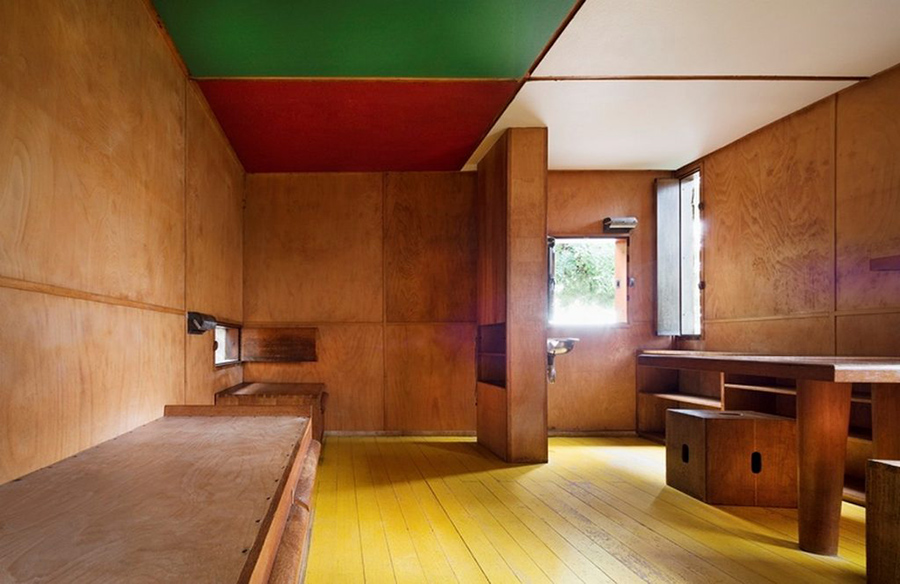
The Cabanon, spanning a mere 15 square meters, stands as a testament to Le Corbusier’s commitment to compact simplicity. The structure is divided into three distinct zones: a living space, a small kitchen, and a bedroom loft. Every inch of the Cabanon is optimized for efficiency, showcasing Le Corbusier’s ability to create a functional microcosm within a limited footprint.
2. Modular Design and Innovation
Le Corbusier employed a modular design approach in the Cabanon, utilizing a 1.8-meter grid system. The building components, from the furniture to the structural elements, adhere to this grid, fostering a sense of order and proportion. This modular approach, a hallmark of Le Corbusier’s design philosophy, allows for flexibility and adaptability within the confined space.
3. Integration of the Five Points of Architecture
Despite its diminutive size, the Cabanon incorporates Le Corbusier’s famous Five Points of Architecture. The pilotis (elevated supports), the free façade, the horizontal window, the open floor plan, and the roof garden are seamlessly integrated, showcasing how these principles can be applied to create a harmonious and livable space even on a small scale.
Enduring Significance
1. Preservation as a Heritage Site
Recognizing the architectural and historical value of the Cabanon, it was designated as a Historic Monument in 1995. The preservation of this humble abode ensures that future generations can appreciate the simplicity and innovation encapsulated in Le Corbusier’s personal retreat.
2. Influence on Minimalist Design
The Cabanon de Le Corbusier has left an indelible mark on the evolution of minimalist design. Its efficient use of space, modular approach, and emphasis on functional simplicity have influenced subsequent architects seeking to create micro-dwellings that prioritize both form and function.
Statistical Insights
1. Dimensions and Layout
The Cabanon measures approximately 4.5 meters by 4.5 meters, with a height of 3.66 meters. Its compact dimensions highlight Le Corbusier’s ability to distill essential living spaces into a small footprint, challenging traditional notions of size and scale in residential architecture.
2. Furniture Design
Le Corbusier, true to his holistic approach, designed the furniture within the Cabanon. The built-in furniture includes a fold-down table, a wall-mounted bookshelf, and a modular storage system, reflecting the architect’s commitment to creating a cohesive and integrated living environment.
Visiting the Cabanon de Le Corbusier
A Glimpse into Architectural Intimacy
For architecture enthusiasts and scholars, visiting the Cabanon de Le Corbusier is a rare opportunity to witness the architect’s private haven. Guided tours provide insights into the design principles, the modular layout, and the historical context that shaped this iconic micro-dwelling.
Conclusion
In conclusion, the Cabanon de Le Corbusier stands as a microcosm of architectural innovation, showcasing the maestro’s ability to distill his design principles into a compact and functional living space. As we reflect on this humble retreat along the French Riviera, it becomes evident that Le Corbusier’s influence extends beyond monumental structures; it permeates even the smallest spaces with a profound commitment to form, function, and ingenuity.