Interior Design: As Old As History Itself
Interior design, as an art and a profession, has a rich history that spans millennia. Traced back to ancient civilizations, people have always taken great care and endlessly spent time and resources arranging their living spaces to achieve both aesthetic appeal and functional comfort.
From the adornments of Egyptian tombs and the harmony of Greek designs both in public and private to the resurgence of interior design in Europe during the Renaissance, all the way through the extravagance of the Victorian era down to the simplistic approaches of modernism and minimalism, interior design has been an integral part of human life.
With the passage of time, interior design has evolved in response to cultural shifts, architectural innovations, and the changing needs of societies. In this day and age, however, with the back-to-back advances in technology, it’s clear that a new era – the age of artificial intelligence – has dawned; an era that’s moving past the limitations of the digital age and leading the entire realm of interior design toward – nope, not another lengthy evolution over time – but, as AI HomeDesign has called it, “a revolution” through and through!
Like all other life aspects, interior design has been flooded with artificial intelligence, and through cutting-edge technologies and advanced machine learning algorithms, various platforms have brought forward AI interior design.
AI Interior Design: Redefining the Future
The interior design industry has a rich history steeped in creativity, aesthetics, and functionality. Traditionally, this field relied on the expertise of human designers who skillfully crafted spaces based on individual tastes and preferences. However, the landscape has shifted dramatically in recent years. Computer graphics and virtual services have been reshaping all conventional practices for decades, and now, AI has taken the helm of this transformation.
AI interior design: A new chapter in real estate photo editing
Ushering in the age of real estate photo editing is AI interior design, which stands as a testament to the limitless possibilities that AI has to offer. As a service that offers complete control over a full redesign of a space, a well-developed AI interior design service isn’t just another design gadget; it’s the beacon of a new era of real estate photo editing. With AI interior design, you have at your fingertips a powerful toolkit to effortlessly transform your home and bring your design dreams to life, all with just a few clicks.
An advanced technology behind a powerful AI service, of course, leverages vast datasets, machine learning algorithms, and advanced image processing to generate design ideas, suggest furniture layouts, and give highly customized options based on user preferences.
Leading the way: Artificial intelligence within interior design
AI interior design doesn’t just offer a convenient way to redesign your space; it represents a fundamental shift in how we can approach home design. It puts the power of professional design into the hands of real estate agents, photographers, and homeowners, enabling them to realize their design visions with ease and affordability.
time-saving
Traditional interior design processes, either physical or virtual, can be time-consuming in their own ways, involving multiple consultations and revisions from different aspects. AI Interior Design significantly reduces the time required to conceptualize and visualize a design. In under 30 seconds, you can see your room transformed.
cost-effectiveness
Hiring an expert interior designer or a high-quality computer graphics expert often comes with a hefty price tag. AI interior design, on the other hand, is typically more cost-effective, as it eliminates the need for extensive professional consultations. Going above and beyond, however, some companies may offer their services as freemiums.
instant results
One of the most remarkable aspects of interior design based on artificial intelligence is its speed. In well-developed systems, you’ll receive the result of your request in under 30 seconds, in the form of an entirely redesigned interior space, with the option of asking for other design suggestions!
Think about it: Each redesigned space takes 10s-30s. Hopefully no fuss, no tricks, and no extra effort. It’ll take you just a bit more than it took to read this paragraph… You’re gonna go back to read again and count, aren’t you?
creativity and customization
AI has the ability to explore a vast array of design possibilities, often beyond what a human designer can envision. Thus, AI interior design takes into account your chosen style and preferences to create a design that is uniquely yours.
user-friendly interface
Using AI interior design is as easy as snapping a photo and uploading it to the platform of your choice. Exactly like that! The user interface is designed to be accessible to, and easily usable for everyone, regardless of their design expertise, tech-savviness, or professional background.
tailored recommendations
Interior design based on artificial intelligence allows you to choose your design preferences, including furniture styles and room types. AI algorithms then generate design suggestions that align with your choices.
How does AI interior design work?
At its core, AI interior design is the interweaving of design expertise with cutting-edge technology. It’s a process that uses AI algorithms to analyze design preferences, spatial constraints, and various other factors to generate interior design concepts and recommendations.
Artificial intelligence works on a number of axes and technologies to bring the astonishing results you see nowadays. Basically, the whole thing for AI interior design boils down to the following:
vast data analysis
Vast datasets of design styles, furniture options, color palettes, and decor elements are analyzed by AI and enable it to use this data to identify patterns, trends, and combinations that resonate with different design aesthetics.
machine learning algorithms
AI employs machine learning algorithms that can continuously learn and adapt based on user preferences. The more you use the platform, the better it becomes at understanding your specific style.
deep learning creativity
With the ability to think outside the box thanks to deep learning, AI is able to combine elements from various design styles, creating fresh and innovative approaches that may not have been apparent through traditional design methods.
 The User Experience: Comfortable as Your Couch
Using AI isn’t just about harnessing the incredible potential of artificial intelligence for interior design; it’s also about making the entire process easy, accessible, and enjoyable for users.
- Capture a space: The journey begins with a simple snapshot. Take a clear photo of the room you want to redesign, making sure to capture the required angles of your choice and their details.
- Upload your photo: Once you have your photo, simply go to your preferred AI interior design platform. Here, you can probably upload your image easily.
- Choose your preferences: Next comes the fun part of customizing your design. When an interior design service runs on artificial intelligence, it lets you choose from various furniture and room styles.
- Wait for AI’s turn: With your preferences set, simply click the generate button and do a few stretches behind the desk while you let AI algorithms take over. As promised, in less than 30 seconds, AI processes your input and generates design options for your room.
- Review and rejoice: You now have a visual representation of your redesigned room. Think of it as a draft that you can regenerate infinitely until you find the perfect gem you’re looking for!
To truly appreciate the power of AI interior design, let’s imagine a couple of scenarios:
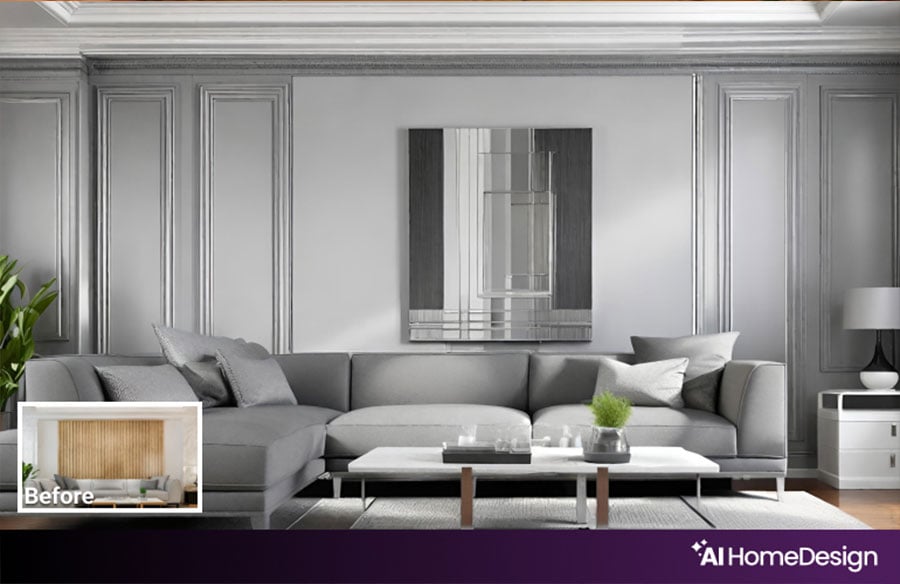
- Small living room with a huge transformation: Imagine you have a small, cluttered living room that could do with more space and a more inviting aura. With AI interior design, you can input your preferences for a minimalist, open-concept design. In seconds, the platform generates a design that removes clutter, suggests furniture arrangement, and provides the colors that brighten the space. You can now visualize how your room could look without the need for costly renovations.
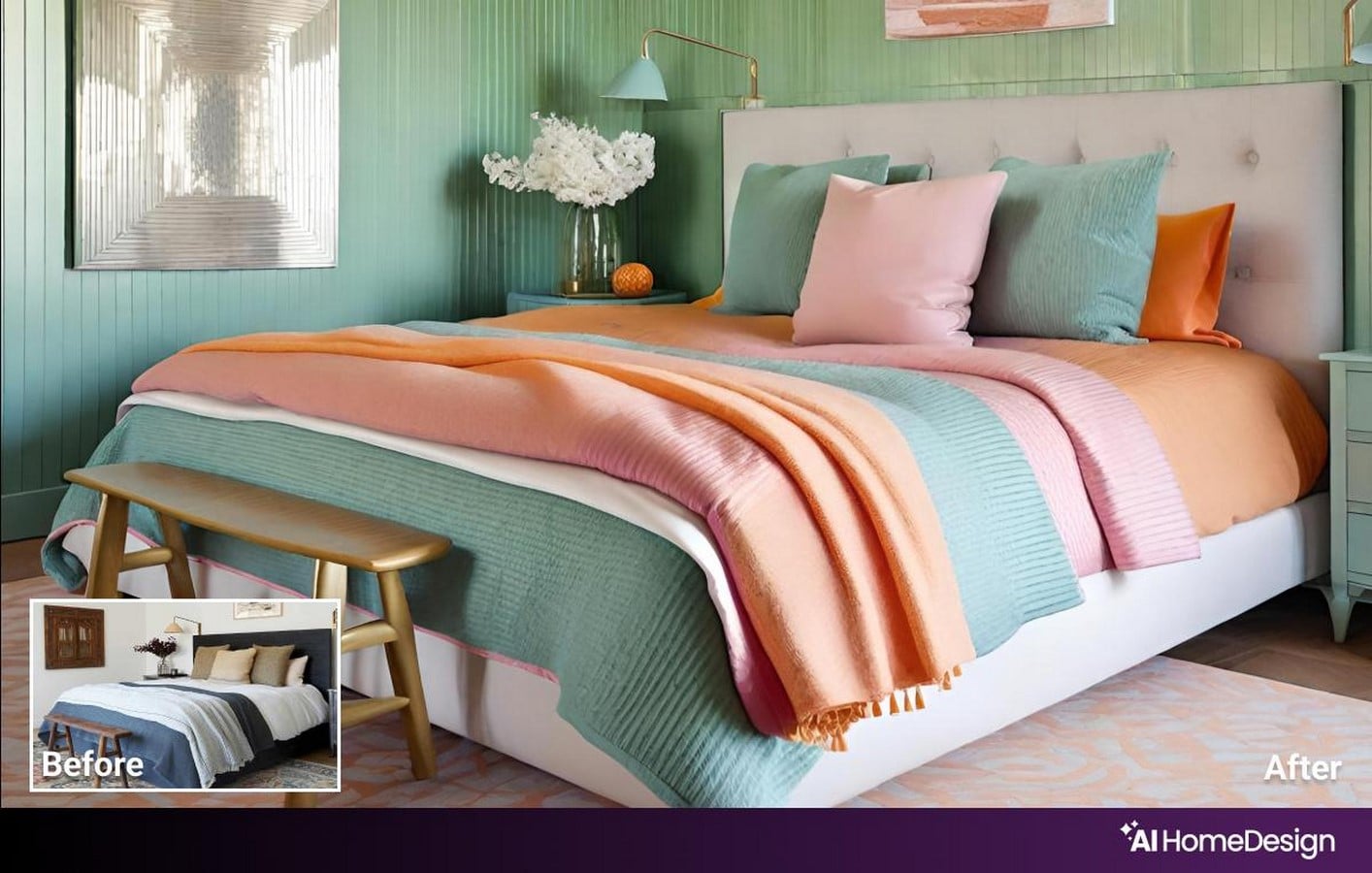
- Personalized bedroom retreat: Perhaps you want to create a personalized bedroom retreat that reflects your unique taste. You input your style preferences, like the urban furniture style. The AI interior design service in front of you takes your choice and presents you with a sleek, tranquil bedroom design. It’s as if you have an interior designer at your beck and call, crafting the perfect space for you.
The Power of Instant Regenerations
In the realm of interior design, the ability to explore various design possibilities is often limited by time, budget, and creative constraints. But online photo editing platforms remove all those confines, allowing you to explore possibilities beyond your wildest dreams.
How do instant revisions work?
Instant regenerations, also referred to as instant revisions or restyling, is a feature that allows you to reiterate and refine your design choices, just like having an infinite canvas for your design ideas. Unlike physical or virtual interior design processes, where revisions can be time-consuming and costly, AI interior design invites you to explore alternative layouts, styles, and arrangements instantly and effortlessly.
Imagine you’ve received your initial design results, and while they’re impressive, you want to experiment with different furniture arrangements or decor choices. With instant restyling, you can do precisely that. You can regenerate your design as many times as you like until you achieve the perfect look for your space.
How does this help?
- Freedom to experiment: Fast regenerations encourage you to step out of your comfort zone and experiment with design choices you might not have considered initially. It’s an invitation to let your creativity flow without constraints. I suggest you do it for as long as you want. It’s on the house!
- Iterative design: Design is often an iterative process, and rapid regenerations accommodate this perfectly. You can make small adjustments, view the results, and then decide whether to keep them or explore further.
- Perfecting the details: A design comes to life with its details. That’s where you’ll be set apart from the competition! With quick restyling, you can fine-tune every aspect of your space, from the placement of individual items to the shade of paint on the walls. As the old saying goes: “measure twice, cut once.” Instant regenerations help with exactly that.
The Future of Interior Design: A Collaborative Approach
As we’ve discussed the world of AI interior design and its transformative capabilities, it’s clear as day that the realm of interior design has undergone a profound shift at the hands of artificial intelligence. To the sane mind, it’s obvious that we’ll witness more of the same in the future:
Coexistence
AI and human designers are not adversaries; they’re the perfect collaborators. AI brings data-driven insights, rapid design generation, and cost-efficiency to the table. Human designers, on the other hand, contribute creativity, empathy, and the ability to understand and cater to individual tastes and emotions.
Accessibility
Artificial intelligence, for lack of a better word, is democratizing interior design. It’s allowing more and more individuals who may not have considered hiring a designer to access professional-level design services at an affordable cost.
Innovation
AI-driven interior design is fostering innovation in the industry. It encourages experimentation and the exploration of new design possibilities, pushing the boundaries of what’s possible. Humans at this time don’t possess the capacity to analyze the amounts of data given to computers. Thus, AI is the perfect tool to empower human innovation.
Sustainability
AI can also play a role in promoting sustainability in interior design. Firstly, by removing various activities and processes – commutes, production and use of real items, manual design labor, energy consumption in different aspects, and so much more – the integration of AI removes a great portion of our environmental footprint. Also, by analyzing material choices, energy efficiency, and design layouts, AI can be enhanced to a level in which it helps create environmentally conscious and resource-efficient living spaces.
AI Ethics: New Age Concerns to Address
While the integration of AI in interior design can be all fun and rainbows, it also raises important ethical considerations. As we navigate this new frontier, it’s crucial to address these concerns and ensure that AI-driven design practices remain responsible, fair, and respectful of privacy.
- Loss of human touch: Some critics worry that the rise of AI in design might lead to a loss of the human touch, where personalized, emotionally resonant design is replaced by algorithmically generated solutions void of any trace of humanity.
- Job displacement: On a similar note, there are concerns about job displacement within the design industry as AI takes on more tasks traditionally performed by human designers. It’s important to consider how AI can complement, rather than replace, human creativity and expertise.
- Transparency: Ethical AI design should prioritize transparency. Users should have a clear understanding of how their data is used and the algorithms that inform design recommendations.
- Data privacy: Protecting user data is paramount. AI platforms should adhere to robust data privacy standards, ensuring that personal information is secure and used only for its intended purposes.
- Algorithmic bias: Bias in AI algorithms is a critical concern. Design algorithms should be thoroughly tested and audited to minimize biases related to factors like race, gender, or socioeconomic status.
Conclusion
Throughout history, humans have poured their creativity and ingenuity into shaping their living spaces, and today, AI interior design is ushering in a new era where this creative endeavor is more accessible, efficient, and innovative than ever before.
The fusion of human design expertise with AI’s data-driven insights and rapid generation capabilities is a testament to the power of collaboration between humans and machines. This collaborative approach not only streamlines the design process but also makes it more cost-effective, bringing professional-level design services within reach for a broader audience.
AI platforms’ commitment to instant regenerations exemplifies the boundless potential of AI in design. It empowers individuals to experiment, iterate, and perfect their designs until they align perfectly with their vision.
However, as we embrace this transformative technology, it’s imperative that we address ethical considerations surrounding AI in design. By addressing the relevant challenges, we can harness the full potential of AI in interior design. In this collaborative future, where humans and AI work hand in hand, we have the opportunity to shape living spaces that are not only aesthetically pleasing but also environmentally conscious and deeply personal.