LH47, Moldova’s leading architecture practice, has unveiled the country’s first sports complex to operate partly on solar energy. Located in Durlești, a growing suburb of Chișinău, the project combines renewable power generation with a multi‑functional, family‑oriented design that brings sports, education, and leisure together under a single sustainable roof.
Project Name: Moldova’s First Solar‑Powered Sports Centre
Studio Name: LH47 ARCH
Location: Durlești, Moldova
Completion year: 2025
Footprint: 2018 sq m
Project team: Serghei Mirza, Victor Rosca, Maria Shova, Vadim Fonariuc, Alexandr Fedorenko
Photographer: Mihaela Alaiba
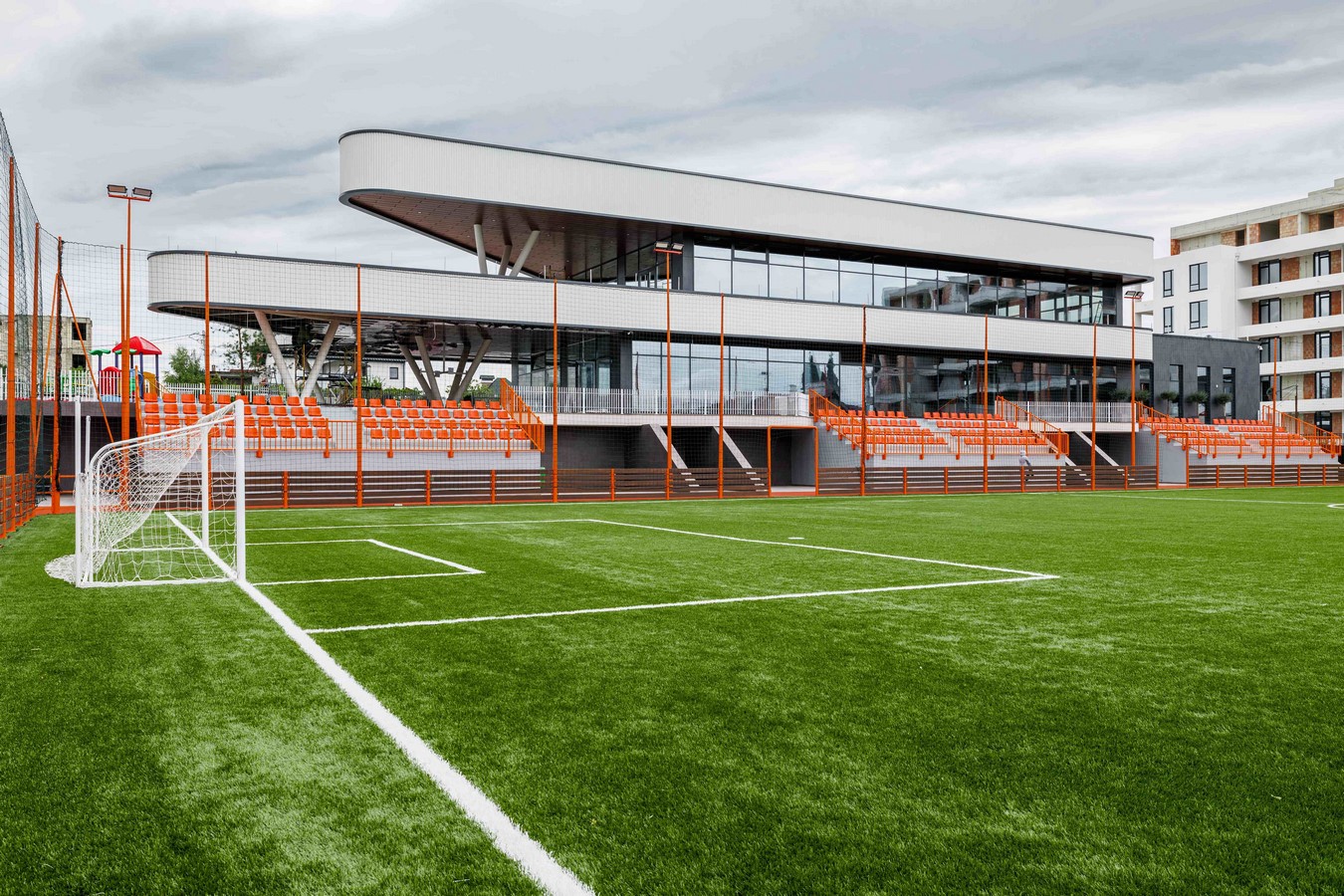
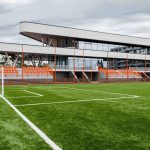
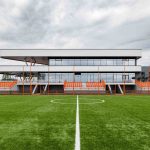
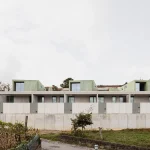
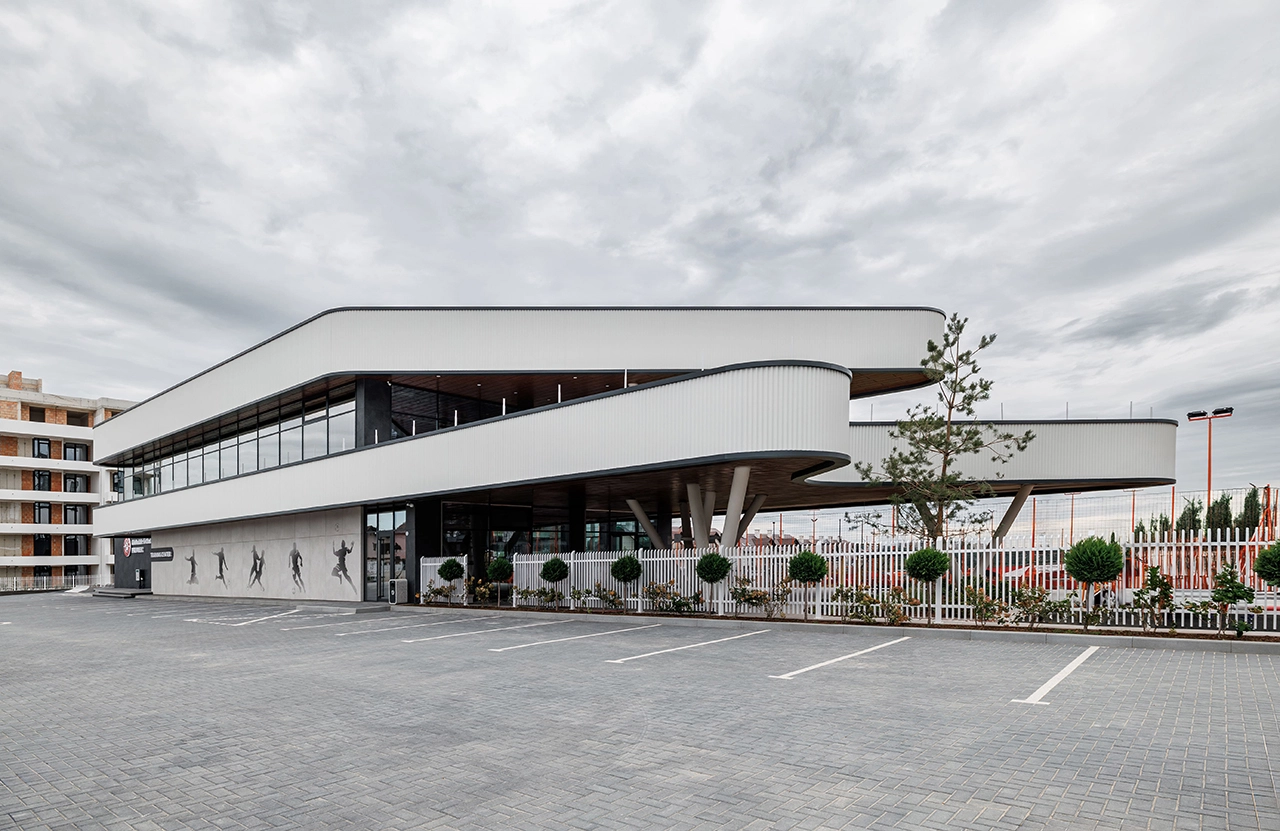
Occupying a challenging site with a five‑meter elevation change, the building unfolds across multiple levels—appearing as two stories from the street and expanding to three from the field below. The terraced layout anchors the structure within its landscape, creating a balance between scale, stability, and the site’s natural contours.
Solar panels placed on the roof meet a share of the building’s energy demand. “We installed solar batteries to maximize the centre’s efficiency,” explains architect and LH47 founder Serghei Mirza. Complementing this system, rainwater is collected and reused for irrigation and maintenance, reinforcing the complex’s environmental ambitions.
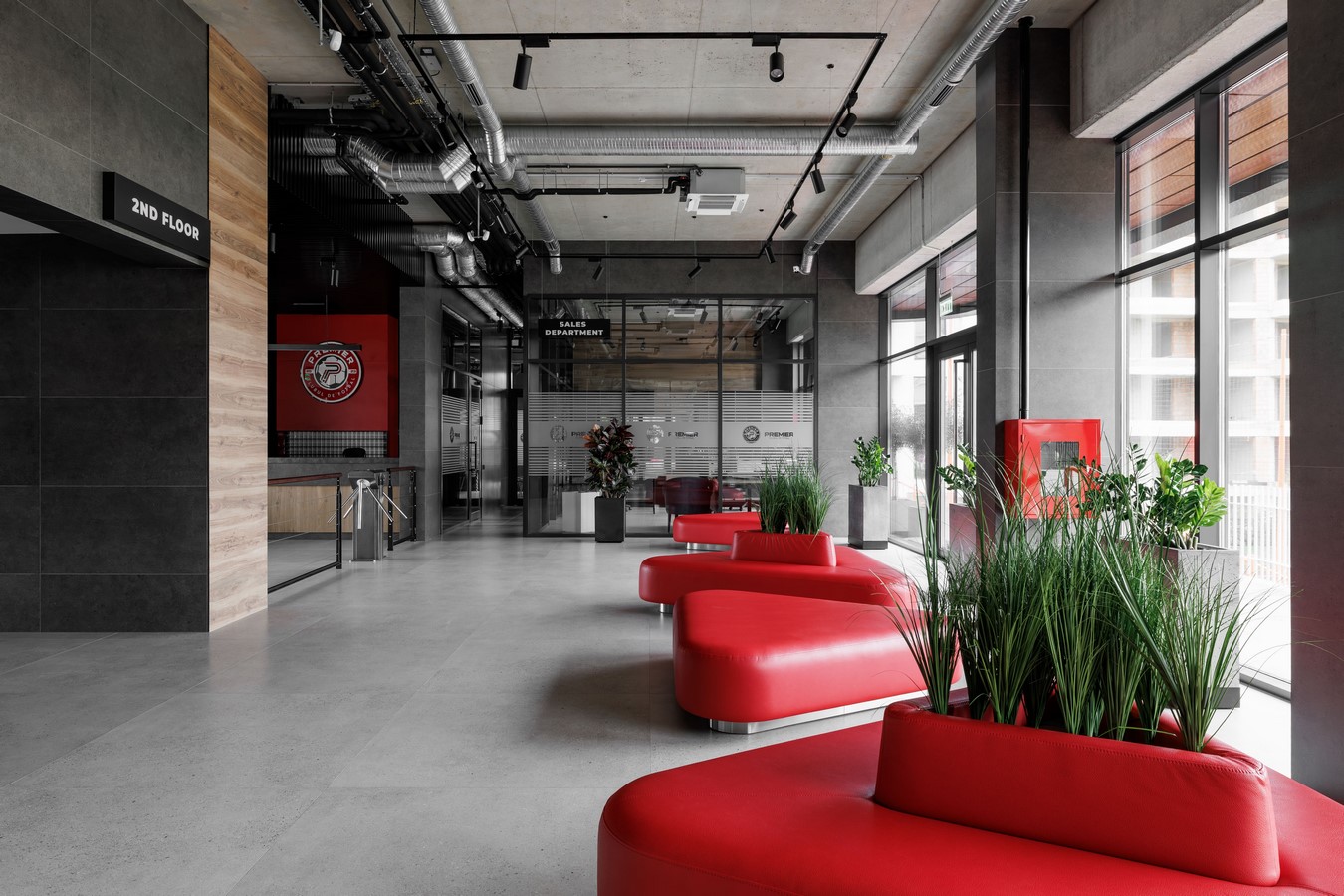
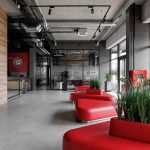
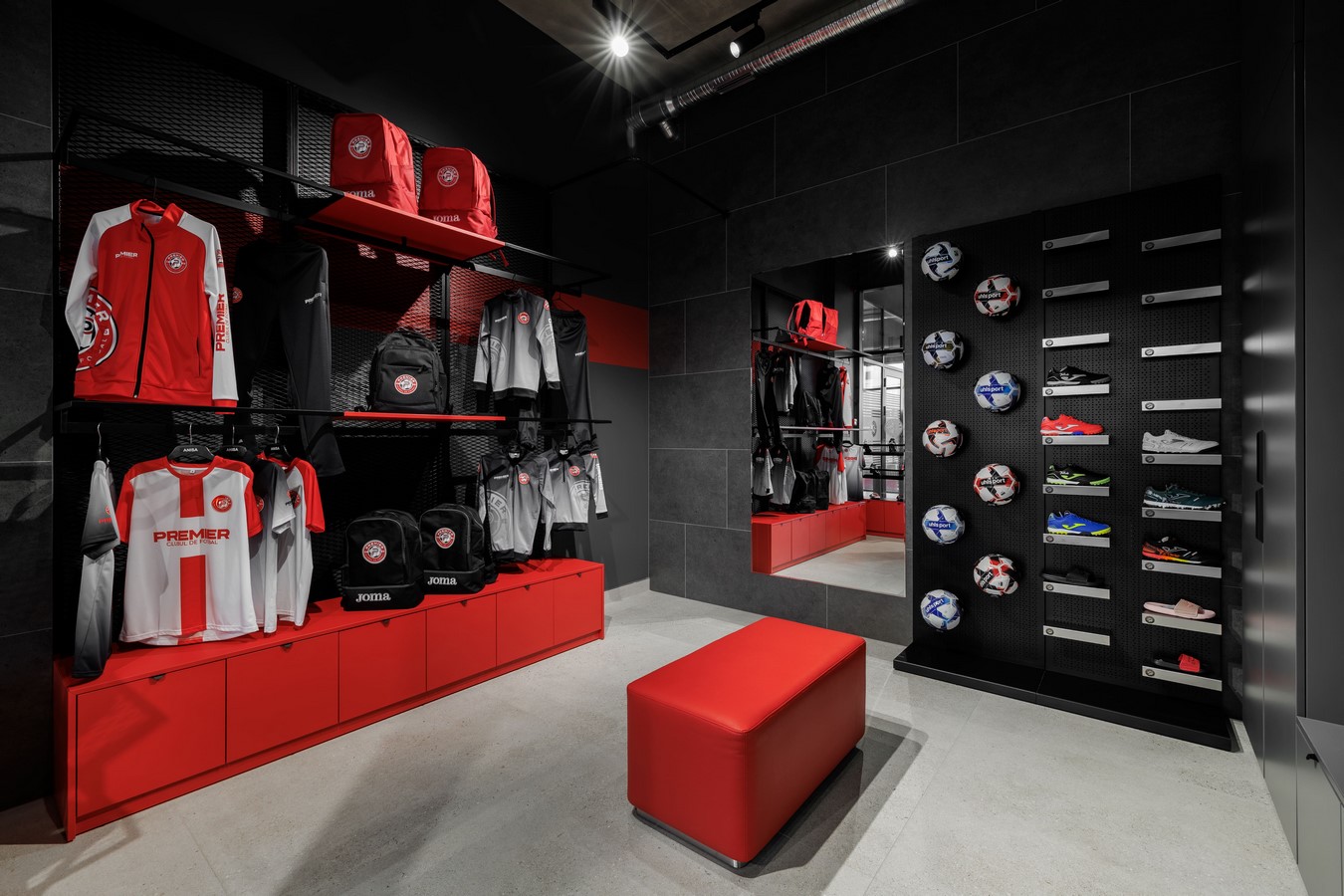
What began as a youth‑training facility evolved into a versatile community hub. “Children never arrive alone — their parents always come with them,” Mirza recalls. “We wanted to transform waiting time into active time — for relaxation, conversation, or fitness.”
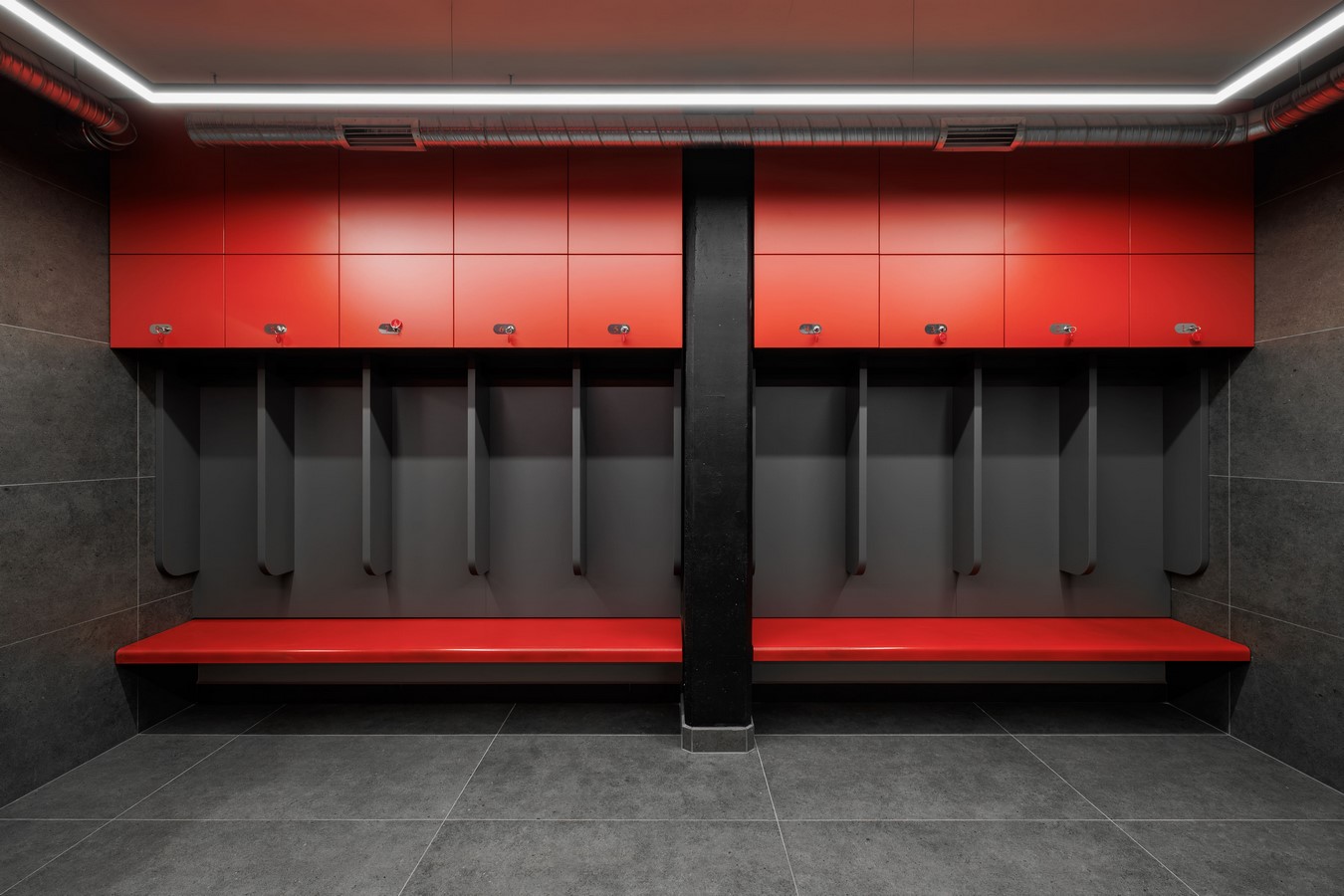
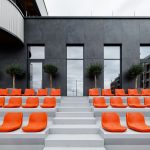
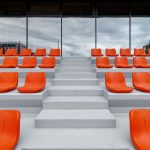
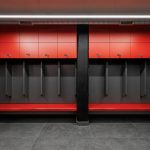
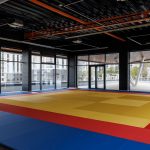
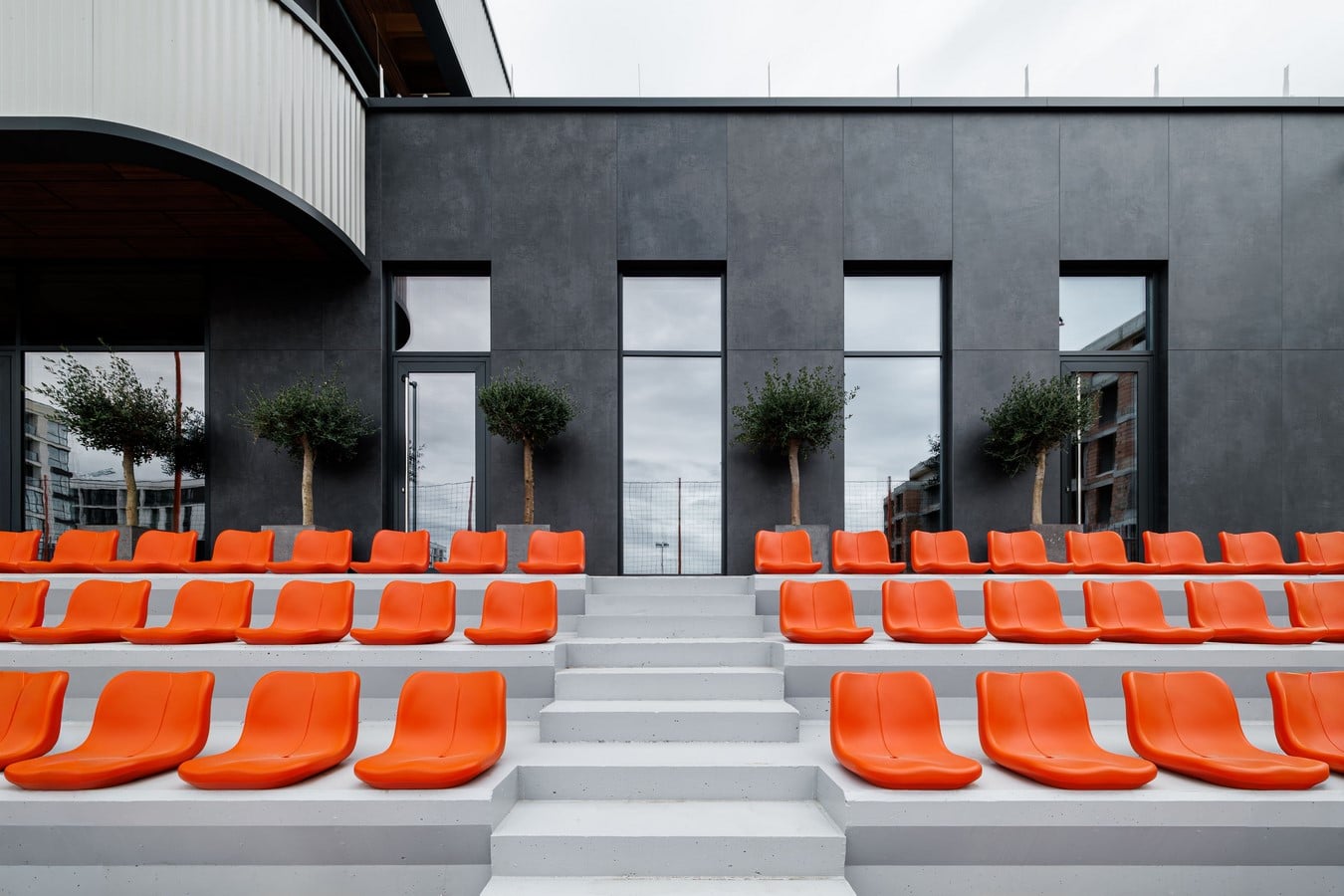
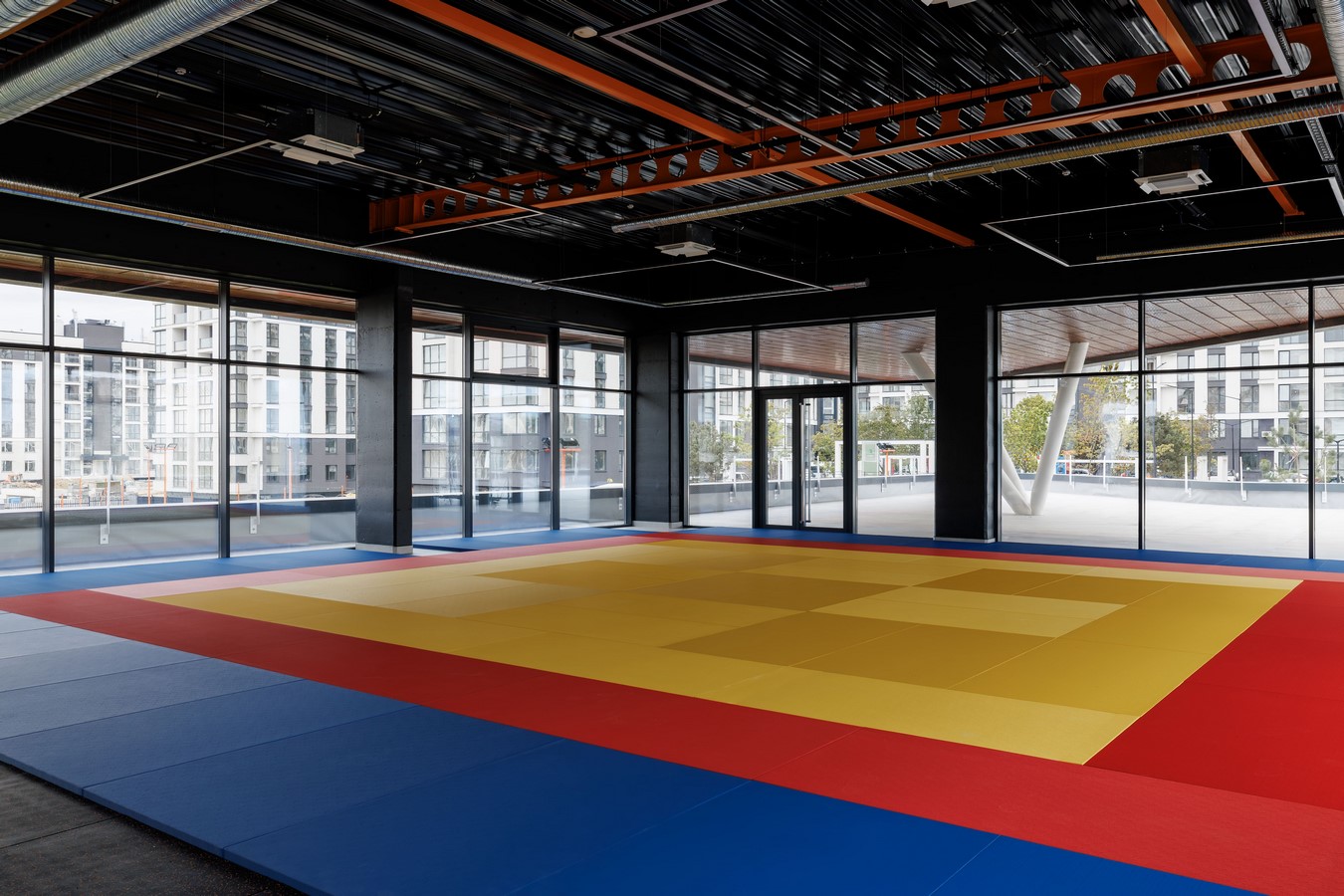
That premise guided the spatial logic. Each user group — children, parents, coaches, and staff — moves through independent routes that prevent overlap and ensure comfort. The main floor contains classrooms and a field‑side café; above it are zones for fitness, boxing, and yoga; while the lowest level integrates locker rooms and concrete stands within the slope, shaped for optimal ergonomics and viewing angles.
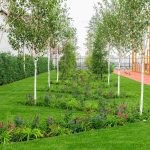
In its architectural language, the complex embraces fluidity over rigidity. Inclined columns, floating balconies, and transparent façades lend the building lightness and momentum. The surrounding landscape is integrated with equal care: trees climb through terraces and are strategically placed around the site to offer natural shade.
For LH47, this project goes beyond athletics — it stands as a model of community architecture and sustainable design. “This was a challenging project,” says Mirza. “But challenge gives rise to depth. We aim to craft not just spaces, but emotions — environments where people feel both harmony and vitality.”