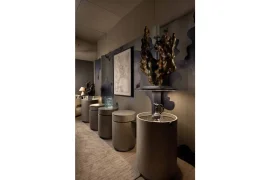
A room can have the right palette, beautiful furniture and immaculate finishes, yet still feel oddly unresolved. Often, what is missing is form. Sculptural décor introduces that pause, giving the eye something unexpected to discover and the room a stronger point of view.
Project Name: Case for Sculptural Décor
Studio Name: House of Lalittya
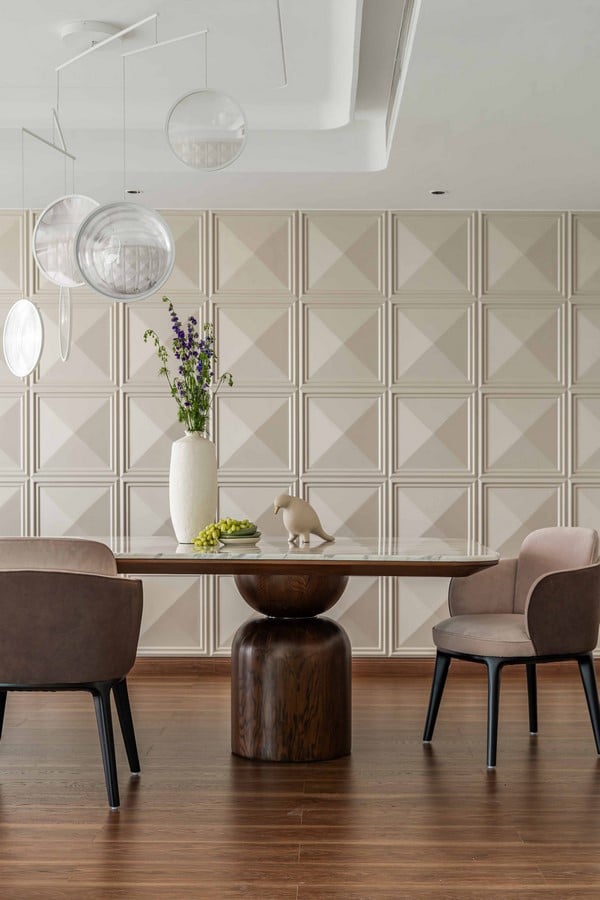
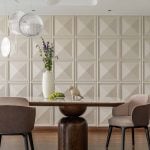
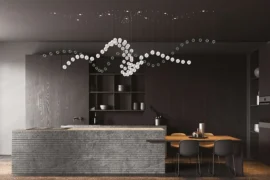
House of Lalittya approaches sculpture beyond the conventional pedestal piece. In one dining space, a small bird sits almost playfully on a marble-topped table. Its rounded silhouette breaks the strict geometry of the panelled wall behind it, while suspended glass discs hover overhead at different heights. Together, these forms prevent an otherwise restrained setting of cream, walnut and muted upholstery from becoming too formal.
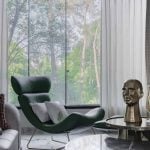
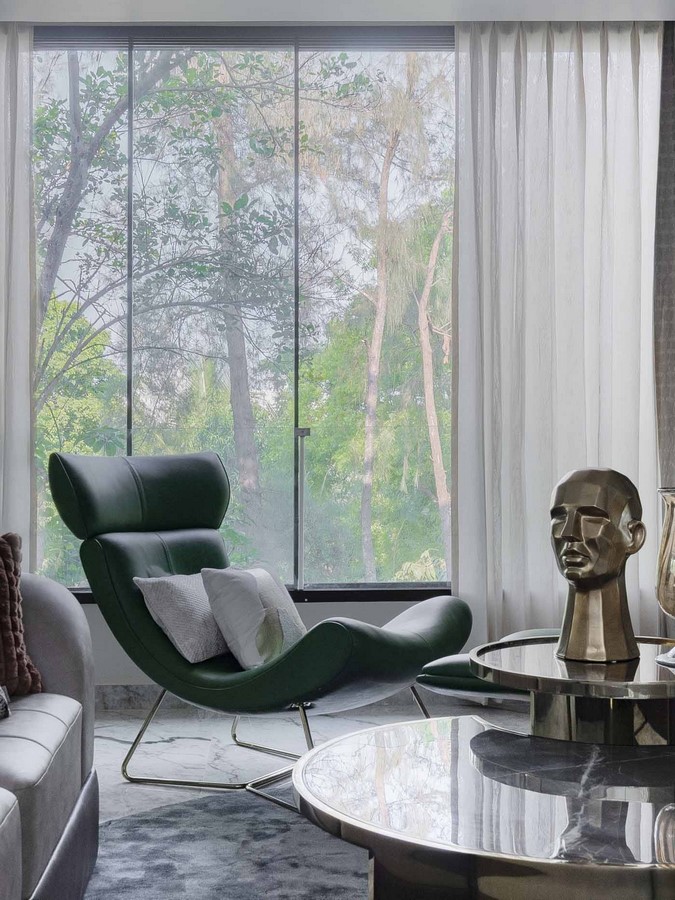
Scale changes the equation in the living spaces. A deep green sculptural lounge chair, with its exaggerated headrest and sweeping seat, reads almost as a single continuous gesture against a wall of glass. Beside it, a faceted metallic head brings another personality into the composition. Neither piece is there simply to fill a corner.
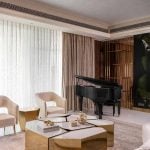
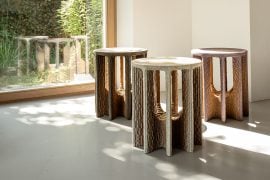
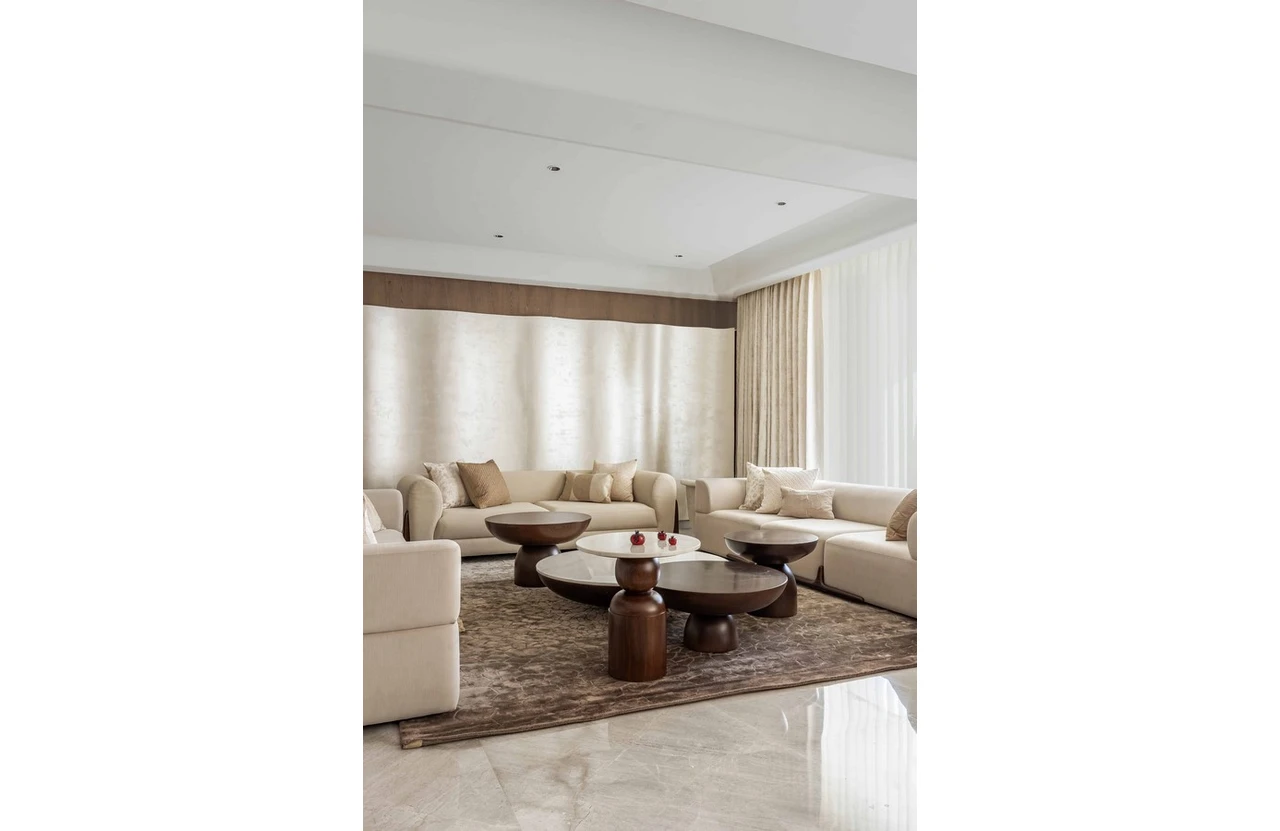
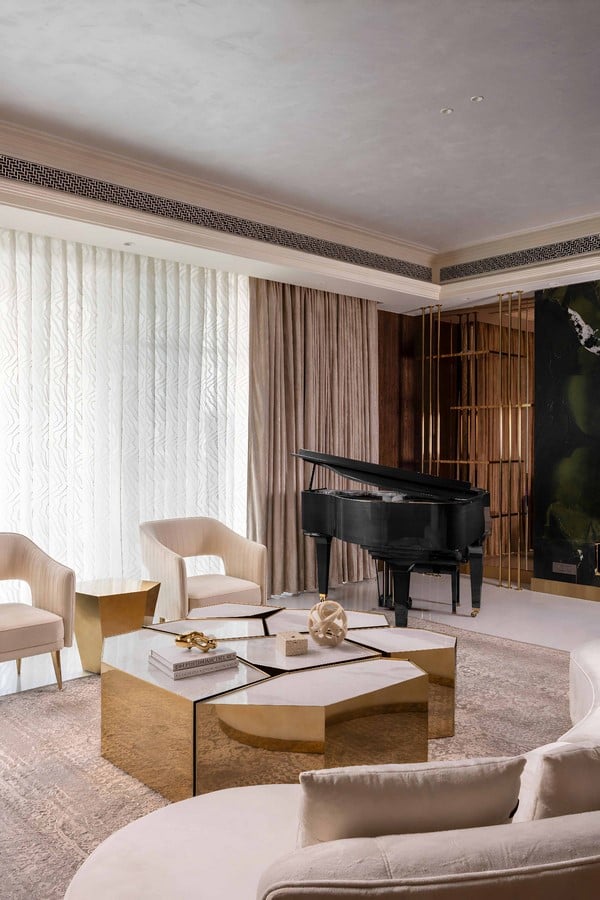
In another space, sculpture is found in the furniture itself. A cluster of irregular brass and pale stone centre tables spreads across the carpet like an abstract composition, their fragmented geometry countering the softness of curved ivory seating. Another living room takes the opposite route: low tables with generous bowl-like tops and bulbous timber bases repeat across the centre, their dark wood adding weight to a pale, almost monochromatic room.
The lesson lies in restraint. Too many statement forms begin competing for attention; too few can leave a carefully designed interior without punctuation. The right piece needs room around it, a considered relationship with scale and enough contrast to register without overwhelming everything nearby.
House of Lalittya treats sculptural décor as part of the architecture of a room, because the piece you add last can completely change how everything around it is seen.