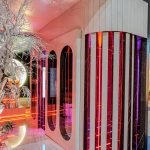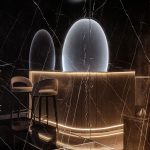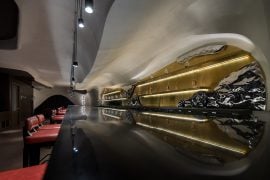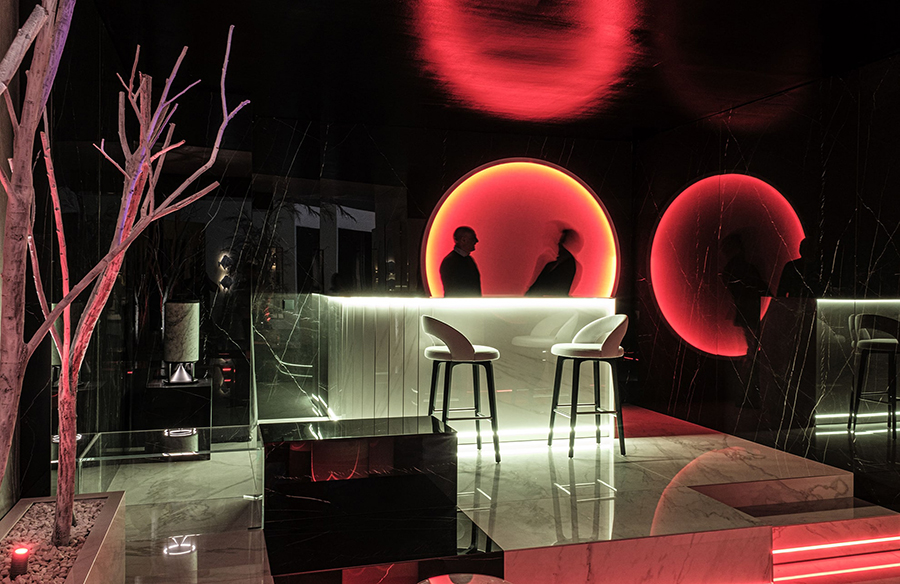
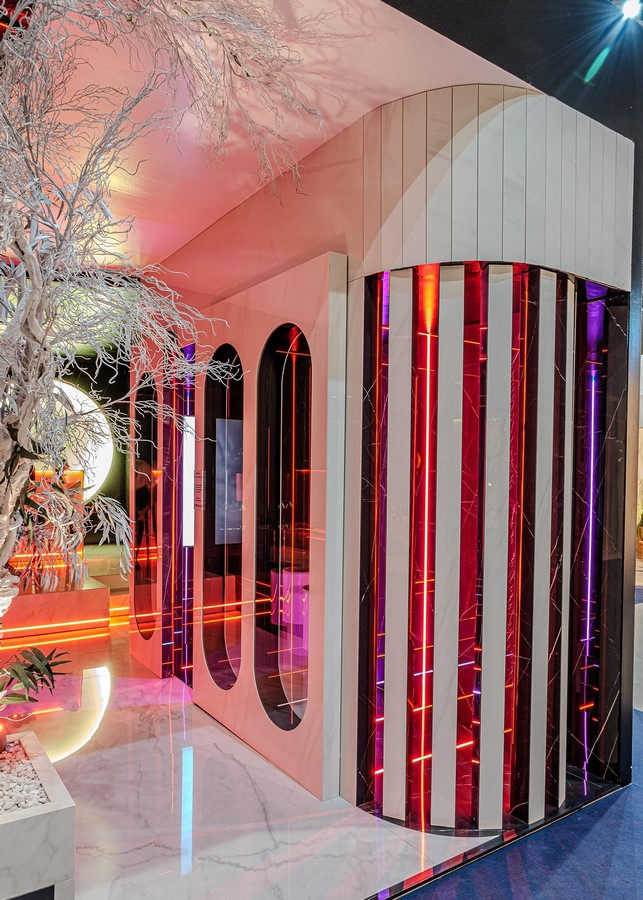
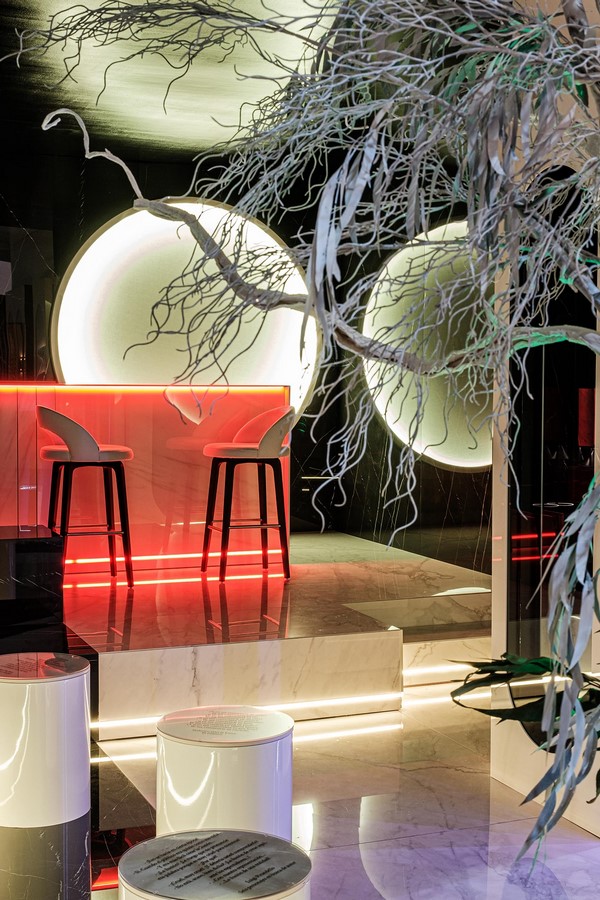
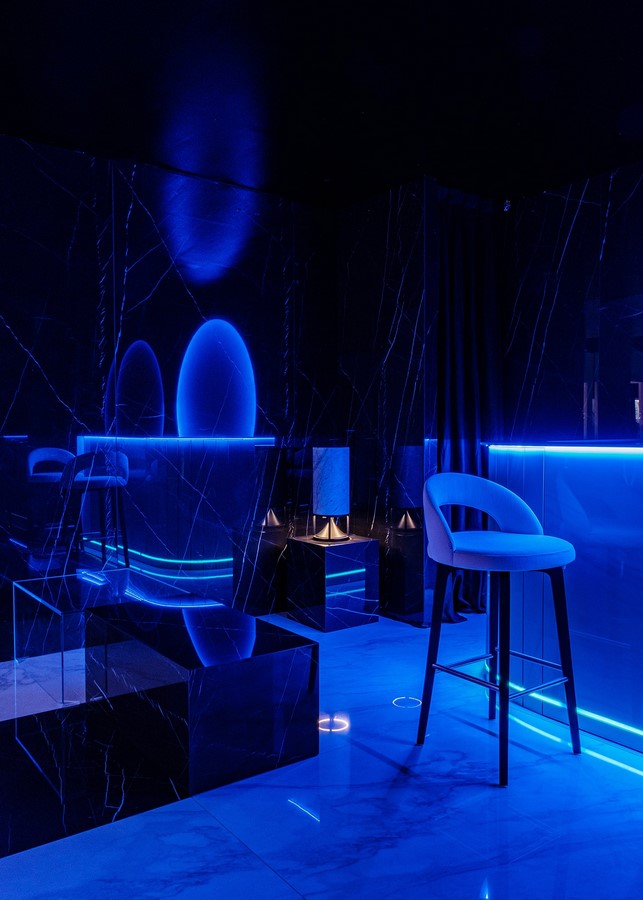
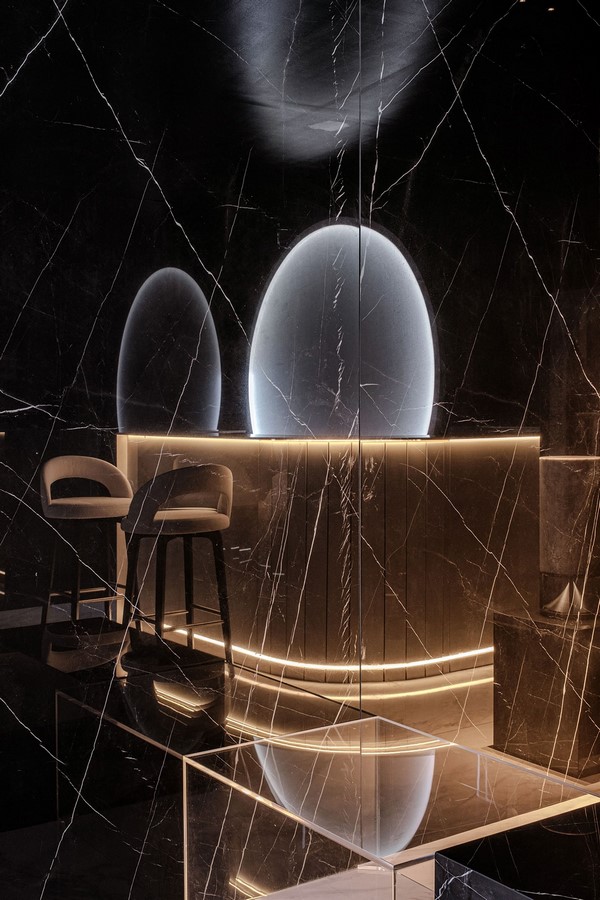
The Catharsis installation draws inspiration from postdramatic theatre, where the interaction between the audience and the environment becomes an essential part of the experience. Garufi’s design features an innovative architectural approach that evolves around a central structure, with polished surfaces of Lasa and Marquina Black marble creating a visually striking effect. The carefully curated selection of materials provides not only a rich aesthetic but also contributes to the conceptual narrative of the space.
Project Name: Catharsis
Studio Name: Simona Garufi Studio
Sponsored: Ascale
Image Credits: Feelmar
Design and Features
The design allows light and shadow to interact with the marble surfaces, creating a captivating visual impact. At the same time, the sound and lighting elements within Catharsis bring an added layer of depth, heightening the sense of immersion for those who enter the installation. A key feature of the design is its unique spatial organization—there are areas that expand and contract, revealing different perspectives and inviting the audience to engage in new ways.
Interactivity and Public Engagement
One of the standout aspects of Catharsis is its ability to turn the observer into part of the
performance. Garufi has created a space where the boundaries between the interior world and the exterior public are intentionally blurred. Large doors with spyglass windows allow those outside the space to witness the transformation taking place within, while those inside are drawn into the drama unfolding around them.
Recognition and Award
The installation was recognized for its innovative use of technology and design and was awarded the Innovation in Technology Award at Marbella Design & Art 2023. The integration of smart lighting, sound systems, and high-end materials made Catharsis a standout feature of the event, showcasing how architecture and technology can work together to create compelling experiences.
Impact and Reflection
Simona Garufi’s Catharsis not only explores the intersection of design and performance but also encourages a deeper reflection on how we engage with the spaces around us. By using
technology and refined materials, the installation aims to evoke a cathartic response from the viewer—one that is both emotional and intellectual, engaging them in a dialogue with the art, the environment, and themselves.
Conclusion
The Catharsis installation is now open to visitors and is expected to continue sparking conversations around the evolving role of architecture in contemporary art.