The Zaragoza Bridge Pavilion – Projects That Define Zaha Hadid’s Style
Zaha Hadid, a pioneering figure in contemporary architecture, revolutionized the design world with her distinctively innovative and futuristic style. Among her many groundbreaking projects, the Zaragoza Bridge Pavilion in Spain stands as a testament to her visionary approach to architectural design. This article explores the unique characteristics of the Zaragoza Bridge Pavilion, elucidating how it exemplifies Zaha Hadid’s unparalleled architectural style.
Zaha Hadid: A Visionary Architect
Zaha Hadid, an Iraqi-born British architect (1950–2016), was renowned for her avant-garde designs that defied conventional architectural norms. Her distinctive style was characterized by fluid forms, dynamic shapes, and a seamless integration of space and structure. Hadid’s architectural philosophy aimed at redefining spatial experiences, pushing the boundaries of innovation, and creating structures that harmonize with their surroundings while offering a glimpse into the future.
Context and Design Concept of the Zaragoza Bridge Pavilion
The Zaragoza Bridge Pavilion, located in Zaragoza, Spain, was designed by Zaha Hadid Architects and was completed in 2008. The pavilion served as an iconic structure during the Expo 2008, showcasing innovative design concepts and technological advancements.
Organic Form and Fluidity
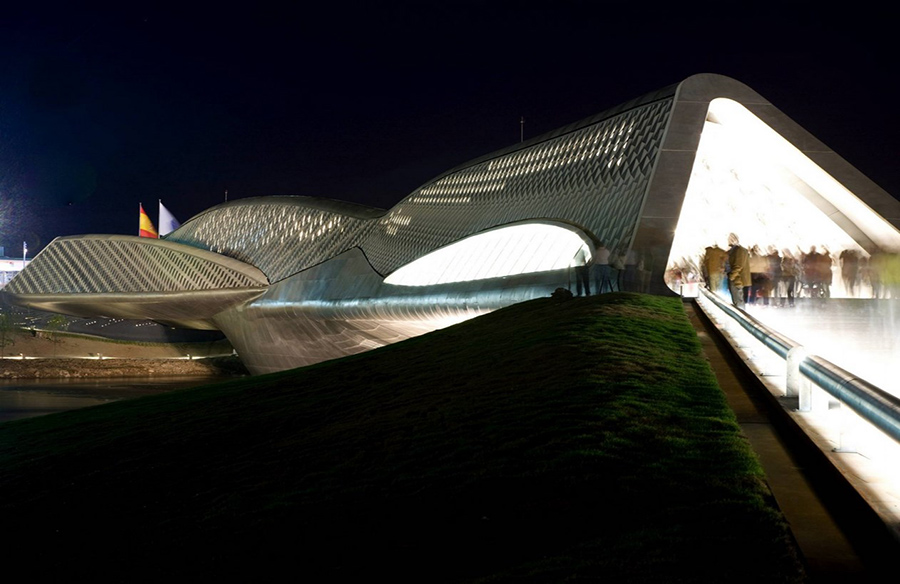
True to Hadid’s signature style, the Zaragoza Bridge Pavilion embodies organic forms and fluid geometries that challenge traditional notions of architectural design. The structure’s sinuous lines and curvilinear shapes create a sense of movement and dynamism, blurring the distinction between architecture and art. The pavilion’s undulating roof, resembling a wave in motion, showcases Hadid’s mastery in sculpting space.
Structural Innovation and Materiality
A hallmark of Hadid’s architectural approach is the fusion of advanced engineering techniques with cutting-edge materials. The Zaragoza Bridge Pavilion exemplifies this through its innovative use of lightweight materials and structural solutions. The pavilion’s steel framework, combined with translucent ETFE (ethylene tetrafluoroethylene) membranes, allows for an ethereal play of natural light, creating an immersive experience for visitors.
Integration with the Environment
In harmony with Hadid’s philosophy of contextual integration, the Zaragoza Bridge Pavilion engages with its surroundings in a symbiotic manner. Its location adjacent to the Ebro River and integration with the landscaped promenade emphasizes a seamless connection between the built environment and nature. The pavilion’s design encourages interaction and dialogue between visitors and the surrounding urban landscape.
Interior Spaces and Functionality
The interior spaces of the Zaragoza Bridge Pavilion are as innovative and dynamic as its exterior. The open-plan layout and fluid transitions between spaces redefine conventional notions of spatial design. Visitors are greeted by an expansive, light-filled interior that seamlessly flows, offering multifunctional areas for exhibitions, events, and communal gatherings. The interplay of light, shadow, and form within the pavilion creates a sensory experience that complements its architectural brilliance.
Legacy and Influence
The Zaragoza Bridge Pavilion stands as a testament to Zaha Hadid’s enduring legacy and continues to inspire architects, designers, and enthusiasts worldwide. Its groundbreaking design principles, technological advancements, and seamless integration with the environment set new benchmarks in contemporary architecture. The pavilion’s influence extends beyond its physical presence, serving as a source of inspiration for future architectural endeavors that prioritize innovation, sustainability, and aesthetic elegance.
Conclusion
The Zaragoza Bridge Pavilion in Spain encapsulates Zaha Hadid’s unparalleled architectural style, showcasing her visionary approach to design, innovative use of materials, and a profound understanding of spatial dynamics. Its organic form, structural ingenuity, and seamless integration with the surroundings solidify its status as a timeless masterpiece, leaving an indelible mark on the world of architecture.
As we reflect on the Zaragoza Bridge Pavilion’s significance, it stands as a testament to Zaha Hadid’s unwavering commitment to pushing the boundaries of architectural possibility and shaping a future where art, technology, and design converge harmoniously.