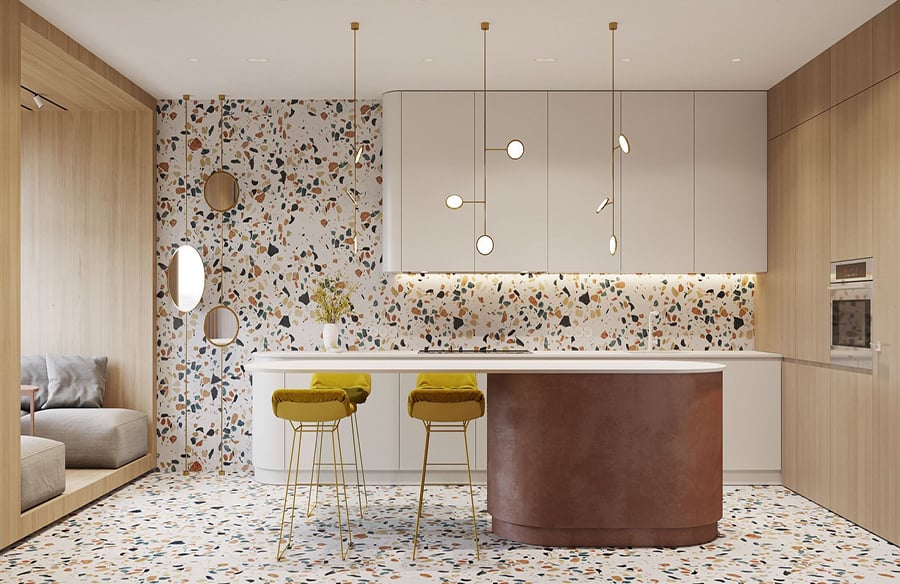
The Timeless Allure of Terrazzo – Building Materials for Interiors- 2021
In the ever-evolving landscape of interior design, certain materials endure as timeless classics, seamlessly blending aesthetics, durability, and versatility. Terrazzo, a composite material consisting of marble, quartz, granite, glass, or other suitable chips, set in concrete or epoxy resin, stands as a testament to enduring elegance and functionality in interior spaces.
Understanding Terrazzo: Composition and Origins
Terrazzo finds its roots in ancient mosaics, dating back to ancient Egypt, where workers utilized crushed stone set in a cementitious binder to create durable and decorative surfaces. Over time, this technique evolved, culminating in the modern incarnation of terrazzo we see today—a material celebrated for its resilience and aesthetic appeal.
Versatility in Design Applications
One of the hallmarks of terrazzo lies in its versatility. This composite material lends itself to a myriad of design applications within interior spaces. From flooring and countertops to wall cladding and decorative elements, terrazzo’s adaptability allows architects and designers to unleash their creative visions, imparting a touch of sophistication to any environment.
Merging Artistry with Functionality
Terrazzo’s allure lies in its ability to merge artistry with functionality. The material offers an extensive color palette and design flexibility, allowing for custom blends and patterns that align with diverse design schemes. Whether seeking a minimalist, monochromatic approach or a bold, vibrant statement, terrazzo accommodates varied design sensibilities.
Sustainability and Longevity
In an era increasingly focused on sustainability, terrazzo emerges as a sustainable choice for interior surfaces. Composed of recycled materials and employing environmentally conscious manufacturing processes, terrazzo aligns with eco-friendly design practices. Additionally, its durability and longevity contribute to reduced replacement cycles, furthering its sustainable credentials.
Maintenance and Durability
Prized for its durability, terrazzo is resistant to wear, stains, and scratches, making it an ideal choice for high-traffic areas. Its non-porous surface mitigates the risk of bacterial growth, simplifying maintenance and ensuring long-lasting beauty—an attribute appreciated in both residential and commercial settings.
Contemporary Interpretations and Trends
Contemporary design trends have rejuvenated terrazzo’s popularity. While classic terrazzo with marble or granite chips embedded in a cementitious matrix remains a staple, modern interpretations include terrazzo with colored or recycled glass, brass, or even mother-of-pearl accents, offering a fresh take on this enduring material.
Conclusion: Terrazzo’s Enduring Appeal
Terrazzo stands the test of time as a quintessential material in interior design. Its marriage of durability, versatility, sustainability, and aesthetic charm solidifies its place as a perennial favorite among architects, designers, and homeowners alike. From its ancient origins to its contemporary adaptations, terrazzo remains an emblem of enduring elegance and functionality in interior spaces.