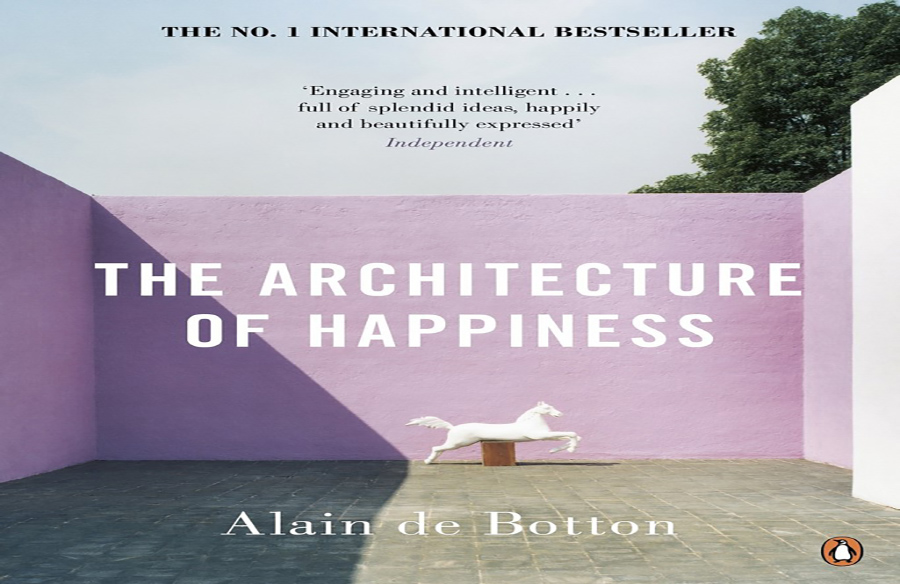
‘The Architecture of Happiness’ by Alain de Botton – Books every Architecture Enthusiasts must read
Alain de Botton’s ‘The Architecture of Happiness’ stands as a philosophical exploration intertwining architecture, emotions, and human experience. Departing from the technical aspects, the book delves into the profound influence of architecture on our emotions and well-being.
Architecture Beyond Aesthetics
‘The Architecture of Happiness’ ventures beyond conventional architectural discourse. De Botton delves into the emotional impact of architectural design, emphasizing that architecture isn’t solely about aesthetics but profoundly shapes our emotions, moods, and daily lives.
Emotional Resonance in Design
Central to the book’s narrative is the notion that architectural design evokes emotions. De Botton articulates how certain architectural styles, spaces, and forms have the power to evoke feelings of tranquility, joy, or melancholy. He encourages readers to introspect on their emotional responses to different architectural environments.
Beauty and its Influence
De Botton navigates the complex relationship between beauty and architecture. He contends that beauty isn’t merely a superficial attribute but a force that influences our well-being. The book invites readers to contemplate the role of beauty in architecture and how it impacts our emotional connection with spaces.
Contextualizing Architectural Styles
Through a philosophical lens, ‘The Architecture of Happiness’ contextualizes various architectural styles and their emotional resonance. De Botton examines the emotional impact of architectural movements such as Baroque, Gothic, Modernism, and Postmodernism, exploring how these styles evoke distinct emotions and perceptions.
Harmonizing Life and Design
The book advocates for an alignment between personal values, emotions, and architectural preferences. De Botton suggests that understanding our emotional responses to architecture allows us to create environments that resonate with our inner sense of happiness and fulfillment.
Conclusion
Alain de Botton’s ‘The Architecture of Happiness’ offers a refreshing perspective, transcending traditional architectural discourse. It invites readers on a philosophical journey, exploring the intricate relationship between architecture and human emotions. By emphasizing the emotional dimensions of design, the book encourages architects and enthusiasts alike to create spaces that not only captivate visually but also resonate emotionally, fostering a deeper connection between individuals and their built environment.