Qingdao Haiwan Bridge and Jiaozhou Bay Bridge, China – Longest Flyovers around the world as of 2022
In the realm of architectural wonders, the Qingdao Haiwan Bridge and Jiaozhou Bay Bridge in China stand tall, quite literally, as testaments to the prowess of modern engineering and design. This article delves into the intricate details of these two awe-inspiring structures, exploring their design, planning, and the pivotal role they play in the landscape of transportation in the region.
Qingdao Haiwan Bridge: Connecting Landscapes and Minds
Design and Architecture
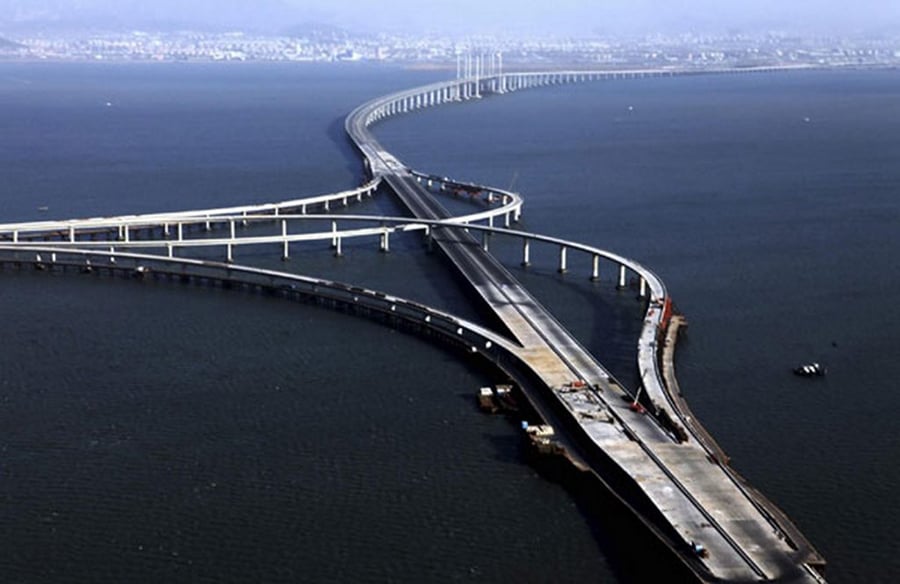
The Qingdao Haiwan Bridge, often hailed as the longest bridge over water in the world, stretches an astonishing 42.5 kilometers across the Jiaozhou Bay. Its design is a symphony of form and function, seamlessly integrating aesthetics with the structural demands of such an ambitious project.
The bridge features a cable-stayed design, characterized by towering pylons and an intricate network of cables that provide stability and support. The architects and engineers behind this marvel carefully considered the challenging environmental conditions, including high winds and seismic activity, ensuring that the bridge not only stands as a testament to human ingenuity but also withstands the test of time.
Urban Planning and Integration
Beyond its structural magnificence, the Qingdao Haiwan Bridge has significantly influenced urban planning in the region. The seamless integration of the bridge into the existing urban fabric has catalyzed economic development and enhanced accessibility between previously isolated regions.
The surrounding areas have experienced a surge in economic activities, with improved connectivity opening new avenues for trade and commerce. The urban landscape, once demarcated by geographical barriers, now flows seamlessly across the bridge, fostering a sense of unity among diverse communities.
Jiaozhou Bay Bridge: Bridging Gaps, Connecting Lives
Engineering Marvels: Design at its Pinnacle
The Jiaozhou Bay Bridge, often referred to as the “Golden Waterway of Qingdao,” is another architectural triumph that graces the Chinese landscape. Its design and engineering push the boundaries of what is achievable, setting new standards for bridge construction.
This bridge, spanning over 26.7 kilometers, boasts a unique combination of cable-stayed and beam bridge designs. The architectural team meticulously considered the topography of the bay, ensuring that the bridge harmonizes with its natural surroundings while providing a safe and efficient transportation corridor.
Environmental Considerations in Planning
The planning phase of the Jiaozhou Bay Bridge also underlines a commitment to environmental sustainability. The careful selection of construction materials, coupled with eco-friendly construction practices, showcases a conscientious approach to minimizing the ecological footprint of such massive infrastructure projects.
Common Threads: Architectural Brilliance and Transportation Efficiency
Integration of Transportation Systems
Both bridges stand as shining examples of integrated transportation systems. The seamless connectivity they provide has not only reduced travel times but has also alleviated congestion in surrounding areas. The efficient movement of goods and people has catalyzed economic growth and improved the overall quality of life for the residents.
Technological Advancements in Bridge Construction
The construction of the Qingdao Haiwan Bridge and Jiaozhou Bay Bridge leverages cutting-edge technology, reflecting the continual evolution of bridge construction techniques. The use of advanced materials, innovative construction methods, and state-of-the-art monitoring systems ensures that these structures remain at the forefront of engineering excellence.
Conclusion: A Call to Appreciate Architectural Marvels
In conclusion, the Qingdao Haiwan Bridge and Jiaozhou Bay Bridge in China represent not only the pinnacle of architectural and engineering achievements but also the transformative power of well-planned infrastructure. These bridges serve as lifelines, connecting communities, fostering economic growth, and inspiring awe in all who traverse their spans.
As we marvel at these architectural wonders, let us not only appreciate the aesthetics but also recognize the meticulous planning and design thinking that went into their creation. In an era where connectivity is paramount, the Qingdao Haiwan Bridge and Jiaozhou Bay Bridge stand as beacons of progress, inviting us to envision and create a future where architectural marvels seamlessly integrate with the natural and urban landscapes.
Call to Action: Embrace Innovation, Foster Connectivity
To continue pushing the boundaries of architectural and transportation design, it is imperative that we embrace innovation and invest in sustainable infrastructure. Whether it be through supporting research and development in bridge construction or advocating for urban planning that prioritizes connectivity, each individual can contribute to shaping a future where marvels like the Qingdao Haiwan Bridge and Jiaozhou Bay Bridge become not just symbols of progress, but the norm in our interconnected world.