Ordrupgaard Museum Extension – Projects That Define Zaha Hadid’s Style
Zaha Hadid, celebrated as an architectural pioneer, left an indelible mark on the world with her avant-garde designs that challenged traditional architectural norms. Among her exceptional projects, the Ordrupgaard Museum Extension in Denmark stands as a testament to her visionary style and innovative approach to spatial design. This article delves into the distinctive features of the Ordrupgaard Museum Extension, highlighting how it embodies the essence of Zaha Hadid’s unparalleled architectural legacy.
Zaha Hadid: A Trailblazer in Architecture
Zaha Hadid (1950–2016), a pioneering Iraqi-British architect, reshaped the architectural landscape with her futuristic designs characterized by fluid forms, dynamic geometries, and a profound integration of art and functionality. Her architectural philosophy aimed to transcend the conventional, redefining spatial experiences and creating structures that seamlessly blend with their surroundings.
Context and Design Concept of Ordrupgaard Museum Extension
The Ordrupgaard Museum Extension, situated in Charlottenlund, Denmark, was a pivotal project undertaken by Zaha Hadid Architects. Completed in 2005, this extension to the existing museum was envisioned as a harmonious integration of contemporary architecture with the historic setting, showcasing Hadid’s ability to juxtapose innovation with tradition.
Organic Form and Contextual Integration
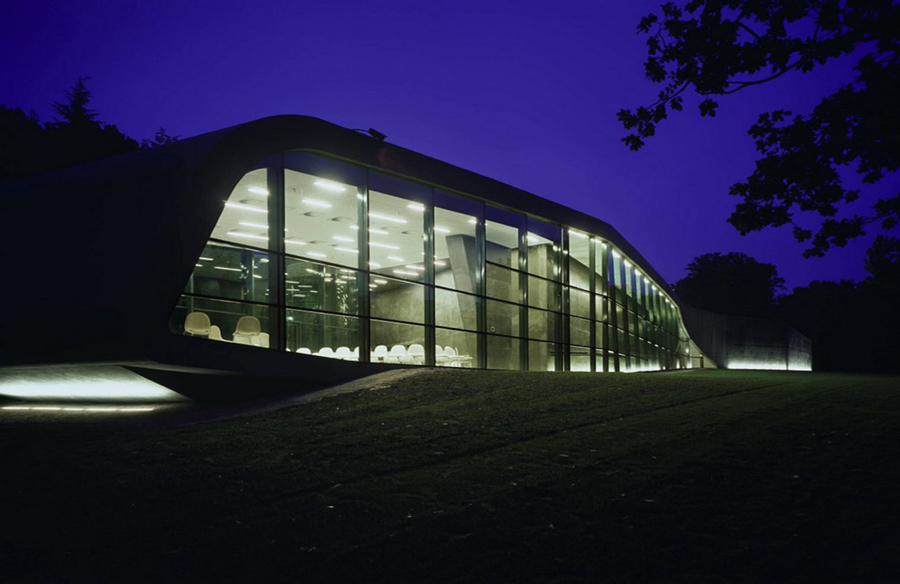
The hallmark of the Ordrupgaard Museum Extension lies in its organic form that harmonizes with the museum’s existing landscape. Hadid’s design embraces the site’s topography, integrating the extension with the surrounding parkland while creating a dynamic dialogue between old and new. The extension’s undulating, curvilinear shapes seamlessly merge with the natural contours of the site, fostering a sense of continuity and spatial fluidity.
Sculptural Elegance and Structural Ingenuity
The extension’s architectural elegance is evident in its sculptural form, characterized by a series of interconnected pods or pavilions that seem to float amidst the greenery. The use of glass and steel in the construction of these pods not only creates a visually striking ensemble but also showcases Hadid’s mastery in seamlessly merging form and function. The innovative structural design enables the pavilions to serve as exhibition spaces, each offering a unique experience for visitors.
Transparency and Spatial Dynamics
A defining feature of the Ordrupgaard Museum Extension is its emphasis on transparency and spatial fluidity. The extensive use of glass in the pavilions allows natural light to permeate the interior spaces, creating a dynamic interplay between light and shadow. The interconnectedness of the pavilions fosters a fluid circulation within the museum, encouraging visitors to explore and interact with the art in an immersive environment.
Integration of Art and Architecture
Zaha Hadid’s vision for the Ordrupgaard Museum Extension extended beyond its physical structure; it aimed to create a symbiotic relationship between art, architecture, and nature. The extension serves not only as a gallery space but also as a canvas that frames and enhances the artworks on display. The seamless integration of art within the architectural framework highlights Hadid’s commitment to creating holistic and immersive experiences for visitors.
Legacy and Influence
The Ordrupgaard Museum Extension stands as a testament to Zaha Hadid’s enduring legacy, exemplifying her ability to blend innovation, functionality, and contextual sensitivity in architectural design. Its seamless integration with the natural landscape, sculptural elegance, and emphasis on spatial dynamics continue to inspire architects, designers, and enthusiasts globally.
Conclusion
The Ordrupgaard Museum Extension in Denmark encapsulates Zaha Hadid’s unparalleled architectural vision, showcasing her ability to create structures that seamlessly integrate with their surroundings while pushing the boundaries of design innovation. Its organic forms, sculptural elegance, and immersive spatial experiences solidify its status as a landmark in contemporary architecture.
As the architectural world evolves, the Ordrupgaard Museum Extension remains a testament to Hadid’s enduring legacy, inspiring future generations to envision spaces that embrace innovation, respect tradition, and celebrate the inherent harmony between architecture, art, and nature.