Chandigarh, India – 8 Cities in the world, famous for their Urban Planning
Nestled in the northern part of India, Chandigarh stands as a testament to the harmonious blend of architecture, urban planning, and urban design. Designed by the legendary architect Le Corbusier, the city is a remarkable showcase of meticulous planning and thoughtful design principles. This article delves into the architectural marvels, urban planning strategies, and urban design elements that make Chandigarh a unique and vibrant city.
Architectural Marvels of Chandigarh
Capitol Complex
One cannot discuss Chandigarh without highlighting the iconic Capitol Complex. Designed by Le Corbusier, it houses the Secretariat, the Legislative Assembly, and the High Court. The structures boast a modernist architectural style, characterized by clean lines, functional design, and the use of raw concrete. The Open Hand Monument in the complex symbolizes the city’s openness to give and receive.
Sukhna Lake
Sukhna Lake, an artificial reservoir at the foothills of the Himalayas, is not only a scenic attraction but also a marvel in urban planning. The lake was created to serve as a water reservoir while providing a serene recreational space. The juxtaposition of the lake against the backdrop of the Shivalik Range adds a picturesque dimension to the city.
Rock Garden
Nek Chand’s Rock Garden is a unique architectural creation, showcasing sculptures made from industrial and home waste. This unconventional garden is a testament to creativity, resourcefulness, and sustainable design. The use of discarded materials not only contributes to environmental conservation but also reflects Chandigarh’s commitment to innovation.
Urban Planning in Chandigarh
Sectoral Division
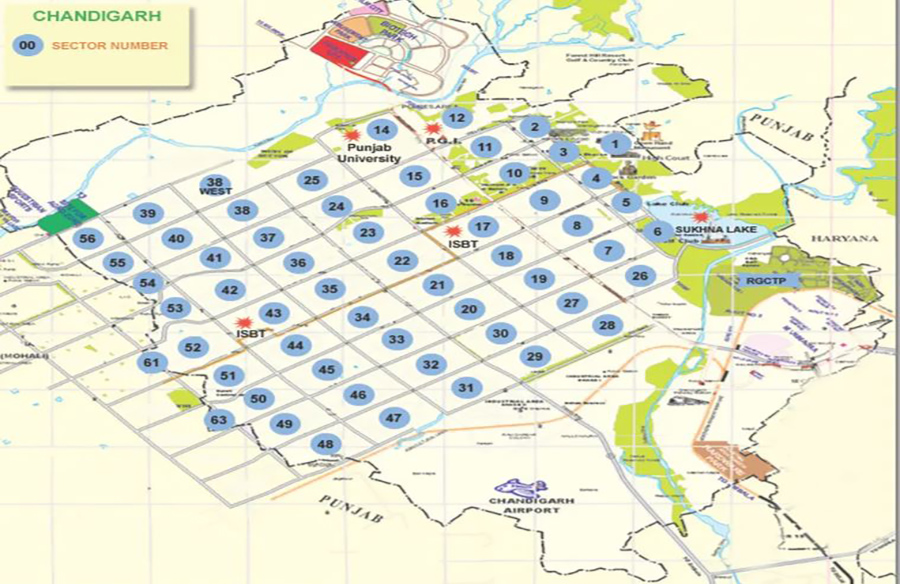
Chandigarh’s urban planning is characterized by a systematic sectoral division. The city is divided into well-planned sectors, each with its own designated functions, including residential, commercial, and industrial areas. This segregation minimizes congestion and enhances the overall functionality of the city.
Green Spaces
One of the key aspects of Chandigarh’s urban planning is the emphasis on green spaces. The city boasts numerous parks and gardens, contributing to a healthier and more sustainable living environment. The Rock Garden, Sukhna Lake promenade, and Zakir Hussain Rose Garden are prime examples of Chandigarh’s commitment to integrating nature into urban spaces.
Efficient Transportation
Chandigarh’s urban planning prioritizes efficient transportation systems. The city is equipped with a well-connected network of roads, cycle paths, and pedestrian walkways. This foresight promotes eco-friendly modes of transportation, reduces traffic congestion, and enhances the overall quality of life for residents.
Urban Design Principles
Grid Layout
The grid layout of Chandigarh’s sectors is a key urban design principle. This layout not only facilitates easy navigation but also contributes to the aesthetic appeal of the city. The organized and structured layout reflects Le Corbusier’s vision of a city that is both functional and visually pleasing.
Modernist Architecture
Chandigarh’s urban design is heavily influenced by modernist architecture. The use of raw concrete, geometric shapes, and open spaces creates a distinctive visual identity for the city. The modernist approach prioritizes functionality, simplicity, and a connection with the surrounding landscape.
Cultural Integration
Urban design in Chandigarh seamlessly integrates the city’s rich cultural heritage. The architecture incorporates elements inspired by local traditions and customs, creating a sense of belonging for the residents. This cultural integration is evident in the design of public spaces, religious structures, and community facilities.
Chandigarh Today: A Model City
Decades after its inception, Chandigarh stands as a model city that continues to inspire urban planners and architects worldwide. The city’s commitment to sustainable development, green initiatives, and efficient urban design serves as a blueprint for creating livable and thriving urban environments.
Call to Action: Embracing Sustainable Urban Living
As admirers of Chandigarh’s architectural legacy, it is crucial for cities around the world to draw inspiration from its success. Urban planners, architects, and policymakers should prioritize sustainable practices, green spaces, and efficient transportation to create cities that not only function seamlessly but also prioritize the well-being of their residents.
In conclusion, Chandigarh, India, stands as a shining example of how meticulous architecture, urban planning, and urban design can transform a city into a masterpiece. As we look to the future of urban development, let Chandigarh serve as an enduring source of inspiration for creating cities that are not just built, but crafted with precision, purpose, and a vision for a better tomorrow.