
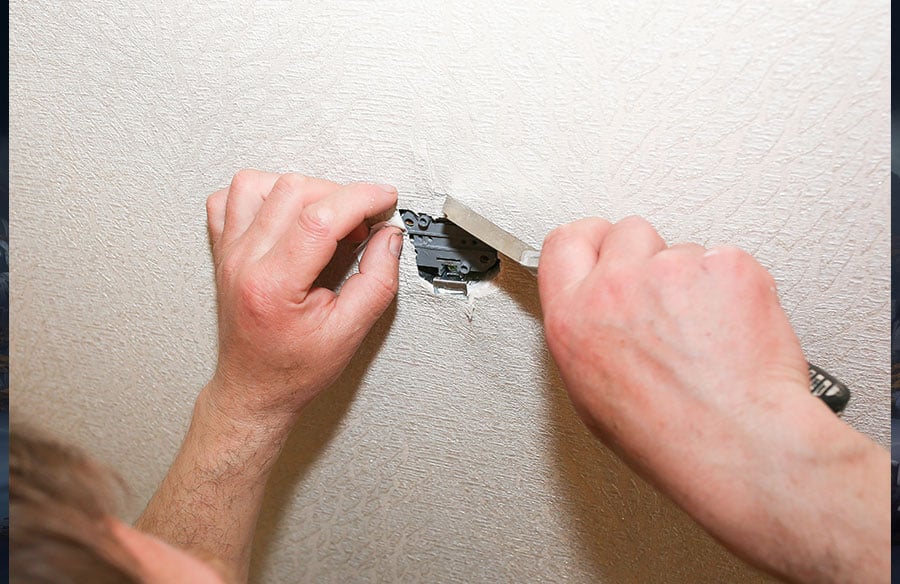
Drywall repair looks like one of those projects any reasonably handy homeowner should be able to handle. The materials are inexpensive, the basic technique is well documented online, and the videos make it look simple. Then most homeowners actually try it and learn why drywall finishing is one of those trades that takes years to do well. The patch ghosts through the paint. The texture does not match. The repair starts cracking a few months later. The wall ends up looking worse than before. Understanding why DIY drywall fails helps homeowners decide when the work is genuinely worth attempting and when to call professionals.
Working with professional drywall contractors specifically trained for repair work makes a meaningful difference in outcomes. The right pros come out with proper tools, fix the problem cleanly, paint to match, and leave the room looking as if the damage never happened. The wrong choice (or a DIY attempt that goes sideways) leaves you with visible patches that bother you every time you walk by.
Home repair is a major Canadian spending category
Drywall repair sits within a substantial home improvement market. Renovation and repair services contributed $105.5 billion in nominal spending in Canada in 2023, according to the Canadian Home Builders’ Association. A meaningful portion of that activity involves drywall work, whether new construction, renovation work, or repair of damage in existing homes. The category is large enough that quality differences between providers matter.
The most common DIY drywall failures
After thousands of repair calls, the pattern of DIY failures is predictable:
- The patch shows through paint. The patched area looks visibly different from the surrounding wall in certain lighting. The cause is usually inadequate priming, texture mismatch, or surface preparation that left the patch raised or depressed.
- Cracks return. A repaired crack reappears within months. The cause is typically not addressing what caused the original crack (settlement, framing movement, moisture issues) and just patching the surface.
- Texture mismatch. DIY repairs on textured walls or ceilings rarely match the surrounding texture. The result is a patch that is visibly different and impossible to ignore.
- Mud cracks. Joint compound applied too thick or too quickly cracks as it dries. Multiple thin coats work better than fewer thick coats, but most DIY attempts use too few coats.
- Visible tape ghosting. Tape joints that are not properly feathered show as raised lines through the paint. This is one of the most common giveaways of amateur work.
- Dust everywhere. DIY sanding without proper containment spreads drywall dust throughout the home. The dust gets into HVAC systems, electronics, fabrics, and surfaces that take days to clean.
Why drywall is harder than it looks
Several factors make professional drywall work consistently better than DIY attempts:
Material control. Professionals know which joint compounds to use for which applications, how to mix them, how long they can be worked, and when to switch between products. DIYers usually use whatever is at the hardware store, which may not be optimal for the specific repair.
Technique developed over time. Feathering compound, achieving smooth surfaces, matching texture, and creating invisible transitions takes practice. Professionals develop these skills over thousands of repairs.
Proper tools. Mechanical sanders with dust collection, the right knives for different stages, drying equipment when needed, and dustless sanding setups all produce results that hand-tool DIY cannot match.
Lighting and inspection. Professionals inspect work under raking light that reveals imperfections invisible under normal lighting. They fix issues before they finish, rather than discovering them after the paint dries.
When DIY actually works
Some drywall situations are reasonable DIY projects:
Small holes from nails or picture hangers. A small nail-hole repair is straightforward, and the result usually looks fine. Joint compound or spackling, a few minutes of work, sand, paint.
Minor dings in already-textured areas. If the damage is small and the texture is forgiving, a quick patch may work acceptably.
Areas behind furniture or in low-visibility locations. If the repair is in a place nobody will see closely, DIY standards are fine.
Anything beyond these categories tends to go wrong frequently enough that hiring professionals is the better economic choice.
When to definitely call professionals
Some situations almost always warrant professional repair:
- Holes larger than a fist. These need backing material, proper patching, and finishing that exceeds typical DIY skill.
- Ceiling repairs. Working overhead with joint compound and tape is hard. Most DIY ceiling repairs look terrible.
- Textured surfaces. Matching popcorn, knockdown, orange peel, or other textures requires specific techniques and equipment.
- Water damage repairs. Beyond patching the visible damage, water-damaged drywall often has underlying issues that need professional assessment.
- Trade-cutout repairs. When plumbers or electricians cut holes in your walls to access fixtures, those holes need professional finishing if you want the wall to look right afterward.
- Large or numerous repairs. When a room has multiple repair needs, the total work justifies professional execution. Costs per repair drop with volume.
- Repairs that need to look perfect. Selling the home soon? Hosting an important event? Concerned about how the result will look? Just call professionals.
What to expect from quality repair providers
Good drywall repair contractors handle the full process: assessment of damage, identification of underlying issues if relevant, proper repair using appropriate materials and techniques, dust control during the work, texture matching where applicable, priming and painting to match surrounding surfaces, and cleanup that leaves the area better than they found it.
Specialists who focus specifically on drywall repair (as opposed to general contractors who include some drywall work) often produce better results because they do this work daily. They have specialized equipment, tested procedures, and the volume to develop real expertise. Same-day or next-day completion for most residential repairs is realistic with the right provider.
The economics
Quality drywall repair often costs less than the math suggests. Materials are cheap; skill is what you are paying for. Compared to the time, frustration, and likely rework involved in DIY, professional repair frequently comes out as the more economical choice, before even considering the quality difference. The math gets even more favorable when you account for the wall looking right for the next decade rather than looking like an amateur patched it.