More HR teams started 2026 by retiring the last of their on-premise servers, and the shift shows up in how they buy. Cloud-based HRIS software now sits at the center of the people stack, holding employee records, payroll connections, and manager workflows in one place that updates itself overnight. I spent time inside the platforms that show up most often in buyer shortlists, weighing how each one handles the daily reality of HR work rather than the feature list on the homepage.
The picks below favor systems that keep a single record of truth and give managers and employees something they want to open. That also means they don’t trap your data when you outgrow the contract. Here’s where each one earns its place, and where it stumbles.
Our 2026 shortlist of cloud-based HRIS software
- Best overall cloud HRIS, single source of truth → Bob
- Best for design-led simplicity → BambooHR
- Best for HR and IT in one workflow → Rippling
- Best for small-team payroll and benefits → Gusto
- Best for established payroll operations → ADP Workforce Now
- Best for large, complex enterprises → Workday
How I evaluated each cloud HRIS
A cloud HRIS lives or dies on whether people trust the data and bother to log in. I looked past the marketing and tested each platform against four things that decide whether an HR team gets value after the contract starts:
- One record, many uses: Does a single change, say a promotion or an address update, flow everywhere it needs to without a second entry? Fragmented data is the failure mode that drags HR back into spreadsheets.
- Self-service that holds up: Can a manager approve leave and a new hire find a payslip without emailing HR? I judged the manager and employee experience with the same scrutiny as the admin console.
- Honest limits: Every platform has a wall it hits, whether that’s scale, reporting depth, or support quality. I pulled documented complaints from verified G2 reviews rather than guessing.
- Pricing and lock-in: Transparent cost matters, and so does how hard a vendor makes it to leave. I noted both where the research supported it.
What follows is the per-platform breakdown, starting with the one that handled the cloud fundamentals best.
HiBob: The best overall cloud-based HRIS
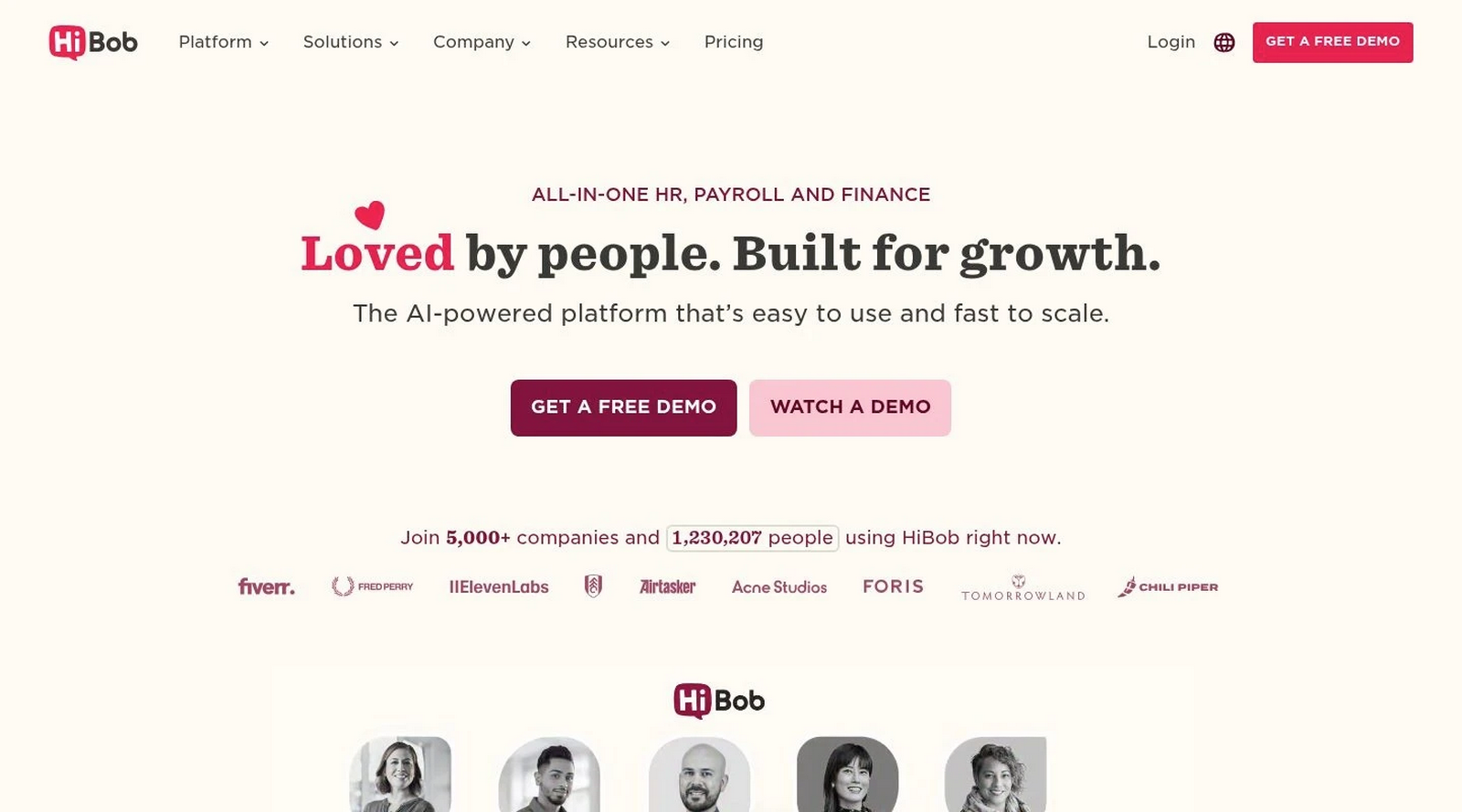 Bob, the platform from HiBob, sits at the top because it gets the cloud foundation right before adding anything else. Bob Core acts as the operational base every customer starts on, unifying people and their work into one connected system. When a manager changes someone’s role or an employee updates a detail, that change becomes the single version everyone downstream reads from, so payroll connections and reporting pull from the same accurate record instead of stale exports. The platform updates itself, so teams wake up to new capability rather than maintenance windows, and it scales as a company grows from a few hundred people to a few thousand without a re-platform.
Where Bob pulls ahead of lighter cloud tools is role-based self-service. Managers get an experience built for them: approvals, team data, and lifecycle actions without an admin login. Employees get a mobile-first interface to check balances, update details, and move through joiner workflows on their own. The daily-use design is why a 4.5 rating holds across about 1,811 G2 reviews. People open it because it’s straightforward to use, which keeps the central record current.
What I like about Bob
Single source of truth in the cloud. Bob Core ties people data and workflows into one connected system, so joiner and leaver actions update every dependent process at once. Audit-ready process history travels with each change, which gives compliance teams a clean trail without a bolt-on tool.
Role-based self-service people use daily. Managers and employees each get an experience scoped to what they need, with mobile-first workflows and attribute-based controls, so the staff who work away from a desk still handle their own admin.
What I don’t like about Bob
Bob doesn’t publish pricing, so budgeting means requesting a quote and you can’t compare list rates against rivals up front. Native payroll runs in the US and UK, while other markets connect through the Payroll Hub to local providers rather than a single in-platform engine, so global teams should confirm provider fit during evaluation.
Pricing: Not listed on the site. Bob uses a modular model where Core is the required foundation and suites like Talent, Payroll, and HR Planning are added as needed; quotes come from sales.
BambooHR: The best for design-led simplicity
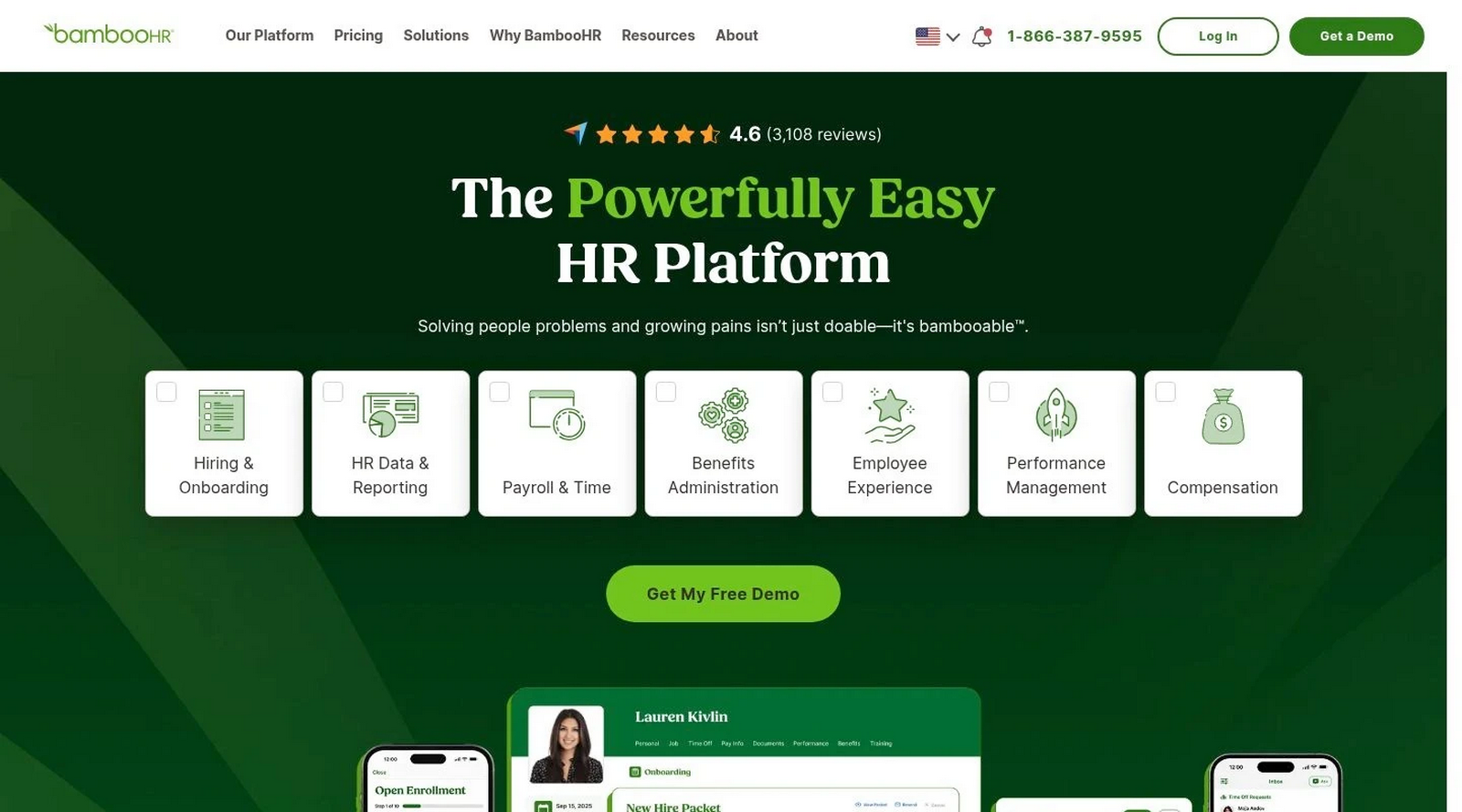 BambooHR built its reputation on an interface that new users navigate without training, and that reputation holds up. Across more than 5,000 G2 reviews it carries a 4.4 rating, with users praising a clean dashboard and a self-service app that lets team members log hours, check the directory, and request time off from a phone. For a company that wants core HR running fast with little onboarding friction, it’s a comfortable landing spot.
The catch shows up as a company grows. Reviewers note that the clean design starts to feel limiting once HR processes get complex, with reporting and customization described as rigid for detailed analytics needs. Payroll is a separate paid add-on optimized for US employees, which complicates the picture for teams operating across borders.
What I like about BambooHR
An approachable interface. Both HR staff and employees find it easy to navigate, which keeps adoption high and routine questions low.
Strong onboarding workflows. Users single out new-hire setup and digital paperwork as areas where the platform saves real time.
What I don’t like about BambooHR
Reviewers flag rigid reporting and limited customization that struggle with complex or detailed data needs. Payroll is a separate paid add-on built for US-based staff, and several users note the platform can feel limiting as a company scales.
Pricing: Not published; BambooHR requires a custom quote, which several reviewers cite as a budgeting frustration.
Rippling: The best for HR and IT in one workflow
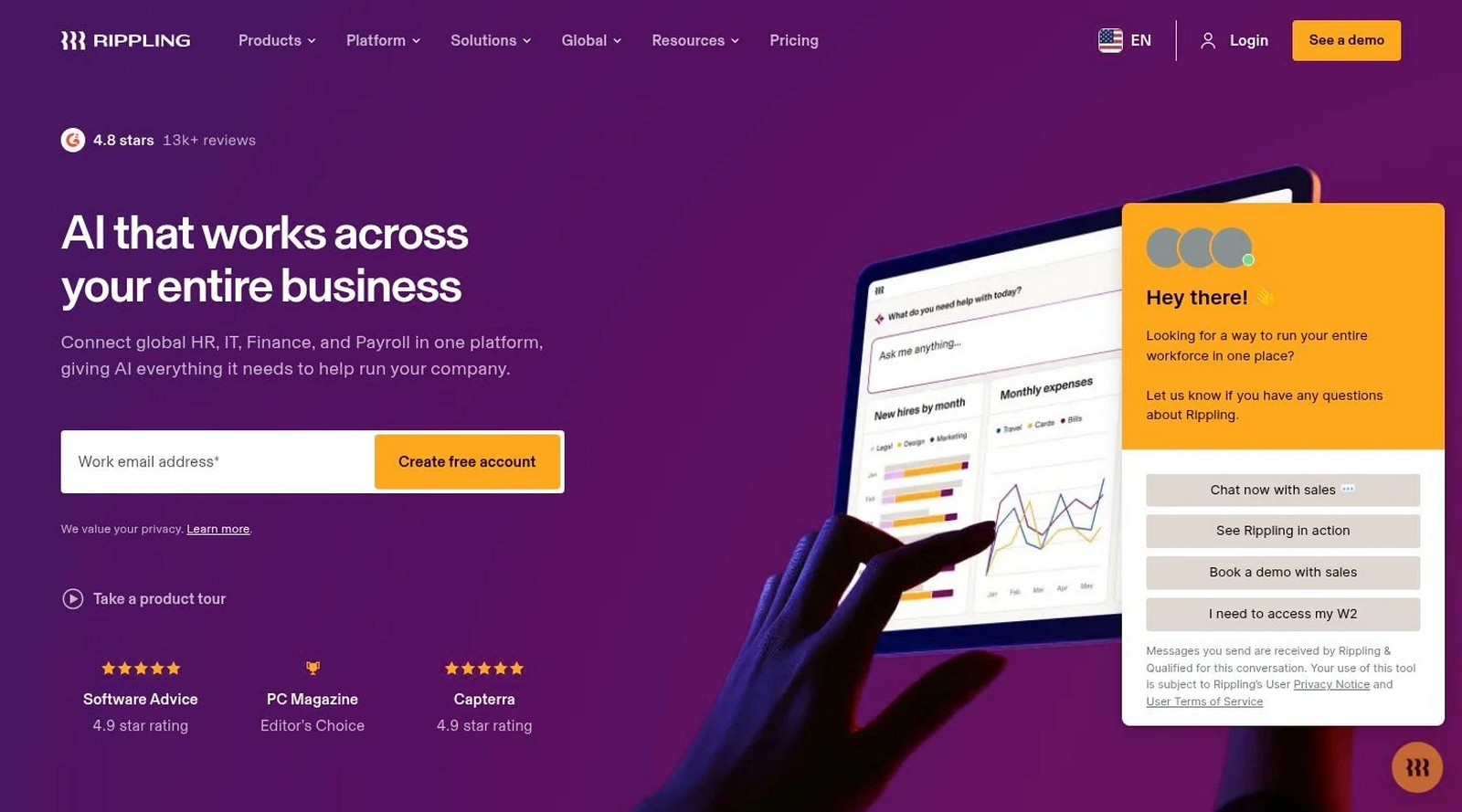 Rippling earns a strong following by wiring HR, IT, and finance into a single automation engine. Onboard someone once and the platform can trigger payroll setup, app access, and device provisioning together, a workflow that draws praise across its 12,000-plus G2 reviews and a 4.8 rating. For a fast-growing company that wants HR and IT operating from one employee record, the breadth is the draw.
That breadth is also the friction. Reviewers describe a steep learning curve, noting the volume of features and settings can overwhelm new users during setup. Others report slow loading on frequently visited pages and a mobile app that pushes them back to the desktop for tasks like timesheet comments. For teams that want HR front and center, the IT-heavy design can make the people side feel secondary.
What I like about Rippling
Deep automation across departments. A single onboarding action provisions payroll, app access, and hardware together, which cuts manual coordination between HR and IT.
Flexible customization. Users managing one-off arrangements across many states value how the platform bends to non-standard cases.
What I don’t like about Rippling
Verified reviewers point to a steep learning curve and an interface that can feel overwhelming during initial setup. Others cite slow page loads at peak times and a limited mobile app, and pricing transparency draws repeated complaints because cost depends on the modules selected.
Pricing: Starts around a per-employee monthly rate, though the published figure shifts with the modules you add, so the real number takes a quote.
Gusto: The best for small-team payroll and benefits
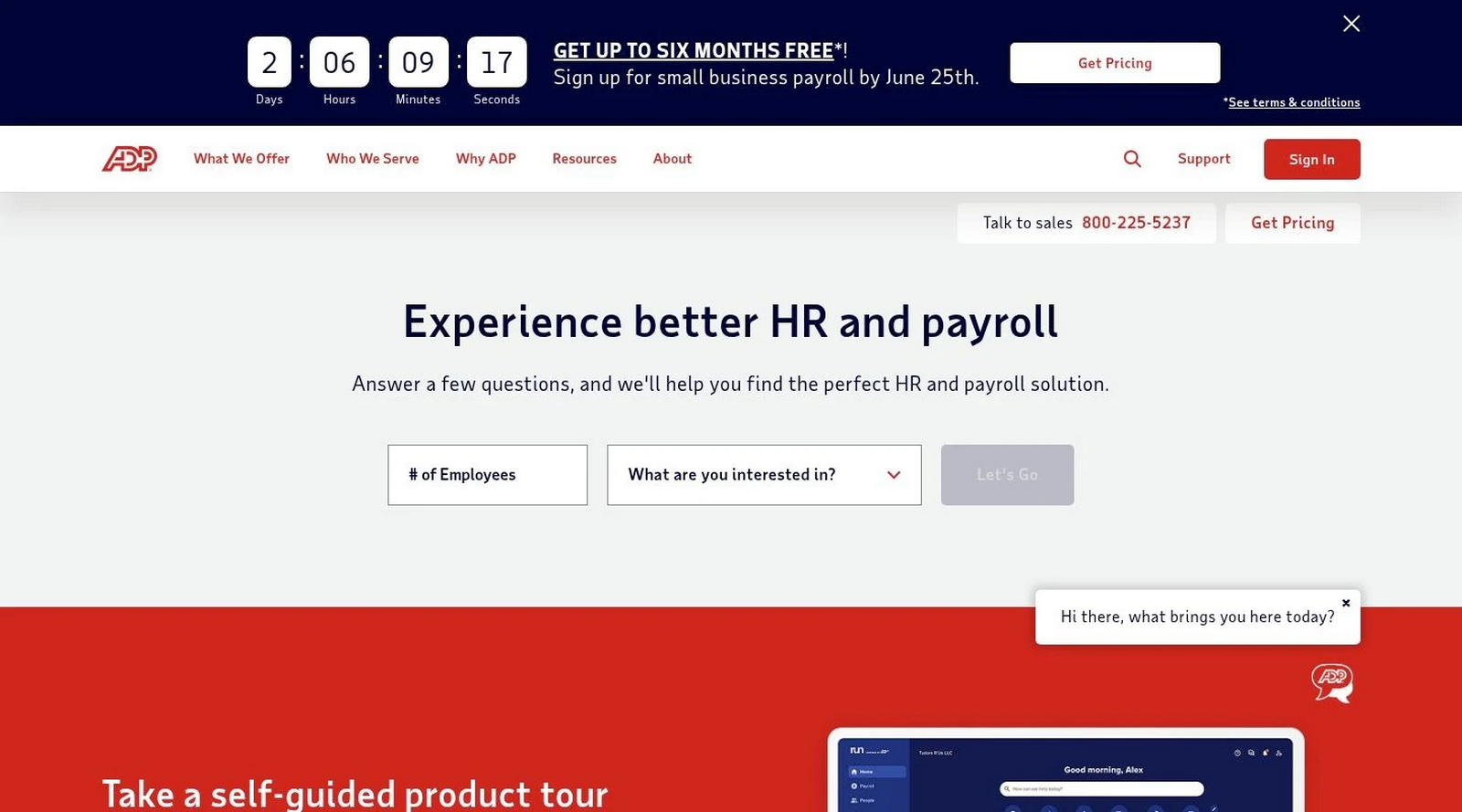 Gusto wins small businesses with payroll that runs without a fuss. Owners describe automated tax filing and an interface that earns warm reviews, and the platform holds a 4.6 rating across more than 10,000 G2 reviews. For a team under 100 people that wants payroll and benefits in one tidy place, it’s a sensible default.
The ceiling arrives as the headcount grows. One enterprise reviewer put it in blunt terms: the capabilities are designed for small orgs, with few bulk functions or CSV update options. Users also report customer support that’s hard to reach when something goes wrong, and onboarding a second company can mean spinning up a whole new account. Advanced HR work, like structured performance and goal setting, sits outside Gusto’s comfort zone.
What I like about Gusto
Effortless payroll automation. Small-business owners praise how it simplifies tax tasks and cuts payroll time, often without a dedicated accountant.
A clear, friendly interface. The dashboard and mobile experience stay consistent and easy, which employees notice during pay and benefits checks.
What I don’t like about Gusto
Reviewers report poor customer support and difficulty reaching help during issues. The platform is built for small teams, with limited bulk functions and advanced HR features, and several users describe friction when adding a second payroll or working across states.
Pricing: Plans start at a base monthly fee plus a per-person charge, with higher tiers adding HR and time tools.
ADP Workforce Now: The best for established payroll operations
ADP brings decades of payroll and compliance muscle, and its Workforce Now platform reflects that. Reviewers value an all-in-one system spanning payroll, benefits, and HR, with a SmartCompliance feature that walks admins through setting up new states. Across more than 4,200 G2 reviews it holds a 4.2 rating, and the dedicated account-team support earns loyal fans.
The trade-offs are familiar to anyone who’s used a legacy-scale vendor. Reviewers describe an interface that can feel dated and unintuitive, with a reporting menu that’s hard to navigate and slow load times during website hiccups. Heavy upselling is a recurring theme, with one small-business owner asking again and again to be left off sales calls. Support quality also splits opinion, with some teams praising their rep and others reporting deflected issues across modules.
What I like about ADP Workforce Now
Battle-tested payroll and compliance. The platform handles multi-state tax filing and compliance with the depth that comes from scale, and many peers already know the system.
Dedicated account support. When the support relationship works, reviewers credit a named team for resolving payroll issues fast.
What I don’t like about ADP Workforce Now
Verified reviewers describe a dated, sometimes unintuitive interface with clunky reporting and occasional slow load times. Aggressive upselling draws repeated criticism, and support quality varies, with some users reporting deflected responsibility between modules.
Pricing: Quote-based and tied to headcount and modules; ADP doesn’t publish standard rates.
Workday: The best for large, complex enterprises
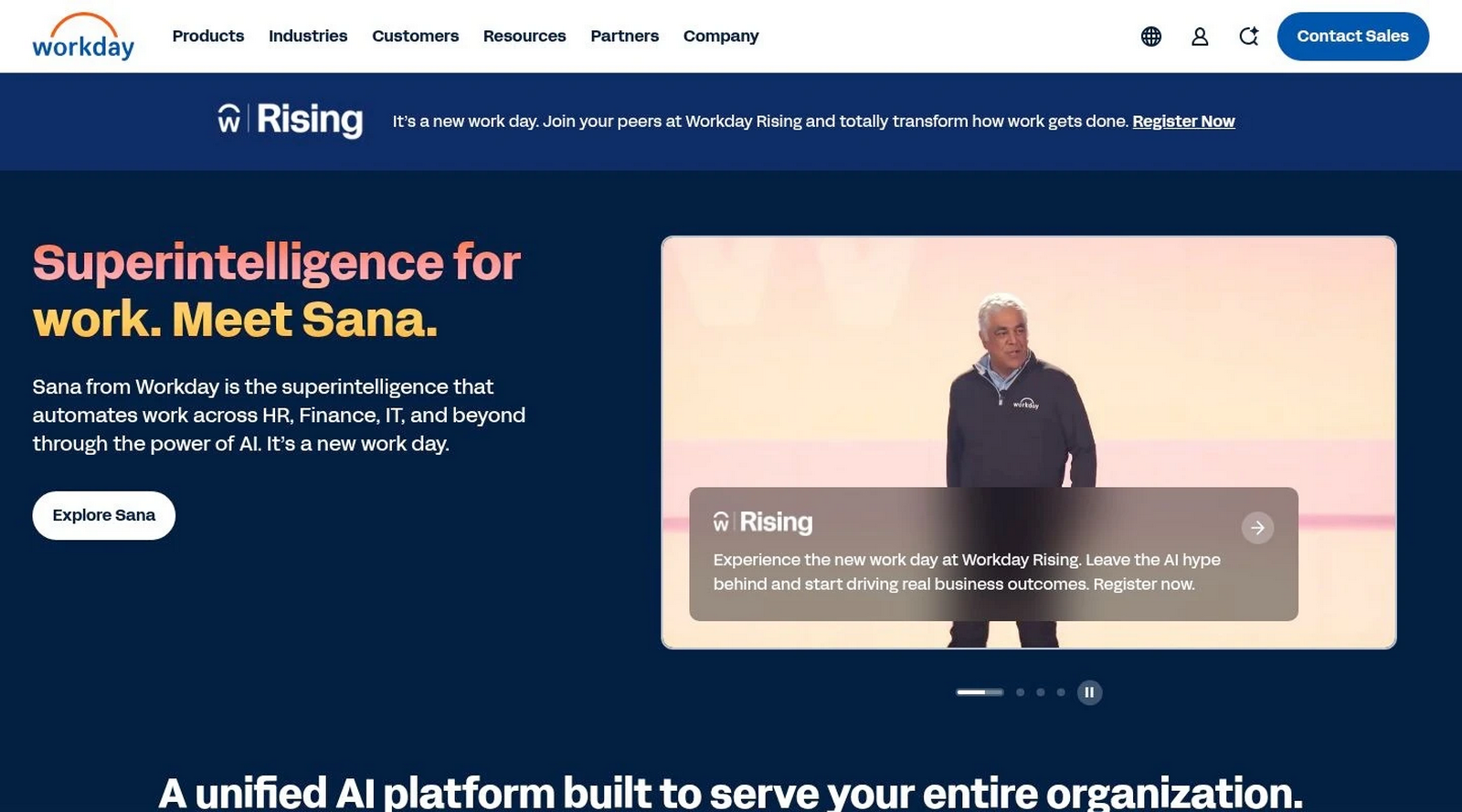 Workday is the system large enterprises reach for when they need to run global HR, finance, and planning under one roof. Its strength is depth: configurable workflows, deep analytics, and the governance a multi-thousand-person organization demands. For companies operating at that scale, few platforms match the breadth.
That depth comes at a cost that smaller organizations feel hard. Workday carries enterprise-level pricing and implementation complexity, with rollouts measured in months and configuration that tends to need specialist help. Mid-market teams often find the weight outpaces their needs, which is why it lands here rather than higher: it’s the right answer for a narrow band of very large, complex buyers.
What I like about Workday
Enterprise-grade depth. Configurable workflows, deep analytics, and strong governance suit organizations running complex, global operations.
Unified HR and finance. Large enterprises value managing people and financial planning from a single connected platform.
What I don’t like about Workday
The platform’s enterprise focus brings high cost and implementation complexity that smaller and mid-market teams struggle to justify. Rollouts are lengthy and configuration tends to require specialist resources, putting it out of reach for leaner organizations.
Pricing: Enterprise quote-based pricing; Workday targets large organizations and doesn’t publish rates.
Frequently asked questions
What is cloud-based HRIS software?
Cloud-based HRIS software is a human resources information system hosted on the vendor’s servers and accessed through a browser or app, rather than installed on your own hardware. It stores employee records, manages workflows like onboarding and time off, and updates on its own. Because the vendor runs the infrastructure, HR teams get new features and security patches without managing servers themselves, and staff reach the system from any browser or device.
Why does self-service matter in a cloud HRIS?
Self-service decides whether a cloud HRIS pays off. When managers approve requests and employees update their own details without routing everything through HR, the central record stays current and the HR team reclaims hours each week. Bob builds role-based self-service into its core, giving managers and employees experiences scoped to what each needs, which is a large part of why daily adoption stays high.
How do cloud HRIS platforms handle uptime and data security?
Reputable cloud HRIS vendors run on recognized infrastructure providers with security certifications, redundant systems for uptime, and access controls that limit who sees sensitive data. Look for documented compliance, audit-ready logs, and attribute-based permissions. Bob, for example, ships strict access controls and audit-ready process history in its core, so compliance teams get a clean trail of every change without bolting on a separate tool.
Can employees use a cloud HRIS from their phones?
Yes. Most modern cloud HRIS platforms offer mobile access, though the depth varies. Some apps cover basics like payslips and leave requests but push users back to a desktop for fuller tasks, a gap reviewers note with certain vendors. The stronger mobile-first platforms let employees complete joiner workflows, check balances, and update details from a phone rather than waiting for a desk, so test the app against the tasks your team does most.
How do you avoid vendor lock-in with cloud HRIS software?
Avoiding lock-in starts before you sign. Confirm the vendor offers full data export in standard formats, supports open APIs, and doesn’t trap historical records behind exit fees. A modular platform that lets you add or remove capabilities on top of a shared core reduces the risk of being forced into an all-or-nothing renewal, and clear export terms mean your people data stays portable if your needs change.