Houston is one of the most mosquito-prone cities in the United States. The combination of a subtropical climate, frequent rainfall, slow drainage, and dense vegetation means mosquitoes are not just a warm-weather nuisance. They are an ongoing public health concern that affects backyards, parks, commercial properties, and entire neighborhoods.
Mosquito bites can transmit West Nile virus, Zika virus, and dengue. Unlike store-bought sprays that offer short-term surface relief, professional mosquito control in Houston targets the full mosquito life cycle, from standing water and larvae to adult populations. This multi-stage approach is what separates expert exterminators from DIY solutions.
This guide covers how trained exterminators identify breeding sites, what treatment methods they use, and why preventive maintenance matters for long-term mosquito reduction.
Why Mosquito Breeding is a Continuous Problem in Houston
Houston sits in Harris County, a flat coastal plain with clay-heavy soil that retains water poorly. After even moderate rainfall, puddles and pools form quickly in yards, flowerpot saucers, gutters, drainage swales, and low-lying landscaping.
 Female mosquitoes need only about a bottle cap of water to lay viable eggs. Within 7 to 10 days under warm conditions, those eggs become biting adults. With temperatures routinely above 85°F from April through October, Houston creates near-perfect development cycles, often multiple per month.
Several mosquito species are active in the Houston area. The Culex quinquefasciatus, or southern house mosquito, is the primary carrier of West Nile virus. The Aedes albopictus, or Asian tiger mosquito, bites aggressively during daytime hours and thrives in small containers. Both species are resilient and reproduce rapidly, which is why mosquito populations in Houston can rebuild within days of a treatment if breeding sites are not properly addressed.
How Experts Identify Mosquito Breeding Areas
A professional mosquito inspection begins with a systematic property walkthrough. Technicians are trained to spot breeding conditions that most homeowners overlook.
Common Breeding Sites Inspected on Residential Properties
- Clogged gutters holding decomposing leaf debris and trapped rainwater
- Birdbaths, plant saucers, and decorative pots with standing water
- Tarps, pool covers, and outdoor furniture covers with water pooling in folds
- Low spots in lawns or garden beds that retain water after rain
- HVAC condensate drain lines that drip into the yard
- Children’s toys, buckets, and unused containers left outdoors
- Dense shrubs and tall grass that hold moisture and provide adult resting sites
Beyond visual inspection, professionals note the proximity of larger water bodies such as retention ponds, drainage ditches, or bayous. Mosquitoes can travel up to a mile from their breeding source, so properties near bodies of water often face higher pressure even when the yard itself appears clean.
Technicians also document the species composition when possible. Identifying Culex versus Aedes species informs which treatments will be most effective and at what times of day applications should be timed.
Methods Used in Professional Mosquito Control
Effective exterminator mosquito treatment is never a single-step process. Professionals in Houston use layered methods that address different aspects of the mosquito life cycle and different areas of a property.
Larvicide Treatments
Larvicides are applied directly to standing water where mosquito eggs and larvae are present. Common products include Bacillus thuringiensis israelensis (Bti), a naturally occurring soil bacterium that kills mosquito larvae without harming birds, fish, pets, or beneficial insects. Larvicides prevent larvae from developing into adults, breaking the reproduction cycle before new mosquitoes can emerge.
Barrier Spray Applications
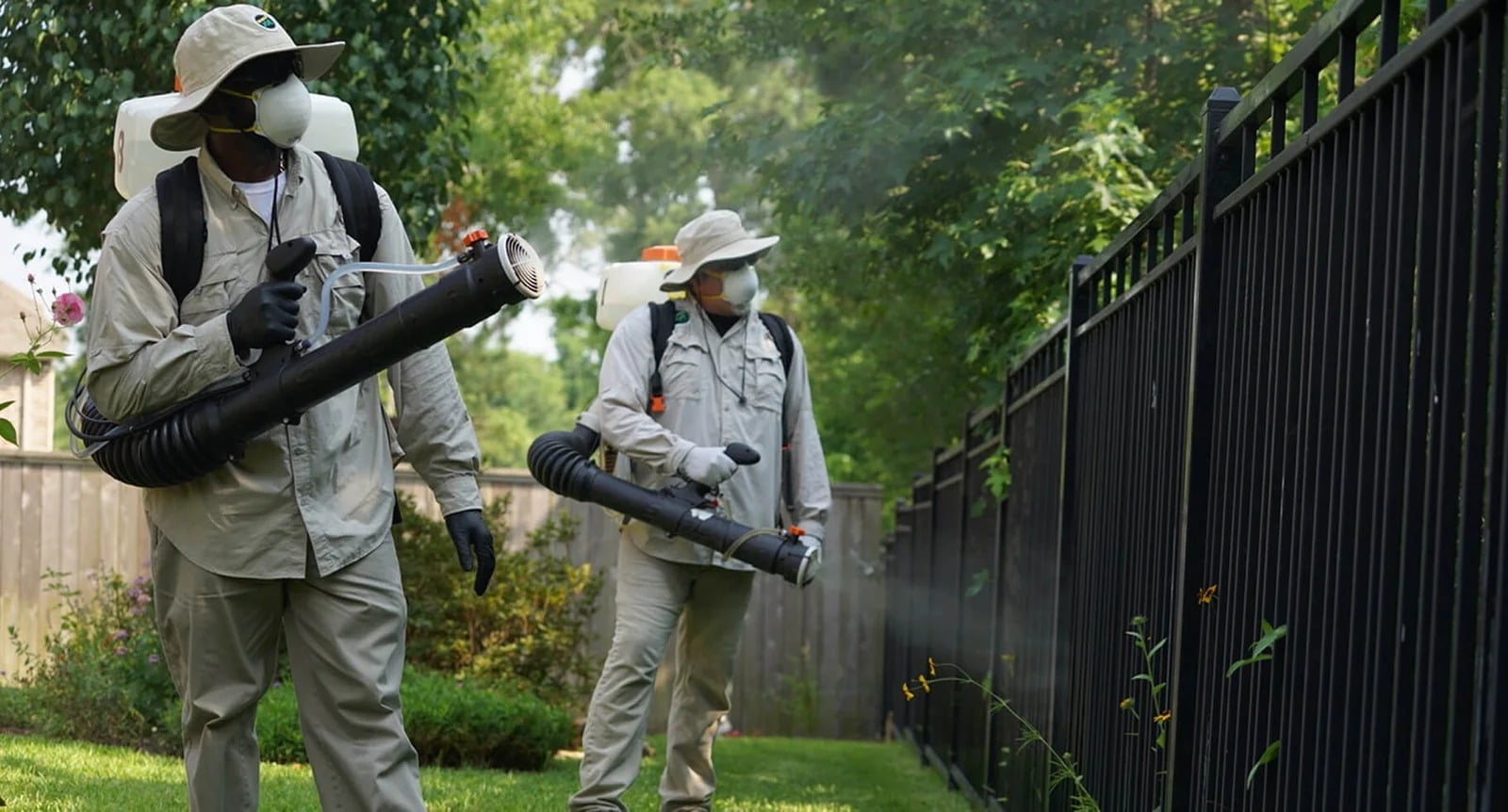
Barrier sprays are applied to vegetation, shrubs, tree canopies, and fence lines where adult mosquitoes rest during the day. Pyrethrin-based formulas or synthetic pyrethroids adhere to leaf surfaces and kill mosquitoes on contact for several weeks. Barrier treatments are typically reapplied every week during peak mosquito season in Houston.
Mosquito Misting Systems
Automated misting systems are installed along property perimeters and release timed bursts of diluted insecticide at dusk and dawn, when mosquitoes are most active. These mosquito control systems are programmed by technicians and use much smaller amounts of product per application compared to one-time fogging. They provide consistent, low-maintenance protection throughout the season.
Yard Fogging
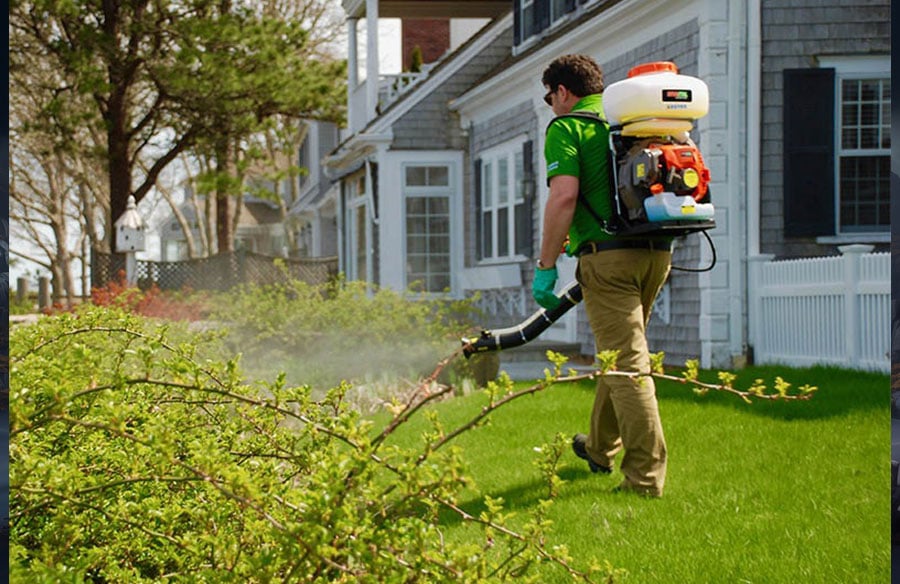
Foggers disperse insecticide as an ultra-fine mist that quickly penetrates dense vegetation, tree canopies, and shaded resting areas. Fogging provides rapid knockdown of adult mosquito populations before outdoor events or after periods of heavy rain, when mosquito pressure spikes. It is most effective when combined with larvicide treatment and barrier spray for longer-lasting results.
Role of Preventive Maintenance in Mosquito Reduction
A single treatment will not solve a mosquito problem long-term in Houston. The climate is too favorable for mosquito reproduction, and new populations can re-establish quickly from nearby breeding sources. Preventive maintenance programs are what keep mosquito numbers consistently low across the season.
Professional mosquito control services in Houston, TX typically follow a scheduled service model during the active season, roughly March through November. Each visit includes a property inspection to confirm no new breeding sites have developed, reapplication of barrier sprays, and adjustments to misting system schedules based on recent rainfall and temperature patterns.
How Mosquito Control in Houston Supports Health and Comfort
The city has reported West Nile virus cases annually, and the Aedes aegypti mosquito species capable of transmitting dengue and Zika virus is established in Harris County. For families with young children, elderly residents, or immunocompromised individuals, reducing mosquito populations around the home is a genuine health measure.
Beyond health, consistent mosquito control directly improves the usability of outdoor spaces. Patios, pools, gardens, and play areas become genuinely enjoyable when mosquito populations are kept low throughout the season.
For businesses, this matters significantly. Restaurants with outdoor seating, event venues, and commercial properties that attract visitors benefit from professional-grade mosquito control to protect their guests and reputation.
When to Consider Professional Mosquito Control Help
Many Houston homeowners attempt to manage mosquitoes themselves before turning to professionals. Store-bought products can provide limited, temporary relief, but several situations indicate it is time to bring in licensed exterminators.
- Mosquitoes are biting during daytime hours, suggesting an Aedes species infestation
- DIY treatments are working for only a few days before mosquito numbers rebound
- The property has persistent standing water that cannot be fully eliminated
- The property is near a retention pond, bayou, or drainage ditch
- Outdoor spaces are not usable due to mosquito pressure for most of the season
- A large outdoor event is being planned, and a rapid population reduction is needed
Licensed exterminators have access to commercial-grade products, application equipment, and the technical knowledge to address breeding sites in ways that over-the-counter products simply cannot replicate.
For Houston-area residents, a local licensed pest control company, such as SkeeterCide, offers residential, commercial, and community mosquito control programs backed by certified exterminators and proven treatment methods.
What Happens During a Professional Mosquito Control Visit
During the visit, the technician completes a perimeter and vegetation inspection, applies barrier spray to all resting and harborage areas, treats any standing water with larvicide, and checks or adjusts any installed misting equipment. The service typically takes 30 to 60 minutes, depending on property size.
Results are usually noticeable within 24 to 48 hours. Adult mosquito numbers drop significantly in treated areas. Larvicide treatments prevent the next generation from emerging, so the cumulative effect of multiple service visits over a season is a sustained reduction in total mosquito pressure on the property.
Conclusion
Mosquito control in Houston is not a one-time fix. It requires identifying breeding sites, applying multi-stage treatments, and maintaining consistent protection across a long, humid mosquito season that can stretch from early spring into late fall.
Professional exterminators bring the tools, products, and expertise to address every phase of the mosquito life cycle. For homeowners, businesses, and communities in Houston, investing in professional mosquito control services means healthier outdoor spaces, lower disease risk, and a yard that is genuinely enjoyable for the people and pets who use it.