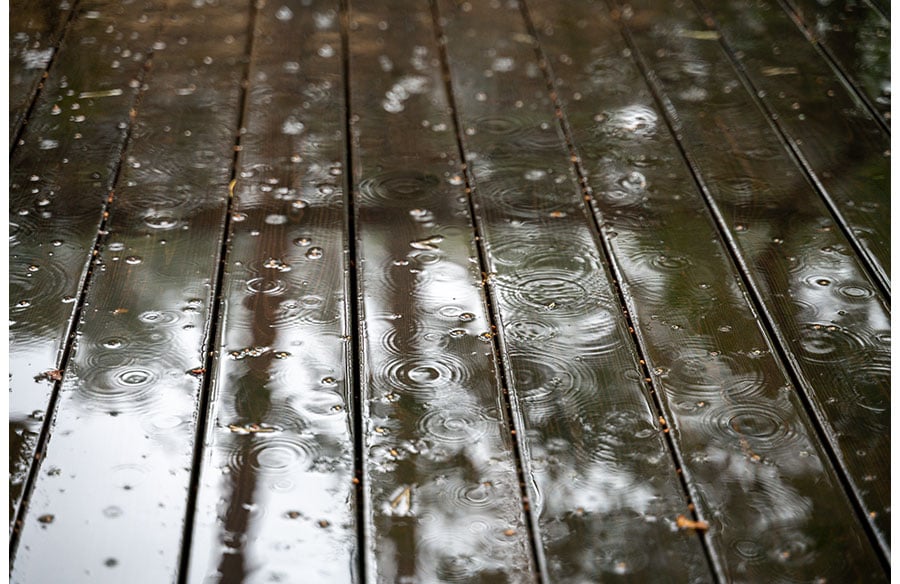
The great thing about composite decks is that they last a long time and don’t require a lot of care. Additionally, high-quality composite decking is also quite slip-resistant. But that doesn’t mean people won’t fall. Composite decking is like any other decking material in that the surface gets slippery when wet. That’s so, it is still vital to be careful when walking in wet places. No one likes to slip and fall on a deck.
Factors Affecting the Slip Resistance of Composite Decking
If you know why accidents occur, you can help them avoid injury. If you understand what causes a deck to be slippery, you can take steps to make you and your family safer. There are a lot of reasons why composite decking gets slippery over time.
Dust and Debris
Dust and leaves can accumulate on your deck over time. Over time, waste may be a safety hazard to you and your family if it is left to build up. This not only makes the deck look dirty but can also assist mildew and algae to grow.
The primary cause of slippery decks is the development of mold and fungus. Mold or fungus is not often supported by composite decks. But they will develop in the dirt, leaves, and other detritus on the deck’s surface. Molds and other detritus on the earth make the deck surface much more slippery.
Surface Texture
The surface roughness of Composite decking boards contributes significantly to the slipperiness of the surface. Smooth board surfaces are more prone to slip, whereas textured decks are better in slip resistance. When selecting composite decking boards, make sure to select ones that are branded for increased traction.
Weather Conditions
Many things can cause wet circumstances, such as rain, dew, or cleaning. The slip resistance of a deck can be affected differently by each of these conditions. For example, a deck in heavy rain could need higher slip resistance than a deck in heavy morning dew.
Ice or Snow
All decks, no matter the material, are slippery in the winter. Ice and water collect on composite decks, making them hazardous to walk on. Getting ice off a deck may be tricky, and if you don’t do it right, you can harm the boards.
To avoid this, scrape off the ice with a plastic or other non-abrasive cleaning implement. Or don’t even bother to get the ice off, but let it melt by itself.
Older Composite Decks
Older composite decking is usually more slippery than contemporary composite decking. Older composite decking is more susceptible to moisture absorption, resulting in mold and moss growth and a slippery deck surface.
How to Prevent Slippery Composite Decking
Even with the reasonably good anti-slip qualities of composite decking. But nonetheless, take these actions to reduce the chances of it getting slippery.
Regular Cleaning
If your composite deck isn’t cleaned, it can grow mold, mildew, and algae around the dirt, trash, and leaves that cover it. Keeping the surface of the deck clean and free from dirt and other objects that can attach to it can lower the chance of slipping.
You can use a soft-bristled broom or leaf blower to get rid of practically anything that falls and accumulates on your deck. But we also recommend deep cleaning your composite deck twice a year, once in the spring and again in the fall. You can accomplish this with cleaning goods bought at the shop or produced at home.
Remove Standing Water
Any hard surface that has standing water on it can be hazardous to walk on. Composite decking is no exception. Composite decking might be dangerous to walk on when it is damp. To prevent this, sweep standing water off the deck with a soft-bristled broom or leaf blower after rain. You should also be careful to use non-skid shoes when emptying water from the deck.
Removing Snow and Ice
When winter weather is forecast, take additional care to remove snow and ice from the surface of a composite deck. Before winter storms, apply rock salt or calcium chloride “ice melt” to outdoor composite decking to help prevent ice from developing on it.
If you miss a good opportunity, don’t use a rough or a metal snow shovel. This could damage the deck boards. Use something soft instead of a harsh broom or plastic shovel.
Start by shoveling off the top layer of snow, being careful not to hit the deck boards, then work your way down. Leave hard-to-shovel snow and ice in place until it melts or the weather warms up. This will remove the snow and ice without having to push or scrape hard.
Apply a Non-slip Coating
You can also apply a professional non-slip coating to the surface of your outdoor deck, which is another simple and effective option. The professional non-slip coating enhances the friction on the deck surface and gives the homeowner extra traction. There are several types of Anti-slip coatings available in the market so try to follow the manufacturer’s directions on choosing the proper anti-slip coating.
Non-slip Tape
If you want a more convenient way to reduce the slipperiness of your deck, and don’t need to clean it as often as non-slip mats. Or non-slip tape, which is easier to put on and use, and also completely customisable.
Just like regular duct tape, you stick it on the surface of your deck and use it. But the sandpaper-like texture gives it more friction and grip.
To Summarize
With a little attention, you can improve your deck’s appearance and make the surface less slippery. Deep clean your composite deck twice a year, constantly remove trash, debris, and leaves, and ensure there is no standing water, ice, or snow on your deck. Then your composite deck will be secure and dependable for years of enjoyment and relaxation.