When summer arrives across the United States, keeping cool during the night becomes a top priority. From the muggy, high-humidity nights in the Southeast and Midwest to the dry heatwaves in the West, summer weather brings unique indoor climate challenges.
You might find yourself tossing and turning, kicking off the sheets, or waking up feeling unrefreshed even after eight hours in bed. While most people blame high temperatures for poor summer sleep, humidity is often the hidden villain. Understanding how moisture in the air affects your body at night and knowing how to manage it can completely transform your rest. Here is everything you need to know about setting up the ideal summer sleep environment.
Why Indoor Temperature and Humidity Control Matter for Sleep
Your body relies on natural biological cues to fall and stay asleep. As bedtime approaches, your core body temperature naturally drops by a couple of degrees. This temperature shift signals to your brain that it is time to rest. When your bedroom is too hot or too humid, your body struggles to shed excess heat:
High humidity prevents sweat evaporation: sweating is your body’s primary cooling mechanism. When the air is saturated with moisture, your sweat cannot evaporate effectively, leaving you hot, sticky, and restless.
Low humidity causes respiratory discomfort: running an air conditioner non-stop can strip the air of all moisture. Air that is too dry causes dry throats, nasal irritation, and woke-up-thirsty episodes.
Extreme conditions disrupt REM sleep: Uncomfortable room conditions disrupt Rapid Eye Movement (REM) and deep sleep stages, leading to frequent micro-awakenings throughout the night.
Controlling both temperature and humidity isn’t just about comfort, but it is essential for high-quality, restorative sleep.
What Are the Ideal Humidity and temperature for Summer Sleep?
What are the exact numbers you should aim for in your bedroom?
Ideal Temperature: Most sleep experts recommend keeping your bedroom between 60°F and 67°F (15.6°C to 19.4°C).
Ideal Relative Humidity: The optimal humidity level for sleep is between 30% and 50%.
What Happens Outside the Ideal Humidity Range?
When Relative Humidity Is above 50%: Heavy air feel, night sweats, skin stickiness, increased dust mites and mold allergens.
When Relative Humidity Is below 30%: Scratchy throat, dry nasal passages, static electricity, increased susceptibility to airborne viruses.
How to Monitor Your Bedroom Environment Accurately
You cannot fix what you do not measure. Relying on your central thermostat often gives an inaccurate picture of your bedroom’s true climate. Thermostats are usually installed in hallways or main living areas, where airflow differs significantly from a closed bedroom.
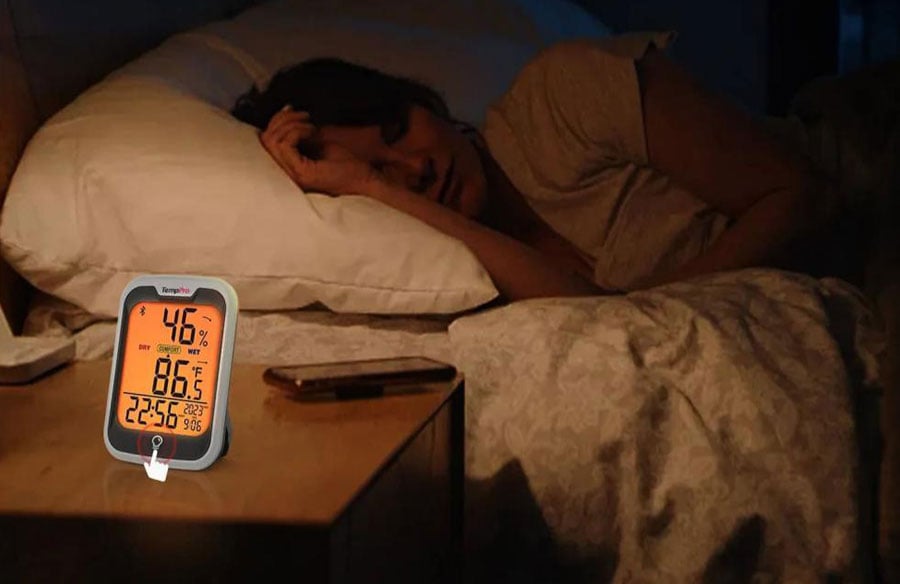
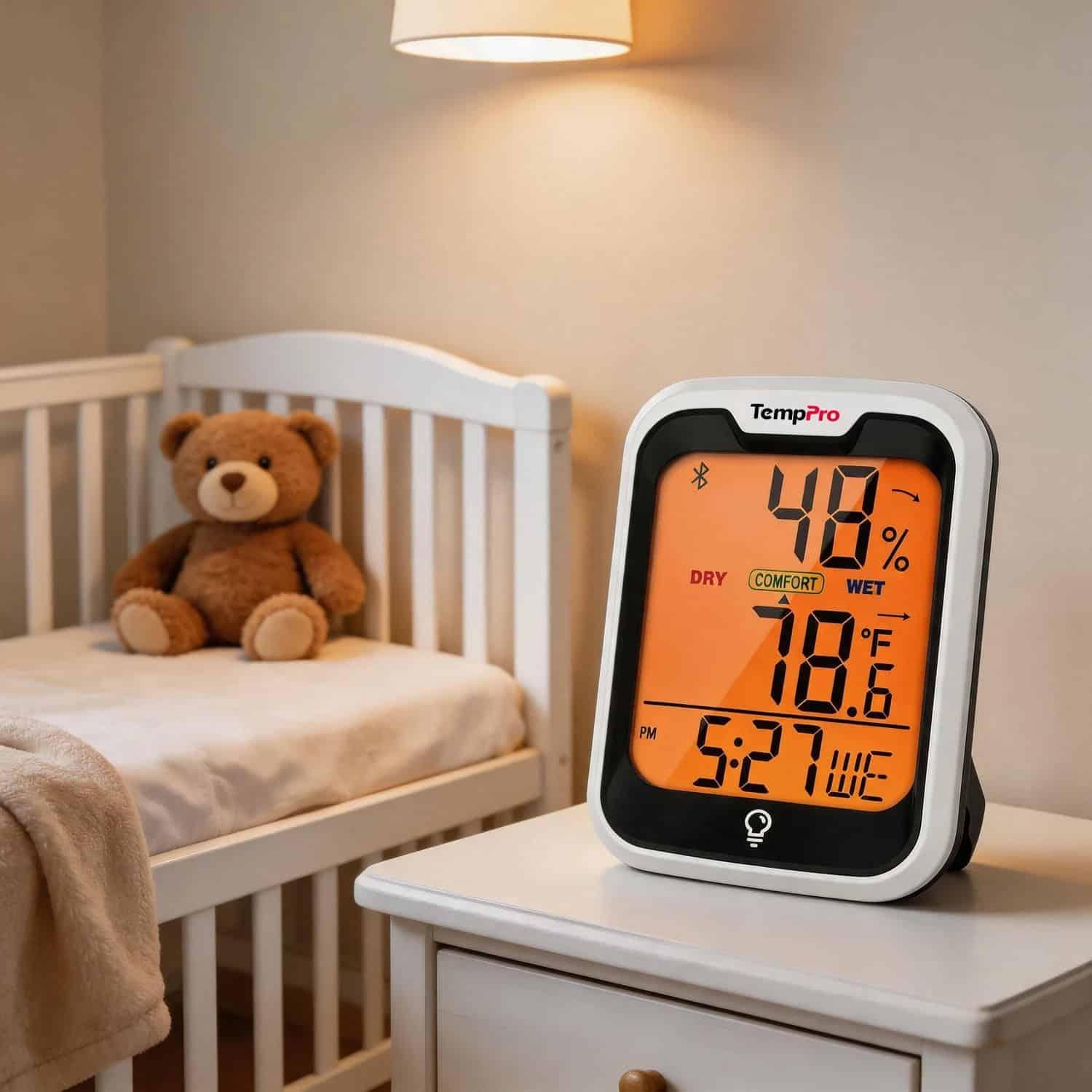
To get precise, real-time data right where your bed is, using a dedicated indoor monitor is the most effective approach. The TempPro TP358 Bluetooth Indoor Hygrometer Thermometer is designed to take the guesswork out of monitoring your home’s microclimate. It measures real-time temperature and humidity with high-accuracy sensors and syncs data straight to your smartphone via Bluetooth. Formerly known as ThermoPro, TempPro continues to provide reliable temperature and humidity monitoring solutions with the same commitment to quality and innovation.
- 260ft Bluetooth Remote Monitoring: Connect the TempPro TP358 to your smartphone via Bluetooth and check real-time temperature and humidity data anytime without manually checking the device.
- Highly Accurate Temperature & Humidity Readings: Equipped with sensitive sensors to provide accurate indoor climate readings, helping you maintain a comfortable environment for better sleep, home comfort, and protection of valuables.
- Smart App with Data History & Trends: View temperature and humidity changes over time through the app, making it easier to identify patterns and adjust your AC, humidifier, or dehumidifier settings.
- Long-Term Data Storage & Export: Store historical temperature and humidity records and export data for deeper analysis, allowing you to better understand your indoor environment throughout different seasons.
- Customizable Temperature & Humidity Alerts: Set your preferred comfort ranges and receive alerts when conditions become too hot, too cold, too dry, or too humid.
- Large LCD Display for Quick Viewing: The clear display shows current temperature and humidity levels at a glance, allowing you to quickly check room conditions even without opening the app.
- Compact Design for Multiple Spaces: Its small and lightweight design makes it ideal for bedrooms, nurseries, living rooms, offices, storage rooms, and areas where climate monitoring is important.
- Comfortable Indoor Environment Monitoring: By tracking temperature and humidity in real time, the TempPro TP358 helps you create a healthier and more comfortable space for sleeping, relaxing, and everyday living.
 Why Remote Bluetooth Monitoring Matters for Sleep
Check Conditions wthout Disrupting the Room: You can check your child’s or baby’s nursery temperature from your living room or bed without opening the door and waking them up.
Track Nighttime Trends: The companion mobile app records historical data, allowing you to see how your room’s environment fluctuates overnight while you are asleep.
Instant Alerts: Set custom comfort zones in the app. If humidity spikes above 50% or drops too low during a summer storm, your phone alerts you so you can adjust your settings before going to bed.
How to Create the Ultimate Summer Sleep Environment
Once you have accurate readings, you can take simple, targeted steps to adjust your bedroom climate.
If Your Bedroom Humidity Is Too High (Over 50%)
Run a Dedicated Dehumidifier: An AC cools the air, but a dehumidifier specifically pulls excess moisture out of the atmosphere. Set it to target 45% relative humidity.
Use Air Conditioning Efficiently: Ensure your AC unit is set to a cooling or “dry” mode rather than just running the fan, which simply circulates humid air.
Improve Air Circulation: Use an oscillating or ceiling fan (set counter-clockwise in summer) to assist evaporation on your skin.
Switch to Breathable Bedding: Swap synthetic sheets for natural fabrics like 100% long-staple cotton, linen, or bamboo, which draw moisture away from your body.
If Your Bedroom Humidity Is Too Low (Under 30%)
Use a Cool-Mist Humidifier: If continuous AC usage dries out your room, run a small cool-mist humidifier near the bed.
Add Bedroom Plants: Houseplants like Peace Lilies or Boston Ferns release moisture into the air through transpiration.
Keep the Bedroom Door Ajar: Allowing air to circulate from other parts of the house prevents the AC from over-drying a small, enclosed space.
Summary Checklist for Better Summer Sleep
- Target a bedroom temperature between 60°F and 67°F.
- Maintain relative humidity between 30% and 50%.
- Set up a TempPro TP358 thermometer and humidity gauge near your bed to track real-time temperature and humidity trends.
- Adjust your AC, dehumidifier, or humidifier based on live readings.
- Choose natural, breathable bedding fabrics for summer nights.
By paying attention to both heat and moisture levels, you can eliminate nighttime tossing and turning and enjoy deep, refreshing sleep all summer long.
Final Thoughts
A great night’s sleep doesn’t happen by accident, especially during the challenging summer months. While summer heat and shifting humidity levels can easily ruin your rest, having the right knowledge and the right tools, puts you back in control. By monitoring your environment with a device like the TempPro TP358 Bluetooth Indoor Hygrometer & Thermometer, you eliminate the guessing game and gain actionable insights into your bedroom’s microclimate. Making small, targeted adjustments to your room’s temperature and moisture levels will help you wake up every morning feeling cool, comfortable, and fully energized.