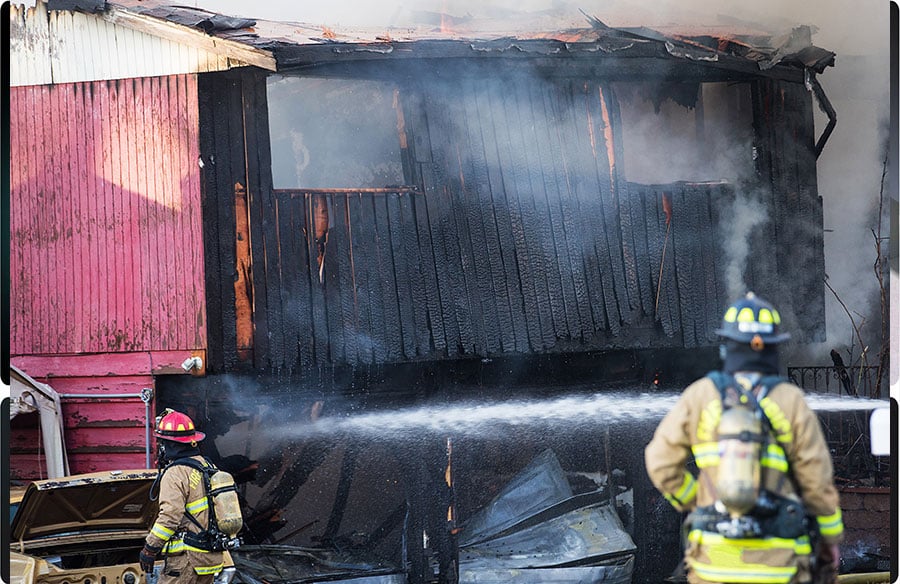
After a house fire, the homeowner’s next decision is rarely limited to who will clean the walls. There may be wet construction from firefighting, belongings requiring assessment, and damaged materials that must be removed before rebuilding can be planned. Cleaning and construction belong to the same recovery, but they require different decisions.
Encore Construction’s service model addresses that connection. The family-owned Washington company describes mitigation, contents care, storage, and reconstruction as in-house operations. This review examines how that model fits a fire-damaged home and why the transition into structural repairs deserves attention from the start.
What connects the initial assessment to reconstruction?
Encore’s owners explain that fire work starts once the property can be assessed safely. The team then evaluates what can remain, what may be restored, and what needs removal. Significant structural damage may also require engineering, architectural input, plans, and permits.
That sequence matters for design decisions. A finish selection cannot resolve uncertainty about the framing behind it. Similarly, an appealing reconstruction concept is not a substitute for establishing which building elements are viable.
Encore Construction provides fire and smoke damage restoration in Seattle and its wider Washington service area. Its role includes documenting damage and connecting the agreed cleanup work with the repair stage.
The owners describe early communication as a central part of the service. Before substantial demolition or equipment use, they want the homeowner to understand the process, the expected disruption, and the decisions still ahead. That is especially relevant when a fire has made familiar rooms difficult to recognize.
Contents care gives the building team room to work
The possessions inside a fire-damaged home form a separate part of the recovery. Some items may need cleaning, others storage, and others may not be recoverable. Decisions should follow the condition and material of each item.
Encore’s owners report an approximately 13,000-square-foot warehouse used for customers’ contents. The figure describes their storage operation; it is not a promise that every item can be restored.
They describe the work as including packing, inventory, transport, storage, and eventual return. From a reconstruction perspective, that creates a defined route for belongings that would otherwise remain inside rooms requiring access.
For the homeowner, the benefit is also personal. Furniture, clothing, and household objects are part of the disruption. A company that includes them within its recovery plan addresses more of the customer’s actual problem than the damaged building alone.
Why does the repair scope need project-specific decisions?
Fire losses differ in what the heat, smoke, and firefighting water have affected. Encore’s owners specifically caution against treating them as jobs with a universal price or completion period.
Materials and construction assemblies can change both removal and rebuilding. Where engineering or permitting is necessary, those decisions also affect the path into repairs. The scope has to follow the individual property.
Encore has operated since 2015, according to its owners. Their stated preference is to retain responsibility through the restoration rather than hand the customer from an emergency cleanup company to an unrelated reconstruction business.
That arrangement supports continuity, but it does not eliminate specialist input. Engineers, architects, authorities, and other parties retain their own roles where the project requires them. A coordinated contractor should connect those responsibilities rather than imply that they disappear.
Documentation supports the repair discussion
The owners describe restoration documentation as a substantial part of the job. Photographs, affected materials, work performed, equipment, and contents all contribute to the record used during planning and insurance discussions.
Their estimate that most company projects involve insurance explains why this administration is central to their operation. It does not mean a particular fire will be covered or every proposed repair approved. Coverage remains a decision under the customer’s policy.
For an architectural reader, the practical strength is the connection between observed damage and the eventual build-back. A repair plan needs to account for what happened before the finishes are chosen.
Encore’s model is most persuasive where the homeowner needs a single company to stay involved across those stages. Its stated emphasis on explanation, contents care, and continued responsibility addresses the human side of a technically complex project. The value lies in making the recovery understandable while keeping the building work connected.