The idea of owning a home abroad often begins with a feeling: a connection to a place discovered while traveling, the appeal of a different pace or the possibility of beginning a new chapter somewhere that has long captured the imagination. Turning that feeling into a successful purchase, however, requires a clear understanding of how daily life there will actually work.
That vision can quickly lead to a property search: comparing locations, browsing listings, evaluating prices and imagining life in a particular house. Before focusing on the property, buyers should ask a more consequential question: Does this home support the life I actually want to live?
For anyone considering a home abroad, that question may matter more than the number of bedrooms, the size of the terrace or the view from the kitchen window. Francesco Nocerino, founder of Italian Design Workshop and a registered architect in Italy, asks clients at the outset: “What kind of life do you want to build?”
Italian Design Workshop helps Americans navigate property ownership in Italy through a planning process that begins with each client’s goals, lifestyle, location preferences and long-term plans. Those priorities guide the property search and inform the broader ownership journey, including architectural design, renovation, permitting, contractor management and ongoing support.
“Finding the right property is important, but the property is only one part of the decision,” Nocerino says. “Before beginning the search, we want to understand what our clients want their lives in Italy to look like—how they want to spend their time, what kind of community feels right and how their priorities may change over time.”
Look Beyond the Property
The relationship between a home and its surroundings is fundamental to how people experience a place. Yet when purchasing property abroad, it can be easy to focus on the building itself while treating the surrounding environment as a secondary consideration.
In practice, buyers should evaluate four dimensions of a location: access to transportation, proximity to health care and everyday services, the character of the community and opportunities to pursue personal interests. Together, these factors often determine whether a property remains a good fit long after the excitement of the purchase has passed.
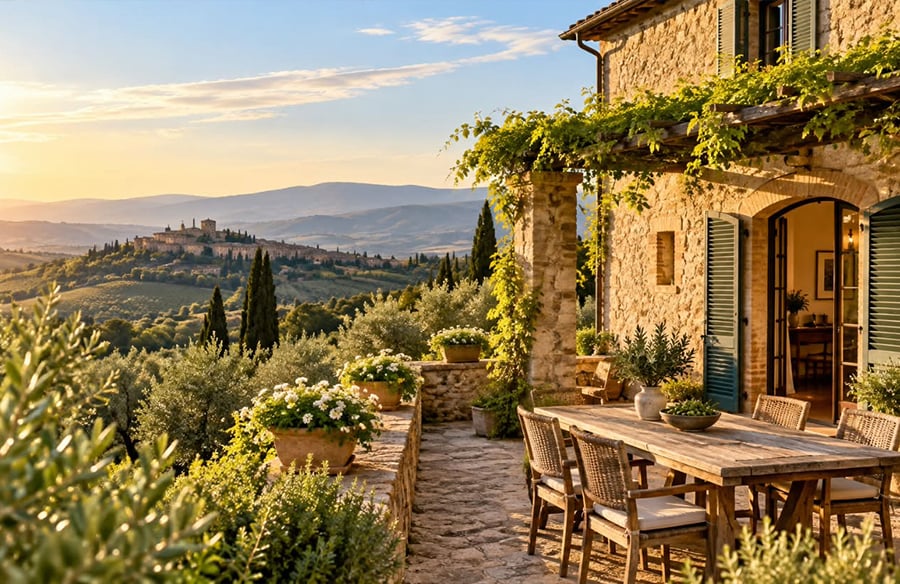
These considerations become particularly tangible in Italy, where the choice among a city apartment, a home in a historic hill town, a coastal property or a rural farmhouse can lead to very different experiences.
A small village may offer character but require compromises in transportation, services and year-round convenience. A rural farmhouse may promise peace and privacy, while a walkable town may ultimately provide the activity and accessibility a buyer prefers.
Neither choice is inherently better. The important question is which environment aligns with the buyer’s priorities and expectations.
The same principle applies to the building itself. Architectural character and visual appeal matter, but so do the existing structure, its condition, its potential for adaptation and the extent to which it can accommodate the owner’s needs. A property’s possibilities and limitations should be considered alongside the lifestyle it is intended to support.
Define the Life Before Starting the Search
A lifestyle-first approach reverses the conventional sequence of property selection. Rather than starting with a listing and deciding whether it might work, buyers first define what they want their lives to look like and then use those priorities to guide the search.
The process begins by defining the purpose of the purchase. Will the property serve as a second home for several weeks each year, a gathering place for family and friends, a future retirement residence or eventually a permanent home? That intended use establishes the criteria for evaluating both location and property.
The answers influence the decisions that follow. A seasonal residence may have different requirements from a home intended for year-round living. Someone who wants to spend time exploring a region may have different priorities from a buyer who hopes to become part of a local community. A person considering a renovation must also weigh the appeal of an existing building against the practical implications of adapting it to their needs.
Architectural expertise helps translate a buyer’s aspirations into realistic options. By assessing the existing structure, renovation potential and physical limitations, an architect can determine whether a property can accommodate the buyer’s needs and intended way of life.
The assessment must also place the building in context. A workable renovation or appealing layout is not enough if the location, required investment or practical demands of ownership conflict with the buyer’s intended lifestyle.
“Good planning can be as much about identifying what may not work as finding what will,” Nocerino says. “Our role is to help clients think through what their Italian chapter looks like and make informed decisions about the place and property that can support it.”
Plan for Ownership, Not Just the Purchase
For Americans considering a home in Italy, the process involves more than selecting a location and completing a purchase. Architectural design, renovation, permitting, contractor management and the practical responsibilities of ownership can all influence the experience that follows.
A lifestyle-first process connects the buyer’s goals to location, property selection, renovation decisions and the responsibilities of ownership. It treats the purchase not as a single transaction but as the foundation for an experience that will unfold over time.
This approach recognizes that the relationship between people and the built environment continues long after a transaction is complete. A home becomes part of everyday routines, relationships and experiences. Its value to its owner is shaped not only by its physical characteristics but also by how well it supports the way that person wants to live.
There is no single ideal life in Italy and no universally perfect property. The right choice depends on the buyer’s priorities, how they intend to spend their time and whether the home can support those plans as they evolve.
Before beginning a property search abroad, pause to ask the more fundamental question: What kind of life do I want this home to make possible?
The answer can guide every decision that follows—from where to look and what to buy to choosing a place that feels right not only on the day of purchase but for years to come.
To learn more about Italian Design Workshop’s lifestyle-first approach to property ownership in Italy, visit italiandesignworkshopllc.com.