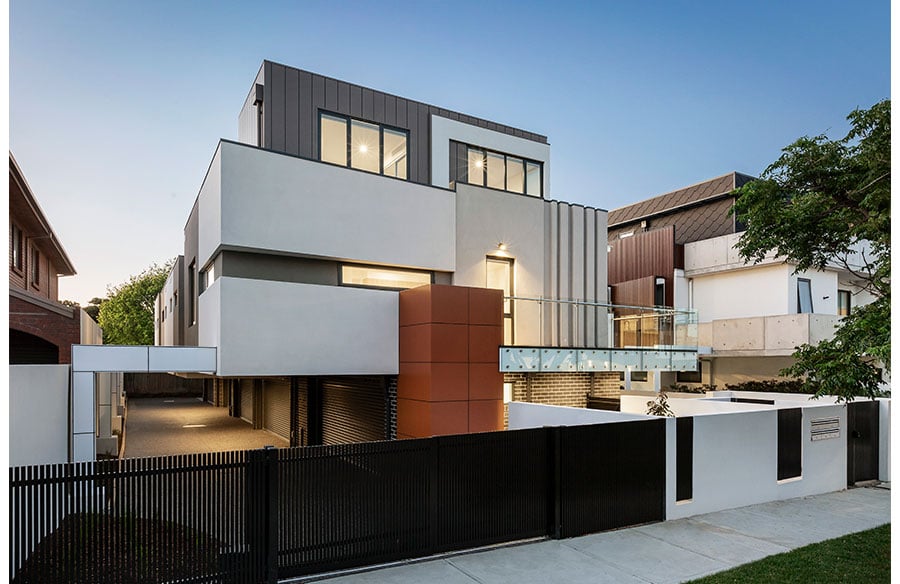
When we talk about residential architecture, the conversation usually starts with the building itself. We discuss rooflines, facades, window proportions and the flow of internal space. The boundary, the line where private property meets the street or the neighbour, is often treated as an afterthought. Yet anyone who has walked through a thoughtfully designed neighbourhood knows the truth instinctively. The fence is part of the architecture. It frames the home, sets the mood before a visitor reaches the front door, and either reinforces or undermines everything the designer worked to achieve.
In a city like Perth, where indoor and outdoor living blend almost seamlessly for much of the year, this relationship matters even more. The fence is not just a barrier. It is a design element that shapes how a home is experienced from the footpath, how privacy is managed, and how the garden reads as an extension of the living space.
The boundary as the first impression
Architects spend enormous energy on the arrival sequence, the experience of approaching and entering a building. For a freestanding home, that sequence begins at the boundary. A high, solid wall communicates something very different from a low, open picket or a horizontal slat screen that allows glimpses of greenery beyond.
The material, height and rhythm of a fence establish expectations. A rendered masonry wall paired with timber battens suggests a contemporary, considered home. A heritage style fence with cast detailing signals respect for a period property. When the boundary contradicts the architecture behind it, the result feels disjointed, like a tailored suit worn with the wrong shoes.
This is why considered homeowners increasingly treat fencing as part of the design brief rather than a line item added at the end. Working with specialists such as FencrGatr means the boundary is considered alongside the building, not bolted on once the budget is nearly spent.
Privacy without fortress walls
One of the central tensions in residential design is the desire for privacy set against the desire for light, openness and connection to the street. Get it wrong in one direction and the home feels exposed. Get it wrong in the other and it feels like a bunker.
The most successful contemporary fences resolve this tension through clever use of material and spacing. Vertical or horizontal battens with carefully calculated gaps can screen sightlines from the footpath while still admitting breeze and dappled light. Layering a fence with planting softens the hard line and gives the boundary depth. A simple change in height across the frontage, lower near the entry and higher near bedroom windows, can deliver privacy exactly where it is needed without walling off the entire property.
Perth’s climate rewards this nuance. A solid barrier that blocks the cooling afternoon sea breeze, the south westerly that locals know as the Fremantle Doctor, is a missed opportunity in a city built around outdoor living. A permeable design lets the home breathe, which matters as much in a Cottesloe beach house as it does on a tighter infill block in Mount Lawley.
Material honesty and the local palette
Good residential architecture tends to favour material honesty, letting timber look like timber and steel look like steel rather than dressing one up as another. Fencing follows the same principle. The most enduring boundaries use materials that age gracefully and sit comfortably within the local context.
In Western Australia, that palette commonly includes powder coated steel, hardwood timber, rendered masonry and increasingly, mixed material designs that combine a solid base with a lighter screen above. Each has its place. Steel offers crisp lines and longevity with minimal upkeep. Timber brings warmth and a tactile quality that softens modern forms. Masonry anchors a home and provides acoustic benefit on busy roads.
The skill lies in matching material to the architecture and to the conditions. Coastal suburbs from Cottesloe to Hillarys demand corrosion resistant finishes that cope with salt laden air, while bushfire prone areas in the hills around Kalamunda and Roleystone require non combustible choices that meet the relevant Bushfire Attack Level under AS 3959. A specialist who understands these constraints, and Perth’s sandy limestone soils that dictate how posts are footed, will steer a homeowner away from decisions that look good on day one but fail within a few seasons.
The fence as a unifying device
In many of the most admired streetscapes, the fences do quiet, unglamorous work. They unify. A consistent boundary treatment along a frontage ties a home to its garden, its carport and its entry, creating a coherent composition rather than a collection of separate elements.
This is particularly valuable in renovations and additions, where new work must sit alongside the old. A well chosen fence can mediate between a heritage cottage and a modern rear extension, carrying a material or a line from one to the other so the whole property reads as intentional. The boundary becomes the connective tissue of the design.
Designing for how people actually live
Architecture is ultimately about people, and fences are where design meets daily life in a very practical way. Gates need to be wide enough for bins, bikes and the occasional trailer. Pedestrian entries should feel welcoming rather than fortified. Families with young children or pets need secure enclosure that does not dominate the look of the home. Pool areas carry strict compliance requirements that must be integrated without turning the backyard into a cage.
The best outcomes come from thinking through these realities at the design stage. A gate that swings the wrong way, a latch placed awkwardly, or a fence line that ignores how the family moves through the property will frustrate the occupants every single day, no matter how striking the home looks in photographs.
Sustainability and longevity
There is a growing recognition that the most sustainable building is the one that lasts. The same applies to boundaries. A cheap fence that warps, rusts or rots within a decade is a false economy, both financially and environmentally. Choosing durable materials, appropriate finishes and sound construction means the boundary serves the home for decades rather than years.
Longevity also has an aesthetic dimension. Materials that weather well, such as quality hardwood or properly finished steel, develop character over time rather than simply degrading. A fence designed with this in mind becomes more handsome as the garden matures around it.
Responding to slope and streetscape
No two sites are identical, and the way a fence handles the ground beneath it is one of the clearest tests of design intelligence. A boundary that marches across a sloping block in clumsy steps draws the eye to the awkwardness, while one that rakes smoothly with the contour or steps in measured, deliberate increments reads as resolved. The decision is not purely technical. Stepping a fence creates strong horizontal lines and triangular infills that can be handled gracefully or badly. Raking keeps the top line parallel to the ground and suits informal, naturalistic settings. The choice should follow the character of the home and the garden, not simply the path of least resistance for the installer.
The streetscape matters too. A home does not exist in isolation but as part of a row, a street and a suburb with its own rhythm and character. A boundary that respects the prevailing scale and material language of its street contributes to a coherent public realm, while one that ignores it can feel jarring no matter how well made. This is not an argument for bland conformity. The best boundaries find a way to express the individuality of the home while still sitting comfortably within their context, much as a well dressed person stands out without clashing with the occasion.
The view from both sides
A fence is unusual among building elements in that it is seen from two sides by two different audiences. The street side is public, contributing to the neighbourhood and forming the first impression of the home. The private side is lived with daily by the occupants, forming the backdrop to the garden and outdoor living. A thoughtful design considers both. A fence that looks handsome from the street but presents an ugly skeleton of rails and posts to the garden has only done half its job. Increasingly, homeowners expect a boundary that is finished and attractive on both faces, which influences the choice of material and construction. Designing for the view from both sides is a hallmark of a boundary conceived as architecture rather than a barrier.
Cost, value and the long game
It would be naive to discuss design without acknowledging budget, which shapes every residential project. The temptation is always to economise on the boundary because it feels secondary to the building. Yet the fence is among the most visible and most used elements of a property, and skimping on it tends to show. The more useful frame is value over time rather than cost on day one. A boundary built well from durable materials, by people who know what they are doing, serves for decades and improves the property throughout. A cheap fence that fails within a few years costs more in the end, both in money and in the disappointment of seeing a carefully designed home let down by its frame. Approaching the boundary as a long term investment, and spending where it counts, is simply good economics as well as good design.
Bringing it together
For all the attention lavished on facades and floor plans, the boundary remains one of the most underrated tools in residential architecture. It sets the first impression, manages the delicate balance between privacy and openness, unifies the elements of a property, and shapes the daily experience of the people who live there.
Treating the fence as an integral part of the design, rather than a final expense, transforms it from a simple barrier into a genuine architectural asset. For Perth homeowners building or renovating, that shift in thinking, supported by specialists who understand both design and local conditions, can be the difference between a home that merely functions and one that feels truly resolved from the street to the back garden.
The lesson is simple. Look at the whole composition, boundary included, and the architecture will thank you for it.