6. The 5 Great Avenues
Located in the southern Tianjin, parallel streets named after 5 cities of Southwest China, locally called as the Five Avenues house varied kinds of European architectural styled buildings belonging to Britain, France, Germany, Italy and Spain. Especially related to the colonial realm. Part of it was the office area whereas part of it served as the residential area for the European people. Thus, one can find an eclectic mix of classical styles ranging from Renaissance, Greek, Gothic and Romantic. Nowadays, celebrities occupy some of these rich estates.
7. Joseph Cathedral
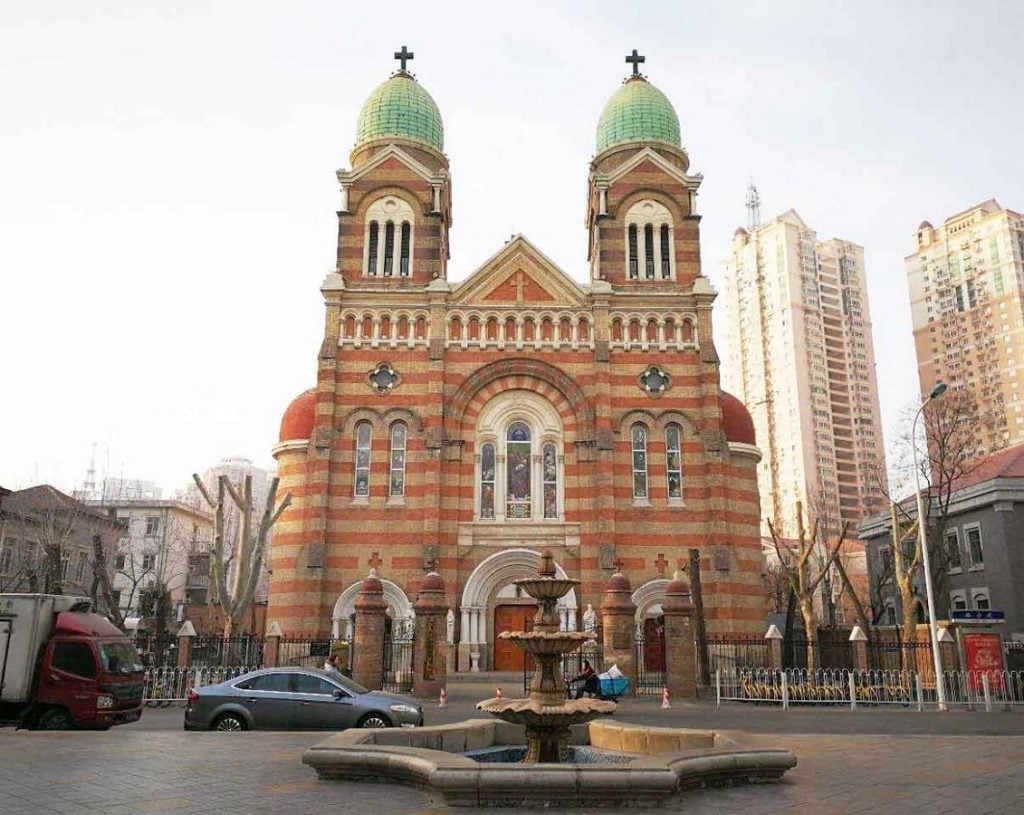
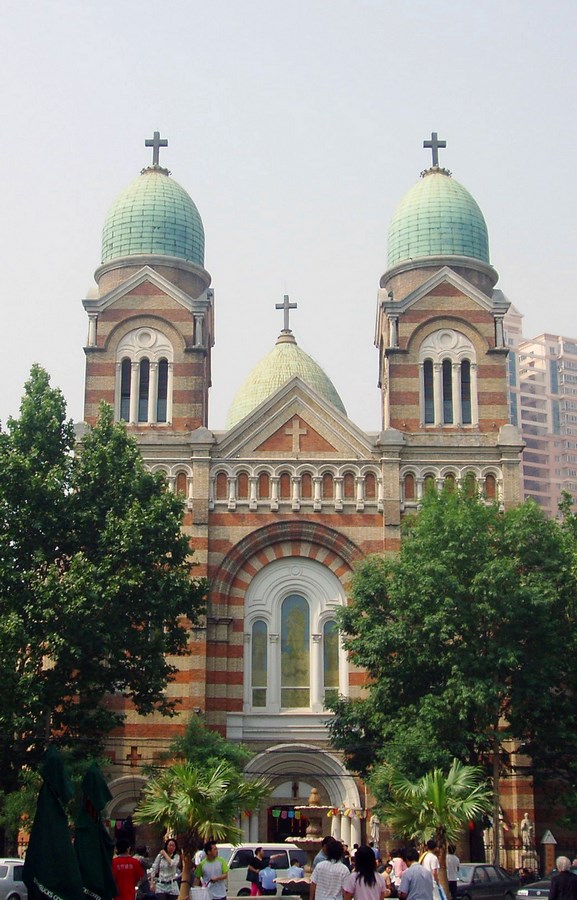
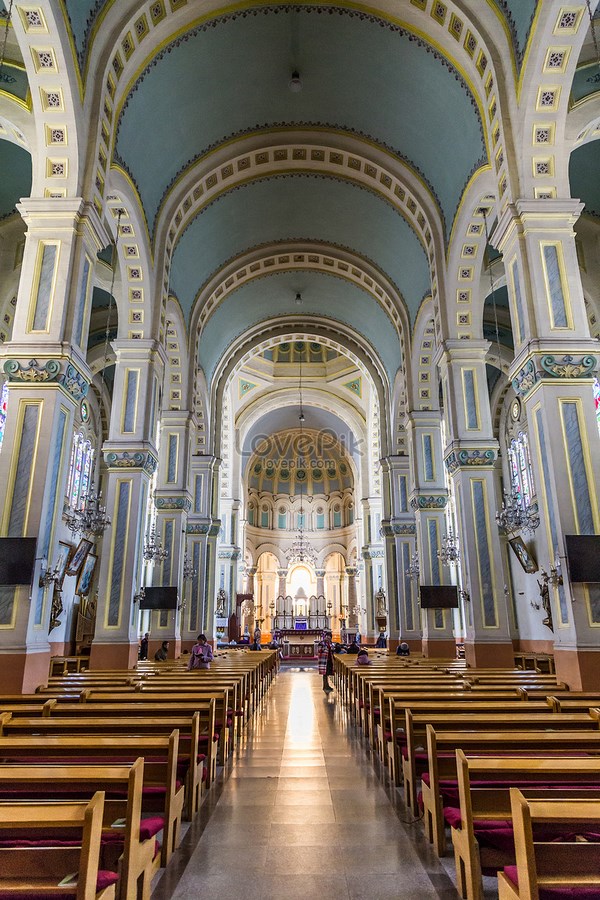
A Roman-Catholic Church built in the 20th century, is one of Tianjin’s protected historic cathedrals. Constructed during the colonial realm, it’s a specimen of Romanesque architecture and considered to be the largest Romanesque Cathedral in Northern China. Circular windows, a tall central octagonal drum room, stained glass with inlay painting, chequered red and yellow tiles on the façade are some remarkable characteristics of the European design styles. Whereas the interiors have an elaborate influence of French and Roman features having painted, ornate murals, full of Biblical scenes. Reflecting the European colonial rule, this church is a must-visit destination. Regarded as the former French concession of Tianjin.
We saw all the historical sites. Now it’s our turn to see the contemporary ones!
8. Tianjin Binhai Library
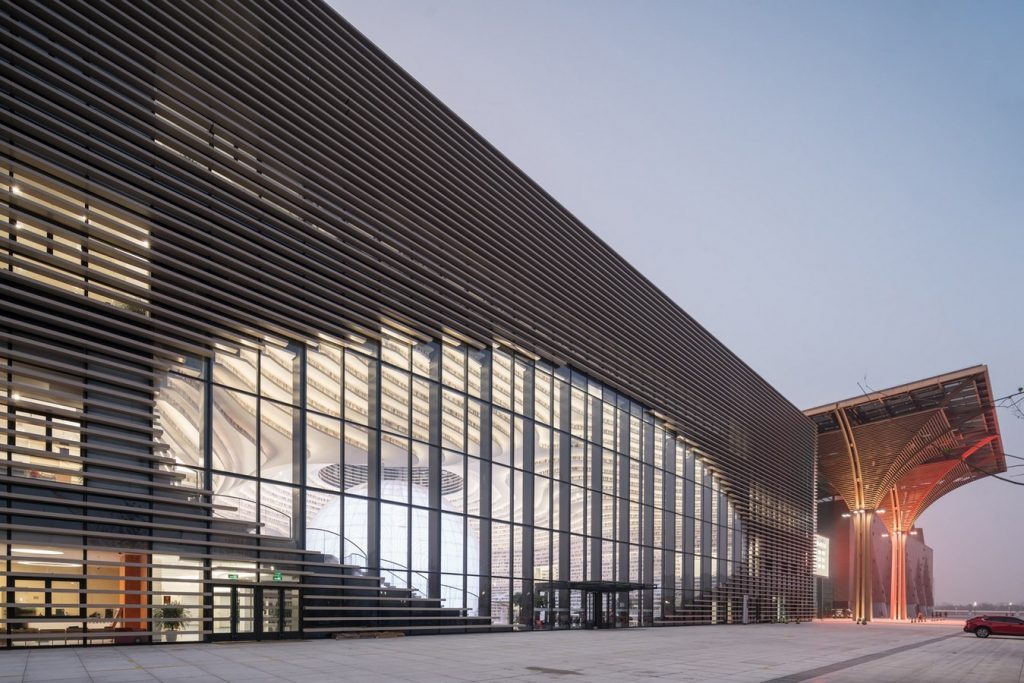
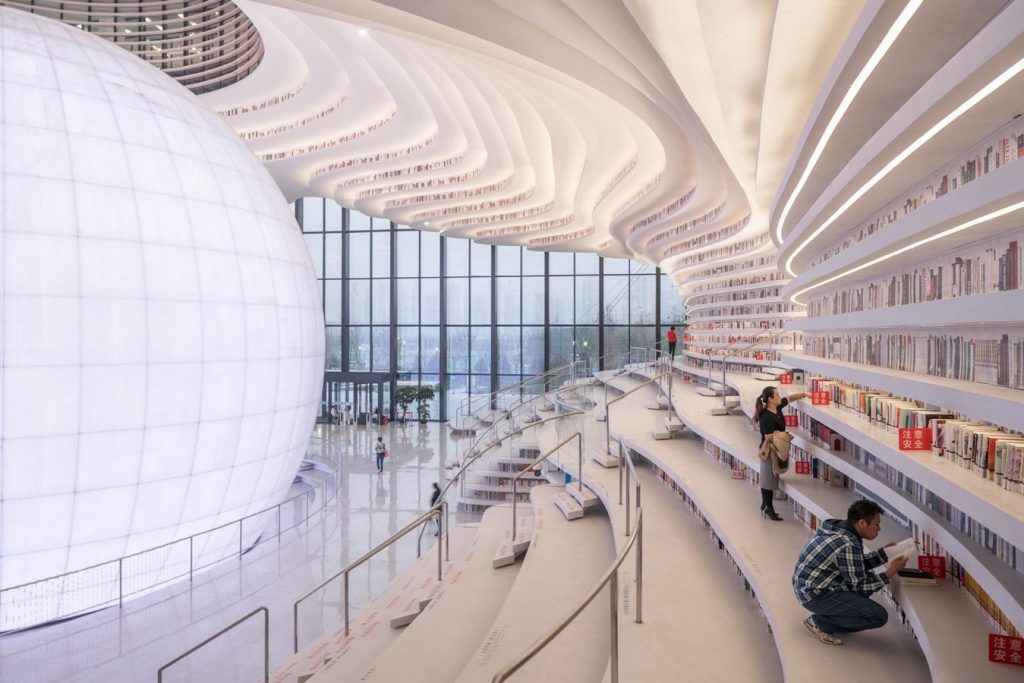
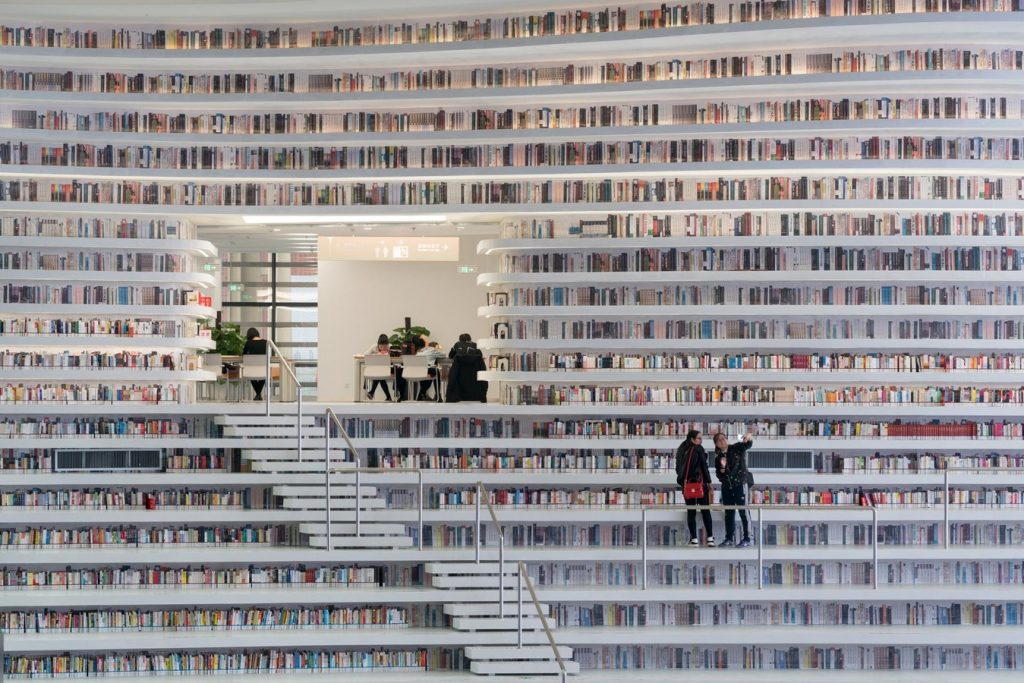
Holding a whopping collection of 1.2 million books, this space is any book lover’s dream! Constructed by the Rotterdam-based architectural firm MVRDV, it is a marvellous specimen of modern-day digital architecture. The series of levels housing the books start from the floor and end at the top in concentric fluid forms, thus giving the interior a homogeneous appearance. The puncture at the top feels like a direct inspiration from the Oculus of Pantheon, thus illuminating the library with natural light. The same tiers are repeated outside and serve as the louvers, continuing the fluidity in the external façade. The central luminous globe is an auditorium for 110 people and looks like an Iris, thus earning its nickname, The Eye. The Binhai Library is part of the Cultural Centre of Tianjin.
9. The Exploratorium Museum
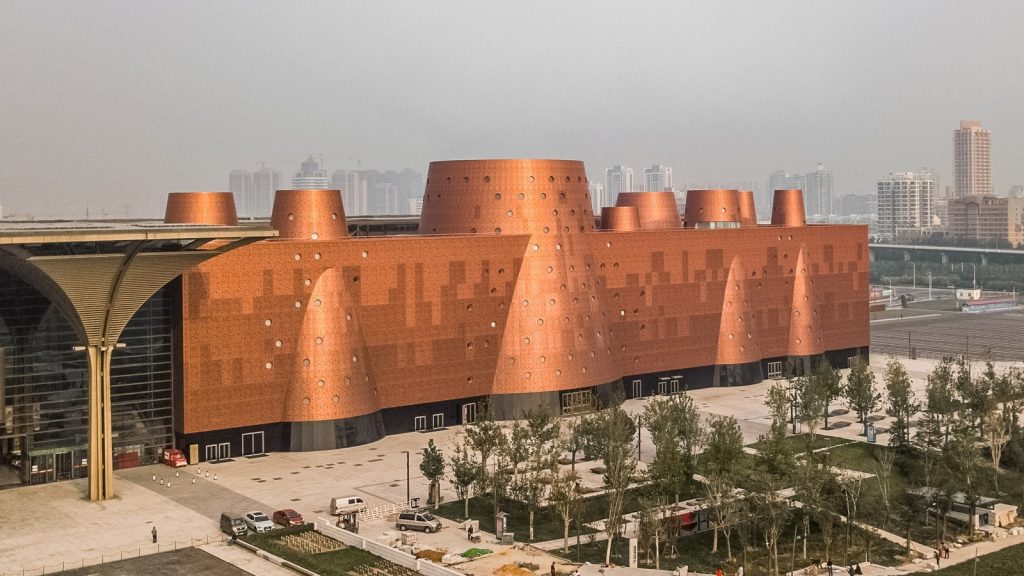
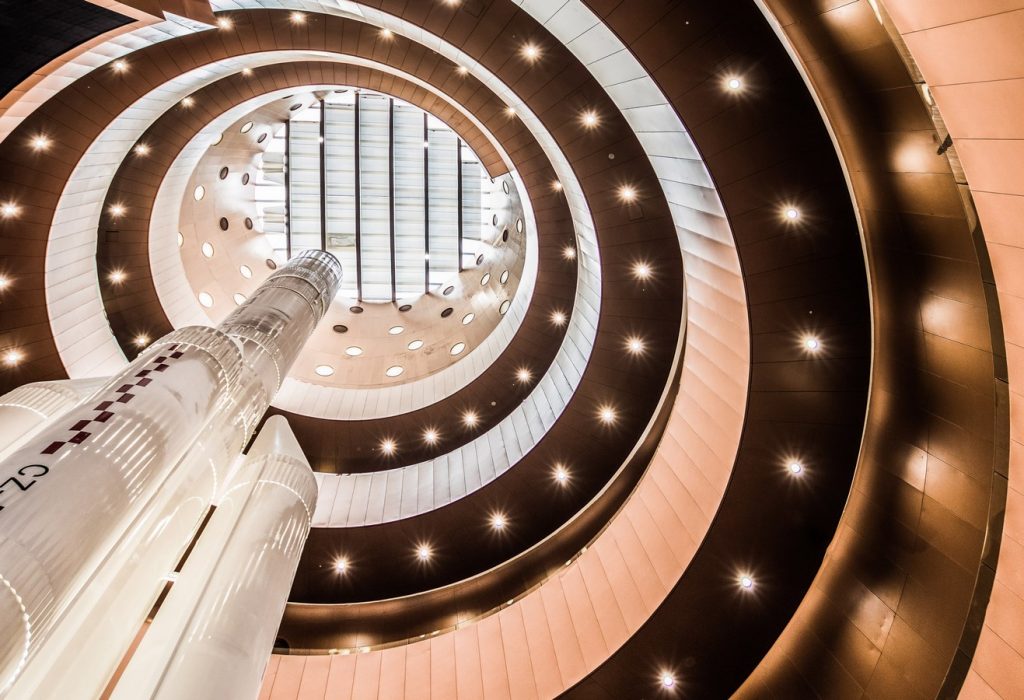
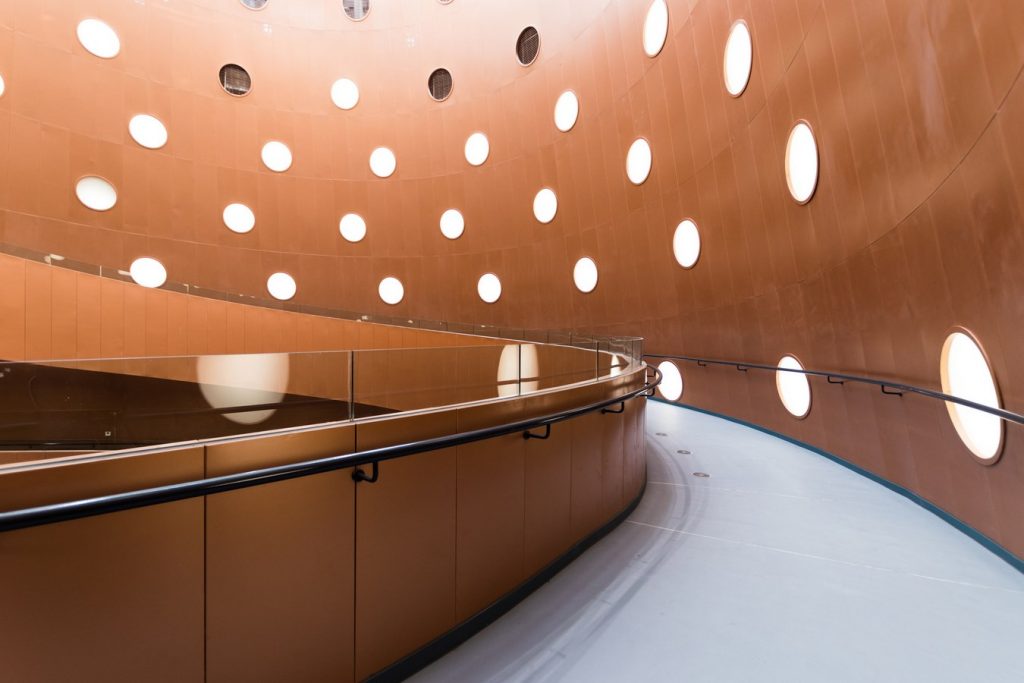
A stark copper-coloured façade, a giant industrial chimney-like exhibition space that dots the Tianjin skyline could be called as the Exploratorium Museum. Completed by the Bernard Tschumi Architects, this structure signifies the port city’s industrial history. The towers protrude form the roof and house the facilities and are wrapped by a copper-coloured facade made from perforated aluminium panels, which give the building a harmonic and rhythmic presence, while helping it to reduce heat gain. The galleries are accessed by a spiral ramp surrounding the 3-storey lobby that goes up-to the terrace from where visitors can see the entire city. Meanwhile, the portholes on the façade surface provide glimpses of the city while treading up and down. The conical protrusions house large exhibits and have huge skylights above, that channel enough natural light, thus illuminating the lobbies exuberantly! Can be said to resemble the Frank O’Gehry’s Guggenheim museum’s spiral design in Manhattan, New York.
10. Tianjin Natural History Museum
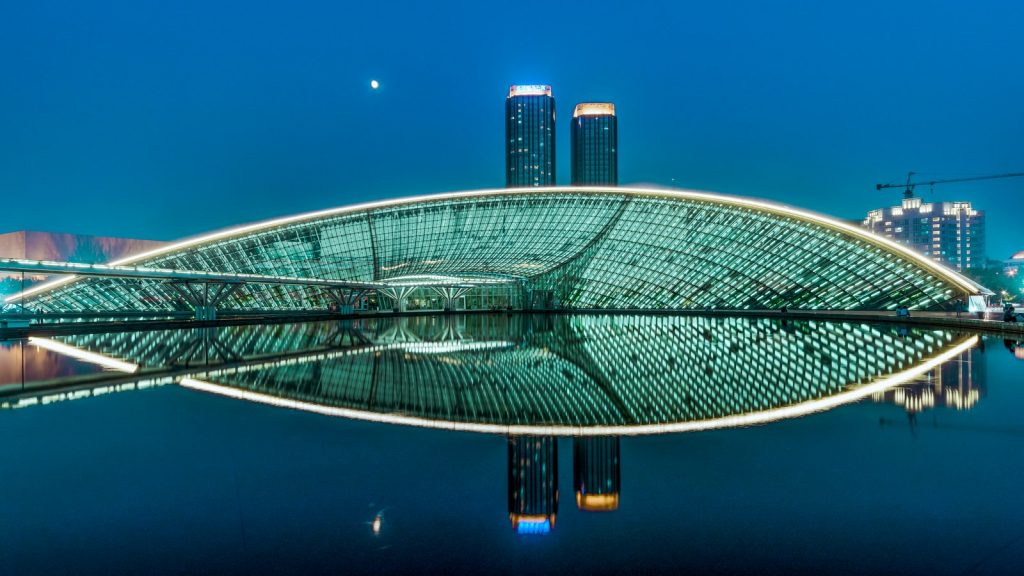
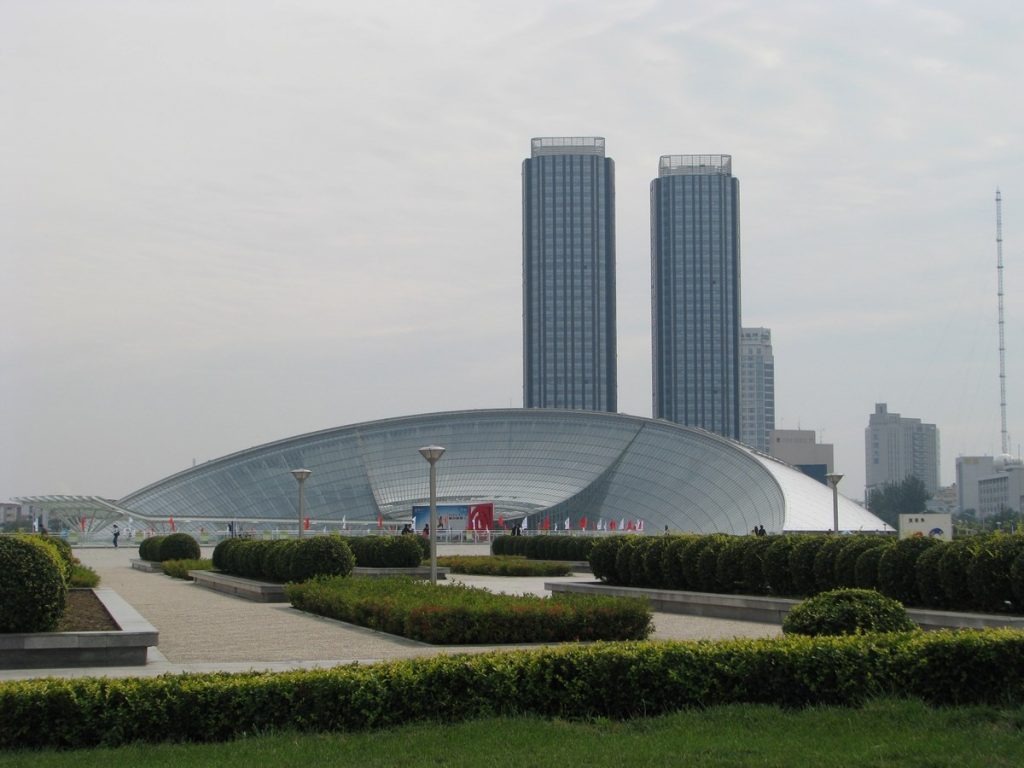
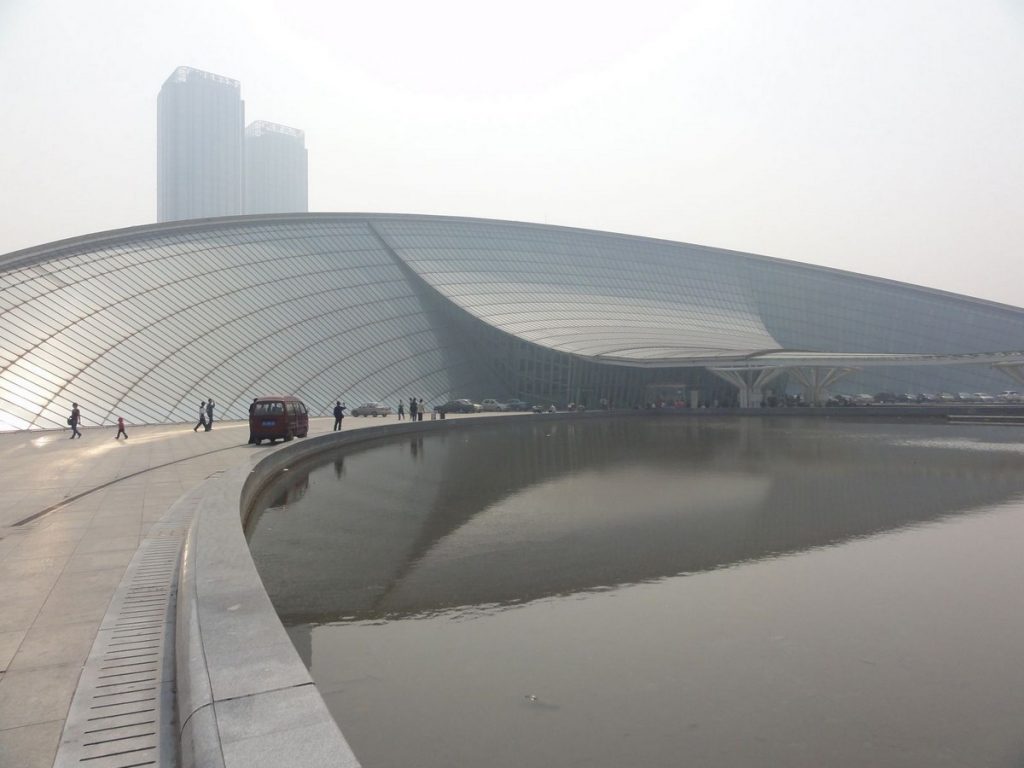
Said to be the second largest building of China, the natural history museum exhibits approximately 1,50,000 objects and emphasises the contribution of Tianjin’s collectors and museum donors to the preservation of China’s cultural tradition over the past century. A marvellous shell-shaped structure can be said to resemble a swan emerging from an egg, the museum stands magnificently illuminated at night. The entire glass façade, if seen during the day just reflects any modern building like an airport or a stadium but at night lights up the whole vicinity. With a wide assortment of objects ranging from ceramic artefacts, inkstones, paintings, calligraphy models and a lot many ancient folk lore attached to these, the museum is worth a visit by any architect and archaeology lover who wants to know more about the Chinese culture!