

Who was Zaha Hadid? Dame Zaha Hadid (31 October 1950, Baghdad – 31 March 2016, Miami) was the British-Iraqi architect known as the “Queen of the Curve” and the first woman to win the Pritzker Architecture Prize (2004). March 2026 marked ten years since her death — a decade in which her practice completed the projects she directed, grew to more than a hundred projects on six continents, and in June 2026 rebranded from Zaha Hadid Architects to ZHA. The 30 buildings below trace how her radical geometry became a global language.
| Quick facts | Zaha Hadid |
|---|---|
| Born / Died | 31 October 1950, Baghdad, Iraq / 31 March 2016, Miami, USA (aged 65) |
| Education | Mathematics at the American University of Beirut; Architectural Association (AA) School, London |
| Firsts | First woman to win the Pritzker Prize (2004) · first woman awarded the RIBA Royal Gold Medal in her own right (2016) · Dame Commander (DBE), 2012 |
| Stirling Prizes | MAXXI, Rome (2010) · Evelyn Grace Academy, London (2011) |
| Signature works | Vitra Fire Station (1993, first built work) · MAXXI (2010) · London Aquatics Centre (2012 Olympics) · Heydar Aliyev Centre, Baku (2012) · Dongdaemun Design Plaza, Seoul (2014) |
| Her firm in 2026 | Rebranded ZHA (June 2026); ~500-person employee-owned practice led by Patrik Schumacher; 100+ projects on six continents, incl. the recently opened ZHA-designed Navi Mumbai International Airport |
Zaha Hadid (1950–2016) was an Iraqi-British architect and the first woman to win the Pritzker Architecture Prize (2004), celebrated for sweeping curves, fragmented geometry, and buildings that seem to defy gravity. From the Vitra Fire Station that launched her built career to the Heydar Aliyev Centre and London Aquatics Centre, the “Queen of the Curve” changed what architecture could look like. The 30 projects below define the radical formal language that made Zaha Hadid Architects a global force.
Zaha Hadid’s Famous Works at a Glance
| Project | Location | Year |
|---|---|---|
| Heydar Aliyev Centre | Baku, Azerbaijan | 2012 |
| Vitra Fire Station | Weil am Rhein, Germany | 1993 |
| London Aquatics Centre | London, UK | 2011 |
| MAXXI Museum of XXI Century Arts | Rome, Italy | 2010 |
| Guangzhou Opera House | Guangzhou, China | 2010 |
| Phaeno Science Centre | Wolfsburg, Germany | 2005 |
| Contemporary Arts Center | Cincinnati, USA | 2003 |
| Eli & Edythe Broad Art Museum | East Lansing, USA | 2012 |
| Nuragic and Contemporary Art Museum | Cagliari, Italy | 2006 (design) |
| Glasgow Riverside Museum of Transport | Glasgow, UK | 2011 |
| Zaragoza Bridge Pavilion | Zaragoza, Spain | 2008 |
| BMW Central Building | Leipzig, Germany | 2005 |
| One Thousand Museum | Miami, USA | 2019 |
| Ordrupgaard Museum Extension | Copenhagen, Denmark | 2005 |
| Wangjing SOHO | Beijing, China | 2014 |
| CMA CGM Headquarters | Marseille, France | 2011 |
| Messner Mountain Museum Corones | Plan de Corones, Italy | 2015 |
| King Abdullah Financial District Metro Station | Riyadh, Saudi Arabia | 2024 |
| Abu Dhabi Performing Arts Centre | Abu Dhabi, UAE | 2007 (design) |
| Maggie’s Centre Fife | Kirkcaldy, Scotland | 2006 |
| Bergisel Ski Jump | Innsbruck, Austria | 2002 |
| Al Janoub Stadium | Al Wakrah, Qatar | 2019 |
| Library and Learning Centre, WU Vienna | Vienna, Austria | 2013 |
| Serpentine Sackler Gallery | London, UK | 2013 |
| Mandarin Oriental, 600 Collins Street | Melbourne, Australia | 2017 (design) |
| Sheikh Zayed Bridge | Abu Dhabi, UAE | 2010 |
| Port House | Antwerp, Belgium | 2016 |
| Jockey Club Innovation Tower | Hong Kong, China | 2014 |
| Leeza SOHO | Beijing, China | 2019 |
| Evelyn Grace Academy | London, UK | 2010 |
Zaha Hadid was an Iraqi-British Architect who was the first woman to be awarded the Pritzker Architecture Prize. Her style was intensely futuristic architecture characterized by curving facades, sharp angles, and using materials such as concrete and steel. She took the strongest materials in the world and manipulated them to form objects that appeared soft and sturdy at the same time. Her buildings are eye-catching and have a unique shape, style and quality, making the structure iconic.
This list represents Zaha Hadid’s 30 projects that define her unique style and make her one of the most famous Architects today:
1. Heydar Aliyev Centre, Azerbaijan | Zaha Hadid

Year: 2012
Type: Cultural Centre
Location: Baku, Azerbaijan
Commissioned by the Republic of Azerbaijan and completed in 2012, the 57,500-square-metre cultural centre holds an auditorium, gallery hall and museum beneath a single continuous skin that rises from the plaza and folds back onto itself, with almost no straight lines anywhere in the building. The undulating shell — glass-fibre-reinforced concrete and polyester panels over a space frame — dissolves the distinction between wall, roof and ground. In 2014 it won the London Design Museum’s Design of the Year, making Hadid the first woman to take that award, and it remains the building most often cited as the purest expression of her fluid, calligraphic style.
2. Vitra Fire Station, Germany
 Year: 1993
Type: Public Building
Location: Weil am Rhein, Germany
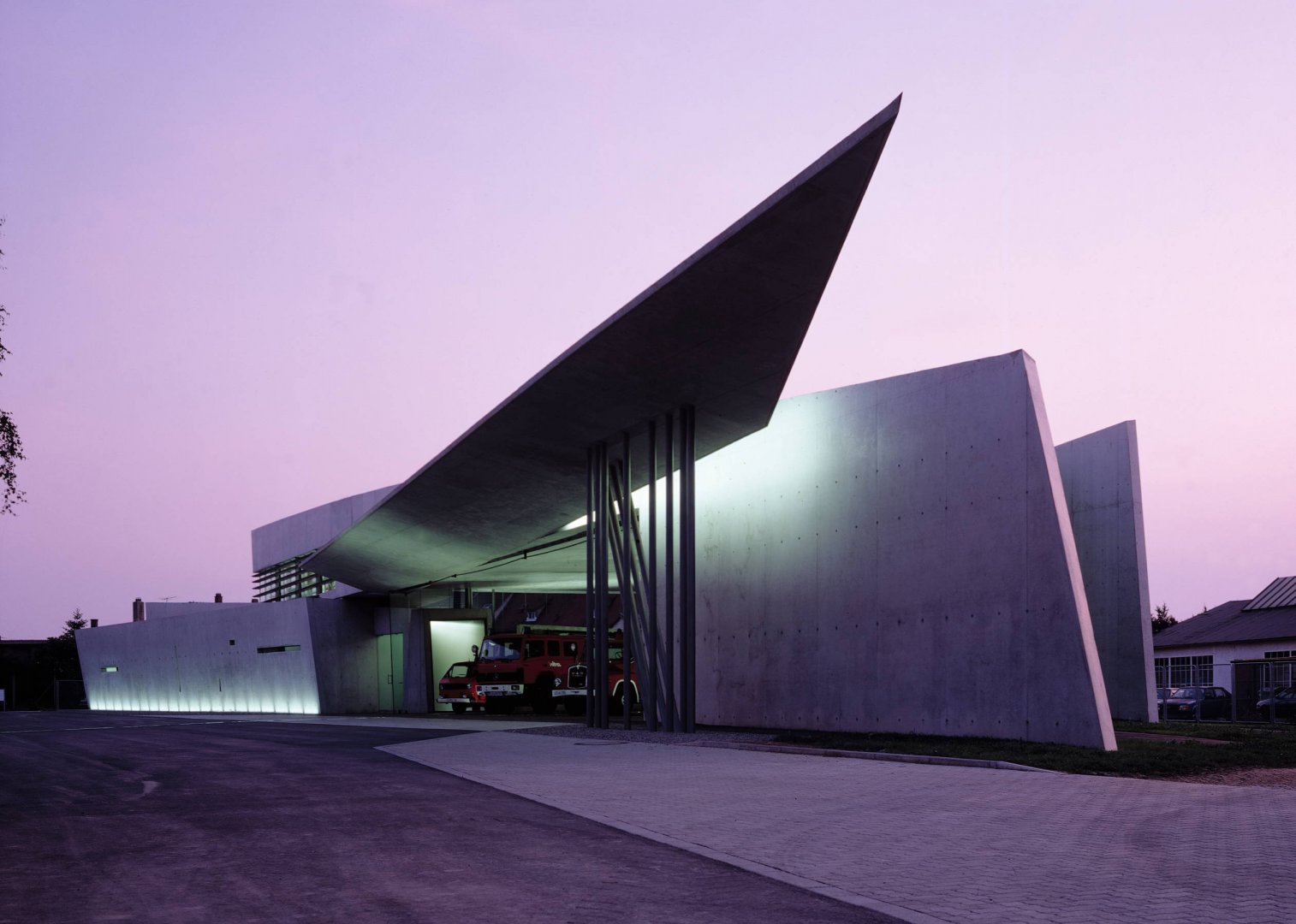
Built for the Vitra furniture campus in Weil am Rhein, Germany, the fire station was Hadid’s first completed building — the moment her “unbuildable” reputation collapsed. Executed in raw, in-situ concrete with razor-sharp angled planes, it translates the dynamism of her early paintings into frozen movement: walls tilt, slice and converge as if caught mid-motion. The building proved too sculptural for its job; after the factory’s fire brigade was disbanded it became an exhibition space for the Vitra Design Museum, and today it is a pilgrimage stop for students of early deconstructivism.
3. London Aquatics Centre for the 2012 Summer Olympics, UK | Zaha Hadid
 Year: 2011
Type: Swimming Pool
Location: Queen Elizabeth Olympic Park, London, E20, United Kingdom
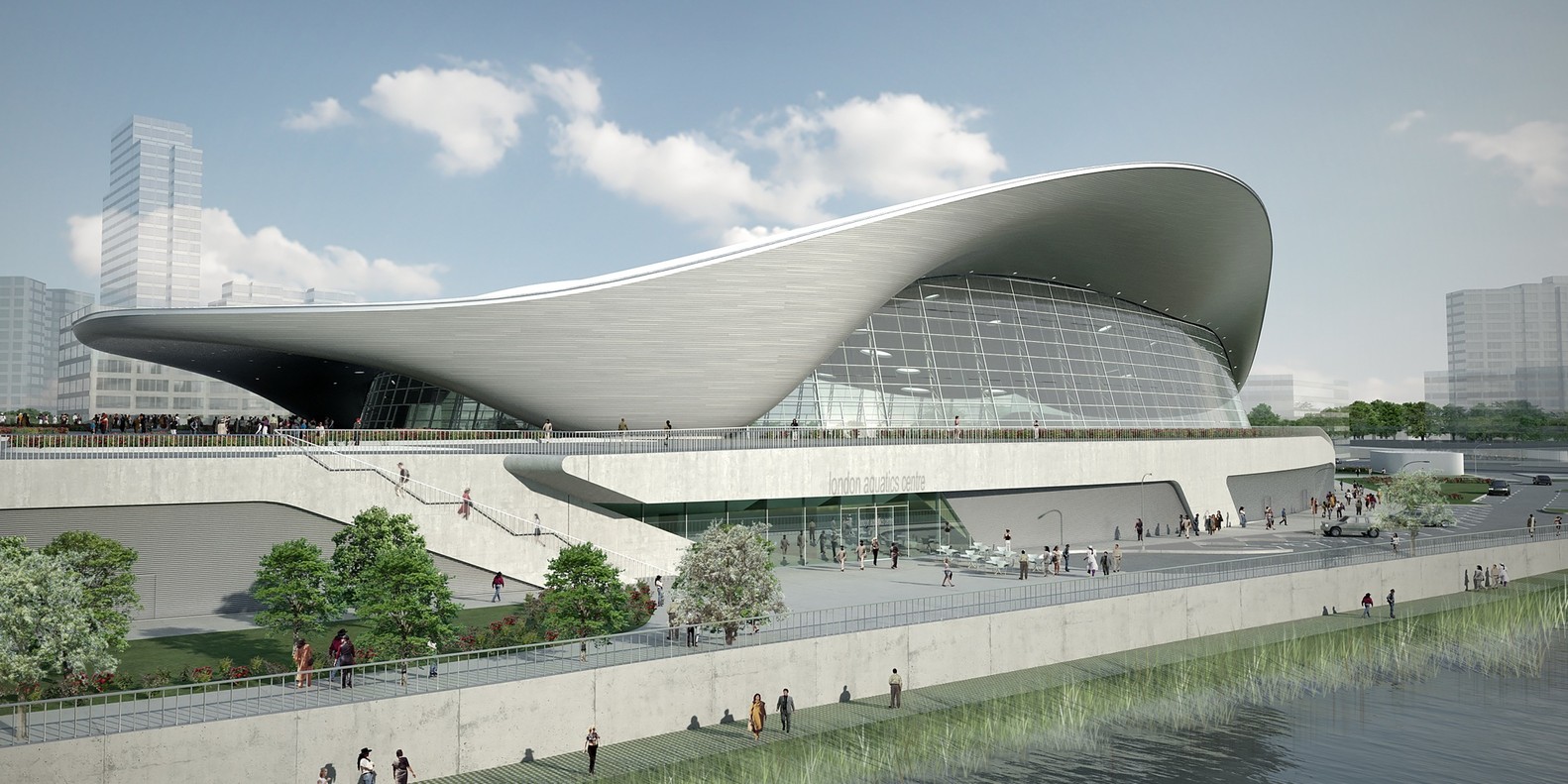
Designed for the London 2012 Olympic and Paralympic Games, the centre’s 160-metre wave-like steel roof — inspired by the fluid geometry of water in motion — sweeps over two 50-metre pools and a diving pool. During the Games, temporary seating wings pushed capacity to 17,500; in post-Olympic “legacy mode” the wings were removed and glass walls installed, and the venue reopened in 2014 as a roughly 2,500-seat public pool — one of the most successful pieces of Olympic legacy architecture anywhere.
4. MAXXI: Museum of XXI Century Arts, Italy
Year: 2009
Type: Art Centre
Location: Rome, Italy
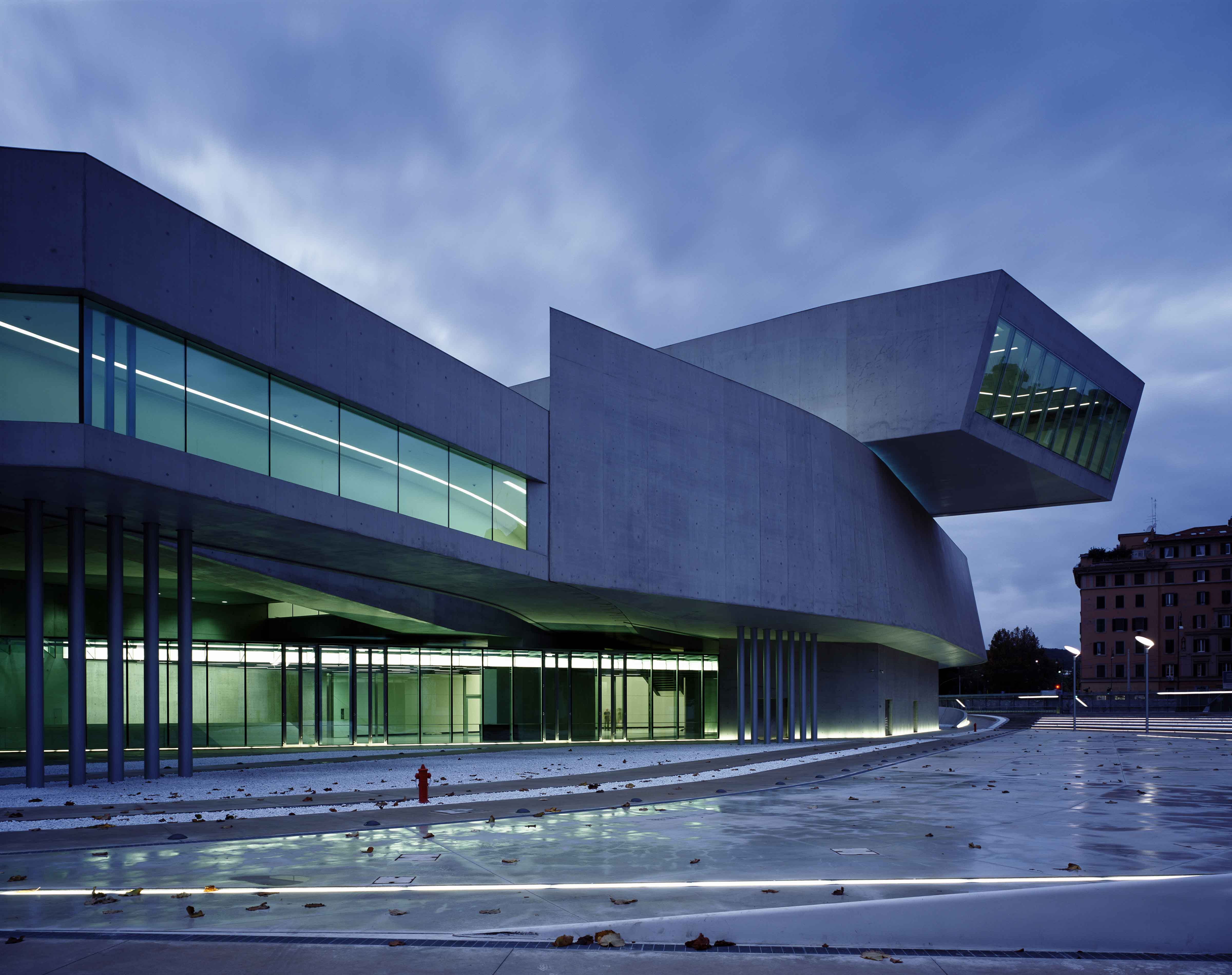
Italy’s national museum of 21st-century art and architecture grew from a former army barracks in Rome’s Flaminio district into a landscape of flowing, intertwining concrete ribbons. Galleries bend, overlap and cross like braided streams, with suspended black steel staircases carrying visitors through the interwoven volumes. Completed in 2010 after a decade of construction, MAXXI won that year’s RIBA Stirling Prize — the first of Hadid’s two — and proved her curvilinear language could organise a complex public institution, not just a sculptural object.
5. Guangzhou Opera House, China | Zaha Hadid
Year: TBD
Type: Museum
Location: Guangzhou, China
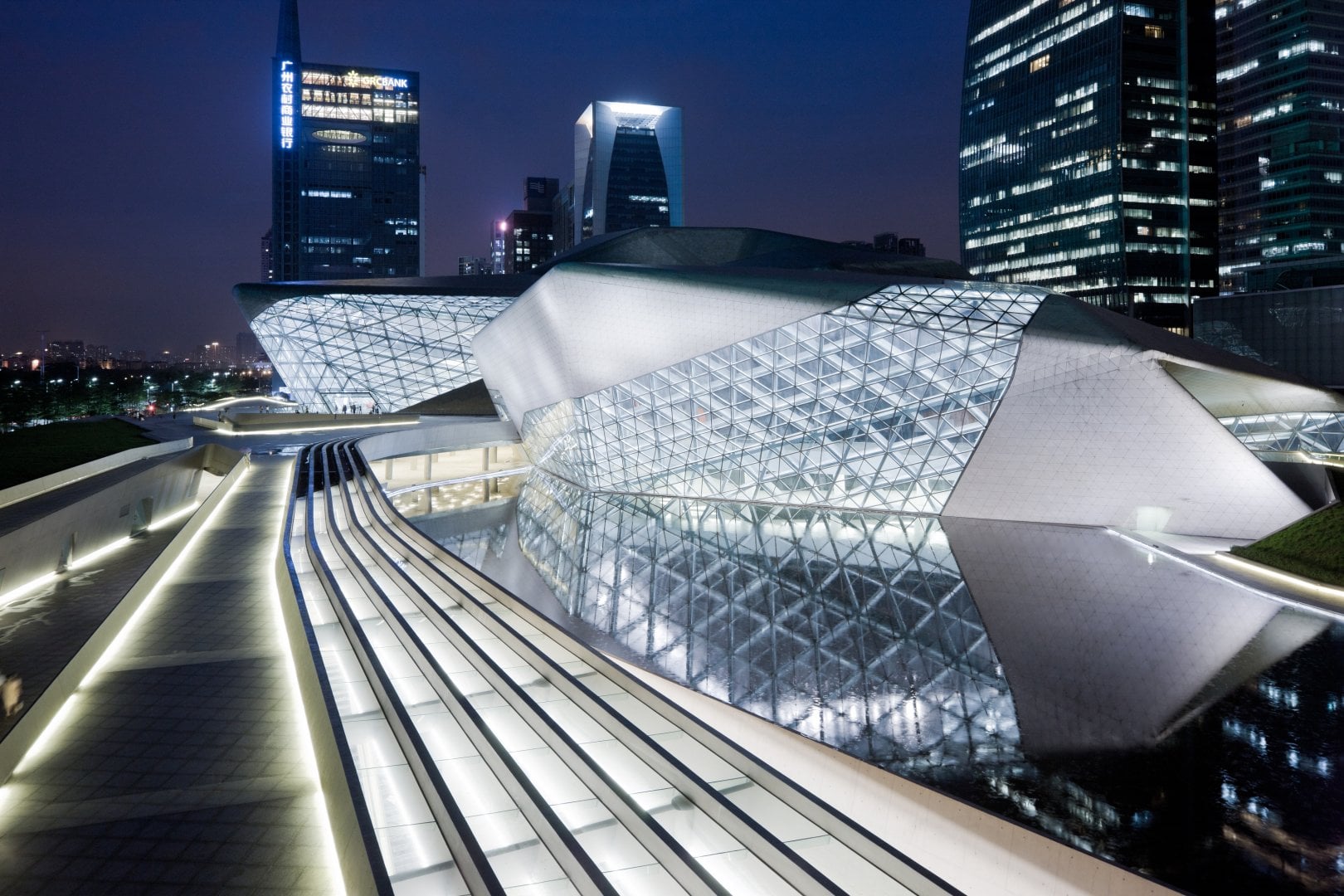
Conceived as two boulder-like “pebbles” washed smooth by the adjacent Pearl River, the opera house anchors Guangzhou’s new central axis. The larger granite-and-glass volume holds a 1,800-seat asymmetrical auditorium wrapped in moulded acoustic panels and thousands of tiny lights that mimic a night sky; the smaller pebble contains a 400-seat multifunction hall. Completed in 2010, it was Hadid’s first opera house and is regularly ranked among the world’s most spectacular performance venues.
6. Phaeno Science Centre, Germany
Year: 2005
Type: Science Centre
Location: Wolfsburg, Germany
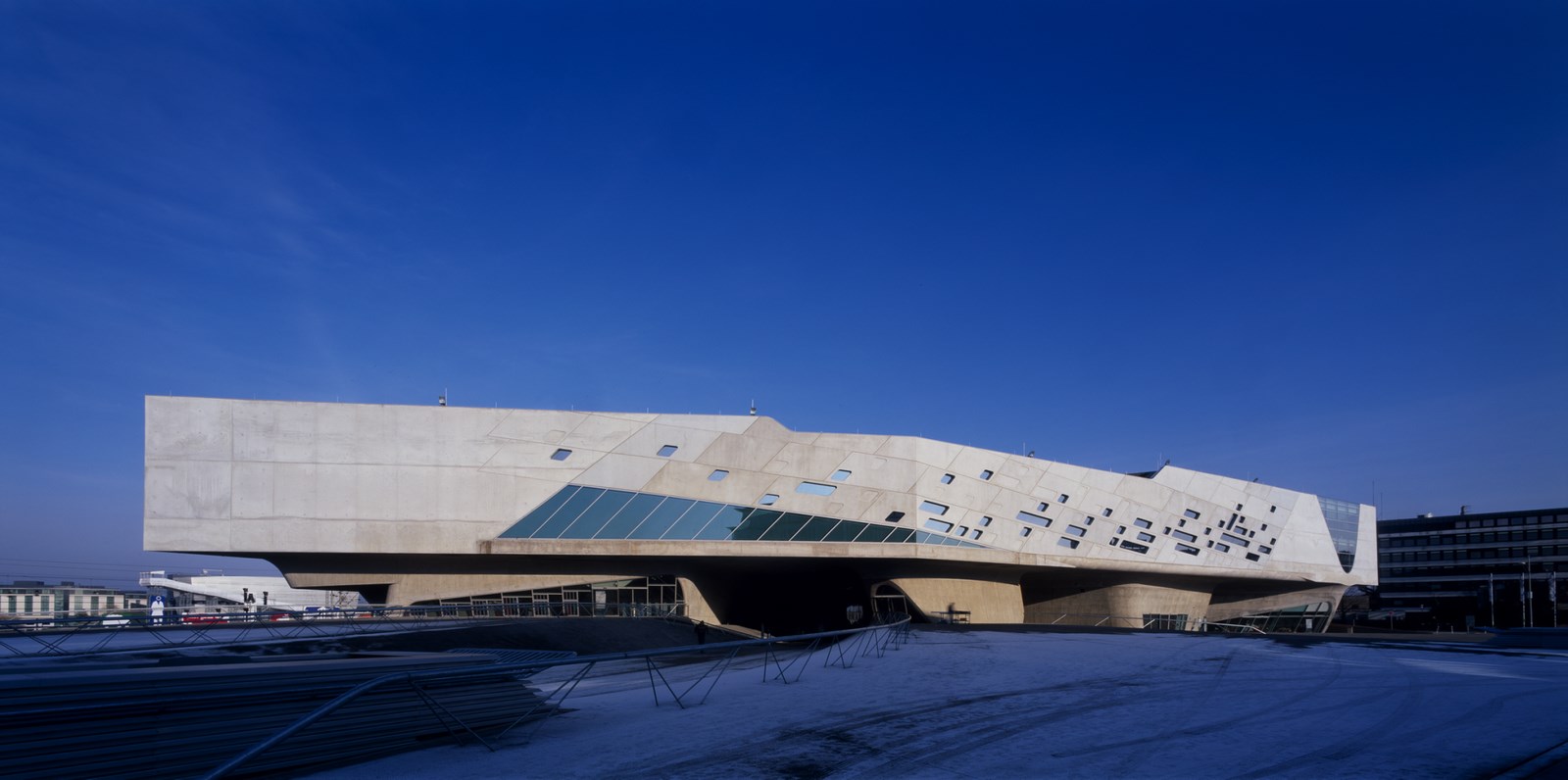
Raised on ten faceted concrete cones that free the public ground plane beneath it, the Phaeno Science Centre in Wolfsburg (2005) is one of the most structurally ambitious buildings of Hadid’s career, and was among the largest applications of self-compacting concrete in Europe at the time. Inside, an artificial crater landscape of slopes and terraces replaces conventional floors, turning the exhibition into an exploratory terrain rather than a sequence of rooms.
7. Contemporary Arts Center, USA
Year: 2003
Type: Art Centre
Location: Cincinnati, Ohio, USA
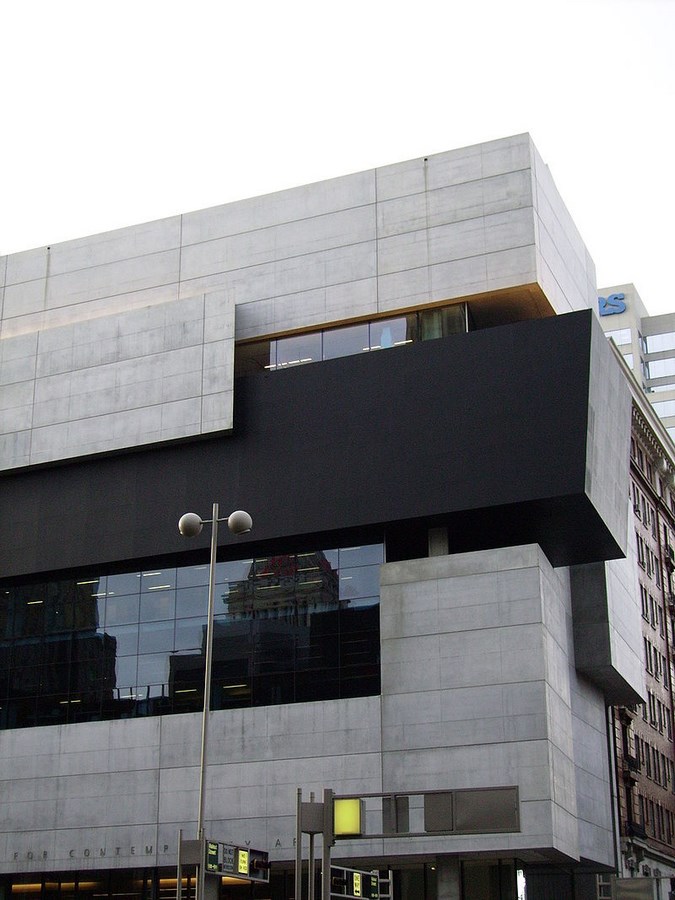
Completed in 2003, the Lois & Richard Rosenthal Center for Contemporary Art in Cincinnati made Hadid the first woman to design a major American museum. Its “urban carpet” concept curls the sidewalk up into the lobby’s rear wall, drawing the street into the building, while a jigsaw of concrete volumes stacks the galleries above. The New York Times hailed it as one of the most important American buildings of its generation, and it opened the door to Hadid’s later US commissions.
8. Eli & Edythe Broad Art Museum, USA | Zaha Hadid
Year: 2012
Type: Museum
Location: East Lansing, USA
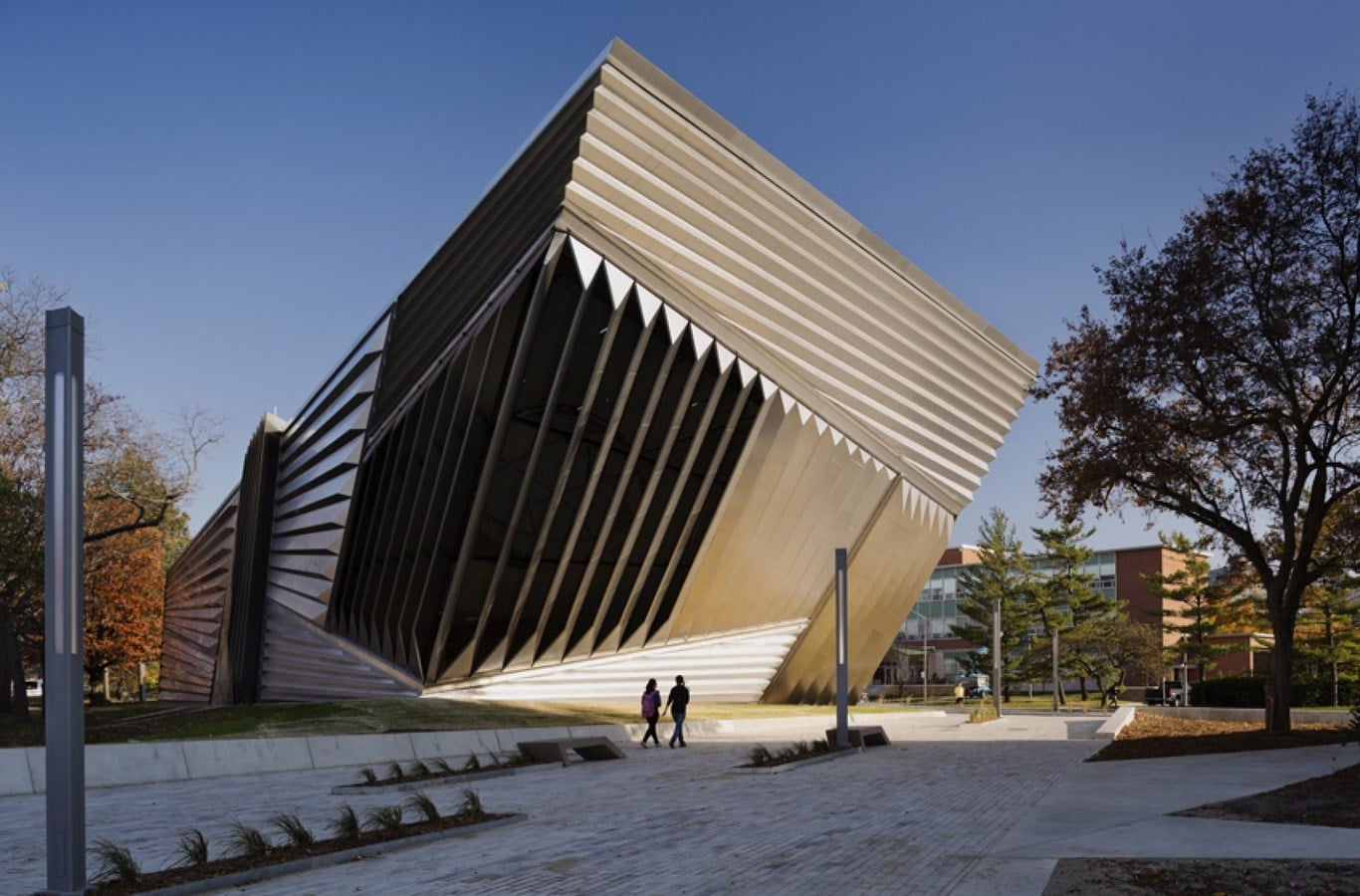
At Michigan State University, the Eli & Edythe Broad Art Museum (2012) compresses Hadid’s directional energy into a compact wedge wrapped in angled pleats of stainless steel and glass. The façade’s folds change character with light and viewing angle, so the building appears in motion even at rest — a study in how her language of movement could work at a modest, campus scale.
9. Nuragic and Contemporary Art Museum, Italy
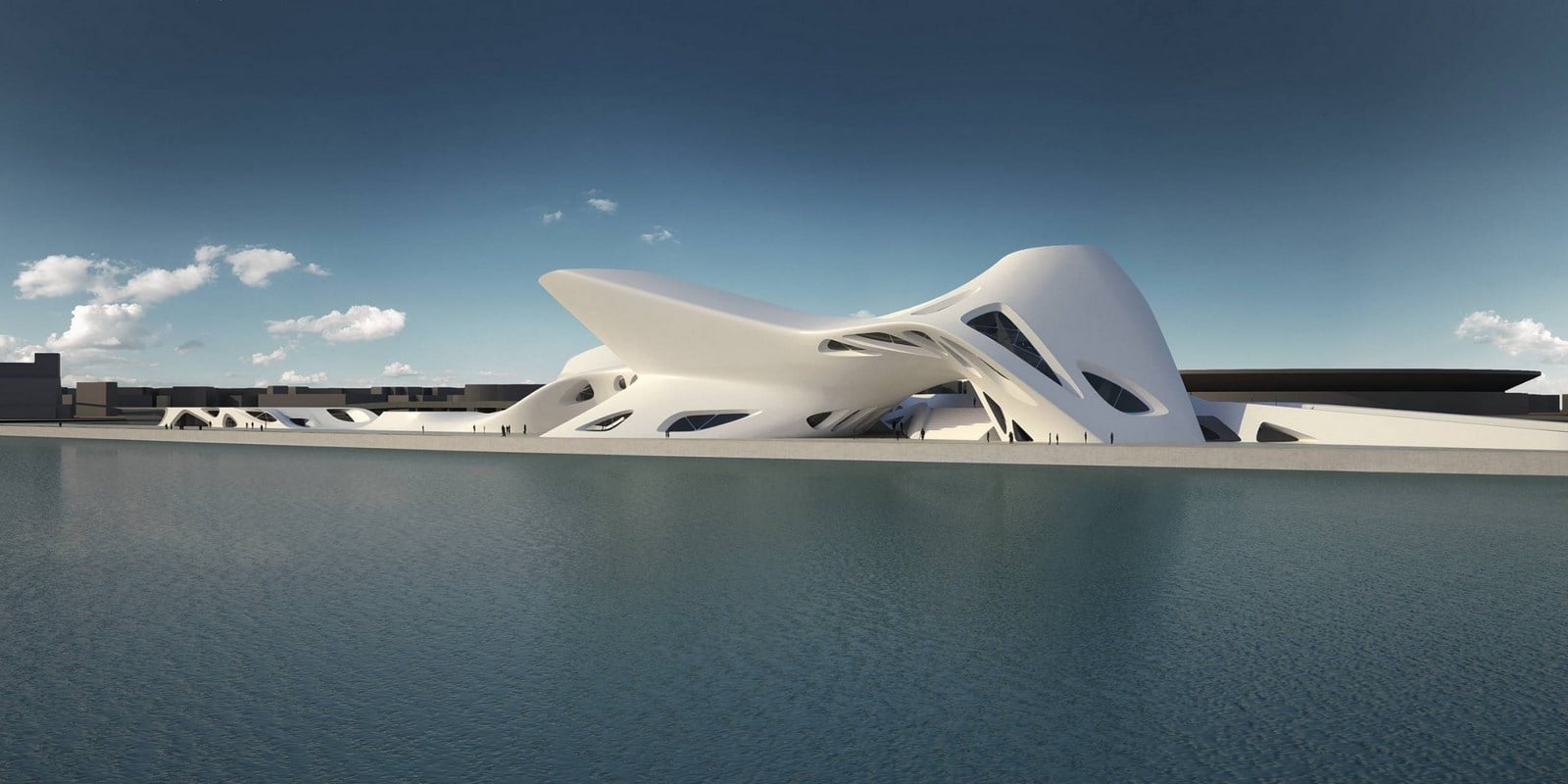
Year: TBC
Type: Museum
Location: Cagliari, Italy
10. Glasgow Riverside Museum of Transport
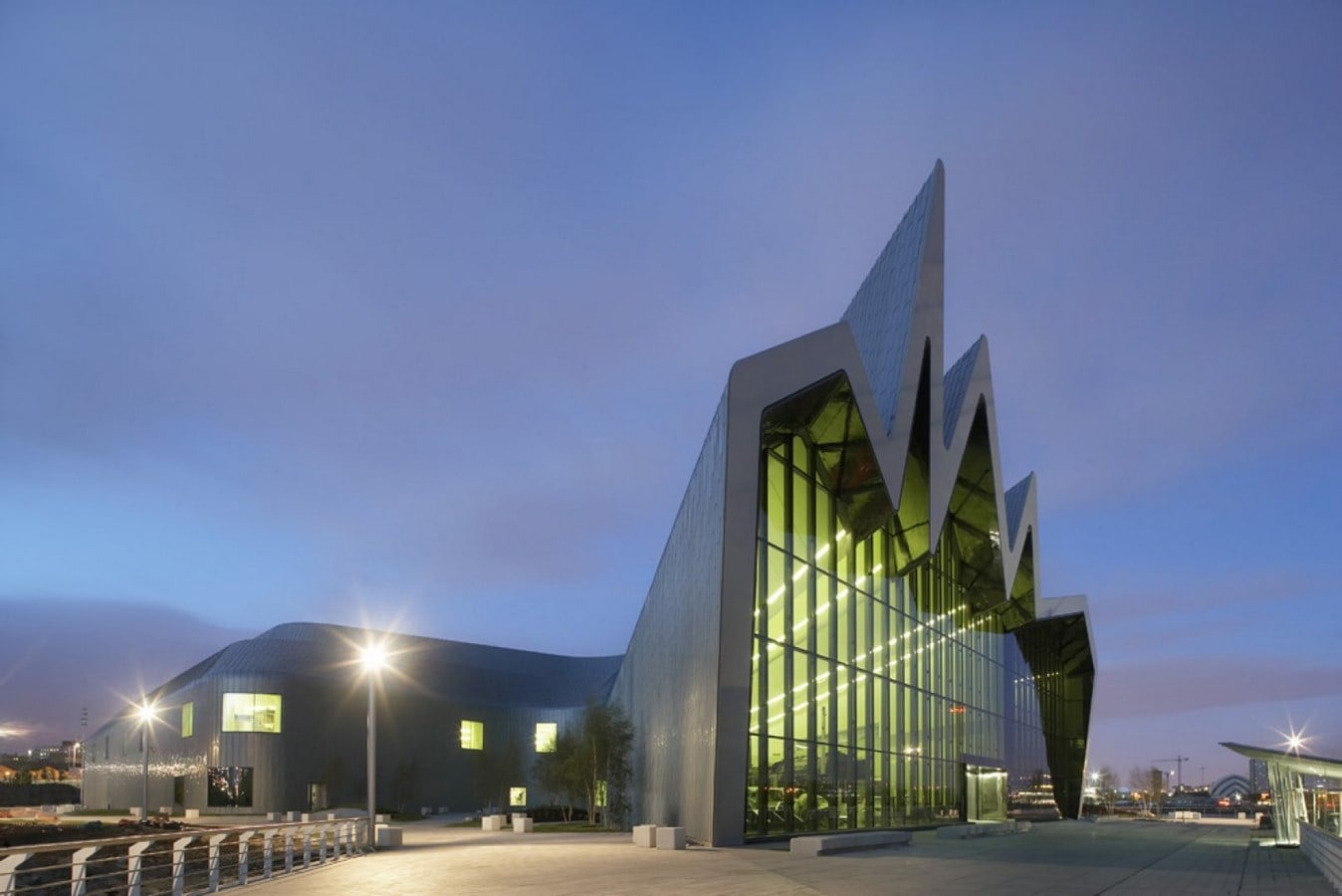
Year: 2011
Type: Museum
Location: Glasgow, UK
Glasgow’s transport museum (2011) runs a pleated, zig-zagging roofline between the city and the River Clyde, its section extruded like a wave from end to end so the building reads as a tunnel of movement. The column-free exhibition hall displays cars, trams and locomotives on walls and suspended decks. In 2013 it won European Museum of the Year, and its zinc-clad silhouette has become shorthand for Glasgow’s regenerated harbourfront.
11. Zaragoza Bridge Pavilion, Spain | Zaha Hadid
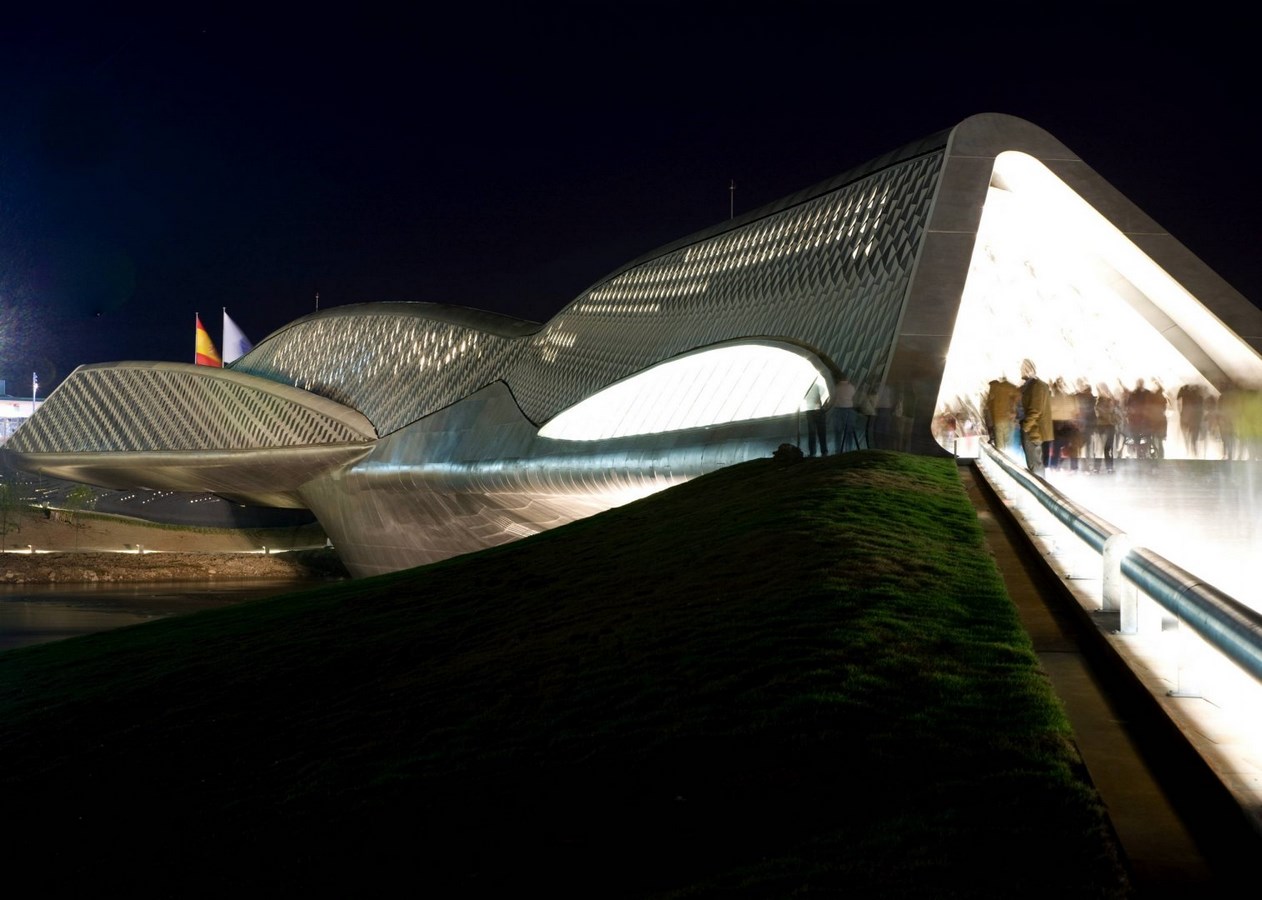
Year: 2008
Type: Pavilion
Location: Zaragoza, Spain
Built for Expo 2008, the Bridge Pavilion crosses the River Ebro as four braided, pod-like beams nearly 280 metres long, making it one of the few genuinely inhabited bridges in modern architecture — infrastructure and exhibition hall at once. Its shark-scale skin of fibre-reinforced concrete panels opens and closes to ventilate the interior, prefiguring the performative façades of her later work.
12. BMW Central Building, Germany
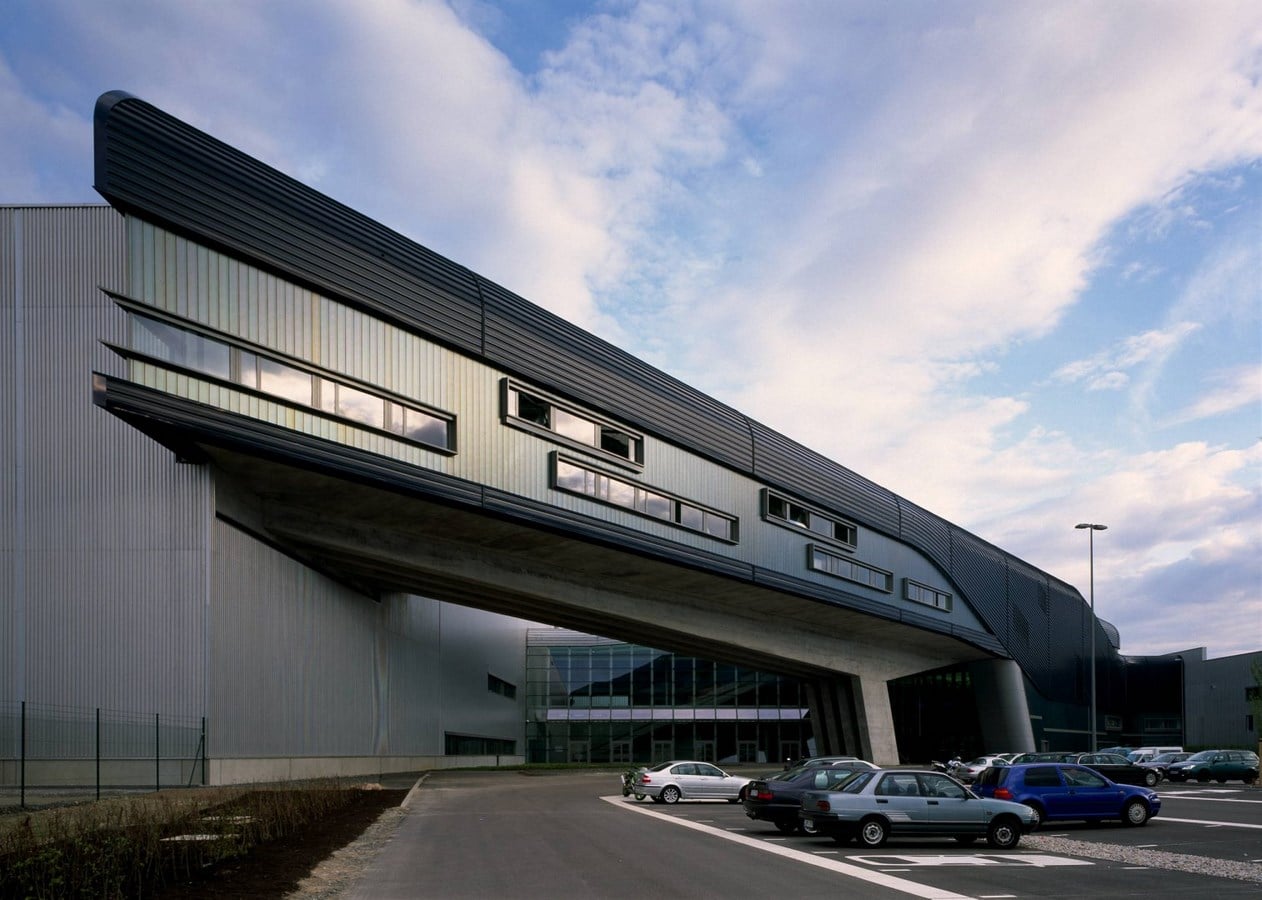
Year: 2005
Type: Office
Location: Leipzig, Germany
13. One Thousand Museum, US
Year: 2019
Type: Residential
Location: 1000 Biscayne Boulevard, Miami, Florida, United States
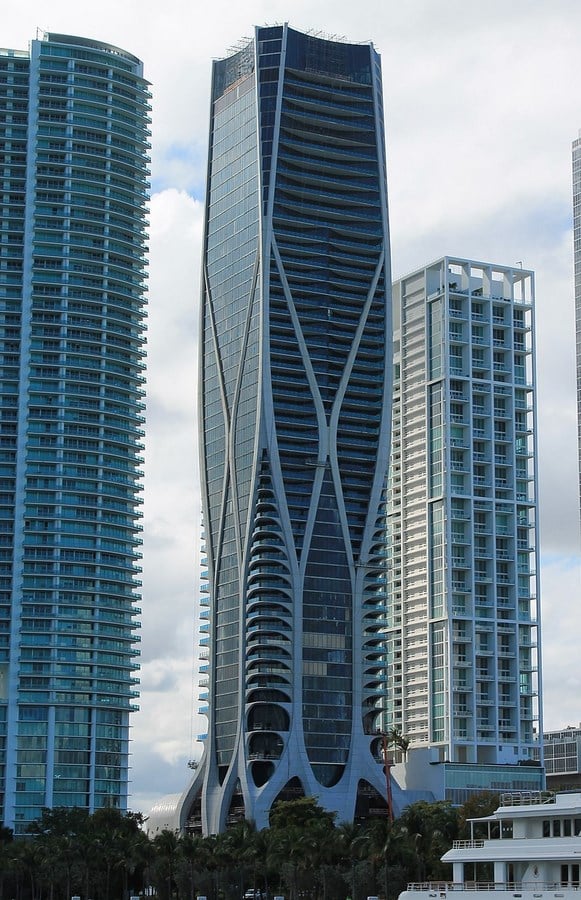
Hadid’s only residential skyscraper in the western hemisphere, Miami’s One Thousand Museum (2019, completed posthumously) rises 62 storeys behind a sinuous exoskeleton of glass-fibre-reinforced concrete that is structure and ornament at once. The curving white frame thickens and splits as loads demand, freeing the interiors of columns and giving the tower its unmistakable skeletal silhouette on the Biscayne Bay skyline.
14. Ordrupgaard Museum Extension, Denmark
Year: 2005
Type: Museum
Location: Copenhagen, Denmark
15. Wangjing SOHO, China | Zaha Hadid
Year: 2014
Type: Mixed-use
Location: Beijing, China
16. CMA CGM Headquarter, France
Year: 2010
Type: Office
Location: Marseille, France
17. Messner Mountain Museum Corones, Italy
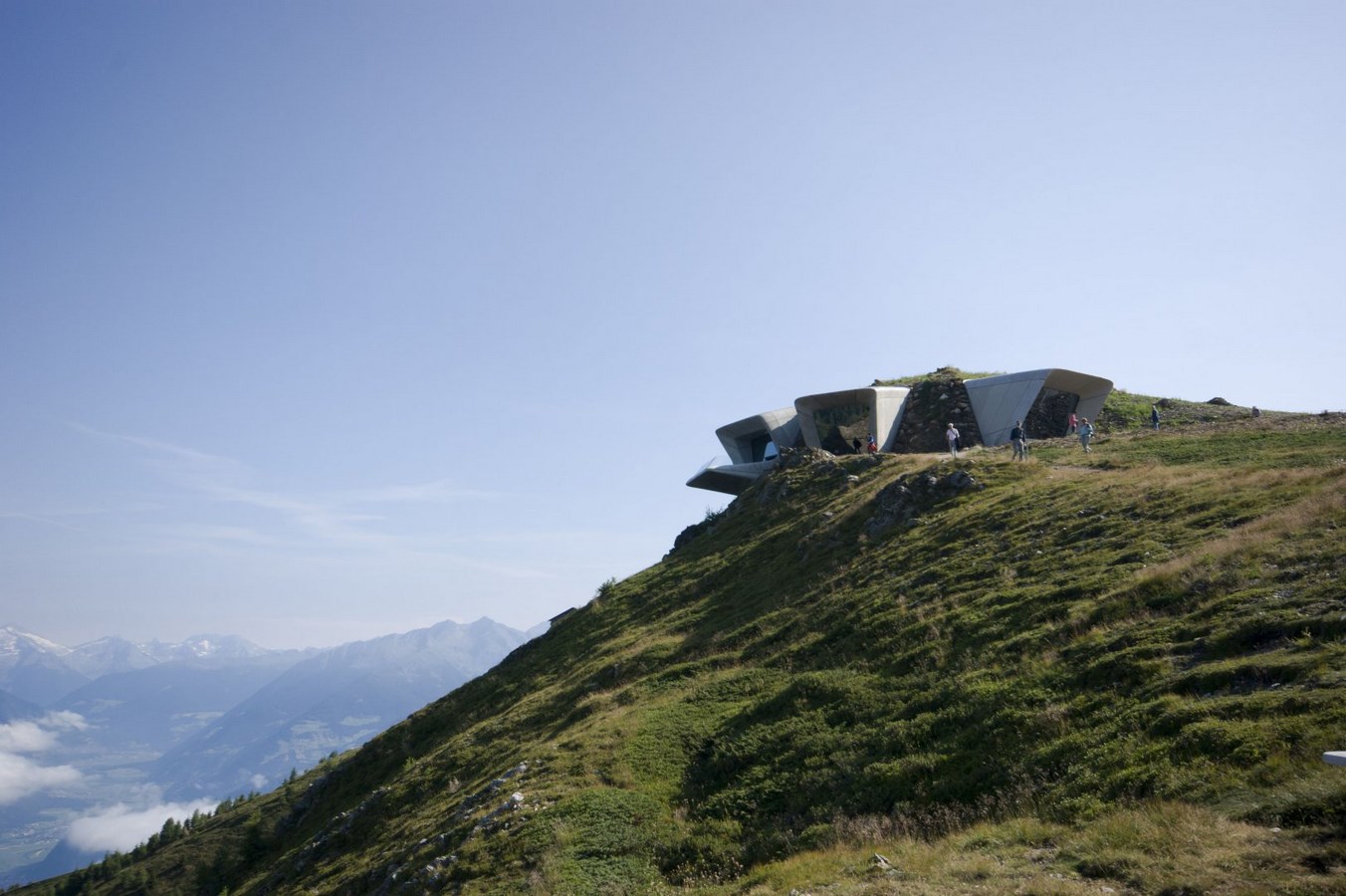
Year: 2015
Type: Museum
Location: Kronplatz Mountain, Italy
18. King Abdullah Financial District Metro Station, Saudi Arabia | Zaha Hadid
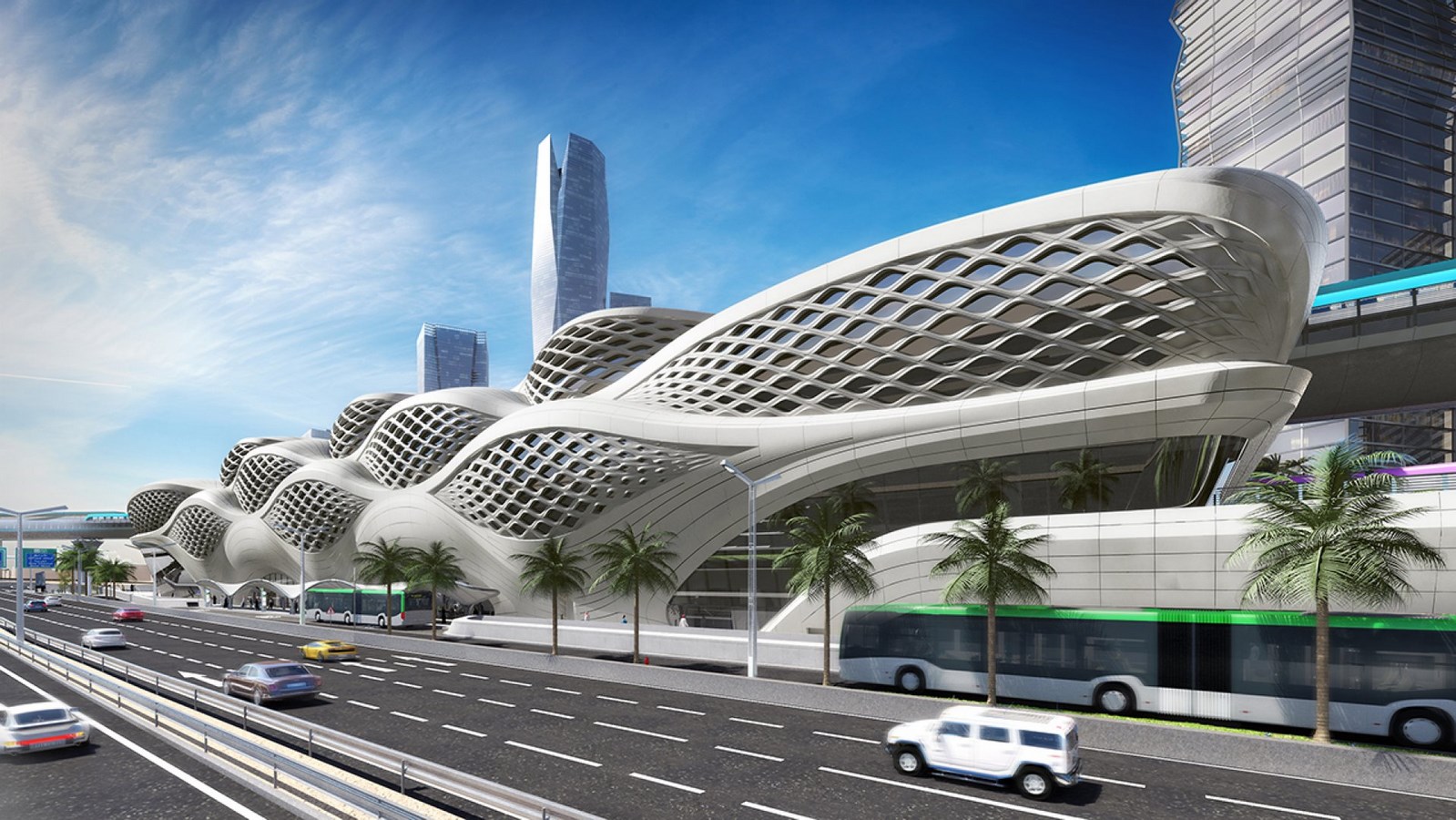
Year: 2020
Type: Transport & Infrastructure
Location: Riyadh, Kingdom of Saudi Arabia
19. Abu Dhabi Performing Arts Centre, UAE
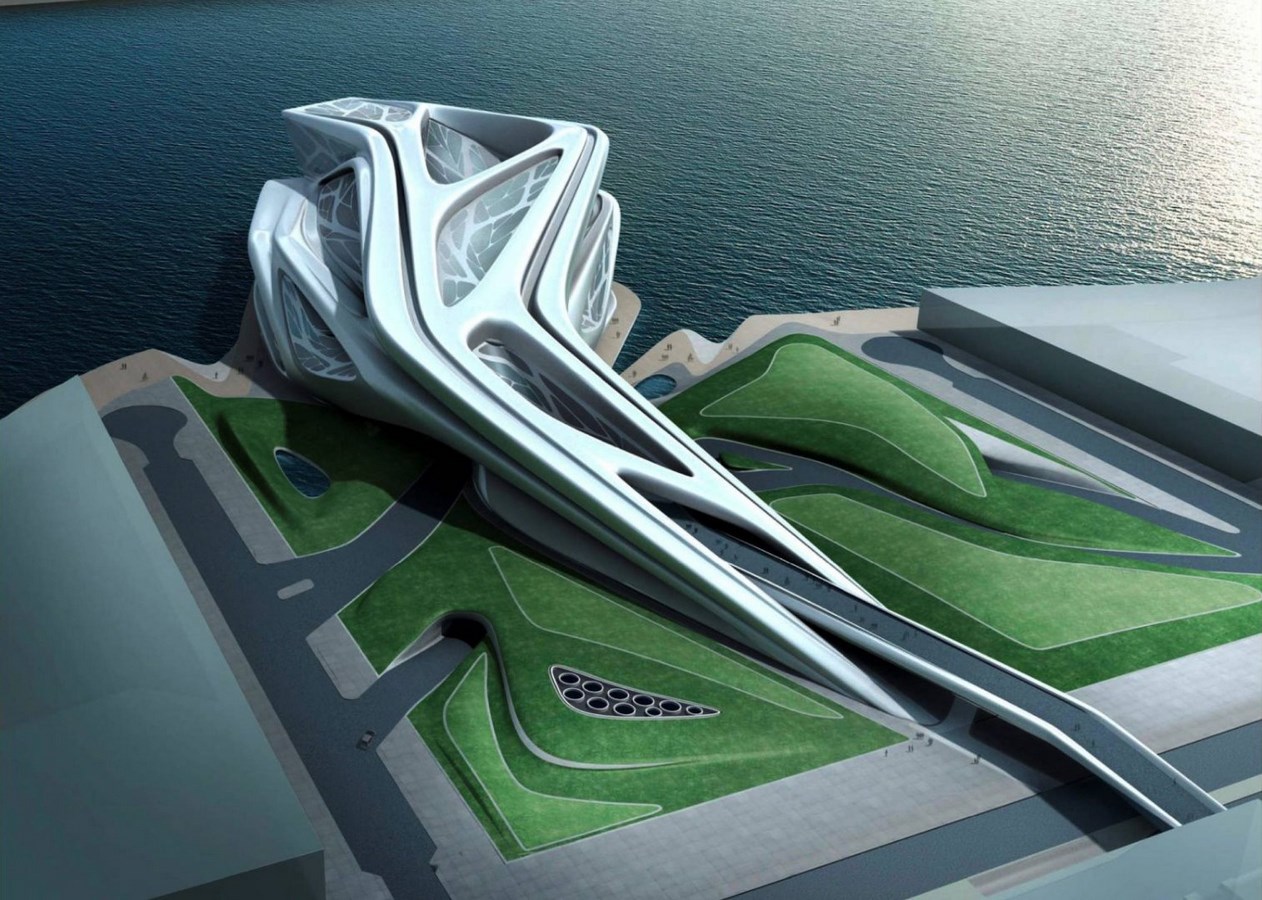
Year: Under Construction
Type: Art Centre
Location: Abu Dhabi, UAE
20. Maggie’s Centre Fife, Scotland
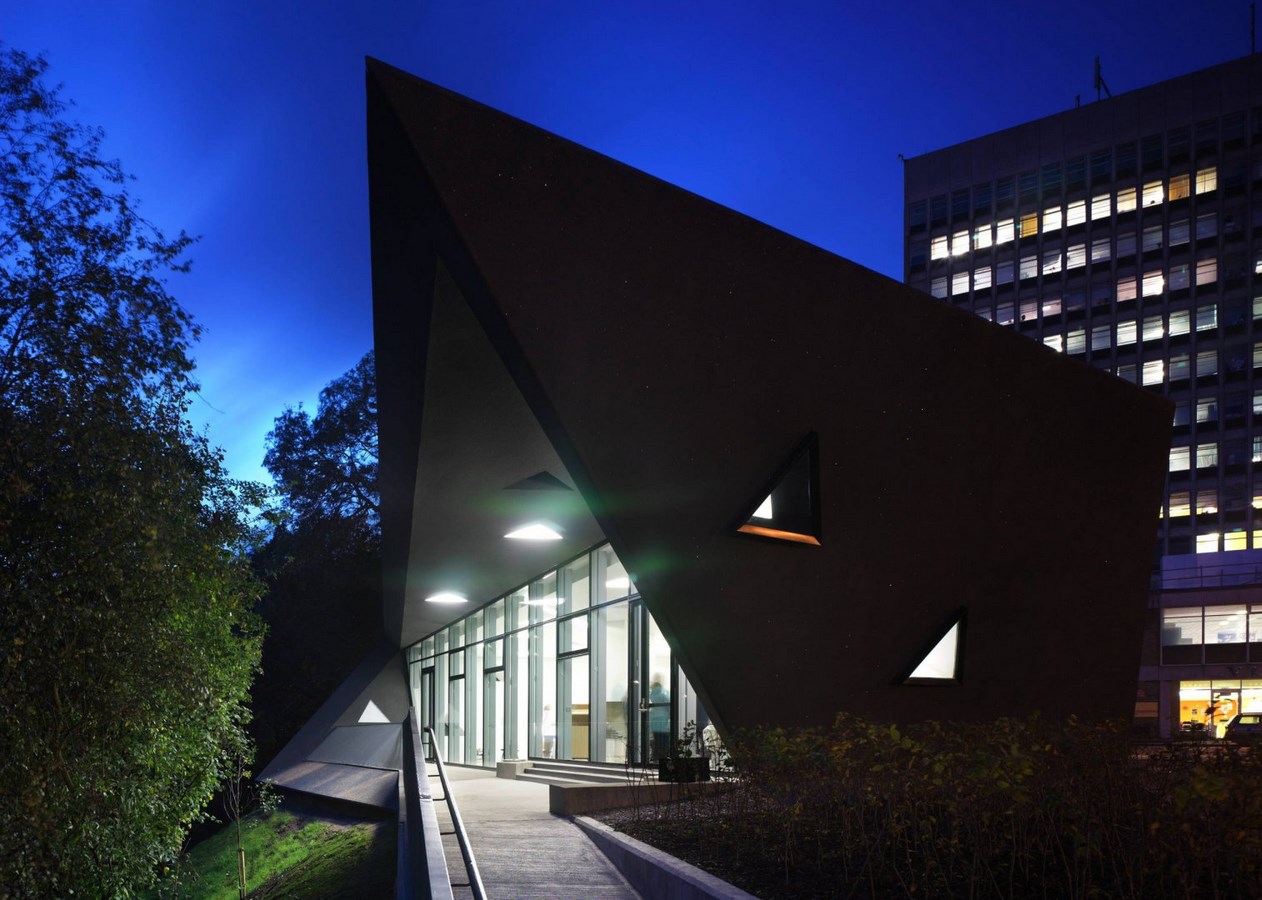
Year: 2006
Type: Private
Location: Kirkaldy, Fife, Scotland
21. Bergisel Ski Jump, Austria | Zaha Hadid
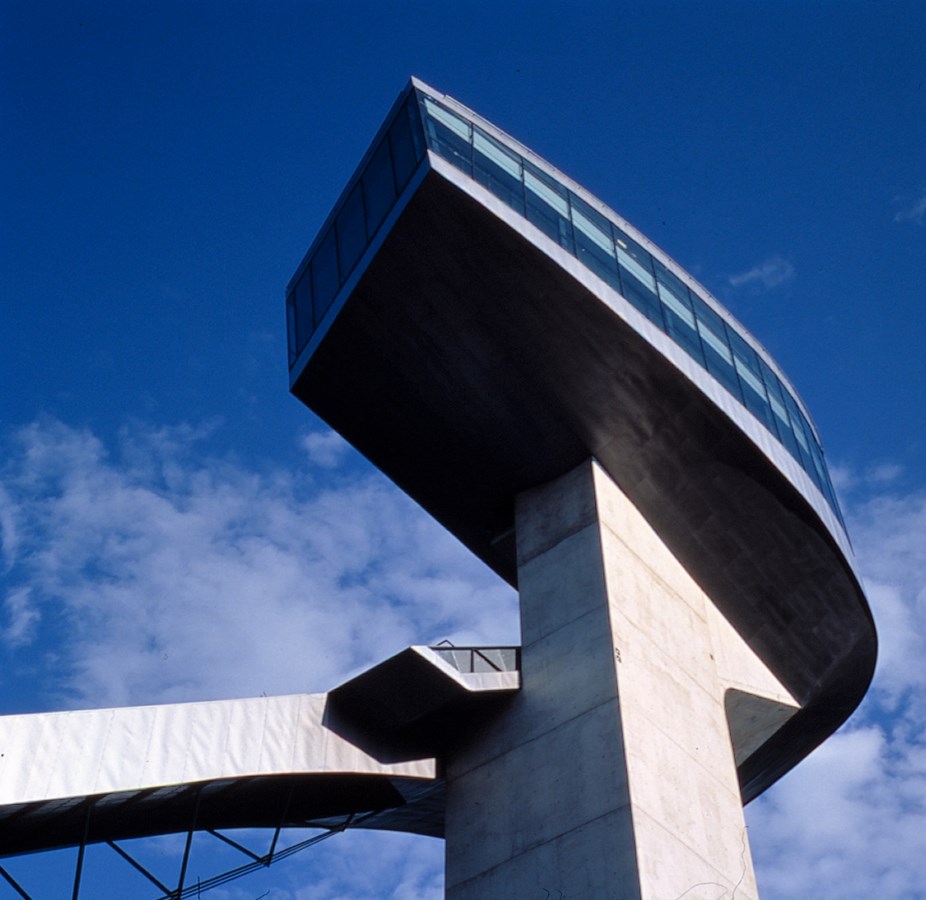
Year: 2002
Type: Public Building
Location: Innsbruck, Austria
22. Al Janoub Stadium, Qatar
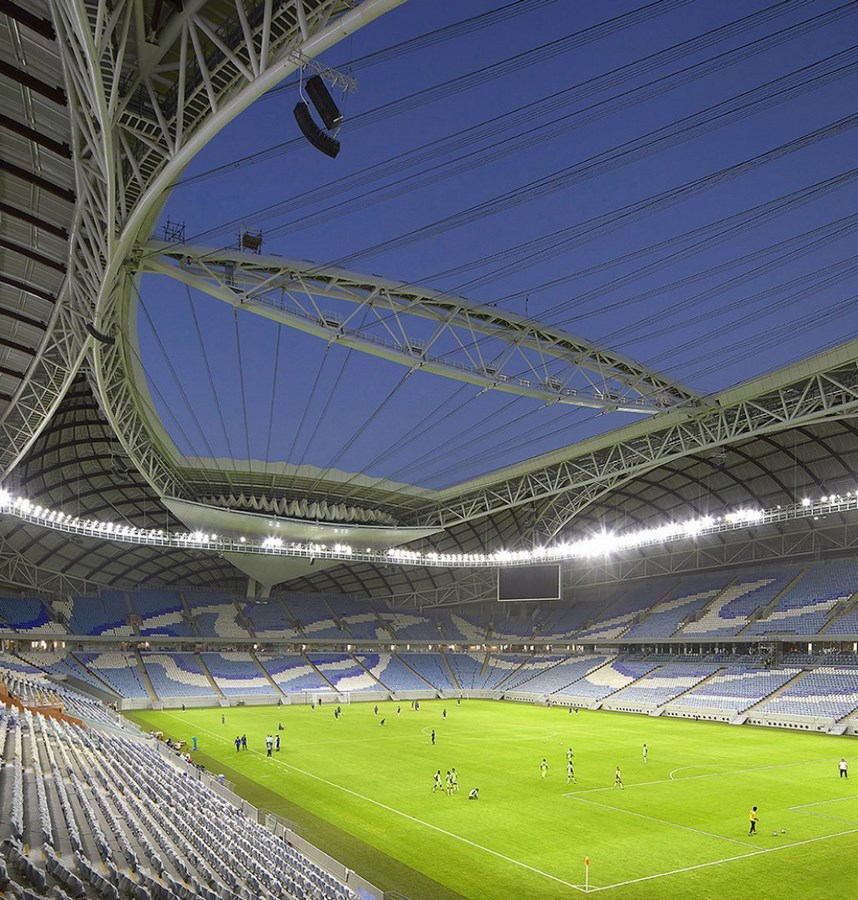
Year: 2019
Type: Sports
Location: Qatar
23. Library and Learning Centre University of Economics Vienna, Austria
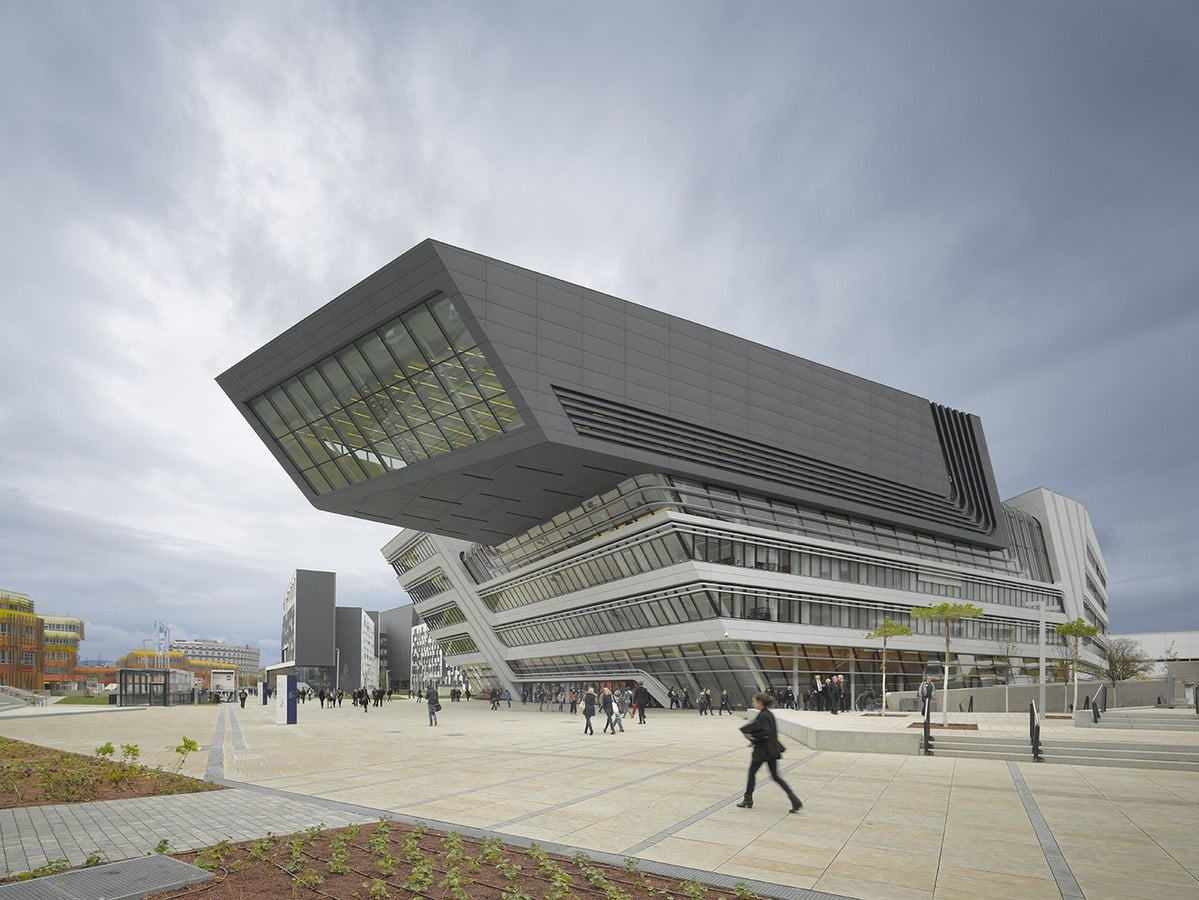
Year: 2013
Type: University
Location: Vienna, Austria
24. The Serpentine Gallery, UK

Year: 2013
Type: Gallery
Location:29 Exhibition Road, London SW7 2AS, UK
25. Mandarin Oriental, 600 Collins Street, Melbourne | Zaha Hadid
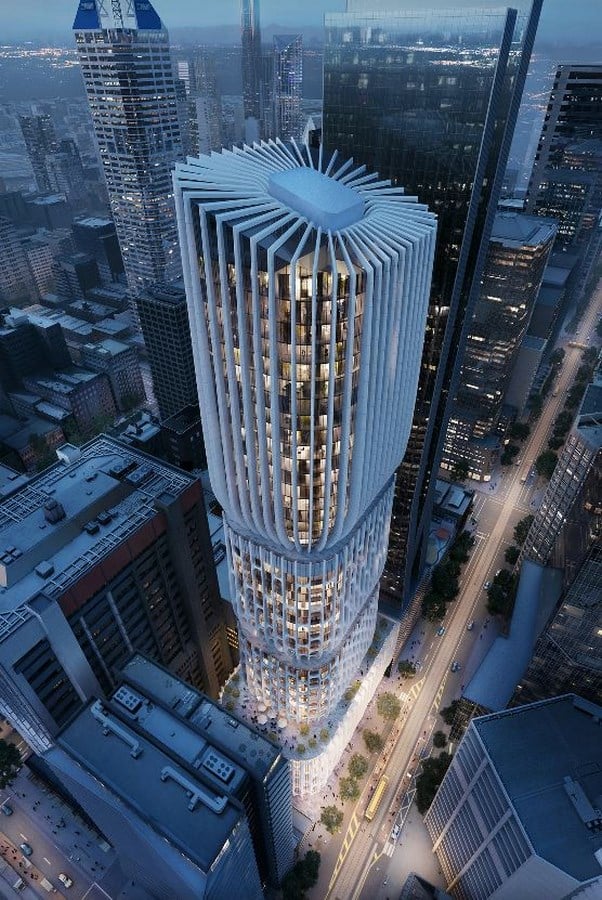
Type: Mixed-use
Location: Melbourne, Australia
26. Sheikh Zayed Bridge, UAE
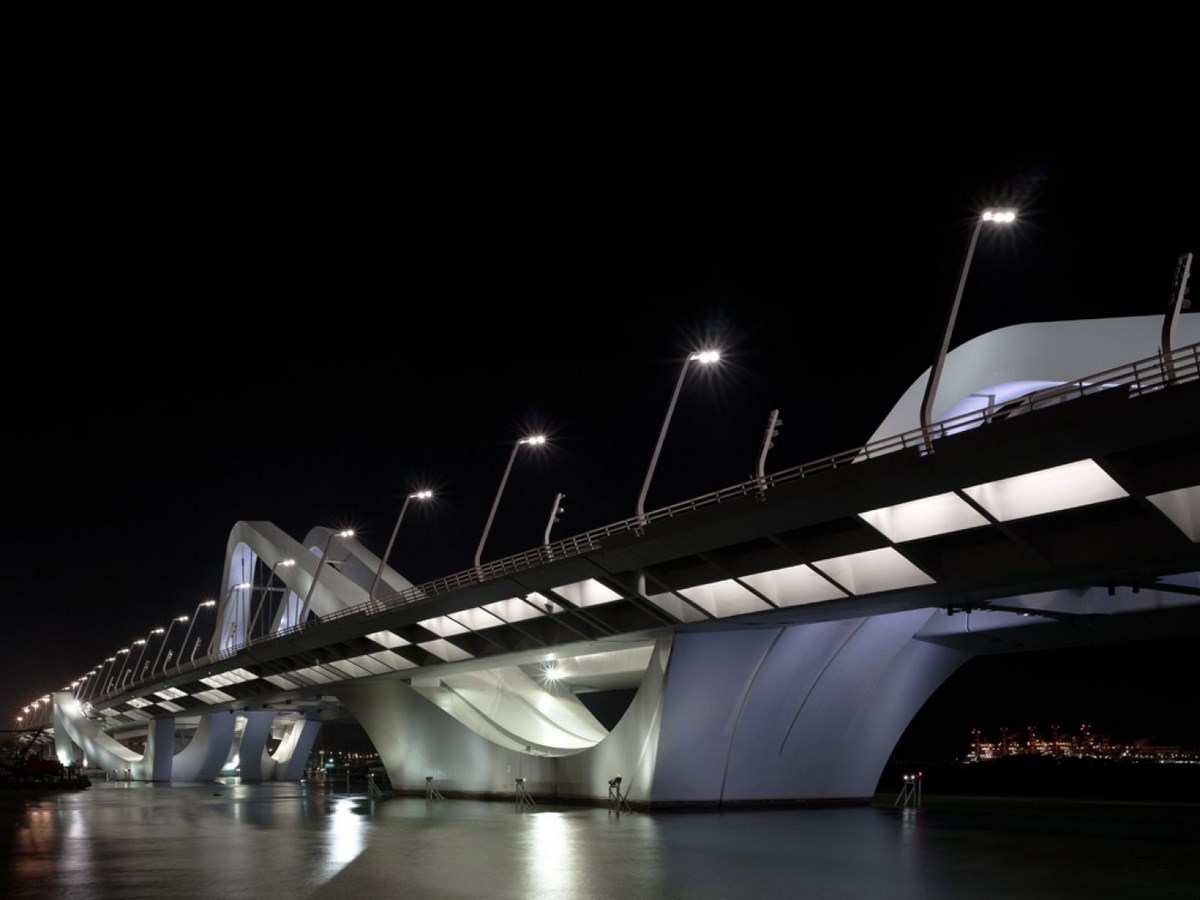
Year: 2010
Type: Bridge
Location: Abu Dhabi, UAE
27. Port House, Belgium
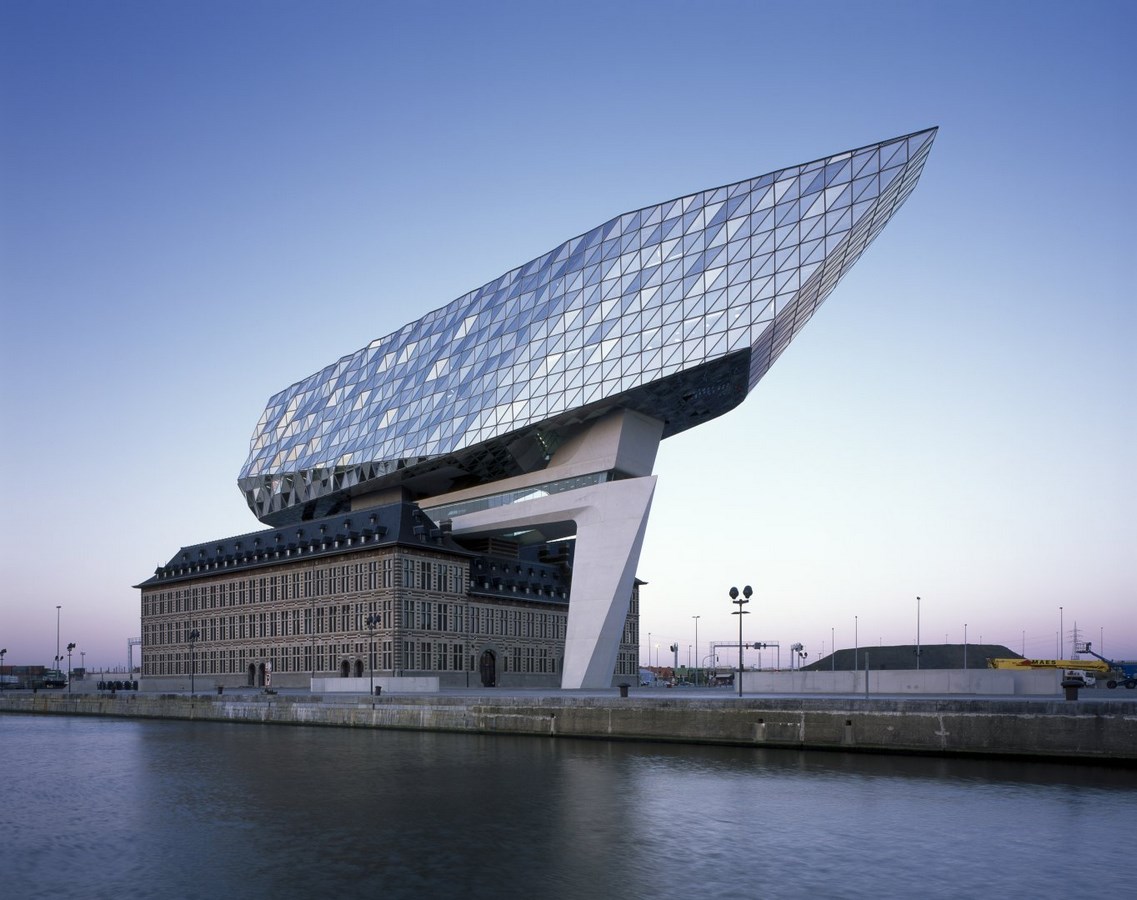
Year: 2016
Type: Public Building
Location: Antwerp, Belgium
28. Jockey Club Innovation Tower, China
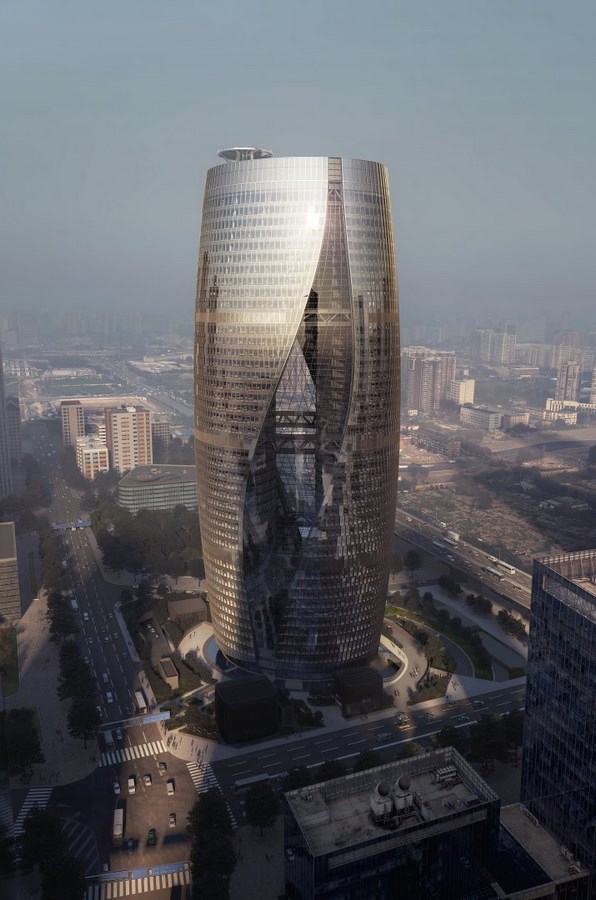
Year: 2014
Type: University
Location:Hongkong, China
29. Leeza SOHO, China
Year: 2019
Type: Mixed-use
Location: Beijing, China
30. Evelyn Grace Academy, UK | Zaha Hadid
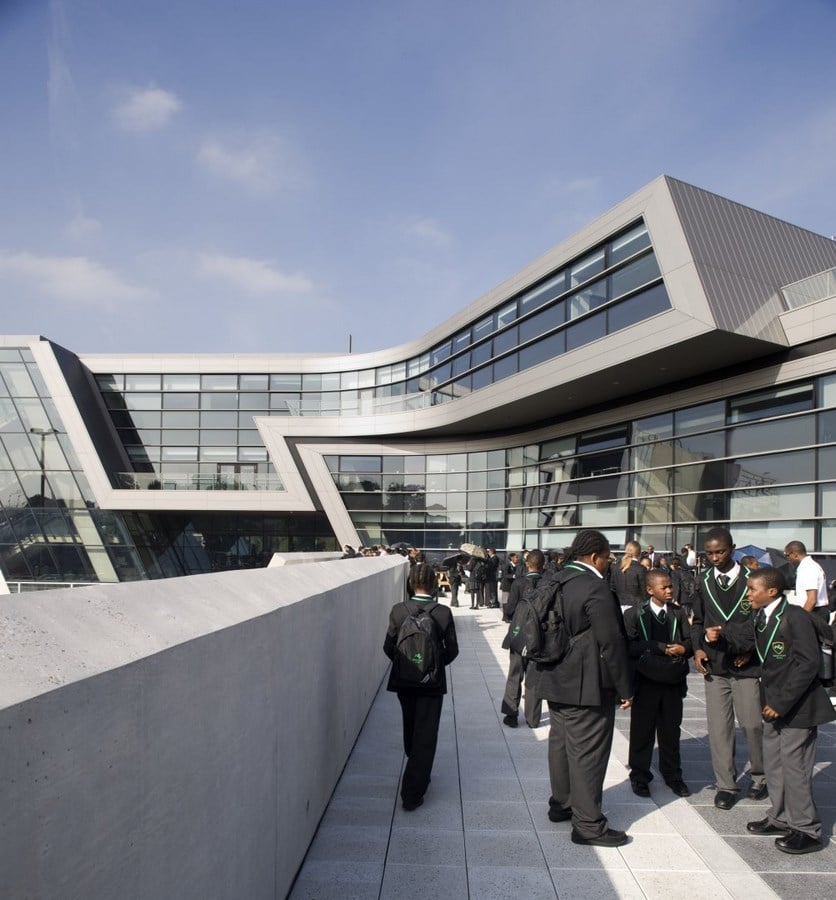
Year: 2010
Type: University
Location: London, UK
Zaha Hadid: Life, Style and Legacy
Zaha Hadid (31 October 1950 – 31 March 2016) was born in Baghdad, Iraq, studied mathematics at the American University of Beirut, and trained at the Architectural Association in London before founding her own practice in 1980. For over a decade she was known as a “paper architect” whose radical, fragmented drawings were considered unbuildable — until the Vitra Fire Station (1993) in Weil am Rhein, Germany proved otherwise and launched one of the most influential careers in contemporary architecture.
In 2004 she became the first woman to win the Pritzker Architecture Prize, and in 2016 the first woman to be awarded the RIBA Royal Gold Medal in her own right. Her practice won the Stirling Prize twice — for the MAXXI museum in Rome (2010) and the Evelyn Grace Academy in London (2011). Nicknamed the “Queen of the Curve”, she pioneered parametricism: fluid, algorithmically driven geometry executed in concrete, steel and glass, seen at its fullest in the Heydar Aliyev Centre and the London Aquatics Centre.
Hadid died of a heart attack in Miami on 31 March 2016, aged 65. Zaha Hadid Architects continues under Patrik Schumacher, completing landmark posthumous works such as Beijing Daxing International Airport (2019) and Al Janoub Stadium for the 2022 FIFA World Cup. Her legacy is also explored in our guide to the 20 greatest architects in the world and pairs well with the restrained minimalism of Tadao Ando’s most famous works — her stylistic opposite.
Opened in 2019, three years after Hadid’s death, Beijing Daxing International Airport unfolds as a giant starfish whose five arms shorten walking distances so that no gate is more than about eight minutes from the centre. At roughly 700,000 square metres it is among the largest single-building airport terminals ever constructed, its flowing roof pierced by light wells that pour daylight into the central atrium — her fluid geometry executed at infrastructural scale.
Frequently Asked Questions About Zaha Hadid
What is Zaha Hadid famous for?
Zaha Hadid is famous for her sweeping, curvilinear buildings that made her the leading figure of parametric architecture, and for being the first woman to win the Pritzker Architecture Prize (2004). Landmarks such as the Heydar Aliyev Centre, the London Aquatics Centre and MAXXI in Rome defined her style.
What architectural style did Zaha Hadid use?
Her work grew out of deconstructivism and matured into parametricism — fluid, computer-driven geometry with continuous curves and dramatic cantilevers, which earned her the nickname “Queen of the Curve”.
What is Zaha Hadid’s most famous building?
The Heydar Aliyev Centre in Baku, Azerbaijan (2012) is widely regarded as her masterpiece, though the London Aquatics Centre (2011) and Guangzhou Opera House (2010) are equally celebrated.
Was Zaha Hadid the first woman to win the Pritzker Prize?
Yes. In 2004 she became the first woman — and the first Arab architect — to receive the Pritzker Architecture Prize, architecture’s highest honour.
When did Zaha Hadid die and what happened to her firm?
She died of a heart attack in Miami on 31 March 2016 at the age of 65. Her practice, Zaha Hadid Architects, continues under Patrik Schumacher and has completed major posthumous projects including Beijing Daxing International Airport.


