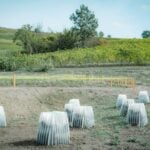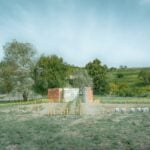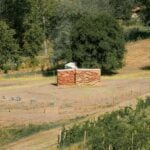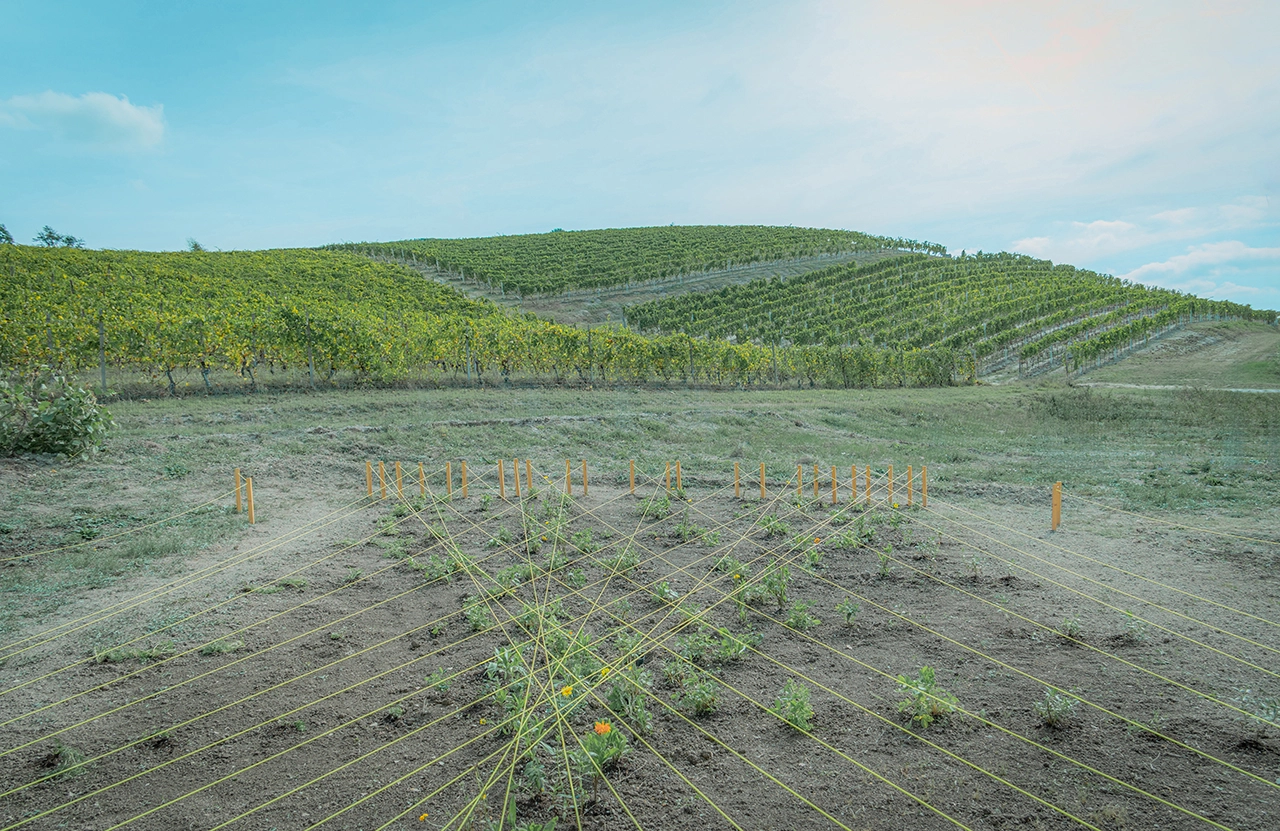
A garden is growing on the hills of Canelli, in the province of Asti. It is already alive. Commissioned by the Castello di Rivoli Museo d’Arte Contemporanea, the Multispecies Vectorial Garden of Canelli is a landscape intervention by ecoLogicStudio in collaboration with the Synthetic Landscape Lab at Innsbruck University.

Project Name: Multispecies Vectorial Garden of Canelli
Studio Name: ecoLogicStudio
Location: Piedmont, Italy
Year: 2026
More than graphic markers, the vectors act as spatial design devices. They establish directions, intersections and gradients that guide the distribution of plant communities while leaving room for spontaneous colonisation and future ecological change. The resulting geometry creates a dialogue between the regular patterns of agricultural production and the more complex, unpredictable dynamics of multispecies life. The design operates across three interconnected scales. At the territorial scale, the garden acts as an ecological node within the wider vineyard landscape, connecting cultivated land with existing vegetation, woodland edges and other habitats. At the spatial scale, vectors, planting fields and pathways organise different ecological conditions and visitor experiences. At the multispecies scale, plant communities are selected according to their ecological functions, seasonal behaviour and relationships with other organisms. Almost one thousand plants from around thirty species contribute to a changing range of habitats and seasonal resources. ecoLogicStudio’s ecological taxonomy informs their selection and distribution according to phenology, ecological function and habitat value. Existing plum and willow trees are retained and integrated into the design, providing shade and a sheltered understorey. The garden is also conceived as an immersive environment for human observation and participation. Three distinct areas, known as quiet wedges, offer different ways of experiencing the landscape. Nine seats, 3D-printed using recycled PETG and biodegradable PET, create places for contemplation while also functioning as planters for growing soft cushions of clover. An inclined surface provides a setting for conviviality and shared observation, while a narrow, deep wedge brings visitors closer to the garden at root level. Six principles — Pause, Observe, Leave Space, Return, Accept Change and Share — guide visitors toward their own route through the garden, inviting them to slow down, pay attention to its living layers and become participants in its evolving ecology-Sheet1
©ecoLogicStudio

The project explores how a designed garden can become an active ecological infrastructure, generating new relationships between plants, soil, insects, birds, microorganisms and human visitors.

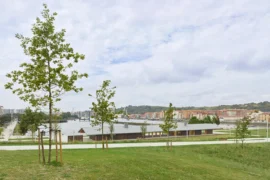
Located at Moncalvina, in Canelli, within the UNESCO World Heritage Vineyard Landscape of Piedmont: Langhe-Roero and Monferrato, the project engages with the distinctive agricultural character of its surroundings. ecoLogicStudio proposes a dynamic system, in which spatial design and biological processes interact and evolve together over time.
More than graphic markers, the vectors act as spatial design devices. They establish directions, intersections and gradients that guide the distribution of plant communities while leaving room for spontaneous colonisation and future ecological change. The resulting geometry creates a dialogue between the regular patterns of agricultural production and the more complex, unpredictable dynamics of multispecies life. The design operates across three interconnected scales. At the territorial scale, the garden acts as an ecological node within the wider vineyard landscape, connecting cultivated land with existing vegetation, woodland edges and other habitats. At the spatial scale, vectors, planting fields and pathways organise different ecological conditions and visitor experiences. At the multispecies scale, plant communities are selected according to their ecological functions, seasonal behaviour and relationships with other organisms. Almost one thousand plants from around thirty species contribute to a changing range of habitats and seasonal resources. ecoLogicStudio’s ecological taxonomy informs their selection and distribution according to phenology, ecological function and habitat value. Existing plum and willow trees are retained and integrated into the design, providing shade and a sheltered understorey. The garden is also conceived as an immersive environment for human observation and participation. Three distinct areas, known as quiet wedges, offer different ways of experiencing the landscape. Nine seats, 3D-printed using recycled PETG and biodegradable PET, create places for contemplation while also functioning as planters for growing soft cushions of clover. An inclined surface provides a setting for conviviality and shared observation, while a narrow, deep wedge brings visitors closer to the garden at root level. Six principles — Pause, Observe, Leave Space, Return, Accept Change and Share — guide visitors toward their own route through the garden, inviting them to slow down, pay attention to its living layers and become participants in its evolving ecology-Sheet3
©ecoLogicStudio

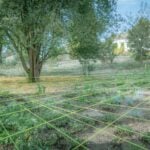
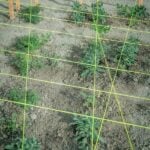
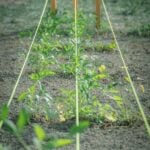
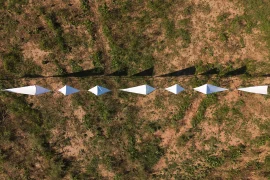
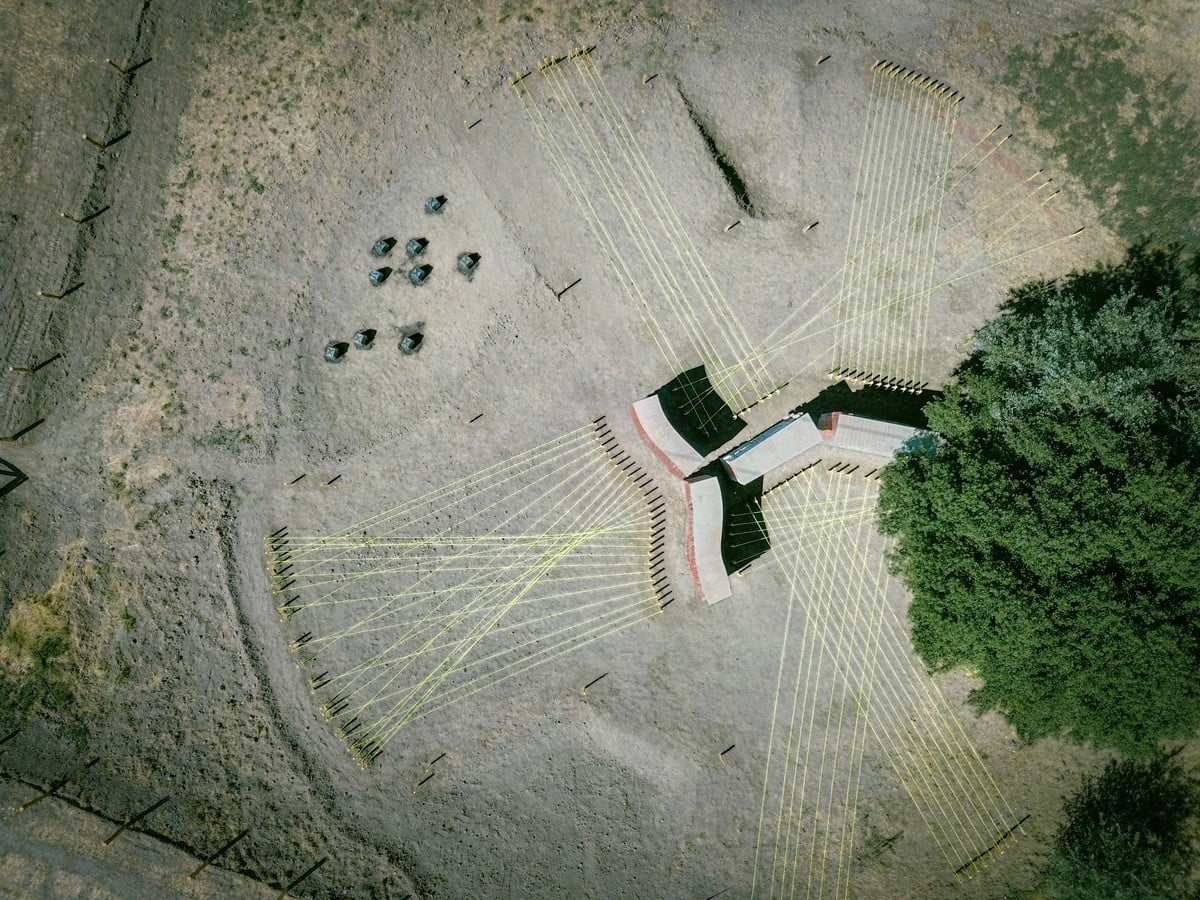
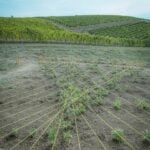
At the centre of the garden, a sculptural artwork forms a distinct artistic presence. In dialogue with it, ecoLogicStudio’s vectorial design system extends across the site through one hundred vectors. Materialised as fine yellow threads, these lines establish spatial relationships between planting positions, existing vegetation and the parallel geometries of the surrounding vineyards.

More than graphic markers, the vectors act as spatial design devices. They establish directions, intersections and gradients that guide the distribution of plant communities while leaving room for spontaneous colonisation and future ecological change. The resulting geometry creates a dialogue between the regular patterns of agricultural production and the more complex, unpredictable dynamics of multispecies life.
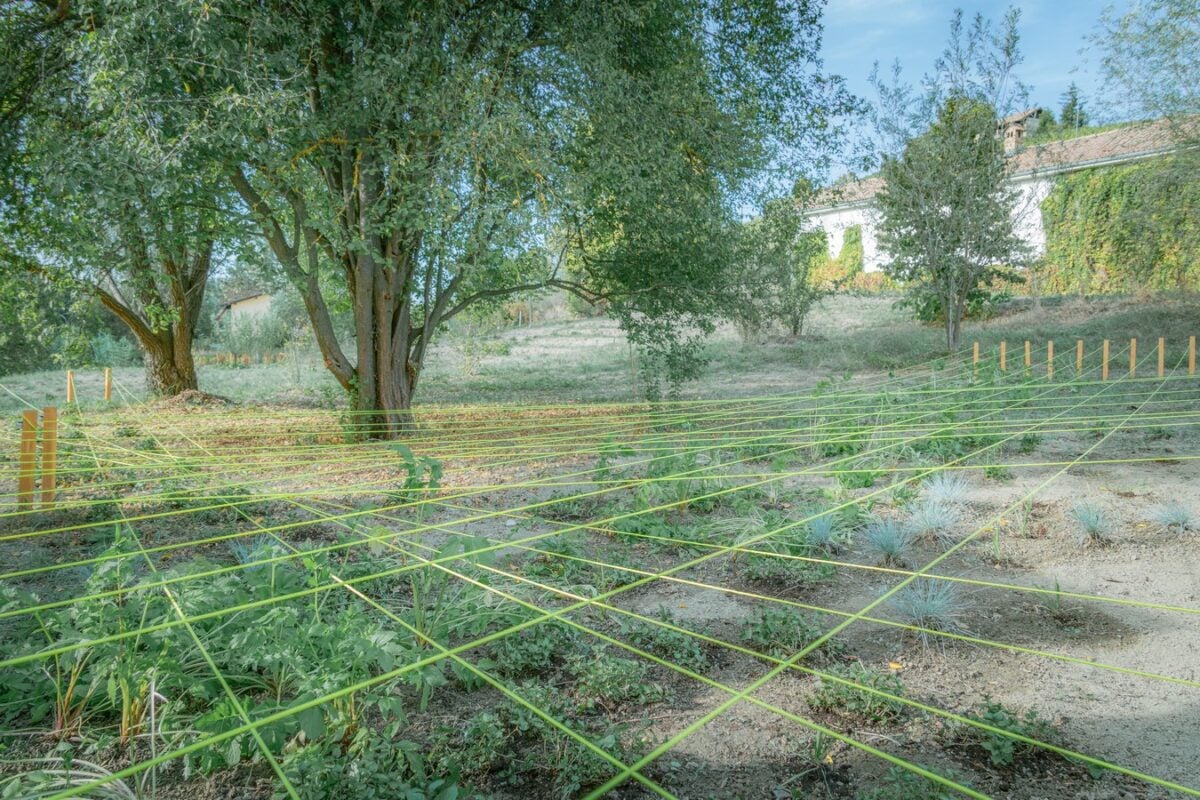
More than graphic markers, the vectors act as spatial design devices. They establish directions, intersections and gradients that guide the distribution of plant communities while leaving room for spontaneous colonisation and future ecological change. The resulting geometry creates a dialogue between the regular patterns of agricultural production and the more complex, unpredictable dynamics of multispecies life. The design operates across three interconnected scales. At the territorial scale, the garden acts as an ecological node within the wider vineyard landscape, connecting cultivated land with existing vegetation, woodland edges and other habitats. At the spatial scale, vectors, planting fields and pathways organise different ecological conditions and visitor experiences. At the multispecies scale, plant communities are selected according to their ecological functions, seasonal behaviour and relationships with other organisms. Almost one thousand plants from around thirty species contribute to a changing range of habitats and seasonal resources. ecoLogicStudio’s ecological taxonomy informs their selection and distribution according to phenology, ecological function and habitat value. Existing plum and willow trees are retained and integrated into the design, providing shade and a sheltered understorey. The garden is also conceived as an immersive environment for human observation and participation. Three distinct areas, known as quiet wedges, offer different ways of experiencing the landscape. Nine seats, 3D-printed using recycled PETG and biodegradable PET, create places for contemplation while also functioning as planters for growing soft cushions of clover. An inclined surface provides a setting for conviviality and shared observation, while a narrow, deep wedge brings visitors closer to the garden at root level. Six principles — Pause, Observe, Leave Space, Return, Accept Change and Share — guide visitors toward their own route through the garden, inviting them to slow down, pay attention to its living layers and become participants in its evolving ecology-Sheet4
©ecoLogicStudio

The design operates across three interconnected scales. At the territorial scale, the garden acts as an ecological node within the wider vineyard landscape, connecting cultivated land with existing vegetation, woodland edges and other habitats. At the spatial scale, vectors, planting fields and pathways organise different ecological conditions and visitor experiences. At the multispecies scale, plant communities are selected according to their ecological functions, seasonal behaviour and relationships with other organisms.

Almost one thousand plants from around thirty species contribute to a changing range of habitats and seasonal resources. ecoLogicStudio’s ecological taxonomy informs their selection and distribution according to phenology, ecological function and habitat value. Existing plum and willow trees are retained and integrated into the design, providing shade and a sheltered understorey.
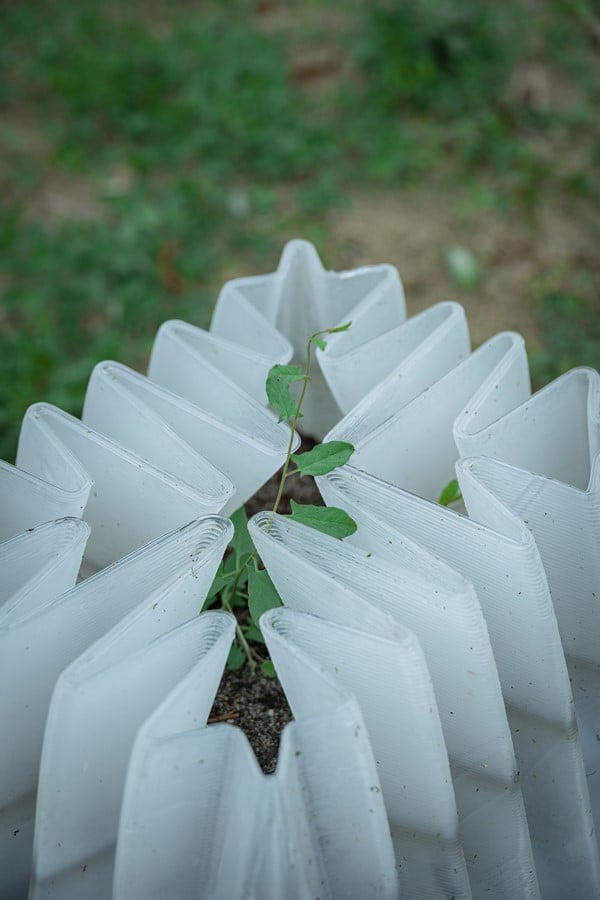
More than graphic markers, the vectors act as spatial design devices. They establish directions, intersections and gradients that guide the distribution of plant communities while leaving room for spontaneous colonisation and future ecological change. The resulting geometry creates a dialogue between the regular patterns of agricultural production and the more complex, unpredictable dynamics of multispecies life. The design operates across three interconnected scales. At the territorial scale, the garden acts as an ecological node within the wider vineyard landscape, connecting cultivated land with existing vegetation, woodland edges and other habitats. At the spatial scale, vectors, planting fields and pathways organise different ecological conditions and visitor experiences. At the multispecies scale, plant communities are selected according to their ecological functions, seasonal behaviour and relationships with other organisms. Almost one thousand plants from around thirty species contribute to a changing range of habitats and seasonal resources. ecoLogicStudio’s ecological taxonomy informs their selection and distribution according to phenology, ecological function and habitat value. Existing plum and willow trees are retained and integrated into the design, providing shade and a sheltered understorey. The garden is also conceived as an immersive environment for human observation and participation. Three distinct areas, known as quiet wedges, offer different ways of experiencing the landscape. Nine seats, 3D-printed using recycled PETG and biodegradable PET, create places for contemplation while also functioning as planters for growing soft cushions of clover. An inclined surface provides a setting for conviviality and shared observation, while a narrow, deep wedge brings visitors closer to the garden at root level. Six principles — Pause, Observe, Leave Space, Return, Accept Change and Share — guide visitors toward their own route through the garden, inviting them to slow down, pay attention to its living layers and become participants in its evolving ecology-Sheet6
©ecoLogicStudio

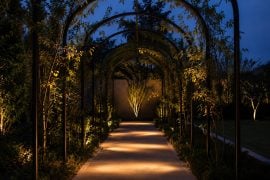
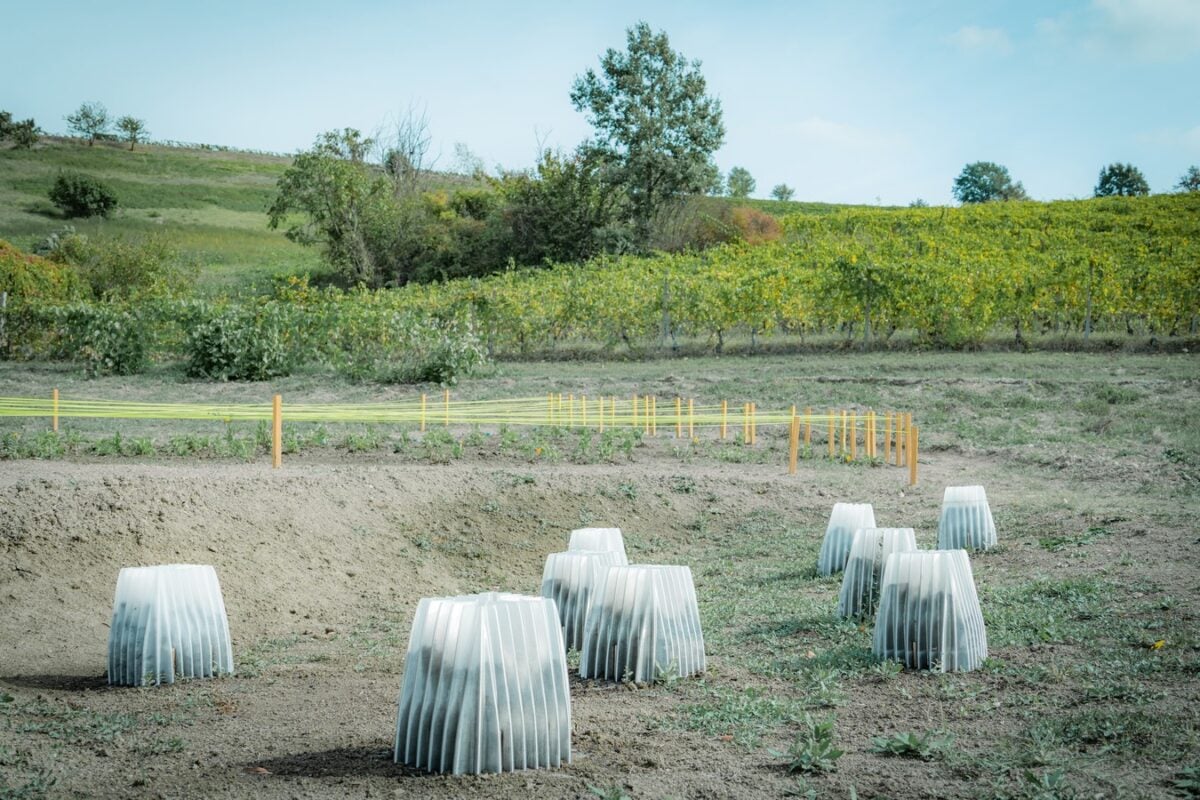
The garden is also conceived as an immersive environment for human observation and participation. Three distinct areas, known as quiet wedges, offer different ways of experiencing the landscape. Nine seats, 3D-printed using recycled PETG and biodegradable PET, create places for contemplation while also functioning as planters for growing soft cushions of clover. An inclined surface provides a setting for conviviality and shared observation, while a narrow, deep wedge brings visitors closer to the garden at root level.
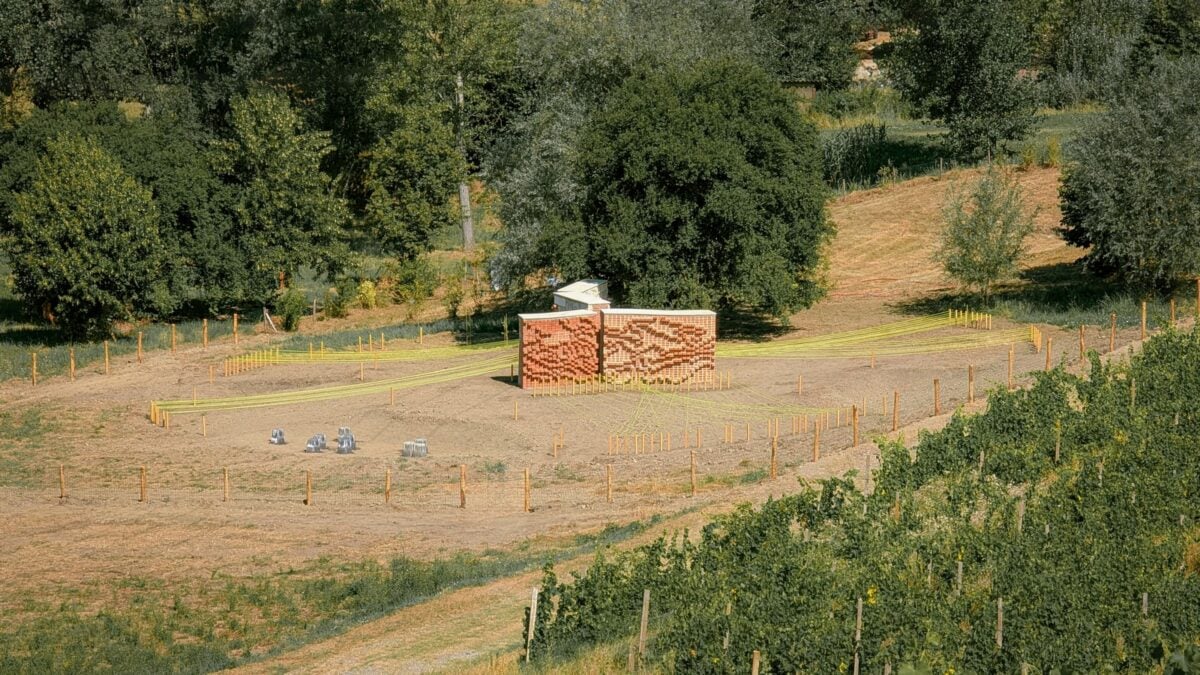
More than graphic markers, the vectors act as spatial design devices. They establish directions, intersections and gradients that guide the distribution of plant communities while leaving room for spontaneous colonisation and future ecological change. The resulting geometry creates a dialogue between the regular patterns of agricultural production and the more complex, unpredictable dynamics of multispecies life. The design operates across three interconnected scales. At the territorial scale, the garden acts as an ecological node within the wider vineyard landscape, connecting cultivated land with existing vegetation, woodland edges and other habitats. At the spatial scale, vectors, planting fields and pathways organise different ecological conditions and visitor experiences. At the multispecies scale, plant communities are selected according to their ecological functions, seasonal behaviour and relationships with other organisms. Almost one thousand plants from around thirty species contribute to a changing range of habitats and seasonal resources. ecoLogicStudio’s ecological taxonomy informs their selection and distribution according to phenology, ecological function and habitat value. Existing plum and willow trees are retained and integrated into the design, providing shade and a sheltered understorey. The garden is also conceived as an immersive environment for human observation and participation. Three distinct areas, known as quiet wedges, offer different ways of experiencing the landscape. Nine seats, 3D-printed using recycled PETG and biodegradable PET, create places for contemplation while also functioning as planters for growing soft cushions of clover. An inclined surface provides a setting for conviviality and shared observation, while a narrow, deep wedge brings visitors closer to the garden at root level. Six principles — Pause, Observe, Leave Space, Return, Accept Change and Share — guide visitors toward their own route through the garden, inviting them to slow down, pay attention to its living layers and become participants in its evolving ecology-Sheet10
©ecoLogicStudio

Six principles — Pause, Observe, Leave Space, Return, Accept Change and Share — guide visitors toward their own route through the garden, inviting them to slow down, pay attention to its living layers and become participants in its evolving ecology.
Author

Mansi Agrawal is a part of the in-house team at Re-thinking The Future and Eduwik. An enthusiastic reader at heart, she has always found joy in exploring new ideas through research and expressing them through writing. As a multi-tasker, she gets multiple jobs done without compromising their quality. She is amongst those people whom you can rely on for any task be it personal or professional.