Good interior design is often recognised by what you see first: the proportions of a room, the material palette, a striking piece of furniture or the way natural light moves through a space. But some of the most important design decisions are the ones that quietly disappear into the background.
Hardware is one of them.
A beautifully designed kitchen or wardrobe can lose its sense of refinement if drawers feel heavy, noisy or awkward to use. On the other hand, when the movement is smooth and the details are considered, the entire piece of furniture feels more resolved. This is why drawer systems have become an increasingly important part of contemporary furniture design.
The shift is particularly visible in modern Indian homes, where clean-lined interiors are often expected to work hard without looking overly functional. Storage needs to accommodate real life, but it also needs to belong to the visual language of the room.
Hettich’s Linear Drawer Systems approach this balance through a combination of design, engineering and flexibility.
AvoriTech, for instance, is built around restraint. Its 8 mm drawer sides create a particularly slim profile, while concealed connectors keep the exterior free from visual distractions. The result is a drawer that can sit comfortably within minimalist furniture, where even a small exposed detail can affect the overall appearance.
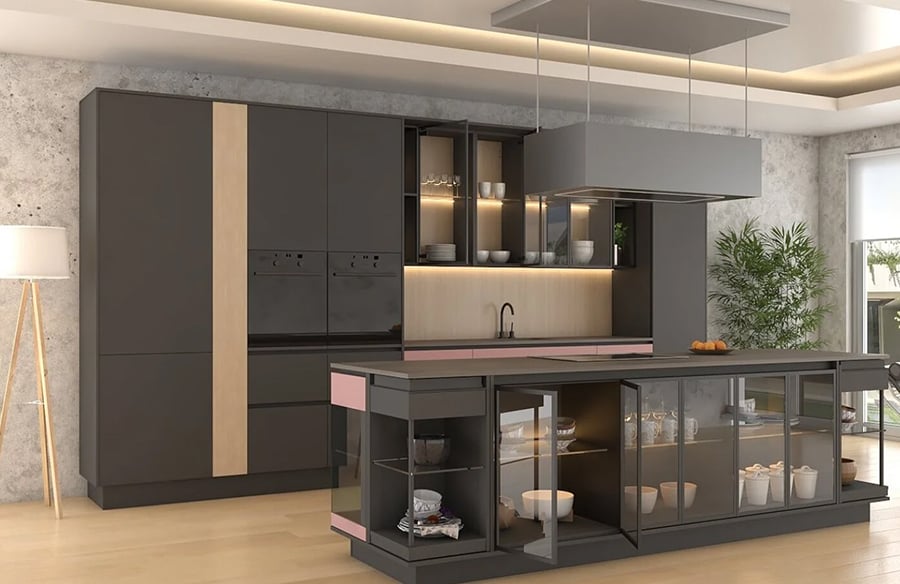
For those looking for more personalisation, AvanTech YOU takes a different route. Its customisable elements and optional add-on illumination allow storage to become part of the furniture’s identity. In a kitchen, this can mean creating a dedicated place for everything from baking equipment to everyday utensils, rather than treating storage as an afterthought.
Then there are spaces where appearance is only half the equation. Kitchen cabinets, wardrobes and utility areas often have to carry considerable weight and withstand repeated use. ArciTech is designed for precisely these demands, with load capacities of up to 70 kg and organisation options that help make heavily used storage easier to manage.
InnoTech Atira brings another layer of flexibility through organisation elements and cross dividers. This becomes useful when storage needs to accommodate objects of very different sizes, allowing the internal layout to be adapted rather than leaving everything to become one large, difficult-to-navigate compartment.
What ties the four systems together is something deceptively simple: movement.
We tend to notice a drawer when it doesn’t work properly. A rough opening, a loud closure or a drawer that struggles under weight can interrupt an otherwise carefully designed interior. Smooth, quiet operation, by contrast, simply becomes part of the experience.
That is perhaps the real role of good furniture hardware. It does not need to compete with the architecture or announce itself every time it is used. It needs to make the design work better.
As homes become more personalised and multifunctional, these seemingly small decisions matter more. The future of furniture may not always be about adding more features. Sometimes, it is about making the everyday feel remarkably effortless.