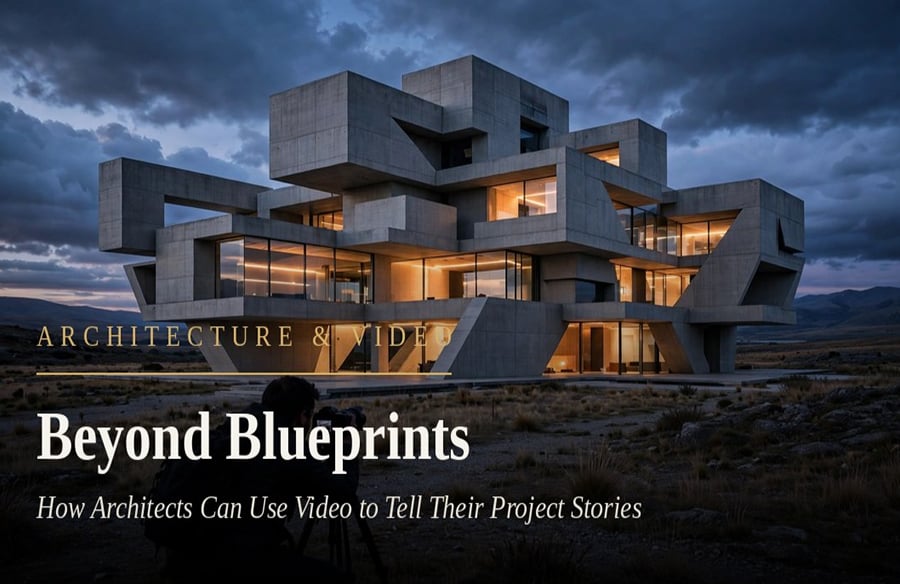
Architecture is best experienced in the real world. You can’t just take a single picture of a building and say you understand it. Space and architecture are best discovered as you move through it. Different kinds of light change a facade through the day. Corridors can be long and narrow before a room suddenly opens up. Courtyards are only discovered when you step into it. You can capture all that with video and not with a single picture.
With video, architecture can easily explain a project in a more honest and elegant manner compared to blueprints. A short video can capture how a client experiences the design, the materials used, and the overall mood of the space.
Why Video Works for Architecture
Architectural drawings and photographs create an understanding of a project and explanatory images for a project, respectively. However, for a client or jury to feel the project and experience it, a project needs to have movement. Videos capture project movement and demonstrate how daylight, for example, moves through a building.
Editing: Where Raw Clips Become a Story
Make the decision about what gets kept and what gets cut. Decide in what order the clips get presented. The online video editor gives you the cutting room without the hassle of large software downloads or long and tedious learning processes about video editing.
With this online editor, clips can be arranged and trimmed to your content in a web browser. You can name the clips and add titles and logos. Simple background music sets the tempo. A well done title sequence gives the project its name. Keep the edit as honest as possible. Do not cut for dramatization.
What to Film: Shots Every Project Video Needs
Film the approach, because arrival gives a first impression. Capture the experience of a visitor as they approach the building, and show them entering the building. Film the materials and details that drawings do not help sell. Drawings do not show the grain of the timber or the way a stair meets a wall. Include people to give a sense of scale, as empty spaces do not give an accurate sense of the dimensions.
- A slow exterior walkaround at golden hour
- Interior walkthroughs at normal walking pace
- Close-ups of materials and junctions
- Occupied spaces, with people using them
- The surrounding context: street, landscape, skyline
Filming With What You Have
You do not need a film or video production company to create a project video. Use your phone to film; a recent phone with a small stabilizer will give you footage good enough for your portfolio. Film your subjects during golden hour, when the sun is low to the horizon. This will give your subject an interesting model. Mid-day light will give you absolutely flat images, which you do not want.
Simple Edits That Make a Big Difference
When viewing a video, pacing is very important in determining whether a viewer sticks around, or bounces. Exterior shots can be longer than necessary, because often times, buildings reveal themselves slowly. Interior sequences can be a lot faster and Match the rhythm of movement. Simple cutaways work best.
Add legible titles, and texts in an elegant serif font for project name and location, and main materials. Finish the video with all clips colored in the same tone, so the video has a consistent feel.
Where to Share Your Project Videos
Embed your project films on the project pages of your portfolio. Drawings and still images sell your projects less than videos. Videos capture attention better, and engage the viewer instantly, unlike stills. Drawings and stills require effort to process.
| Platform | Best use |
| Portfolio website | Full project story, embedded with drawings |
| Award entries | Jury attention, design narrative |
| Social feeds | Sixty-second highlights, reach |
| Client pitches | Design intent, emotional buy-in |
Conclusion
Your buildings tell great stories; video gives you the opportunity to narrate these stories. Video provides an opportunity to bring your projects to life in a way that still photographs cannot. It will take a few hours to film your project and a couple more hours to edit, but the video will be something you can use and share for years. Film your best project, the one you have great still photographs of. Video will help people have the same experience you had when you took pictures of the building. Upload the video, embed it, share it. You will see how people respond to your work very differently when they can walk through it instead of scrolling past it.