Gravity is the only force a roof never gets a day off from, yet almost nobody designs for the weather that actually breaks buildings. I’ve spent enough time on ladders after storm season to know the failure usually isn’t dramatic. It’s a lifted shingle tab on the windward rake, a hairline crack above a dormer, water finding a path it’s been hunting for a decade.
That’s why I care less about which shingle brand a homeowner picked and more about how the whole assembly handles three specific loads: impact, uplift, and water that freezes. If you own a house in a four-season climate, you should too. When a system does fail, homeowners in my area search for emergency roof repair services in Alexandria and the good crews are booked solid. That crowding tells you something: most damage was preventable, or at least detectable weeks earlier.
Here’s what I want to walk you through. The physics of how storms hurt roofs, the layers that actually do the protecting, and a short inspection routine you can run yourself after the next big system rolls through.
What actually kills a roof in a storm
Three mechanisms do nearly all the damage, and they gang up on each other.
Impact is the obvious one. Hail hits, granules shear off, the asphalt mat cracks underneath. A shingle that loses its granule armor ages years in a single afternoon because the asphalt is now exposed to ultraviolet light.
Uplift is the one homeowners underestimate. Wind doesn’t push a roof down, it pulls it up. Air moving over a roof creates negative pressure, and at the edges and ridges that suction gets strongest. Once one shingle edge lifts, the wind gets a grip and peels a whole field of them like a zipper.
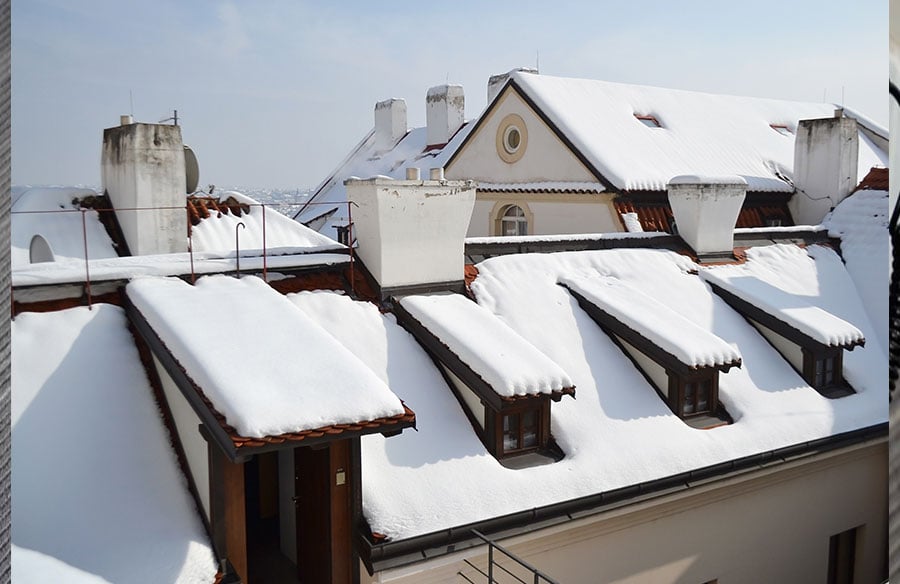
Freeze-thaw is the patient killer. Water sneaks into a gap, freezes overnight, expands, and widens the gap a fraction. Repeat that a few hundred times across a winter and a small flashing defect becomes a leak.
You can’t stop weather. You can absolutely design against the sequence.
A framework I call the Four Lines
Most roofing advice lists products. I’d rather you think in defense layers, because a roof fails at its weakest line, not its average one.
- Line 1, the surface: the shingles, metal panels, or slate you actually see.
- Line 2, the water-shedding plane: underlayment, which is doing far more work than most people realize.
- Line 3, the penetration seals: flashing at valleys, chimneys, vents, skylights, and wall intersections.
- Line 4, the drainage exits: gutters, downspouts, and the ground slope that carries water away from the foundation.
When I look at a storm-damaged roof, I diagnose it in that order. Surface damage with intact lines two through four usually means a repair. A breach at line three with blown-off shingles means you’re looking at a bigger conversation.
Follow that logic and you stop guessing. You start pointing at a specific line and asking a specific question about it, which is also exactly how you talk to an insurance adjuster without sounding like you’re fishing.
Why roof geometry matters more than the product spec sheet
Two houses on the same street with identical shingles can come through the same storm in completely different shape. The difference is shape itself.
Roof pitch changes how fast water leaves the deck. Hip roofs shed wind better than gable roofs because they have fewer sharp corners for suction to grab. Overhangs create pressure pockets at the eaves. A complex roof with ten valleys and six penetrations has ten extra chances to leak compared to a simple gable.
This is the part architects and builders don’t always say out loud to clients: complexity buys you interior volume and it costs you weather resistance. If you’re planning a renovation and the design adds dormers, valleys, or a second-story bump-out, budget for a stricter flashing detail set. That’s the trade.
Climate baseline matters too. Areas that see both heavy rain and hard freezes stress roofs in a way that a mild coastal climate simply doesn’t. The National Weather Service tracks the storm patterns that drive this kind of regional risk, and it’s worth knowing what your own county’s history looks like before you pick materials.
The 15-minute inspection you can do after any storm
You don’t need to get on the roof. Binoculars from the yard and a flashlight in the attic tell you most of what you need to know.
- Walk the perimeter. Look for shingle tabs, granules, or metal fragments in the grass and gutters. Debris on the ground means the roof is missing pieces above it.
- Scan the slopes with binoculars. Check the windward side and the ridge for lifted, creased, or missing shingles. Creasing is the tell for uplift damage that hasn’t fully failed yet.
- Inspect the attic with a flashlight. Look for dark streaks on the underside of the roof deck, damp insulation, or daylight around penetrations. Do this on a dry day so you’re not confusing condensation with a leak.
- Check the flashing zones. Chimneys, vent pipes, and wall intersections. Run your hand along the caulk line if you can reach it safely from a window or low roof edge.
- Watch your gutters during the next rain. Water running behind a gutter, or pooling at the foundation, points to a drainage problem that will eventually climb back into the roof assembly.
Write down what you find with dates and photos. A dated record from the day after a storm carries real weight when you file a claim, and it costs you nothing but fifteen minutes.
Materials, honestly compared
I’ll take a stance here, since a neutral brand comparison would just waste your time. For most homes in a hail-and-freeze climate, I’d put class 4 impact-rated asphalt shingles at the top of the list. They’re not the cheapest or the prettiest, but they handle impact far better than standard three-tab and they’re the easiest to repair when something eventually fails.
Metal standing seam is my second pick. It sheds water and snow beautifully and lasts a very long time. The catch is installation quality; a poorly sealed metal roof leaks at every fastener and panel seam.
Slate and cedar look exceptional and hold up well against weather when they’re properly installed. They’re also the hardest to source matching replacements for after a storm, which is a real practical problem most product guides skip over. Housing research from HUD USER consistently shows that upkeep and long-term durability are top concerns for owners, and material choice is where that conversation actually starts.
Whatever you pick, the underlayment matters more than most people think. Even a high-end shingle without a proper water-shedding layer beneath it will leak once the surface is breached.
The part nobody plans for: the repair itself
Labor is where budgets quietly fall apart. Skilled roofing crews are in short supply, and after a major storm every qualified installer in the region is booked for weeks. Building codes and material testing standards exist for good reason, and the National Institute of Standards and Technology has done significant work on how wind interacts with building envelopes.
If you’re a homeowner, that means two practical rules. Schedule routine maintenance in the shoulder seasons when the calendar is quiet. And if you own a property you rent out, keep a maintenance reserve on hand. Set aside a realistic slice of annual rental income for exterior upkeep, because the storm won’t wait for your cash flow to catch up.
What to do before the next one hits
You can’t control the weather, but you control whether your roof is ready for it. Check your garage and attic for matching spare shingles now, so a repair crew isn’t hunting for a discontinued color in three months. Clear your gutters before the leaves are fully down. Get one honest inspection done in a calm season, not the week after a storm.
That single appointment is boring and unglamorous. It’s also the cheapest storm repair you’ll ever make. So here’s my question for you: the last time you stood in your yard and actually looked up at your roof, how long ago was that?