Key Takeaways
- Water, road salt, and freeze-thaw exposure can worsen existing concrete damage.
- A coating is only as reliable as the preparation and condition of the slab beneath it.
- Moisture testing and crack repair should happen before a coating is selected or installed.
- Epoxy, polyaspartic systems, sealers, and interlocking tiles each serve different garage needs.
- Slip resistance and drainage matter as much as color when water from winter enters the garage.
- Routine sweeping and salt removal can help preserve coated and uncoated concrete floors.
Ottawa garages work hard through long winters. Snowmelt, grit, road salt, wet tires, and frequent temperature changes can leave an ordinary concrete slab stained, slippery, and harder to maintain. Before the next winter season arrives, homeowners can protect the space by inspecting the concrete, correcting small defects, and choosing a finish suited to local conditions. Durable premium garage coatings can be a practical option for homeowners who want a seamless surface that is easier to clean after snowy commutes and weekend errands.
Why Ottawa Winters Are Hard on Garage Floors
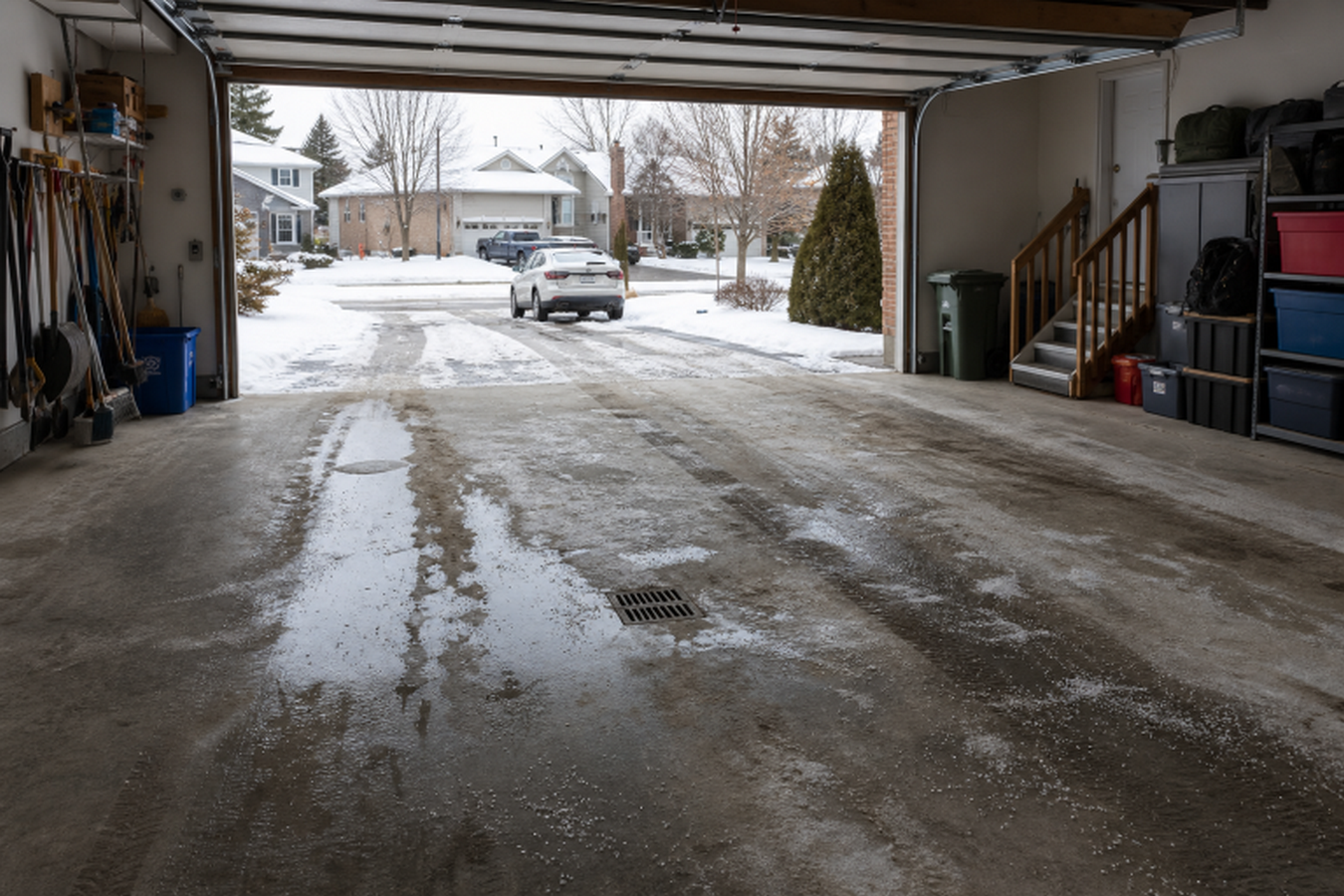
A garage floor is often the first place where snow brought home from Ottawa roads begins to melt. Water pools beneath vehicles, carries grit across the slab, and can move into small cracks or worn areas. If the garage cools enough for that water to freeze, existing weaknesses may become more noticeable over time. De-icing salt can also leave a white residue and contribute to conditions that lead to concrete degradation, especially when moisture repeatedly contacts a porous surface.
The areas nearest the garage door, floor drain, and vehicle parking spots usually deserve the closest attention. These zones see the most water, tire traffic, and abrasion from sand or small stones. A floor that has been serviceable for years may still need preventive work before another season of wet boots, shovels, snow blowers, and salt-covered vehicles.
How to Inspect the Floor Before Winter
Start with an empty garage, a flashlight, a stiff broom, and enough time to examine the slab closely. Sweep away loose debris first so that cracks, flaking, and stains are easier to see. A clean-looking floor is not automatically ready for paint or coating, since oil, old sealers, and moisture can remain below the visible surface.
- Look for cracks wider than a fine hairline or that appear to be growing.
- Check for pits, loose flakes, crumbling edges, and rough spots near the overhead door.
- Watch for white, powdery deposits that can indicate moisture moving through the concrete.
- Identify oil stains, tire marks, old paint, and peeling coating material.
- After washing the floor, note where water remains instead of draining or evaporating evenly.
Why Moisture Testing Comes First
Concrete can release water vapor even when the top of the slab looks dry. That moisture matters because many coating systems need the concrete to meet specific moisture limits. When a coating is installed over excessive moisture, the result can include bubbles, cloudy areas, loss of bond, or peeling.
A taped plastic-sheet test can be a simple warning sign, but it is not a substitute for the test method required by the selected product. Before approving an installation, ask how moisture will be measured, what result the coating manufacturer permits, and whether a moisture-control primer may be needed. Active leaks, standing water, or drainage problems should be resolved rather than sealed beneath a new finish.
Repairs to Complete Before Coating
Not every flaw means the slab needs replacement. Small pits, minor surface chips, and stable cracks can often be repaired as part of preparation. However, a coating should not be expected to solve structural movement, a sinking slab, recurring water entry, or a foundation-related issue.
Common Pre-Coating Repairs
- Fill stable cracks with a repair material compatible with the planned coating.
- Remove loose, weak, or flaking concrete before patching.
- Repair chipped edges where tires cross the garage threshold.
- Address shallow low spots that regularly collect snowmelt.
- Remove failed paint or old coating that no longer bonds to the slab.
If a crack changes height from one side to the other, widens noticeably, or returns after repair, it deserves a closer assessment before cosmetic work begins. A durable finish starts with a stable base.
Cleaning and Preparing the Concrete
Surface preparation is usually the deciding factor in whether a coating bonds well. The concrete needs to be free of dust, grease, weak material, curing compounds, and incompatible sealers. Simply rolling a new product over a shiny or contaminated floor can create a short-lived improvement rather than a long-term solution.
- Move stored items, shelving, and vehicles out of the work area.
- Sweep and vacuum loose debris thoroughly.
- Degrease oil-contaminated areas with a concrete-safe cleaner.
- Rinse carefully and allow the slab to dry as required by the coating system.
- Use mechanical grinding or another specified profiling method when required.
- Complete crack and patch repairs before applying the first coating layer.
Acid etching, light cleaning, and mechanical grinding are not interchangeable processes. The right method depends on the slab’s condition, the existing finish, and the product being installed. Homeowners should ask why a particular preparation method is being recommended.
Garage Floor Options for Ottawa Homes
There is no single best garage floor option for every household. The right choice depends on moisture conditions, vehicle use, desired appearance, available installation time, and willingness to maintain the floor.
- Concrete sealer: A reasonable choice for basic dust control and light use. It may not offer the same level of protection from wear or standing water as a multi-layer coating system.
- Epoxy coating: Often selected for its hard, seamless appearance and suitability for home workshops. Surface preparation, moisture conditions, cure time, and UV exposure should be reviewed before choosing it.
- Polyaspartic coating: Often considered when a faster return to service is important. Application timing, temperature range, slip resistance, and installer experience remain important.
- Interlocking floor tiles: A removable option for some DIY projects. Homeowners should consider drainage below the tiles, edge movement, cleaning needs, and fit around walls or posts.
Solid colors offer a clean, simple look. Decorative flakes can help make small marks, dust, and tire residue less noticeable between cleanings.
Adding Grip Without Creating a Cleaning Problem
A glossy floor may look polished, but snowmelt and oil can make any smooth surface more hazardous. Fine anti-slip additives can improve footing in walking areas, particularly near the garage entrance. Too much texture, however, can hold onto dirt and make sweeping more difficult. Ask how the finished floor will feel when wet, not just how it will look under dry showroom lighting.
Questions to Ask an Installer
When comparing estimates, focus on the complete process instead of price alone. A detailed proposal should explain preparation, repairs, materials, cure time, and cleanup.
- How will the concrete be cleaned and profiled?
- Will cracks, pits, and damaged edges be repaired first?
- How will moisture be checked before installation?
- What products and layers are included in the quoted system?
- How long must vehicles remain outside?
- What temperature and humidity conditions affect installation?
- What does the written warranty cover?
Simple Winter Maintenance
Winter maintenance does not need to be complicated. Use a mat or containment tray beneath vehicles, sweep away sand and salt regularly, remove slush before it spreads, and keep floor drains clear. Use a neutral cleaner approved for the installed finish, and avoid metal tools that may scratch the surface. Canada’s guidance on road salt management practices also reinforces the importance of limiting unnecessary salt buildup around the home.
Inspect the garage again in spring for lifted coating, new cracks, worn patches, or drainage concerns. In Ottawa, a practical garage floor plan begins before winter, not after another season of snow and salt has already done its work.