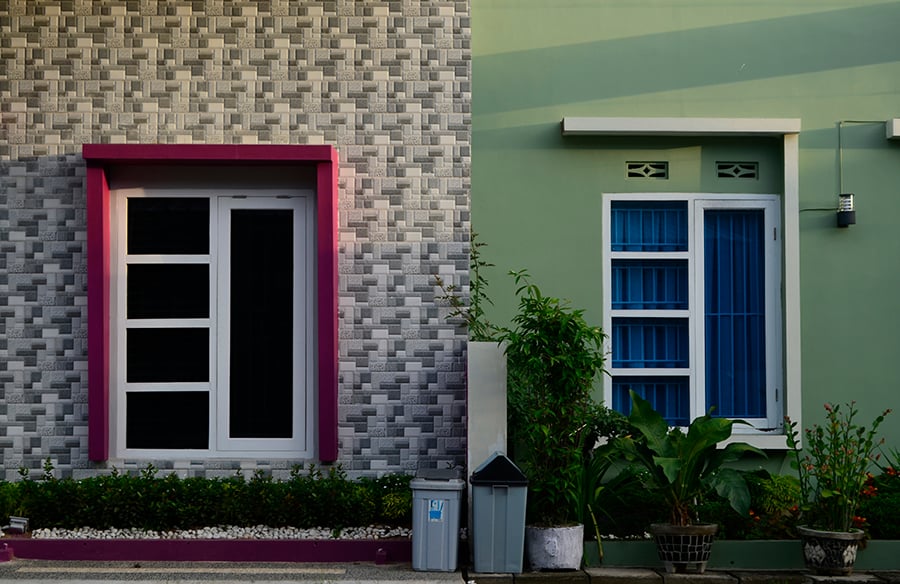
Exterior walls do more than protect a home; they shape its character before anyone steps inside. Today’s most appealing façades often rely on thoughtful texture combinations rather than a single flat finish. Pairing natural, refined, warm, or industrial surfaces can add depth without making the elevation feel busy.
The right combination should suit the architecture, surrounding landscape, light, and overall mood of the property. Here are exterior texture pairings that can give Indian homes a distinctive, balanced street presence overall.
Stone and Smooth Plaster
Stone brings natural variation, while smooth plaster gives the elevation visual breathing room. This pairing suits homes that need character without excessive detailing. A carefully chosen texture paint on plastered sections can also introduce subtle depth while allowing the stone to remain the focal feature.
- Use stone around entrances, columns, or feature walls.
- Keep adjoining plaster surfaces clean and understated.
- Choose related earthy tones for a composed finish.
- Let lighting highlight the contrast between rough and smooth exterior wall surfaces.
Wood and Textured Concrete
Warm wood tones soften the strong, architectural character of textured concrete. Together, they create an exterior that feels contemporary but still welcoming. The combination works especially well where clean lines need a touch of natural warmth, such as balconies, porch ceilings, screens, or entrance zones.
- Place wood on smaller areas to create emphasis.
- Use concrete textures across broader structural surfaces.
- Repeat wood tones around doors or windows for continuity.
- Keep surrounding colours muted so both textures remain visually distinct outdoors.
Brick and Neutral Stucco
Brick adds warmth, pattern, and a familiar handcrafted quality, while neutral stucco keeps the overall façade calm. This combination can suit both contemporary homes and elevations with a more traditional influence. The key is to allow one surface to lead and the other to support it.
- Use brick to frame entrances or selected wall sections.
- Choose soft beige, ivory, or grey stucco tones.
- Avoid covering every surface with strong texture.
- Match trims and railings with the quieter background wall finish.
Concrete and Wooden Cladding
Concrete and wooden cladding offer a clean balance of cool and warm surfaces. Concrete provides a grounded, minimal base, while timber-like cladding brings richness to selected architectural details. Used with restraint, the pairing can make a simple elevation feel more layered and thoughtfully designed.
- Highlight balconies, soffits, or entrance walls with cladding.
- Keep concrete areas broad and visually uncluttered.
- Use vertical or horizontal cladding lines intentionally.
- Consider weather exposure when deciding where wood-look finishes should appear on the home exterior.
Natural Stone and Glass
Natural stone and glass create an elegant contrast between solidity and openness. Stone gives the exterior a grounded, tactile quality, while glass introduces lightness and reflects the surrounding sky or greenery. This combination works particularly well on modern homes that connect indoor spaces with terraces, balconies, or gardens.
- Use stone near solid architectural volumes.
- Keep glass sections simple and well proportioned.
- Repeat stone tones in paving or boundary walls.
- Avoid too many competing finishes around large glazed exterior areas nearby.
Exposed Brick and Cement Finish
Exposed brick and cement finishes bring an honest, relaxed character to the façade. Brick contributes warmth and irregularity, while cement adds a quieter, more industrial surface beside it. The pairing can feel especially suitable for homes that favour earthy materials and unfussy architectural lines.
- Keep brickwork neat enough to look intentional.
- Use cement finish on larger background planes.
- Add greenery to soften the raw material palette.
- Choose simple window frames and metal details that complement both exterior textures naturally together.
Metal Panels and Matte Textures
Metal panels can give an exterior a crisp, modern edge, but pairing them with matte textures prevents the façade from feeling overly sharp or commercial. This combination works best when metal is used as an accent, and the softer finish provides a calm visual base.
- Use metal around screens, canopies, or selected panels.
- Prefer subdued finishes rather than highly reflective surfaces.
- Pair dark metal with warm or neutral matte walls.
- Keep the material transitions aligned with main architectural lines carefully.
Mixing Light and Dark Exterior Textures
Light and dark textures can make an elevation feel more defined by drawing attention to projections, recesses, entrances, or upper levels. The contrast should support the architecture rather than divide the façade into unrelated blocks. A balanced palette can also help natural textures stand out clearly.
- Use darker finishes to emphasise selected structural features.
- Keep larger surfaces lighter for visual openness.
- Repeat each shade in small details for consistency.
- Check the combination in daylight before finalising the exterior colour scheme.
Conclusion
Exterior texture combinations work best when they feel connected to the home rather than added purely for decoration. Stone, brick, concrete, wood, glass, metal, plaster, and matte finishes each bring a different mood, so thoughtful pairing matters more than using many materials. Look at the architecture, daylight, surroundings, and maintenance needs together before finalising the façade. A restrained mix of surfaces can create depth, warmth, and personality while giving the exterior a polished look that remains inviting for years ahead.