There is a quiet ritual most architects know well: the moment before stepping onto an active build site when you look down at your shoes and realise they were the wrong choice. A client meeting in the morning, a site walk in the afternoon, and nothing in between.
The challenge for architects and consultants isn’t understanding that a site requires appropriate clothing. It’s knowing what “appropriate” actually means across different build phases, different principal contractors, and different risk levels on any given day. This article addresses that gap.
Why Site Attire Matters More Than Architects Often Assume
On an active build, the principal contractor controls the site and their PPE rules apply to everyone on it, including visiting architects and engineers. The pattern that surfaces consistently in professional architecture communities is straightforward: a consultant arriving without steel-capped footwear or a hi-vis vest gets turned back at the gate. The cost isn’t embarrassment; it’s a missed observation, a defect that goes undocumented, a report filed without complete information.
For building a consistent, compliant kit that also carries your firm’s identity, durable products designed for site conditions provide a starting point that casual workwear cannot match.
The Non-Negotiable PPE Layer
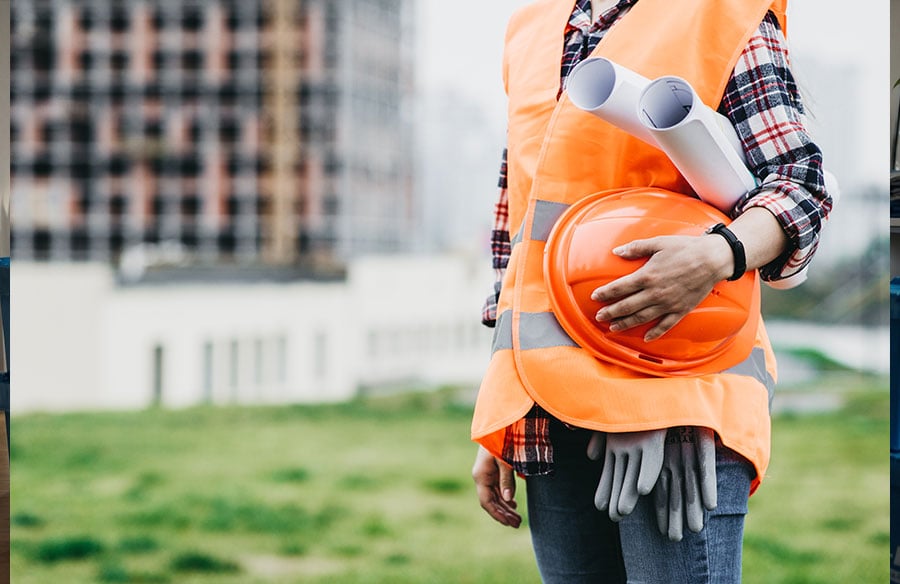
Most active construction sites enforce a minimum PPE standard that applies to every person on site, regardless of role:
- Hard hat: White is conventional for architects, engineers, and visitors on most Australian and UK sites
- High-visibility vest or jacket: Class D/N is the minimum on most principal contractor sites, requiring both fluorescent and retroreflective material
- Steel-capped footwear: The most common reason visiting professionals are turned back at the gate; leather-soled fashion boots and clean trainers do not qualify
- Safety glasses: Required during active works, particularly concrete pours, grinding, or overhead trades
- Gloves: Situational, but increasingly required at induction on larger commercial builds
Carry these items to every visit regardless of build phase. The construction stage changes what you encounter. The PPE requirement does not.
What to Wear Underneath: Clothing That Works on Site
Work Jeans: The Most Practical Base
Standard office trousers fail on site. Chinos permanently absorb concrete dust and thin dress fabric tears on rebar or formwork edges. Purpose-built work jeans solve this: heavier denim, reinforced seams, knee articulation for ladders and scaffolding, and a cut that moves without sacrificing the professional appearance needed in a client-facing context earlier in the day. Practitioners who visit sites regularly consistently recommend the switch. The professional appearance survives the morning meeting. The construction-grade build survives the afternoon.
Upper Body: Layer for Hi-Vis Over the Top
Whatever you wear on the upper body needs to accommodate a hi-vis vest or jacket as the outer layer without restricting movement. A fitted long-sleeve shirt, a moisture-wicking base layer in summer, or a structured fleece in cooler months all work. The principle is simple: the hi-vis stays on the outside and stays on.
Avoid suits and dress shirts for scheduled site visits. The combination signals to site trades that this is a rare visit rather than a regular one, which affects the frankness of conversations on the walk.
Footwear: Where Architects Get Turned Away
Steel-capped safety boots rated to the relevant local standard are the requirement on most active sites. Several manufacturers now produce styles that carry the safety rating without the traditional bulk: lace-up ankle boots in clean leather that read as professional in an office and are compliant on site. Confirm the steel cap rating is marked on the boot. A boot that looks the part but isn’t rated won’t pass induction.
The Jacket and the Layering Problem
The most common cold-weather compliance failure: pulling a non-hi-vis waterproof over a compliant vest. Compliance is measured at the outermost layer, so the moment that jacket goes on, the hi-vis underneath counts for nothing. A Class D/N rated softshell or waterproof jacket worn as the outer garment solves both problems at once. Custom branded options with logo placement outside the reflective tape zones mean your practice is identifiable on site without borrowing a vest from the site office.
Building a Kit That Travels With You
A dedicated site bag, packed once and maintained, removes the pre-visit scramble. It contains:
- Hard hat, fitted and clean
- Hi-vis vest or jacket at the appropriate class
- Safety glasses in a case
- A pair of gloves
- Measuring tape and site notebook
- Spare steel-capped boots in the car if your morning footwear is office-appropriate
For firms visiting multiple sites, standardising the kit with branded workwear makes the team identifiable on site without extra effort. A consistent hard hat colour, a firm-branded hi-vis jacket, and structured work jeans signal a practice that treats site presence as a professional discipline.
What the Site Sees When You Walk Through the Gate
Contractors form assessments quickly, and a consultant in inappropriate footwear signals, fairly or not, that site visits are rare. That impression affects what gets shared.
A site-ready consultant is more likely to hear about a detail that isn’t working as drawn, a specification concern, or something a trade has been uncertain about raising. Architecture communities note this consistently: the professionals who get the most useful information from contractors are the ones who look like they belong on site. That starts before the conversation does.