Museum spaces demand more than good-looking walls. The best environmental graphic design agencies understand that a poorly signed gallery is frustrating and actively works against the stories museums spend years building. Bridging the gap between a 2D concept and a finished 3D space, while satisfying ADA requirements and coordinating with architects across months-long timelines, is genuinely hard work. After reviewing dozens of firms across portfolios, client feedback, and industry recognition, this guide covers five agencies that consistently deliver in that space.
How this ranking was put together
Public information shaped every pick here: client reviews, project case studies, firm websites, and design directories were all pulled into the research. Only agencies with a clear, proven track record in environmental graphic design made the cut.
→ See the full research breakdown
- Entro – Best for environmental graphic design and experiential placemaking
- WhyBrow Studio – Best for wayfinding and environmental graphic design
- Small Stuff – Best for brand identity, editorial design, and nonprofit design strategy
- DAZU Creative – Best for environmental graphic design, wayfinding systems, and brand identity for mission-driven organizations
- LVCK – Best for environmental graphics, signage design, and wayfinding systems
Why Environmental Graphic Design Agencies Are Worth a Closer Look
Picking the wrong agency for a museum project doesn’t just slow things down. It can mean wayfinding systems that confuse visitors, signage that clashes with the architecture, or donor recognition walls that get fabricated incorrectly because the design intent was never communicated clearly.
Specialized agencies understand the full chain: concept through fabrication, ADA standards through aesthetic goals, brand consistency through every gallery and corridor.
That matters because museums run on long project cycles where a miscommunication in month two shows up as a costly fix in month eight.
The agencies that stand out tend to win SEGD recognition, maintain high visitor navigation success rates, and get brought back for repeat projects, because they know how to deliver the complete picture, not just a pretty rendering.
Comparing the 5 Best Environmental Graphic Design Agencies
Note: All data in this table is sourced from review platforms and the official websites of the listed companies.
| Company Name | Years Operating | Headquartered In |
| Entro | Since 1990 | Toronto, Canada |
| WhyBrow Studio | Since 2003 | Margate, Kent, UK |
| Small Stuff | Since 2014 | New York City and Hudson Valley, NY |
| DAZU Creative | Not listed | Chattanooga, TN |
| LVCK | Since 2013 | Manhattan, NY |
1. Entro – Best for Environmental Graphic Design and Experiential Placemaking
 How Does Entro Function?
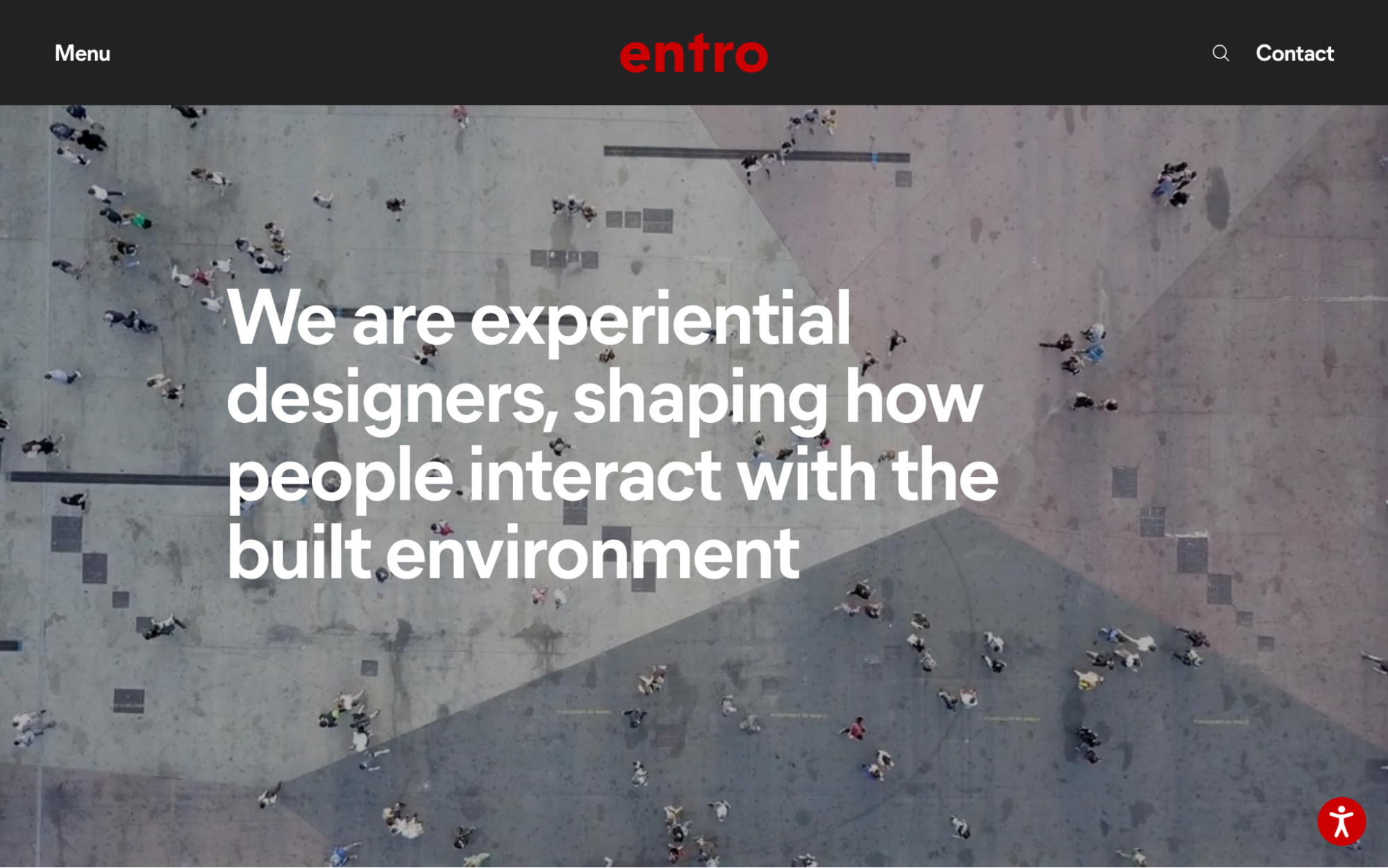
Entro is an experiential design firm with over 80 interdisciplinary strategists and creatives spread across offices in Toronto, New York, Calgary, and Vancouver. Their work spans airports, transit systems, healthcare campuses, corporate environments, and sports venues. The firm’s approach to environmental graphic design blends strategic planning with creative execution, which is rarer than it sounds at this scale. Nearly 35 years of work gives them a track record that most firms in this space can’t match.
What Sets Entro Apart from Other Environmental Graphic Design Agencies?
Museums and cultural institutions deal with layered storytelling requirements that generic signage firms simply aren’t built to handle. Entro’s multi-disciplinary structure means strategists and designers are working the problem together from day one. Their recent Grand Prix Honours for the Perelman Performing Arts Center show the quality of output that approach produces.
What Users Are Actually Saying:
Industry recognition tells a real story here. Entro’s work keeps landing at the top of competitive design juries, including the Toronto Urban Design Awards of Excellence in 2025. That kind of repeated recognition across different project types is hard to fake.
2. WhyBrow Studio – Best for Wayfinding and Environmental Graphic Design
 How Does WhyBrow Studio Function?
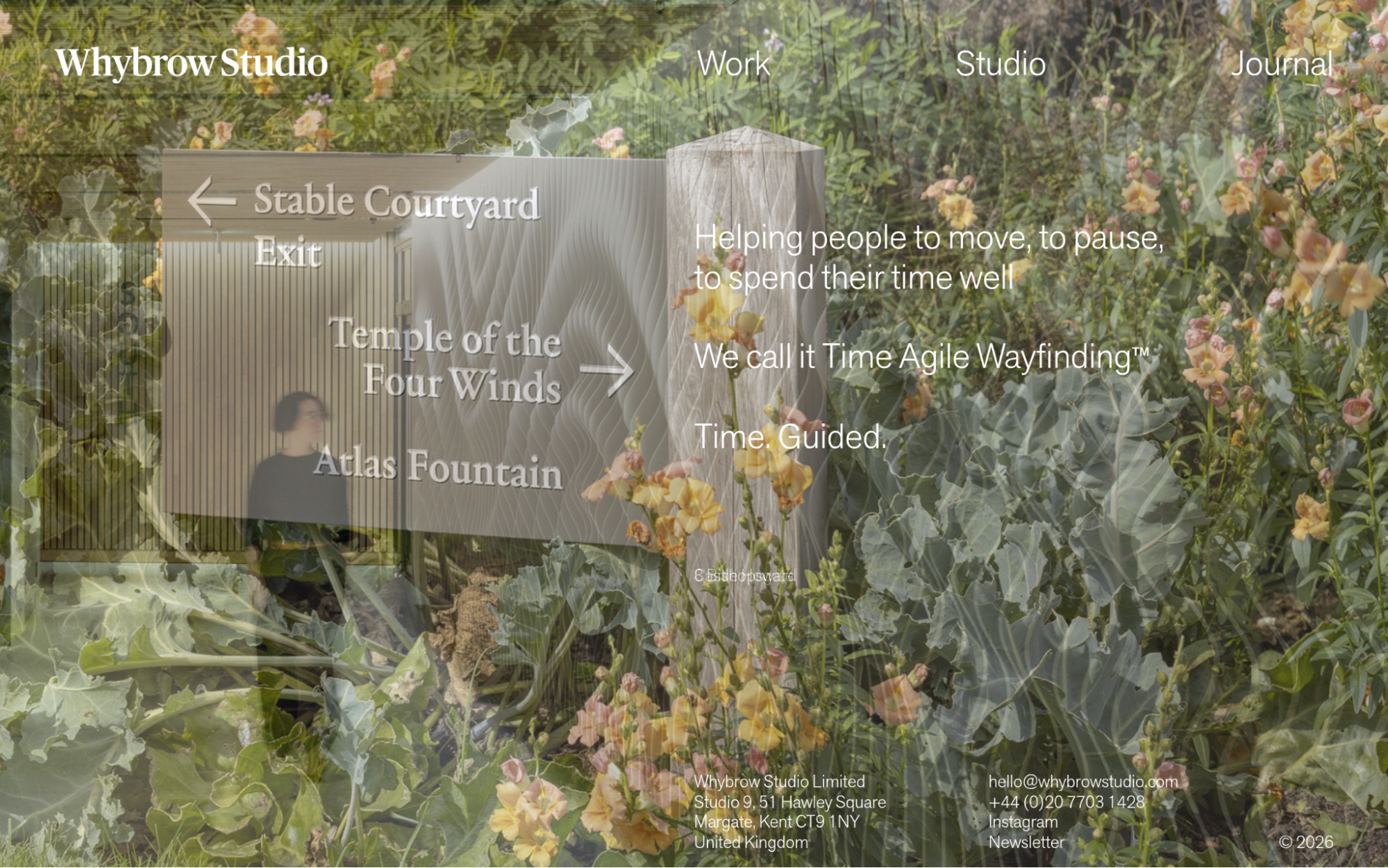
WhyBrow Studio is an independent UK consultancy led by founder Ian Whybrow, operating out of Margate, Kent since 2003. The firm brings together strategic analysis, graphic design skills, and project management under one roof. Their proprietary “Time Agile Wayfinding™” method gives them a structured framework for heritage and cultural projects where phasing and timeline shifts are constant realities. Their portfolio includes The British Museum, Tate Britain, and King’s College London (not cheap projects, and clearly not entry-level work either).
What Sets WhyBrow Studio Apart from Other Environmental Graphic Design Agencies?
Cultural institutions with deep heritage requirements need a firm that respects the weight of the space, and WhyBrow’s track record at major UK institutions shows they get that balance right. Ian Whybrow’s founding membership in the Sign Design Society and AJ100 Awards shortlisting add real credibility to the firm’s standing in the field.
What Users Are Actually Saying:
Publicly available reviews for WhyBrow are limited, but their project portfolio speaks clearly. They’re trusted with some of the most visited and carefully preserved spaces in the UK, which says more than a star rating typically would.
3. Small Stuff – Best for Brand Identity, Editorial Design, and Nonprofit Design Strategy
 How Does Small Stuff Function?
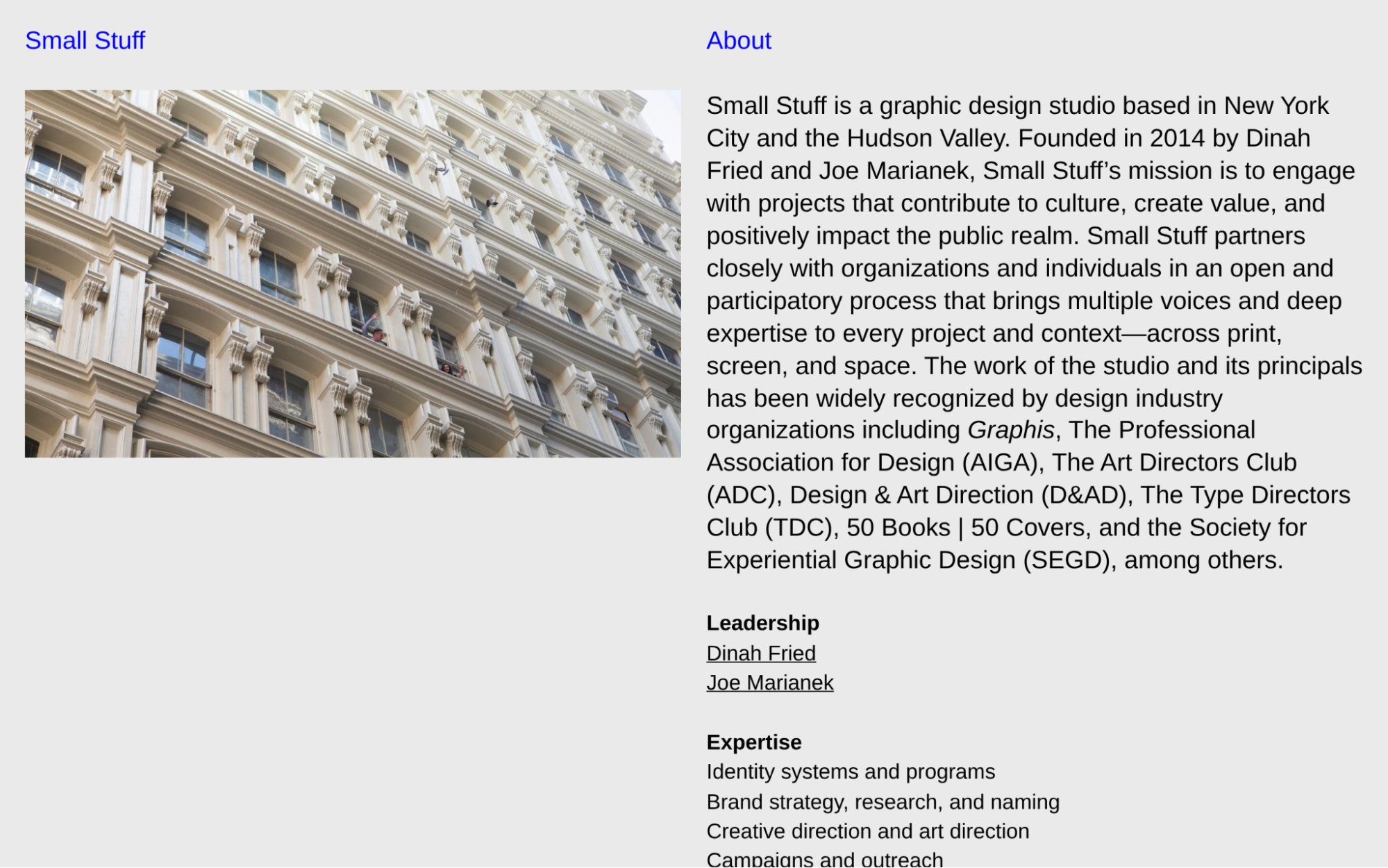
Small Stuff is a New York-based studio founded by Dinah Fried and Joe Marianek in 2014. The firm works across identity systems, brand strategy, content strategy, editorial design, and environmental graphics, with a collaborative model that brings in additional voices when projects call for it. Their client list includes Lincoln Center, MIT, Apple, and the Equal Justice Initiative. For museums and nonprofits operating under real budget pressure, their policy of offering reduced rates to 501(c)(3) organizations is genuinely meaningful.
What Sets Small Stuff Apart from Other Environmental Graphic Design Agencies?
Many studios talk about social impact. Small Stuff actually structures their pricing around it, which changes the kind of relationships they build with mission-driven clients. Recognition from AIGA, D&AD, the Art Directors Club, and the Type Directors Club confirms their design output is operating at the highest level.
What Users Are Actually Saying:
The media coverage tells a consistent story: the New York Times, NPR, and Bloomberg have all featured the studio’s work. Small Stuff earns attention through quality and relevance, not volume. That’s a good sign for clients who need a firm that stays focused.
4. DAZU Creative – Best for Environmental Graphic Design, Wayfinding Systems, and Brand Identity for Mission-Driven Organizations
 How Does DAZU Creative Function?
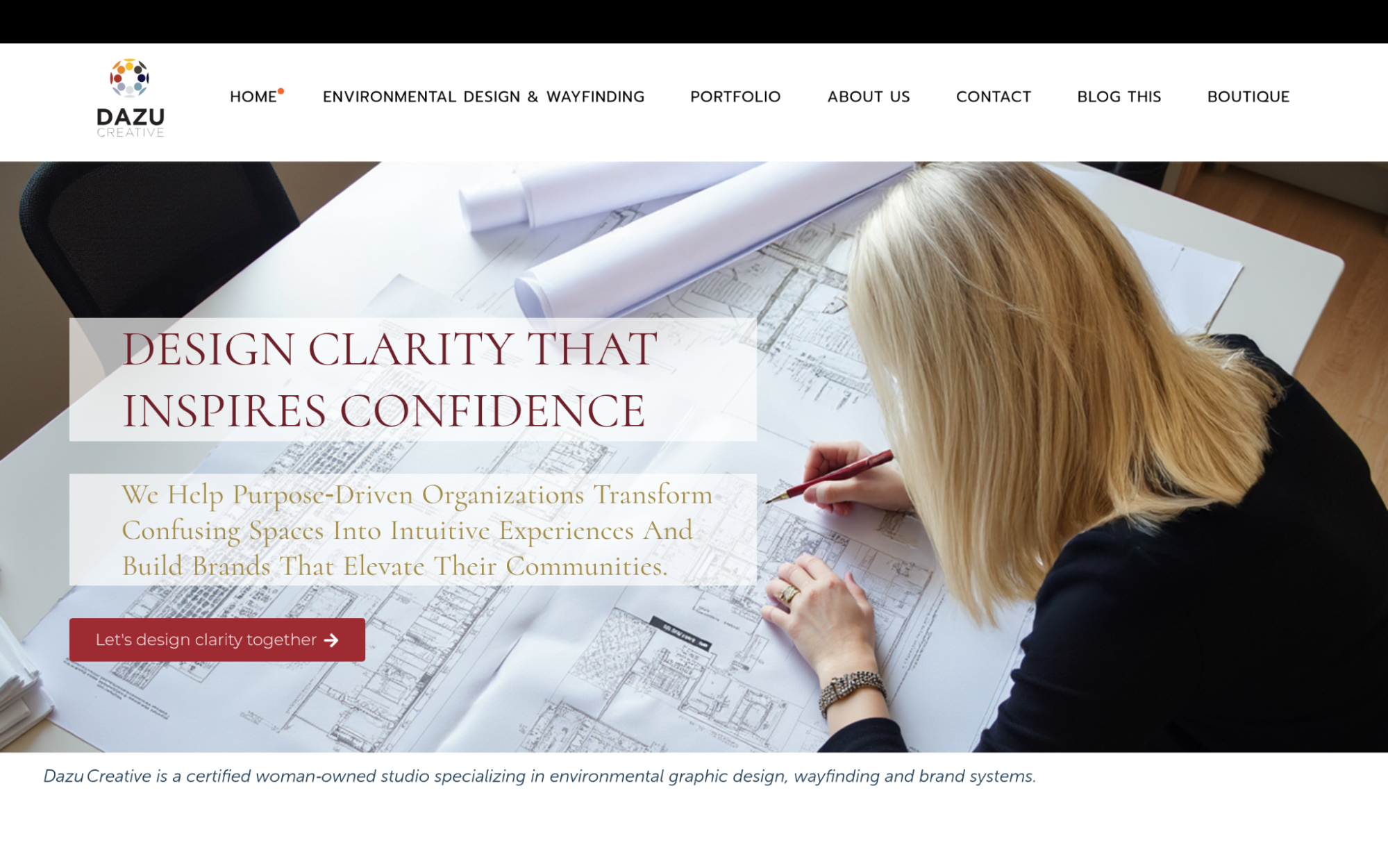
DAZU Creative is a certified woman-owned design studio based in Chattanooga, Tennessee, led by founder Carolyn Mueller with over 20 years of experience. The firm works across wayfinding systems, experiential design, and brand identity, with a particular focus on ADA-compliant work. Projects like Queens Public Library show they can handle civic-scale work without losing the refined aesthetic detail that makes environments feel considered. Their ability to combine editorial precision with strategic thinking gives their work a noticeably clean quality.
What Sets DAZU Creative Apart from Other Environmental Graphic Design Agencies?
Public and civic institutions often struggle to find boutique-scale firms that can handle both the strategic rigor and the fabrication coordination that wayfinding projects require. DAZU’s 20-plus years of focused practice fills that gap. Client feedback consistently points to Carolyn Mueller’s personal attention to detail and her ability to translate client vision into finished environments that exceed expectations.
What Users Are Actually Saying:
The reviews are direct and specific. A CEO noted she “brought our vision to life seemingly effortlessly,” and a construction industry president called the end results “always top of the line.” Clients aren’t just satisfied, they’re genuinely surprised by the quality of execution.
5. LVCK – Best for Environmental Graphics, Signage Design, and Wayfinding Systems
 How Does LVCK Function?
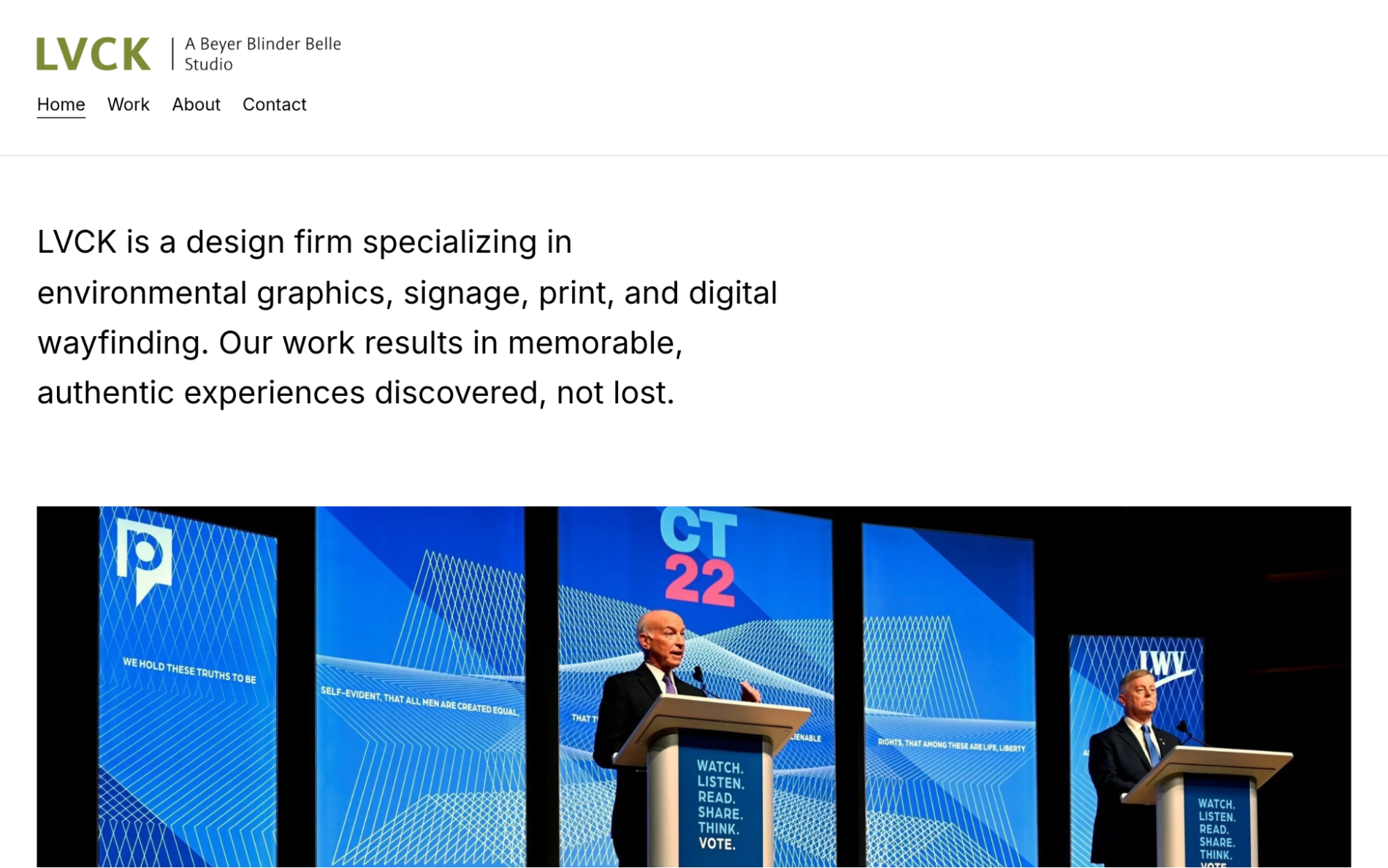
LVCK is a Manhattan-based design firm founded in 2013 that works across environmental graphics, signage, print, and digital wayfinding. Their portfolio covers interactive maps, outdoor signage, full rebranding initiatives, and multi-medium design systems. Clients include the Philadelphia Passport Agency, Brooklyn Public Library, and Christie’s International (think institutional credibility across government, civic, and cultural sectors). Their strength sits in the overlap between physical and digital design, which is increasingly where museum wayfinding projects are landing.
What Sets LVCK Apart from Other Environmental Graphic Design Agencies?
Museums moving toward interactive and digital wayfinding components need a firm that doesn’t treat print and digital as separate silos, and LVCK’s multi-medium approach keeps those systems coherent. That kind of cross-discipline design thinking is rare at the boutique scale, and it shows in the consistency of their finished environments.
What Users Are Actually Saying:
Publicly available reviews for LVCK are limited, but their institutional client portfolio makes a clear case. Christie’s International and the Brooklyn Public Library aren’t organizations that hire firms without a serious vetting process, so the project wins themselves carry meaningful weight.
Methodology Behind These Picks
Gathering Information at the Starting Point
The research started by pulling together a wide list of environmental graphic design firms from design directories, professional organization listings, and industry-specific review platforms. Publicly available case studies, project portfolios, and service pages were collected to get a clear picture of what each firm actually does day-to-day, not just what their homepage claims. Firms that appeared across multiple credible sources moved forward in the process.
The Shortlist Cut
From the full list, firms without verifiable project histories or public client references were set aside. Review patterns were analyzed to check for consistency: not just average sentiment, but whether specific feedback reflected real project complexity, coordination with architects, fabrication oversight, and ADA compliance handling. Firms where the review language stayed vague or generic were flagged and removed from consideration.
Fact-Checking the Picks
Each shortlisted firm’s stated capabilities were cross-referenced against their actual project portfolios and available client feedback. Where firms claimed skills in healthcare, transit, or cultural organization work, the research looked for specific named projects that confirmed it. Claims without portfolio evidence didn’t survive this stage.
Authority Signals and Industry Standing
Award recognition, mentions in design publications, professional organization memberships (including SEGD), and speaking or jury roles were reviewed for each firm. These signals aren’t perfect, but repeated recognition across multiple credible sources gives a reasonable indication of standing within the field. Firms that appeared consistently in recognized industry conversations ranked higher.
Environmental Graphic Design Agencies Track Record
Each firm’s dedicated service pages, named client projects, and sector-specific work history were reviewed to confirm genuine depth in environmental graphic design, not just surface-level familiarity. The final list reflects firms where the evidence of specialized, sustained work in this discipline is clear across multiple project types and client scales.
Picking the Right Environmental Graphic Design Agencies for You
Choosing a firm for a museum project comes down to more than portfolio aesthetics. The practical fit matters just as much as the design quality.
- Industry/Domain Experience: Look for firms with named projects in museums, cultural institutions, or similar public environments. General commercial experience doesn’t always translate to the specific storytelling and wayfinding demands of a museum setting.
- Features and Service Scope: Some firms cover the full pipeline from strategy through fabrication coordination; others focus purely on design work. Know which type of support your project actually needs before shortlisting.
- Pricing Structure: Boutique studios often offer more direct principal involvement (and more flexibility), while larger multi-office firms bring deeper bench capacity. Neither is automatically better, but the structure affects how a project gets staffed and managed.
- Results Measurement: Ask how firms measure success after installation. Visitor navigation success rates and post-occupancy feedback are real signals that a wayfinding system is working as designed.
- Industry Knowledge and Compliance: ADA standards, local building codes, and SEGD guidelines aren’t optional considerations. Firms with documented compliance experience save real time and budget compared to those learning requirements mid-project.
The Verdict
Environmental graphic design for museums sits at the intersection of storytelling, architecture, and logistics. The agencies on this list each bring a distinct strength to that mix, whether it’s Entro’s multi-office scale, WhyBrow’s heritage organization track record, or DAZU Creative’s boutique precision. Project scale, budget, and sector experience should shape the final choice. As museums keep adding digital and interactive elements into physical spaces, firms that can bridge both worlds will be the ones most worth knowing.