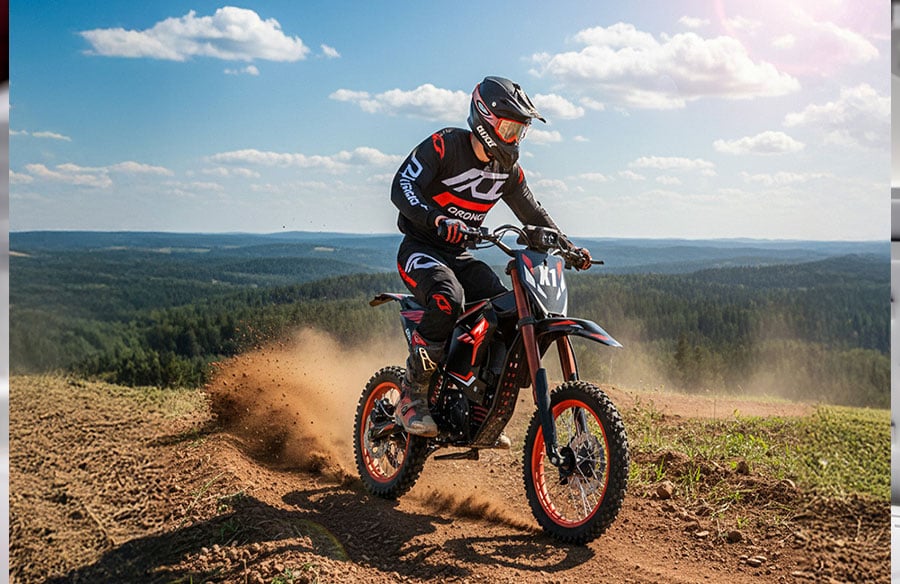
Electric dirt bike product pages often lead with power, torque, range, and top speed. Yet the first things riders notice are far more immediate: whether their arms can stay relaxed, whether the footpeg position allows natural movement, whether the brake lever is easy to reach, and whether the bike remains manageable when it begins to lean.
These experiences are not accidental details outside the specification sheet. They are the result of design decisions working together. Human-centered design begins with the rider’s body dimensions, movement patterns, and riding environment, then uses that information to make the bike easier to understand, operate, and adjust.
Vehicle Design Begins With User Research
Human-centered design should not be treated as a comfort feature added after the product is finished. It needs to shape development from the beginning.
Design teams first need to understand who the bike is intended for: rider height, arm reach, leg length, hand size, previous off-road experience, and the type of riding area where the bike will be used. A new rider and an experienced rider may respond very differently to the same throttle and braking system.
User research also needs to observe real movement. The way riders mount the bike, stop, stand over uneven ground, and recover it after losing balance can reveal problems that static dimension drawings do not show.
Physical models, adjustable prototypes, and riding tests allow designers to refine the seat, handlebars, footpegs, and controls throughout development instead of relying only on average body measurements.
The Rider Triangle Shapes Body Movement
The seat, handlebars, and footpegs form the rider triangle. Their height and spacing determine whether the rider can remain relaxed or must constantly stretch the arms, bend the knees, or tense the lower back.
When seated, handlebars placed too far forward can force the torso to lean. If they are too close, they may limit arm movement during turns. In a standing position, the relationship between the handlebars and footpegs becomes even more important. Riders need to shift their weight without pulling on the bars and use their knees and arms to absorb changes in the terrain.
Good design should therefore consider the full sequence of sitting, standing, turning, and braking instead of presenting seat height as the only measure of fit. Adjustable handlebar positions, alternative footpeg mounting points, or replaceable seats can also help one bike accommodate a wider range of riders.
When an electric dirt bike feels natural to operate, that impression often reflects repeated testing and refinement of the rider triangle.
Compact Proportions Must Be Designed Around the Center of Gravity
Small wheels and a short chassis can make a bike appear more approachable, but compact dimensions alone do not guarantee easy control. Center of gravity, weight distribution, and steering geometry all influence low-speed balance.
If the battery and other heavy components sit high on the frame, even a slight lean may require more effort to correct. When mass is concentrated closer to the bike’s center, its movement becomes easier to anticipate while stopping, pushing, or turning slowly.
The Qronge X1 Spark M, positioned as a mini electric dirt bike, uses a 14-inch front wheel and 12-inch rear wheel and offers one example of compact vehicle proportions. Yet its real handling still depends on how wheel size, seat height, total weight, center of gravity, and rider position work together.
Human-centered design is not simply about making a bike smaller. It is about arranging components within a limited footprint so that the bike responds in a way the rider can understand.
Controls Need Clear, Natural Mapping
Riders understand a bike through the throttle, brakes, handlebars, and footpegs. The clearer the position, travel, and feedback of those controls, the lower the chance of an unintended input.
If brake lever reach cannot be adjusted, riders with smaller hands may be forced to apply pressure with their fingertips. Excessive lever travel or vague feedback can also make it difficult to judge when braking force begins to build.
Throttle response should be progressive as well. The amount of movement at the rider’s hand should lead to a response that is easy to anticipate. An overly sensitive initial response can magnify small movements caused by tension, while a delayed response followed by a sudden release of power can weaken the rider’s trust in the machine.
This clear relationship between action and result is known as natural mapping. Well-designed controls do not force riders to guess what the bike will do. Each input produces feedback that feels continuous and understandable.
Riding Modes Are Part of the Interface
ECO, Sport, and Turbo modes are often presented as performance features, but from a human-centered perspective, they are also part of the interaction between rider and machine.
Mode definitions vary between manufacturers, so the name, switching method, and active status should all be easy to identify. Riders need to know which mode is selected, whether a change has been completed, and how power, speed, or throttle response will be affected.
Unclear icons, poorly placed buttons, or a lack of visual and tactile feedback can increase the risk of mistakes. If a bike retains a high-output mode after restarting, the system should provide a clear prompt rather than relying on the rider’s memory.
The quality of mode design on an electric motorcycle depends on more than the number of settings available. Riders should be able to understand each option quickly and make changes without losing attention from the route.
Adjustability Expands the Design’s Usable Range
A fixed layout cannot suit every rider. Human-centered design therefore needs to leave room for adjustment.
Handlebar angle, brake lever reach, suspension preload, and riding modes can help a bike accommodate different body types and experience levels. Those adjustments must remain easy to understand and be supported by clear instructions. A complicated feature that riders struggle to use does little to improve the experience.
Design teams should also conduct usability testing with riders of different heights, strength levels, and experience. Testing should examine more than whether the bike completes a route. It should also identify accidental control inputs, difficulty locating functions, and physical discomfort that develops during longer sessions.
This feedback helps designers uncover problems that laboratory measurements may miss and refine the product before it reaches its final form.
Good Design Makes the Bike Easier to Understand
Human-centered design cannot remove the learning process of off-road riding, nor can it replace helmets, protective equipment, legal riding areas, and proper training. Its role is to reduce unnecessary operating difficulties and make the bike’s feedback easier to interpret.
When the rider triangle supports natural movement, the center of gravity feels predictable, the controls provide clear mapping, and mode status is easy to recognize, riders can direct more attention toward the route and surrounding environment.
A well-designed electric dirt bike is not simply a frame carrying more power. It is the result of user research, prototype testing, and continued refinement that makes every interaction between rider and machine feel more natural.