Every winter, thousands of Edmonton homeowners brace themselves for higher utility bills. Most assume there’s little they can do about it. After all, heating a house through months of sub-zero temperatures isn’t cheap.
What often goes unnoticed is how much of that heat disappears before it ever has a chance to warm the rooms where you actually spend your time.
It’s easy to blame the furnace when the house feels cold. Sometimes that’s justified. More often, though, the windows are quietly working against it.
A window doesn’t have to be cracked or visibly damaged to become inefficient. Performance fades gradually. The changes are subtle enough that most people adapt without realizing it. They grab a blanket while watching television, avoid sitting beside the living room window in January, or bump the thermostat up another degree because one side of the house never seems comfortable.
Those little adjustments become routine, and the real problem stays hidden.
If you’re researching Edmonton window replacement, chances are your home has already started showing some of the warning signs.
When the Furnace Never Seems to Get a Break
Ask any HVAC technician, and they’ll tell you that Alberta winters demand a lot from heating equipment. Still, a properly insulated home shouldn’t feel like it’s losing the battle every time temperatures drop.
One situation comes up again and again during window consultations. A homeowner says, “The furnace runs almost constantly, but the house never feels quite warm enough.”
That isn’t always a furnace issue.
Older windows allow warmth to escape much faster than most people realize. Every time heated indoor air reaches cold glass or leaks around aging frames, your heating system has to replace that lost energy. The furnace isn’t failing. It’s simply working overtime to compensate for parts of the home that no longer hold heat effectively.
Replacing outdated windows won’t magically cut your heating bill in half, but many homeowners notice that the house reaches a comfortable temperature more quickly and stays there with less effort from the heating system.
The Coldest Room Usually Isn’t an Accident
Almost every older home has one.
Maybe it’s the bedroom over the garage. Perhaps it’s the dining room with the large front window or the basement office nobody enjoys using in January.
Whatever the location, the pattern is usually the same. One room feels noticeably colder than the rest of the house, even though every vent seems to be working properly.
That inconsistency often points toward heat loss rather than poor heating.
Homes built during the 1980s and 1990s throughout Edmonton were constructed with windows that met the standards of their time. Building science has advanced considerably since then. Today’s insulated glass, frame technology, and weather sealing perform at a level those earlier products simply couldn’t achieve.
When homeowners replace older windows, they’re often surprised that the improvement isn’t limited to lower energy bills. The rooms themselves become places people actually enjoy spending time in during winter.
You Stop Sitting Near Certain Windows
Most people don’t think about this until someone points it out.
Think about your favorite chair in the living room. Is it beside a large front window, or has it gradually migrated toward the middle of the room over the years?
Many homeowners unknowingly arrange furniture around uncomfortable windows.
It’s not always because of noticeable drafts. Often, the glass itself becomes so cold that your body continuously gives off heat toward it. Even when the thermostat says twenty-two degrees, the area beside the window feels several degrees colder.
That’s why people reach for a blanket while everyone else feels perfectly comfortable.
Triple-pane replacement windows dramatically reduce this effect because the inside surface of the glass stays much warmer during cold weather. The change isn’t dramatic in appearance, but it’s immediately noticeable in daily comfort.
Condensation Shouldn’t Become Part of Your Morning Routine
Wiping moisture from windows every winter may seem normal, especially in older homes, but it shouldn’t be accepted as unavoidable.
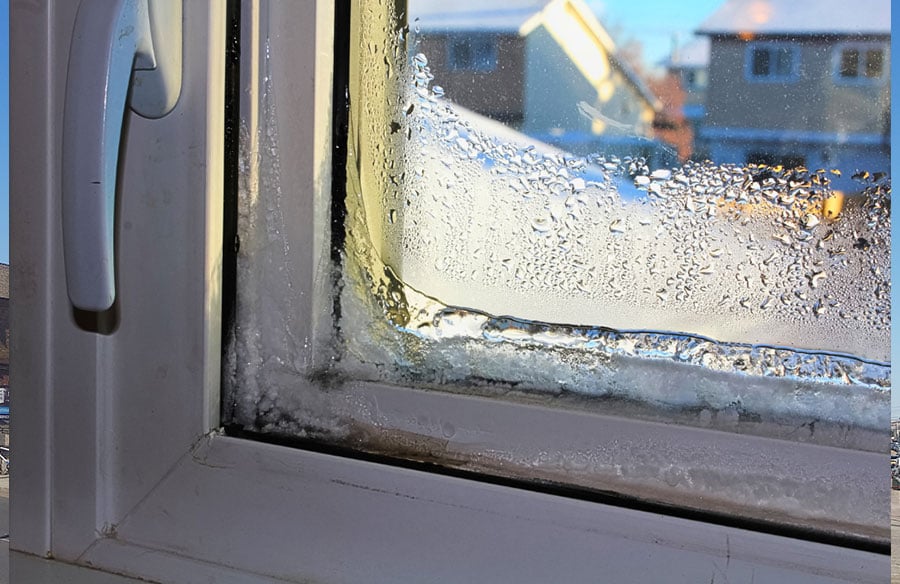
Condensation forms because warm indoor air meets a cold surface. The colder the glass becomes, the more likely moisture is to collect.
Left alone, that moisture doesn’t simply disappear without consequences.
Homeowners frequently discover peeling paint, swollen trim, dark stains around the frame, or even mold beginning to develop in corners where condensation appears regularly.
Replacing windows won’t eliminate every moisture issue inside a home. Indoor humidity still matters. However, better insulated windows keep interior glass warmer, making condensation far less common under normal living conditions.
Rising Heating Bills Rarely Have Just One Cause
Energy prices change from year to year, so it’s natural for heating costs to fluctuate. What deserves attention is a steady increase that doesn’t match how your household uses energy.
If your family hasn’t grown, your thermostat habits haven’t changed, and your furnace has been serviced regularly, yet every winter seems more expensive than the last, the windows deserve a closer look.
Heat loss isn’t dramatic enough to notice from one day to the next. Instead, it accumulates over an entire heating season. Warm air escapes a little faster, the furnace cycles a little more often, and by spring you’ve spent far more on heating than necessary.
Many homeowners don’t realize how much energy their old windows were wasting until they’ve lived through a full winter with modern replacements.
Feeling Air Around the Frame Is Never a Good Sign
One of the simplest tests doesn’t require any special equipment.
On a cold January afternoon, place your hand around the edges of the window frame. If you can feel moving air, your home is telling you something.
Sometimes the problem is worn weatherstripping. Sometimes the frame has shifted after years of seasonal expansion and contraction. In other cases, the insulated glass unit has simply reached the end of its service life.
Temporary plastic film kits and extra caulking may help for one season, but they rarely solve the underlying problem. They’re much like patching a worn winter boot. It may keep your feet dry for a while, but it won’t restore the insulation that has already disappeared.
Outside Noise Has Become Part of Everyday Life
Heat isn’t the only thing older windows struggle to keep outside.
If your home is close to Anthony Henday Drive, Whitemud Drive, Yellowhead Trail, or even a busy neighborhood street, you’ve probably become accustomed to traffic noise. It happens gradually. A motorcycle passes by, snowplows start before sunrise, or construction begins a few blocks away. At first it’s mildly annoying. Eventually, it becomes something you expect to hear every day.
Many homeowners don’t connect that extra noise with aging windows.
Modern replacement windows, especially triple-pane models, do a much better job of reducing sound transmission. The difference isn’t absolute silence, but it is noticeable. Conversations become easier, television volume stays lower, and bedrooms feel more peaceful during the evening and early morning.
People who work from home often mention this benefit first. They originally replaced their windows to save energy, but they end up appreciating the quieter environment just as much.
Twenty-Year-Old Windows May Still Work, but That Doesn’t Mean They’re Working Well
One of the biggest misconceptions in the window industry is that replacement only becomes necessary after something breaks.
Homeowners often say, “They still open and close fine.”
That’s certainly a good sign, but smooth operation isn’t the same as energy efficiency.
Think about a twenty-five-year-old furnace or refrigerator. Even if it still functions, you wouldn’t expect it to perform like a modern model. Windows are no different.
Manufacturing has changed dramatically over the past two decades. Today’s insulated glass units, Low-E coatings, spacer systems, weather seals, and multi-chamber vinyl frames outperform products that were considered premium twenty years ago.
Many homes across Edmonton still have their original windows from the late 1990s or early 2000s. While those windows may not appear damaged, they often allow far more heat transfer than homeowners realize.
Age alone doesn’t determine whether replacement is necessary, but once windows reach the twenty-year mark, it’s worth having them professionally evaluated.
Small Problems Rarely Stay Small
One drafty window doesn’t seem like a major concern.
Neither does a little condensation on cold mornings or a room that’s slightly cooler than the rest of the house.
The trouble is that these issues tend to build on one another.
Higher heating bills encourage homeowners to increase the thermostat. More heat inside the house creates additional condensation on cold glass. Excess moisture begins affecting trim, paint, and drywall. Meanwhile, the furnace continues working harder every winter because warm air keeps escaping.
By the time many homeowners decide to replace their windows, they’ve already spent years paying for energy they never actually enjoyed.
Addressing the issue earlier often prevents a much larger cycle of unnecessary expenses.
The Quality of the Installation Matters Just as Much as the Window
Buying an excellent window is only half the project.
Even the most energy-efficient product won’t deliver its advertised performance if the installation isn’t done correctly.
Professional installers pay attention to details many homeowners never see. The opening must be properly prepared, insulated, sealed, and finished so that air and moisture cannot work their way around the frame. Those steps may seem minor during installation, but they make an enormous difference once Edmonton temperatures drop below freezing.
Poor installation often creates problems that homeowners mistakenly blame on the window itself.
That’s one reason it’s important to choose a company with experienced installers rather than focusing solely on the lowest quote.
At Canglow Windows & Doors, every project is completed by trained in-house installation crews who understand Alberta’s climate and the construction methods commonly found in Edmonton homes. From the initial measurement to the final finishing work, the goal is to ensure your new windows perform exactly as they were designed to.
Knowing When It’s Time to Replace Your Windows
No homeowner wants to replace windows sooner than necessary.
If your home feels comfortable, your energy bills remain consistent, and your windows show no signs of deterioration, there’s no reason to rush into a replacement project.
However, if several of these warning signs sound familiar, your windows may already be costing you more than you realize:
- Your furnace seems to run almost continuously during cold weather.
- Some rooms never feel as warm as the rest of the house.
- Sitting near the window becomes uncomfortable in winter.
- Condensation regularly forms on the interior glass.
- Heating costs continue increasing without another obvious explanation.
- Drafts are noticeable around the frame.
- Outside noise has become more noticeable than it used to be.
- Your windows are more than twenty years old.
One symptom by itself doesn’t always mean replacement is necessary. Several together usually deserve a closer look.
A Comfortable Home Starts with Better Windows
Edmonton winters aren’t getting any shorter, and energy costs aren’t likely to decrease anytime soon. While homeowners can’t control the weather, they can control how efficiently their homes respond to it.
Replacing aging windows is about far more than improving appearance. Modern energy-efficient windows help create more consistent indoor temperatures, reduce drafts, minimize condensation, lower outside noise, and improve the overall comfort of your home during every season.
If you’re considering Edmonton Window Replacement, the best first step is a professional assessment rather than a guess. An experienced window specialist can evaluate the condition of your existing windows, explain which improvements would provide the greatest benefit, and help you determine whether replacement makes financial sense.
For more than fifteen years, Canglow has helped Edmonton homeowners upgrade to premium vinyl windows built specifically for Alberta’s demanding climate. Our experienced team provides honest recommendations, professional in-house installation, and industry-leading warranties, giving homeowners confidence that their investment will continue paying dividends for many winters to come.