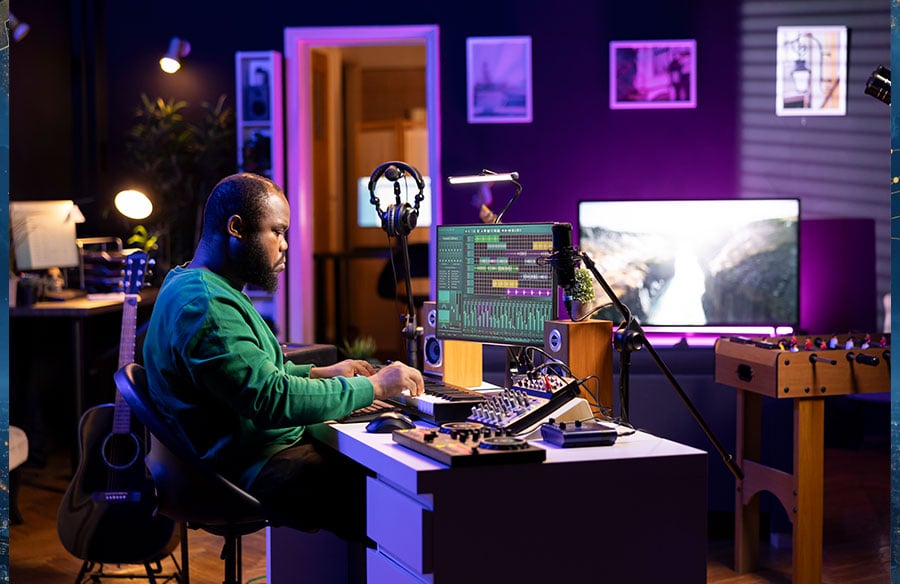
A decade ago, producing a polished video required a crew: a camera operator, an editor, someone on sound, maybe a colorist. Today, a single person with a laptop can turn out content that looks — and performs — like it came from a full production house. That shift didn’t happen by accident. It happened because the tools people use to plan, shoot, and finish video changed faster than most marketing teams could keep up with.
This matters because video isn’t optional anymore. Businesses that have embraced video report strong results: 82% of marketers say video delivers a positive return on investment, and 88% credit it with directly boosting sales and leads, according to Demand Sage’s 2026 marketing data. Meanwhile, 91% of businesses now use video as a core part of their marketing, per Wyzowl. The demand is clear. What’s changed is who can meet it.
Why Small Teams Are Catching Up to Big Budgets
For years, video production budgets tracked closely with output quality. More money meant better cameras, more editors, and faster turnaround. That correlation is breaking down.
- Speed now matters more than crew size. Short-form video — under 60 seconds — consistently outperforms every other format for ROI heading into 2026, according to HubSpot’s State of Marketing report, for the fourth year running.
- Consistency beats occasional polish. Platforms reward accounts that post often. A team that publishes daily with solid production usually outperforms one that posts a beautifully shot video once a month.
- Editing has become largely automated. Tasks that used to eat entire workdays — trimming footage, syncing captions, adding transitions — now take minutes with the right software.
This is where a modern editing tool earns its place in a creator’s toolkit. It’s not replacing creative judgment; it’s removing the technical bottleneck that used to separate people with good ideas from people with the resources to execute them. The most noticeable change is on the post-production side, where an ai video editor can turn hours of trimming, syncing, and captioning into a task measured in minutes.
[Image suggestion: a workspace photo showing a laptop with a video timeline open, a phone on a tripod nearby — search “video editing workspace laptop” on Unsplash or Pexels]
The Numbers Behind the Shift
It helps to see the scale of what’s happening rather than take the trend on faith:
- 63% of video marketers now use AI-assisted tools to help create or edit content, up from 51% just a year prior — a jump reported in Wyzowl’s 2026 industry survey.
- Short-form video generates 2.5 times more engagement than long-form content, with some platforms recording engagement rates above 5.9%, per Clouted’s 2026 data.
- Social video drives 1,200% more shares than text and images combined, according to industry benchmarking cited by SellersCommerce.
- The short-form video market, valued at roughly $59 billion in 2026, is projected to grow to over $640 billion by 2035 — a trajectory that assumes far more people producing video, not fewer.
None of this growth is sustainable if every clip still requires a full production cycle. The math only works because the cost — in time, money, and skill — of making a decent video has dropped sharply, and editing is usually the single biggest chunk of that cost.
A Real-World Walkthrough
Consider a small architecture or design firm — the kind that has strong visual work but no in-house video team. Historically, showcasing a completed project meant hiring a videographer, scheduling a shoot around weather and light, and waiting weeks for an edited walkthrough.
Here’s how that process looks with modern software in the workflow:
- Gather existing assets. Most firms already have professional photography and drone stills from the project.
- Draft a simple script or outline. Three or four sentences describing the project’s story — the brief, the challenge, the outcome — is enough to start.
- Generate a first cut. An ai video editor assembles pacing, transitions, and captions automatically from the assets and script, producing a rough timeline without manual scrubbing.
- Refine, don’t rebuild. Instead of editing from scratch, the team adjusts pacing, swaps a clip, or tightens the voiceover.
- Export for each platform. Square for Instagram, vertical for Reels and Shorts, widescreen for the website — all from one source project.
What used to take three weeks and an outside vendor now takes an afternoon. The firm still controls the story and the visuals; the software just removes the mechanical labor in between.
Where People Still Get This Wrong
Automation raises the floor on production quality, but it doesn’t guarantee good content. A few patterns worth watching for:
- Skipping the hook. Viewer retention is decided in the first two to three seconds. No editing tool fixes a slow, unclear opening.
- Ignoring sound-off viewing. A large share of social video — some studies put Facebook viewing at 85% muted — is watched without audio. Captions aren’t a nice-to-have; they’re the primary way most people experience the content.
- Publishing the same cut everywhere. A video built for YouTube’s 16:9 frame rarely works well cropped into a vertical Reel. Platform-specific exports matter more than most teams assume.
- Treating output volume as the goal. More videos only help if each one still earns attention. Three strong, well-targeted clips a week will usually outperform ten rushed ones.
- Letting automation make the final call. Even the most capable software still benefits from a human pass — trimming a beat that runs long, tightening a line that doesn’t land, checking the pacing against the message.
What This Means Going Forward
Digital video advertising spend is expected to climb from about $140 billion in 2025 to nearly $189 billion in 2026, and that spending is increasingly funding tools and platforms rather than traditional production crews. For small businesses, solo professionals, and lean marketing teams, this is a genuine structural advantage — not just a cost-saving trick.
The firms and creators who adapt fastest won’t necessarily have the biggest budgets. They’ll be the ones who treat video as a repeatable system: a clear script process, a capable ai video editor handling the technical heavy lifting, and a habit of publishing consistently rather than occasionally. That combination, more than any single piece of software, is what’s actually driving the shift happening across feeds right now.