Many building owners view the roof as a part of the building that is just there in the background and worry about it when it starts leaking. This puts the owner or property manager in a very reactionary position and it’s hard to plan and budget on a reactive/consequence basis.
How Commercial Roofs Fail Differently Than Residential Ones
Residential roofs with a slope will naturally remove water. With commercial roofs, water won’t drain without properly designed systems – scuppers, internal drains, and downspouts – to direct water off the roof. Once these systems plug or fail, the water won’t move.
Flat commercial roof systems suffer most from ponding water. Any amount of pooled water on the roof for more than 48 hours negatively impacts the underlying membrane. Water is heavy – about 5 pounds per square foot per inch of depth. And a backed-up drain over a large roof section can easily add several thousand pounds of excess load to a structure. Water also speeds membrane oxidation, fosters algae and root growth, and turns minor surface variations into breaches.
Migration magnifies the problem. In a given day, a typical membrane roof will warm by 80-100 degrees and cool by the same amount with the sun’s passage. During this daily thermal cycling, the seams and flashings will expand and contract more than the total movement they’ll experience over years of normal weather. Water beneath the membrane doesn’t get as hot or cold. Instead, it holds heat and transfers it up to the roof surface daily and through the night, amplifying the membrane stresses and accelerating the damage.
The Financial Case For Proactive Maintenance
The math is simple. For an average commercial roof, the cost of implementing a solid preventative maintenance program (PMP) can amount to between $1,000 and $3,000 per year. With a new roof installation or full replacement costing between $60,000 and $100,000 or more, the choice seems obvious. A new roof should last 25 to 30 years. With proper preventative maintenance, however, a large percentage of commercial low-slope roofs are replaced earlier than necessary due to neglect. Taking into account inflation and no additional building expenses over the years, a $100,000 roof over 12 years equals $725 per month or $24.15 per day. Ramp that up to 15 years and you’re paying $500 per month or $16.44 per day for a new roof.
A proactive maintenance program can contain emergency repair costs at 50% less than a run-to-failure approach (Building Owners and Managers Association, BOMA). Emergency repair costs generally include premium labor rates, expedited material costs, and interior damage remediation where flooring, drywall, furniture, computer equipment, inventory, and substitute facilities or lodging are typically not reclaimable through the roof budget. From a CapEx planning perspective, a detailed maintenance history not only offers maintenance managers the information they need to implement a well-balanced maintenance program, but it will also give them the data they need to accurately plan for future capital replacement expenses. It’s not a shot in the dark when the roof will officially die. You know the situation, you have the maintenance record, and you can plan on spending the capital to fix your roof rather than making last minute emergency decisions on paying extra so water continues pouring into your operation during the worst possible time for your business.
The Semi-Annual Inspection Checklist
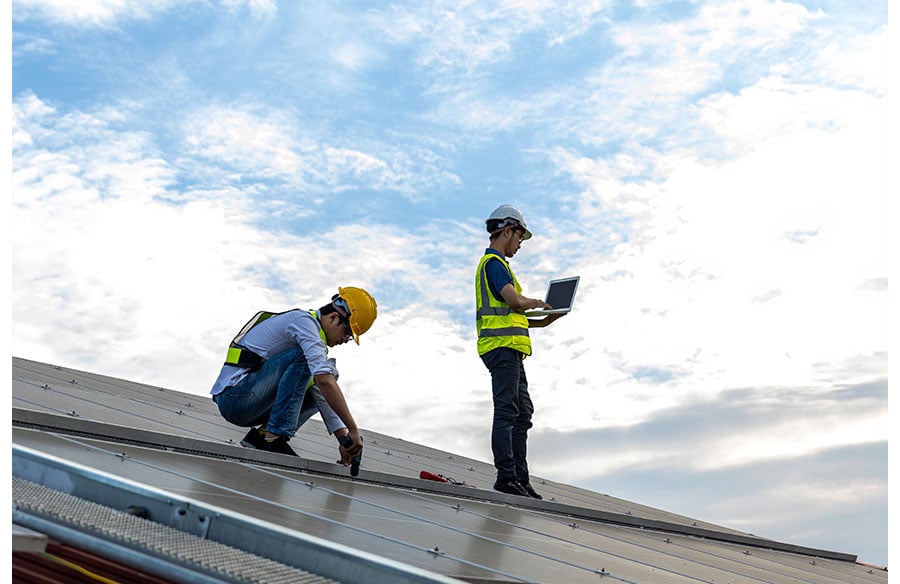
A professional roof inspector should walk the roof twice a year if at all possible. The right time is in the spring after the roof has been under the extreme stress of another winter and in the fall before the freeze cycles begin. Assuming there is a prioritization matrix or checklist in place to be sure nothing is missed, the inspector should first concentrate on high-risk locations. Those are not the locations to skip during the walk-around; they are the locations where failure occurs with that roof type and configuration.
Flashing and penetration seals are always the weak points in the armor. If the roof system is going to spring a leak, it’s most likely to happen at a place where something punctures the membrane or a vertical surface meets the membrane. These are also typically the kinds of leaks that do the most damage by the time they migrate all the way through the insulation and deck. Observation from the roofline does not suffice here: HVAC curbs, parapet walls, pipe penetrations, exhaust vents. You have to go up there and see if the sealant has cracked, dried, and started to fall off, or if the metal termination bar has pried away due to wind uplift.
Look at the membrane surface itself for blisters, ridges, and soft areas. Moisture that has seeped beneath the membrane insulation will create “soft” areas that often feel spongy underfoot. Blisters are caused by vapor pressure that has become trapped and is forcing the membrane sections apart. Moisture-swollen insulation will cause ridges to form in the membrane. Blisters and ridges cause the membrane to lose proper adhesion and will reduce its service life. Neither condition will improve by itself.
Identifying Issues Before They Become Structural Failures
The time between a compromised membrane and water entry to the building can be quite long or quite short. A tiny puncture in a well-adhered membrane might take weeks or months to show up inside. Meanwhile, a large seam that’s already opened up due to adhesion failure is effectively an open drain during the next rain.
What this means in the real world is that minor issues found during inspection should be addressed quickly, not logged and deferred. Something very minor – a pinhole puncture, a cracked sealant joint – can be patched in a half hour with a dollar’s worth of flashing cement. Left through a wet season, that same defect can require section re-flashing or membrane patch work. When inspection reveals a genuinely compromised area – not just surface weathering but actual membrane breach or failed adhesion – that’s the moment to bring in professionals for targeted roof leak repairs rather than relying on temporary in-house patches that delay the work without solving the problem.
Temporary patches have their place in emergency response, but they’re not a maintenance strategy. The gap between “we put tape over it” and “we had it properly repaired” is exactly where expensive interior damage accumulates.
Material-Specific Maintenance Requirements
The three most common membrane types found on commercial buildings are TPO, EPDM, and Modified Bitumen, each with its own unique set of maintenance characteristics.
TPO is a single ply thermoplastic membrane with heat welded seams. Its reflective surface performs well with UV exposure, but its seams are the weak point, and seam inspection is required at every maintenance interval. It is also easily punctured by foot traffic in the absence of walkway pads.
EPDM, a synthetic rubber membrane, is extremely durable and performs well with thermal cycling. However, its adhesive bonded seams and surface applied flashings can become weakened over time due to adhesive failure. Oils are absorbed by the membrane, so products that are petroleum based, like those often tracked onto the surface by contractors, can cause the membrane to degrade. Walkway protection for EPDM is also required wherever regular foot traffic occurs.
Modified Bitumen systems are frequently installed in multiple plies and have surface caps embedded with granules. These systems tend to be more puncture resistant, but are substantially heavier than the single ply membranes. Seams are torch or heat welded and generally robust, but UV degradation of the surface granules leads to loss of reflectivity and accelerated aging. Coating maintenance is typically required to extend service life.
Protecting The Roof From Unauthorized Access Damage
A good amount of commercial roofing failures do not have material or weather as a culprit. It’s actually unrecorded damage caused by tradespeople getting on to the roof to perform other tasks. HVAC technicians, telecom installers, antenna contractors, you name it, all these people are walking on the roof membrane, with no clue how puncture-sensitive they are or why designated paths are necessary.
There’s an easy solution: an access protocol. Your roof should have a physical log book or digital equivalent at the access hatch where ANY contractor accessing the roof records their name, company, date, purpose, and duration. If membrane damage appears after an HVAC service visit, the logbook provides the basis for a warranty or liability claim.
Designated access routes should use permanent walkway pads. Anywhere tradespeople or contractors, the inspector, or your maintenance person are regularly walking, those are the paths that should have installed pads. They distribute the weight, ensuring that the roof membrane surface is safe. They’re pretty cheap compared to how much damage they prevent.
Warranty Compliance and Documentation
Building owners frequently mix up these two warranties: the manufacturer’s material warranty and the workmanship warranty, the latter of which comes from the full-service or roofing contractor typically hired to install the roof. Both material and workmanship warranties are fairly standard in the commercial roofing industry and typically last between 10 and 20 years for a good installation. Both contain a similar set of warranty voiders, the most common of which is the lack of documented maintenance inspections on the roof at least once a year, and preferably twice, before and after any storm season.
After severe weather, documentation is equally critical. If a hailstorm or high-wind event hits the building, the inspection protocol should happen within 24 to 48 hours. Photograph every area of suspected damage with timestamps. Document the weather event with local meteorological data if possible. This evidence package is what makes insurance claims defensible, and it’s almost impossible to reconstruct after the fact if the immediate post-event window passes.
Managing The Roof As A Long-Term Asset
A commercial roof that receives regular maintenance as part of a total care plan is a good roof. One that does so because minor problems are easier and cheaper to repair than major problems is even better. This is all asset management 101. Run-to-fail is a dubious maintenance strategy for any major system, but it’s especially unforgiving with a roof.
The annual visual inspection reports and the associated repair orders that result from them are the tracks on which your warranties run. If you ever have a large enough failure to make a warranty claim, the OEM vendor is going to ask to review the records and the logs, and that is going to be item one on his checklist. The building owners and facility managers who avoid major roof expenditures aren’t lucky. They built systems that make large-scale failures avoidable in the first place.