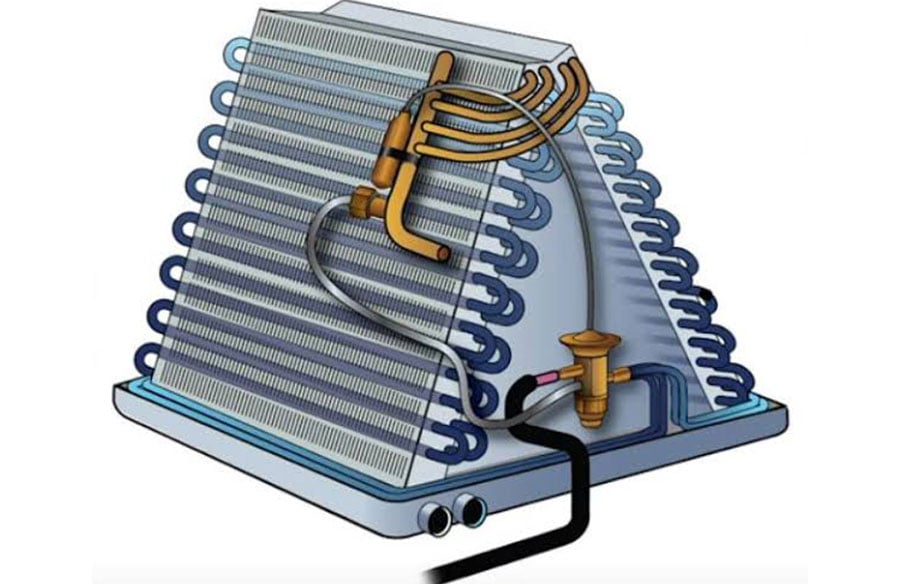
Few components inside an air conditioning system work harder than the evaporator coil. Hidden inside the indoor portion of the HVAC system, the evaporator coil plays a critical role in removing heat from the air and helping maintain comfortable indoor temperatures. When it functions properly, most homeowners rarely think about it. When problems develop, however, the effects can quickly become noticeable.
An evaporator coil that is damaged, leaking, or deteriorating can significantly reduce cooling performance, increase energy consumption, and place additional strain on other HVAC components. In some situations, a repair may be sufficient to restore proper operation.
In others, replacement becomes the more practical and cost-effective solution.
What Does an Evaporator Coil Do?
The evaporator coil serves as one of the central components of the air conditioning process. Located inside the air handler or attached to the furnace, the evaporator coil contains refrigerant that absorbs heat from indoor air. As warm air passes over the coil, heat transfers into the refrigerant. The cooled air is then circulated back into the home through the duct system.
This process repeats continuously while the air conditioner is operating. Without a properly functioning evaporator coil, the system cannot effectively remove heat from the indoor environment. As a result, cooling performance declines and overall efficiency suffers. Because the evaporator coil directly influences comfort and energy consumption, problems involving the coil can have a noticeable impact throughout the entire HVAC system.
Reduced Cooling Performance
One of the most common indicators of evaporator coil problems is a decline in cooling performance. Homeowners may notice that their air conditioner runs longer than usual without achieving the desired temperature. Rooms that were previously comfortable may begin to feel warmer, particularly during periods of high outdoor temperatures.
While several HVAC issues can contribute to poor cooling performance, evaporator coil problems are often among the possibilities technicians investigate. A damaged coil may struggle to absorb heat effectively, reducing the system’s ability to cool the home efficiently. If cooling capacity continues to decline despite routine maintenance and filter changes, a closer evaluation of the evaporator coil may be warranted.
Recurring Refrigerant Leaks
Refrigerant leaks are one of the most common reasons evaporator coil replacement is considered. Over time, coils can develop small leaks due to corrosion, vibration, manufacturing defects, or general wear. These leaks allow refrigerant to escape, reducing system performance and forcing the air conditioner to work harder to maintain indoor temperatures.
In some cases, a leak may be repairable. However, multiple leaks or widespread corrosion often indicate that the coil is deteriorating. Continually repairing new leaks can become expensive and may only provide temporary relief if the underlying condition of the coil continues to worsen.
Ice Formation on the Coil
Many homeowners are surprised to learn that an air conditioning component can freeze during the summer. Yet ice accumulation on an evaporator coil is a common symptom of underlying HVAC problems. When airflow becomes restricted or refrigerant levels fall too low, the coil may become excessively cold. Moisture in the air then freezes on the coil’s surface, creating layers of ice that further reduce performance.
Although frozen coils do not automatically require replacement, repeated icing problems may signal more serious issues. A technician will typically investigate airflow restrictions, refrigerant levels, and the condition of the coil itself to determine the underlying cause. If significant deterioration or leakage is contributing to the problem, replacement may ultimately be recommended.
Increasing Energy Bills
A less obvious sign of evaporator coil trouble is a gradual increase in energy costs. When the coil cannot transfer heat efficiently, the air conditioning system often runs longer to achieve the same cooling results. This increased runtime translates directly into higher electricity consumption.
Many homeowners initially attribute rising utility bills solely to changing weather conditions. While outdoor temperatures certainly influence energy use, declining HVAC efficiency can also play a major role. If utility costs continue climbing despite relatively consistent usage patterns, the evaporator coil may be one factor worth evaluating. Efficiency losses often develop gradually, making them easy to overlook until they become significant.
Corrosion and Age-Related Wear
Like any mechanical component, evaporator coils have a finite lifespan. Over years of operation, exposure to moisture, airborne contaminants, and chemical reactions can gradually contribute to corrosion. In particular, a form of corrosion sometimes called formicary corrosion can create tiny pinhole leaks within copper tubing.
Because these openings may be extremely small, refrigerant loss can occur slowly over time. As corrosion spreads, repairs become increasingly difficult and less cost-effective. A coil with widespread deterioration may continue developing new leaks even after previous repairs have been completed.
Knowing When Replacement Makes Sense
Evaporator coils are critical to air conditioning performance, but they do not last forever. Recurring refrigerant leaks, widespread corrosion, declining efficiency, ice formation, and persistent cooling problems may all indicate that the coil is reaching the end of its useful life. Although some issues can be repaired, there comes a point when replacement becomes the more practical and reliable option.