Constructing a building is not just about building it. It is important to maintain it for years. The maintenance issues are highlighted when they are ignored during the planning and design phase.
Generally, designers and homeowners focus mainly on the building’s layout and design, rather than maintenance requirements. That’s why they face issues after a few years.
For example, building A and building B are similar in layout and design; however, the maintenance problem is overlooked in building A. For minor repairs in both buildings, building A will require more time and effort compared to building B. This difference is due to planning. With better planning, sudden repairs can be easily fixed and can improve the building’s lifespan.
In this blog, we will discuss the key aspects homeowners and designers should consider when planning a building’s layout.
Why is Early Planning Needed for Maintenance?
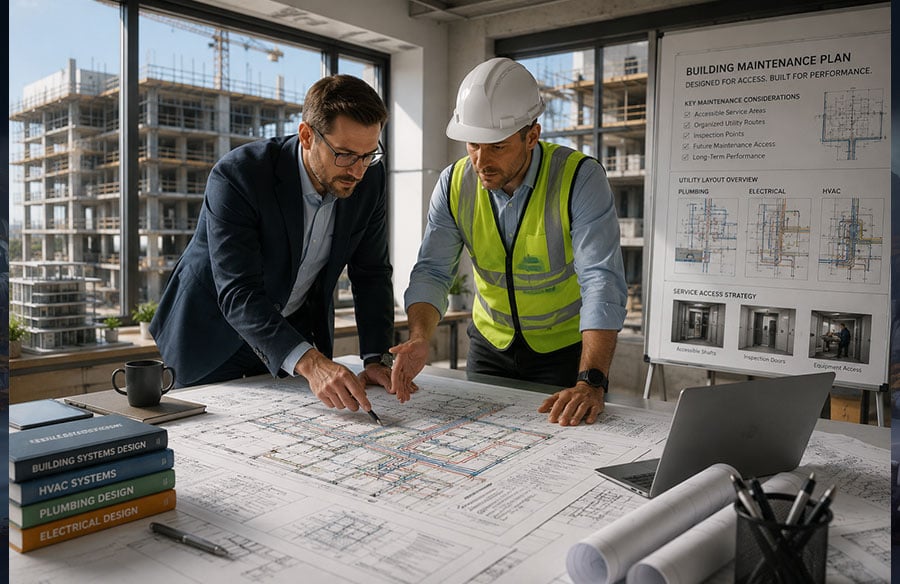
Design and maintenance decisions made during planning improve the building’s construction and decide whether maintenance will be easy in the future. If accessibility during construction, such as service lines and other essential systems, is planned at convenient locations, repairs are easy fixes.
Also, managing the maintenance frequency becomes easier. This also reduces operational disruption. It is recommended to choose standardised systems and easily available replacement parts for easy fixes.
For example, using common plumbing supply parts at the planning phase makes maintenance convenient and flexible. Many planners and homeowners rely on Quality Plumbing Supply, a store where they find trusted commercial plumbing parts. They have versatile replacement parts for the ease of long-term maintenance. Good planning helps construct a structured building and maintain it for years.
Planning Decisions That Help Maintain a Building in the Long Term
A building should be constructed so that it is easy to repair. This decision is usually made during the design and planning phase. Here are some important factors to consider while planning the building’s structure.
1. Prioritise Easy Access
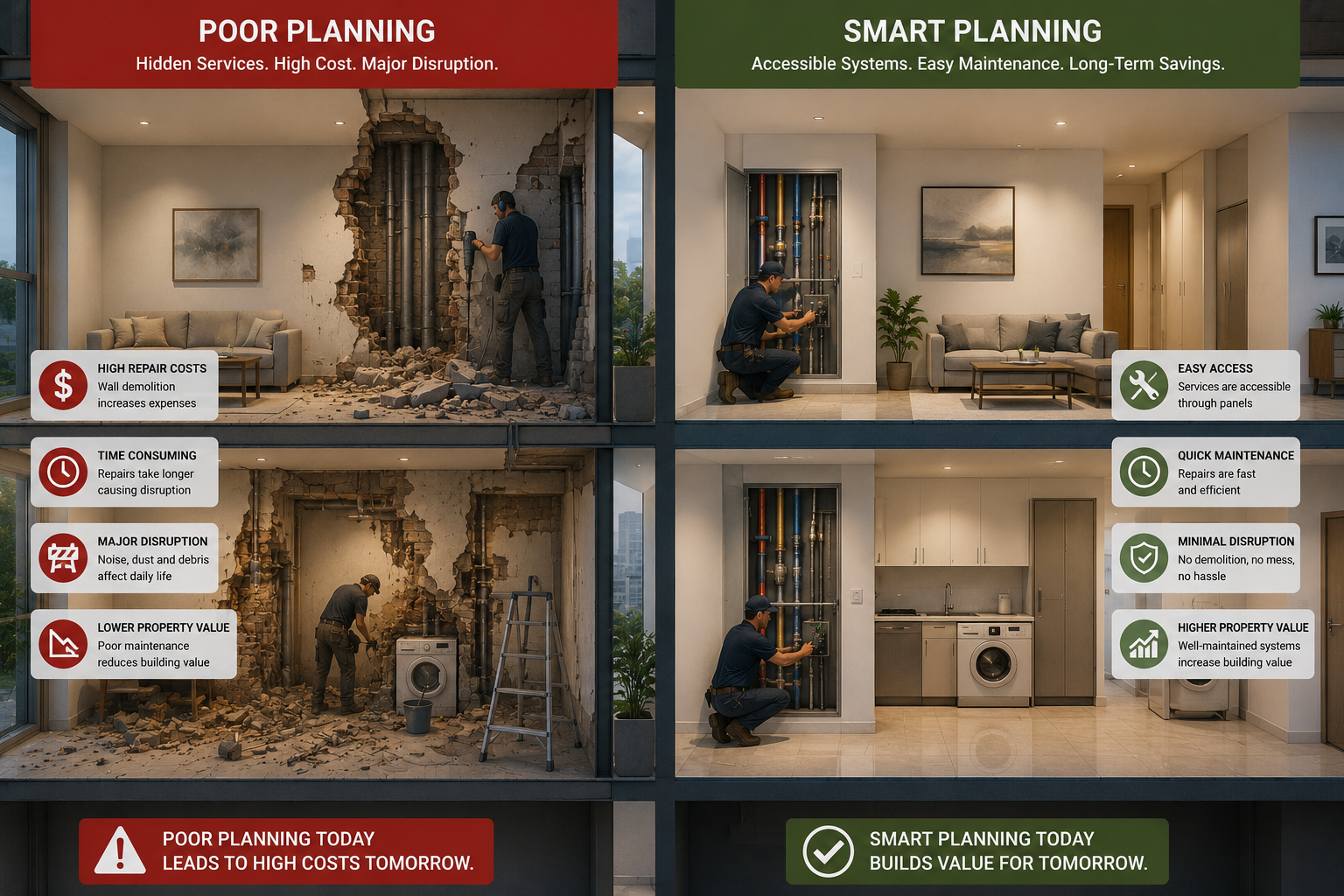
A building’s maintenance is easy when its important systems are easily accessible for fixing. There are cases where pipes or electrical lines are hidden behind permanent fixtures such as tiles or walls. This causes problems when they need some repair.
However, when access points and service panels are planned, they are easily accessible for maintenance, reducing the time and unnecessary deconstruction. For example, for a minor leak, if the repair point is easily accessible, it is easy to fix.
But if the system is sealed behind the wall, it will require more time and effort to fix. Also, the cost will rise. With accessible designs, the repairs are faster, and there’s less disruption. The maintenance cost is also under control.
Some important considerations:
- Keep the service lines easily accessible
- The inspection should be hidden but at reachable locations
- Frequently managed maintenance points should be in one place
- Have removable tiles in the wet areas such as the bathroom and kitchen
2. Choose Common Building Systems
Maintenance is easier when planners use the systems that are common and easily available. The benefit of standardised components is that replacement or repair parts are easily available.
However, if unique replacement parts are used, it becomes difficult to find the specific replacement parts. This causes a delay in the repair, and the issue might get worse. Sometimes, the designer or the homeowner chooses customised fittings for an aesthetic look; this is appealing at the beginning.
But when the fitting demands repairs after some years, it becomes difficult to find its relevant part. Therefore, always choose standard designs and parts for long-term reliability and a better maintenance experience.
Some things to consider:
- Give priority to easily available components and fittings
- Use same system family parts
- Avoid using unique parts
- Choose familiar systems for maintenance issues
3. Have Scope for Future Upgradation
Designers and homeowners should plan the building’s design and structure so that they can easily do renovation in the future, if required. With technology changes, building codes are updated, and people’s requirements evolve. If the planning is inflexible, it can lead to bigger renovations even for a small change.
There should be extra space and spare routes in the building for the upgrade, without disturbing the entire structure. For example, a building with extra service routes in advance makes it easy to upgrade the AC fittings or plumbing system there.
However, if the building is tightly packed with no extra space, the upgrade will be an issue. If planning considers future changes, it saves money and makes the process easier.
Some key considerations:
- Plan extra service spaces and concealed areas in advance
- Keep the layout simple for future renovation
- Have extra space for electrical and plumbing zones
- Keep oversized design for the equipment areas for easy replacement of parts
 Small Mistakes That Lead to Bigger Maintenance Issues
Maintenance issues are generally not big problems. They are the result of small mistakes made during planning.
The common mistakes are:
- Having limited access to the service lines
- No coordination between building systems
- Choosing low-quality material because they are less costly
If the planning is done well, most of the costly problems can be eliminated easily. This also helps reduce the maintenance load.
Conclusion
Building maintenance is not just about repairing issues. This might be the result of improper planning. Always choose common replacement parts for easy renovation. The maintenance points should be accessible, and always leave extra space for upgrades. Thoughtful planning helps reduce costs and ease maintenance while extending the building’s life. It is recommended to consider maintenance while designing the building’s structure. Build buildings that remain functional and efficient for many years.