
If you’ve heard about infrared saunas and wondered what makes the heater itself worth buying—or whether they’re any good at all—you’re not the only one. When I started looking into this myself, I found a lot of brands throwing around terms like “full spectrum” and “low EMF” without much explanation of what matters. This article builds a framework—using concrete numbers like surface temperature, wavelength, emissivity, and EMF—so you can tell a well-designed heater from a marketing gimmick. Along the way, one engineered heater (the VantaWave from SaunaCloud) serves as a useful example of a design that hits all the right notes, but the goal is to give you the tools to judge any heater you come across.
Key takeaways
- The most important spec for an infrared heater is its surface temperature: heaters running between 190°F and 250°F produce far-infrared at 7–10 microns, the wavelength range your body absorbs most efficiently. That’s Wien’s Law in action: surface temperature dictates whether you get deep, therapeutic heat or just warm air.
- Heater technology varies wildly: generic carbon panels run at 140–150°F (below the sweet spot), ceramic hits 350–400°F (uncomfortably hot and just outside the window), halogen reaches 750°F+ (near-infrared, not the therapeutic band), and engineered options like VantaWave land at 190°F with 7.9 microns and 0.97 emissivity.
- EMF levels between sauna brands can vary 100–500x. While your cell phone emits 50–200 mG and the WHO recommends a limit of 3 mG, typical imported sauna heaters put out 20–100 mG. Well-engineered low-EMF designs (like VantaWave) measure under 0.2 mG at the seated position—less than a tenth of the WHO guideline.
What Is an Infrared Sauna Heater — and What Makes One “Good”?
An infrared sauna is a light-based heater. Instead of warming the air like a traditional hot-rock sauna (think oven), it uses infrared light to heat your body directly—more like standing in sunlight. That’s why you can sit in one at a lower temperature and still sweat buckets. Sometimes you’ll see them called far-infrared saunas; same thing.
So what makes one “good”? Not brand name or total wattage. The answer lives in a handful of engineering metrics and how they translate into your experience during a 30-minute session. You want a heater that delivers the right wavelength of infrared, at sufficient intensity, with even coverage, and without unnecessarily high electromagnetic fields (EMF). This article walks through each of those factors, along with the honest caveats about what the research does—and doesn’t—prove.
Health Benefits and Safety: What the Research Actually Says
The Mayo Clinic says that health benefits from infrared saunas are still uncertain, and larger, more-exact studies are needed.
Researchers have looked at infrared saunas for a range of conditions: high blood pressure, heart failure, dementia, Alzheimer’s, headache, type 2 diabetes, and arthritis. Some of those studies showed promising results. But a key caveat: some of the positive studies used traditional saunas, not infrared, so you can’t borrow the data. On the safety side, though, the news is straightforward—no harmful effects have been reported.
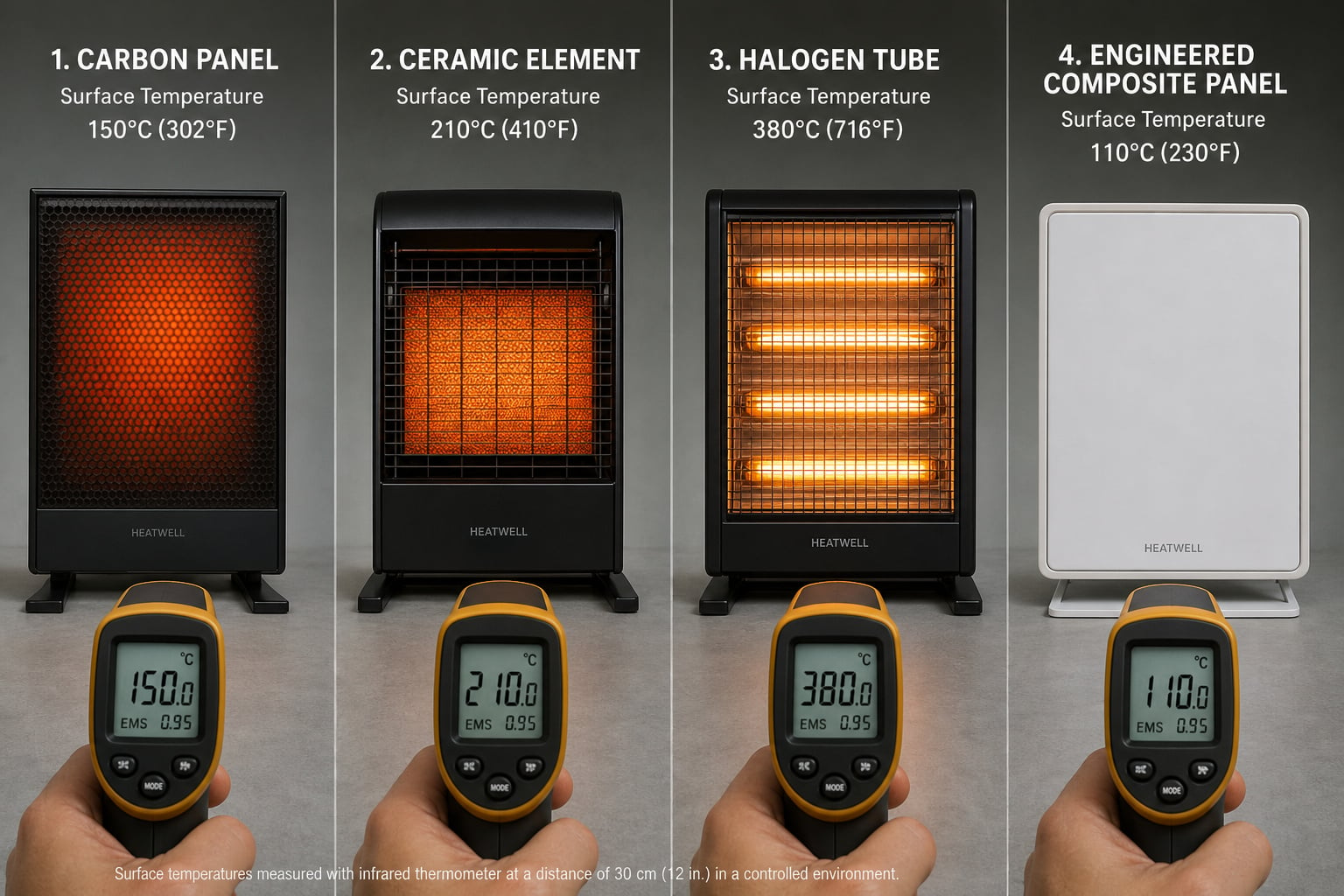 Surface temperature dictates wavelength, and only the 190–250°F range lands in the 7–10 micron therapeutic sweet spot your body absorbs best.
The Physics of Infrared: Why Surface Temperature and Wavelength Matter More Than Brand
The most important specification for an infrared heater is its surface temperature, because that determines what kind of infrared it produces. The formula converts surface temperature into peak wavelength: divide 5268 by the temperature in Fahrenheit plus 460.
Here’s what that means in plain English:
- Heaters running at 190°F put out a peak wavelength around 7.9 microns.
- At 350°F, the peak drops to about 6.5 microns.
- At 140°F, you get roughly 8.8 microns.
- Above 750°F, the peak shifts to around 4.4 microns (near-infrared).
The therapeutic sweet spot for far-infrared is 7–10 microns. That’s the range where water molecules in your body absorb the energy most efficiently—like a lock and key. The mild, penetrating heat of an infrared sauna helps balance cortisol levels, nudging your body from a “fight or flight” state into a relaxed, healing mode. Heaters that run 190–250°F land in that zone. Heaters outside that range either fall short or overshoot.
Heater Technology Face-Off: Carbon, Ceramic, Halogen, and Engineered Solutions
Here’s what the main types deliver, so you can see which ones check the boxes.
Carbon panels (budget option)
Standard carbon panels operate at 140–150°F—below the therapeutic sweet spot. Their peak emission is 9–11 microns, which is at the long end of far infrared. Emissivity (how much of the electricity turns into infrared) runs 0.94–0.95—good but not great. The problem is that they mostly heat the air around you rather than penetrating your body.
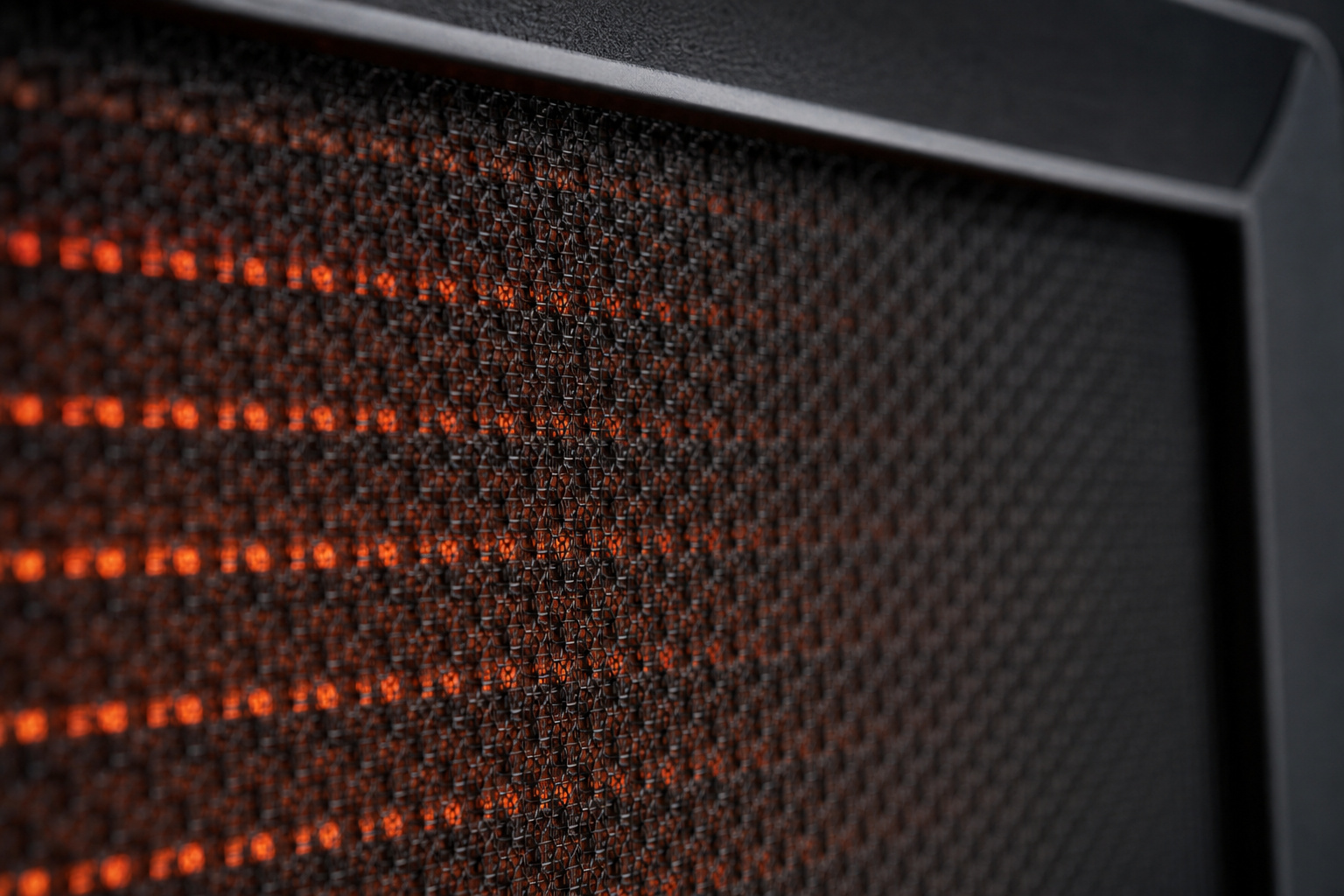 Standard carbon panels run at 140–150°F, which falls below the therapeutic range and mostly heats the air instead of penetrating your body.
Using infrared heaters, these saunas warm your body directly rather than the air, operating at lower temperatures. You’ll sweat, but it’s from warm air, not deep infrared. Think of a campfire 20 feet away: it radiates infrared, but you don’t feel a therapeutic dose. These saunas cost $1,500–$3,000, and they can’t raise your core temperature efficiently.
Ceramic heaters
Ceramic runs hotter: 350–400°F surface temperature. Peak wavelength lands at 6–7 microns, below the therapeutic sweet spot. Emissivity is 0.99, the highest of common materials—almost all electricity becomes infrared. But ceramic heaters get hot at close range (6–12 inches).
That creates hot spots on one part of your body while your legs stay cool. The even coverage isn’t there, and the higher operating temperature also means higher EMF potential.
Halogen / “full spectrum” heaters
Halogen elements (quartz tubes) hit 750°F+ and peak at 4.4 microns—near-infrared, not far-infrared. You’ll see them marketed as “full spectrum,” “tri-light fusion,” or “dual-wave.” Don’t be impressed. Those terms are repackaged combos of carbon, ceramic, and halogen. The halogen near-IR at 4.4 microns is not the same as therapeutic near-IR LEDs at 660–850nm; different wavelengths, different effects.
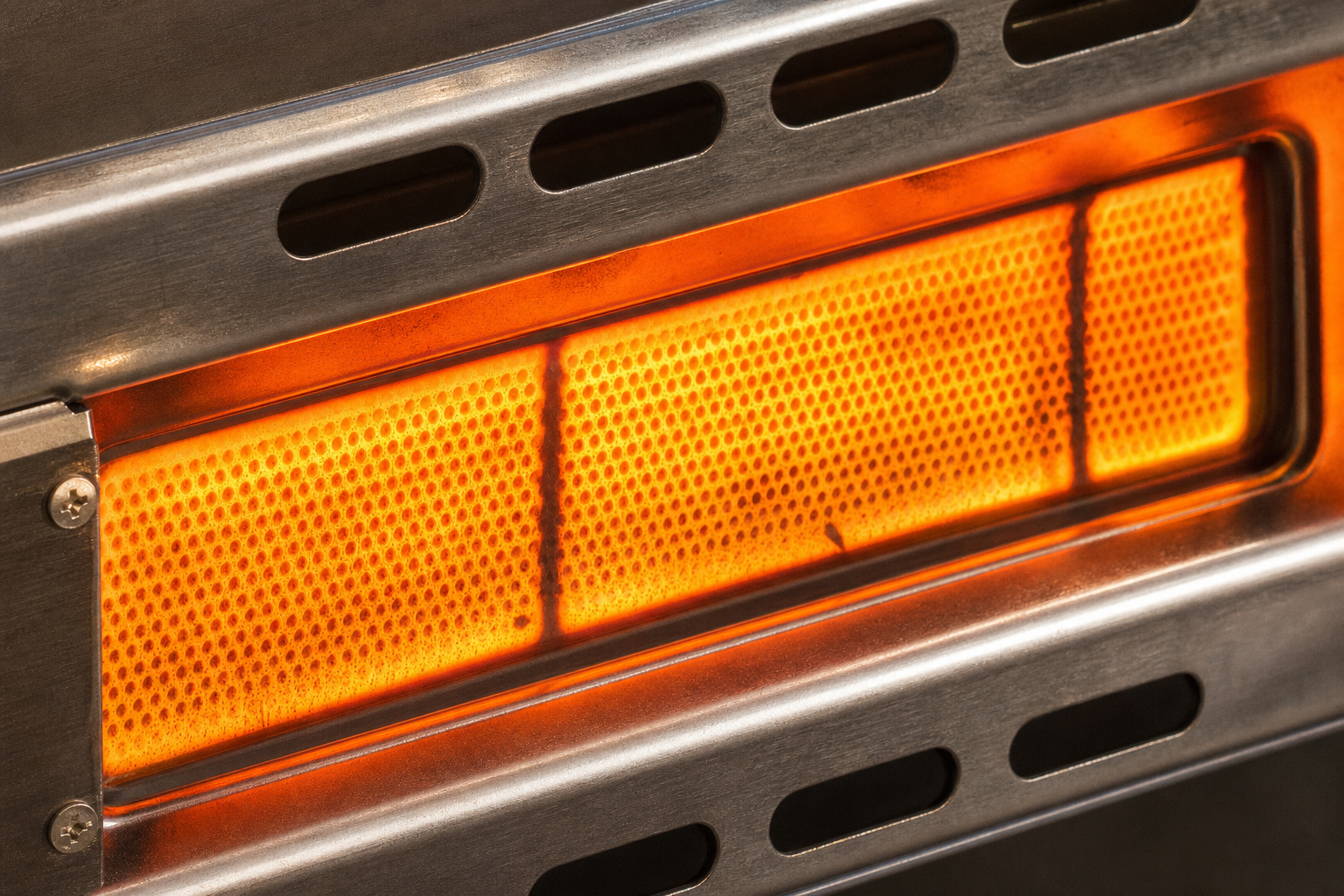 Ceramic heaters hit 350–400°F and high emissivity, but their narrow hot spots can leave your legs cool while your torso heats up.
In practice, halogen adds a harsh, concentrated radiant heat that many people find uncomfortable for a full 30-minute session. Clearlight is a well-known brand that uses this approach.
VantaWave (engineered example)
VantaWave is a proprietary carbon-blend heater designed to hit the therapeutic sweet spot. Its key specs: 190°F surface temperature, 7.9 microns peak wavelength (center of the 7–10 range), emissivity 0.97, and EMF below 0.2 mG at the seated position. The panel distributes heat across a large surface area for even coverage. It’s engineered in-house by SaunaCloud, along with their own power supplies and controls.
That level of vertical integration is unusual in this industry. VantaWave is offered exclusively within a complete custom sauna from SaunaCloud, but it’s a useful benchmark for what “good” looks like on paper.
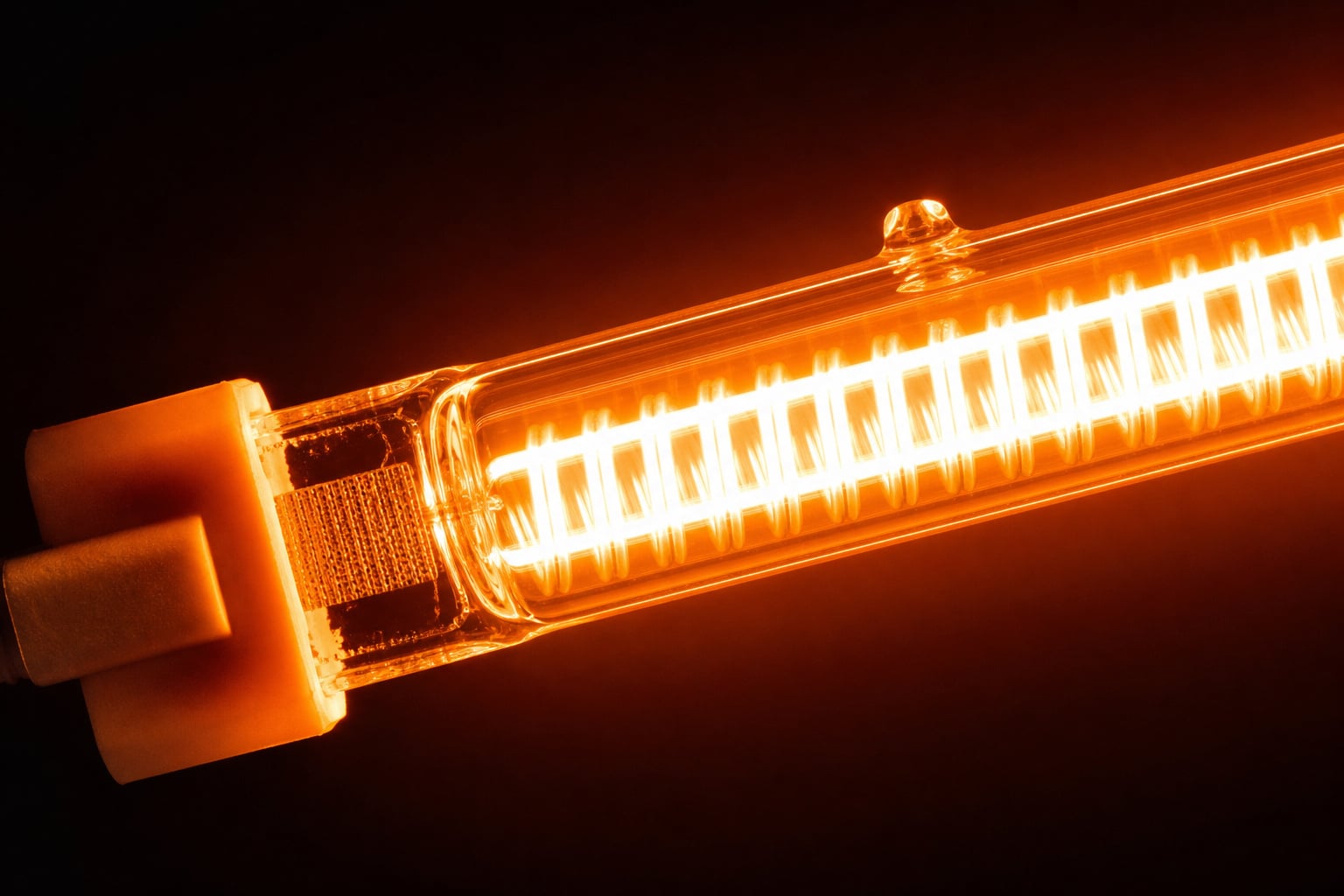 Halogen ‘full spectrum’ heaters hit 750°F and near-infrared at 4.4 microns—not the therapeutic far-IR that drives deep heat and sweat.
EMF: The Hidden Variable in Sauna Quality
Electromagnetic fields vary between sauna heaters—as much as 100–500x from one brand to another. Your cell phone emits 50–200 mG. Your laptop: 10–20 mG. The World Health Organization’s recommended limit is 3 mG.
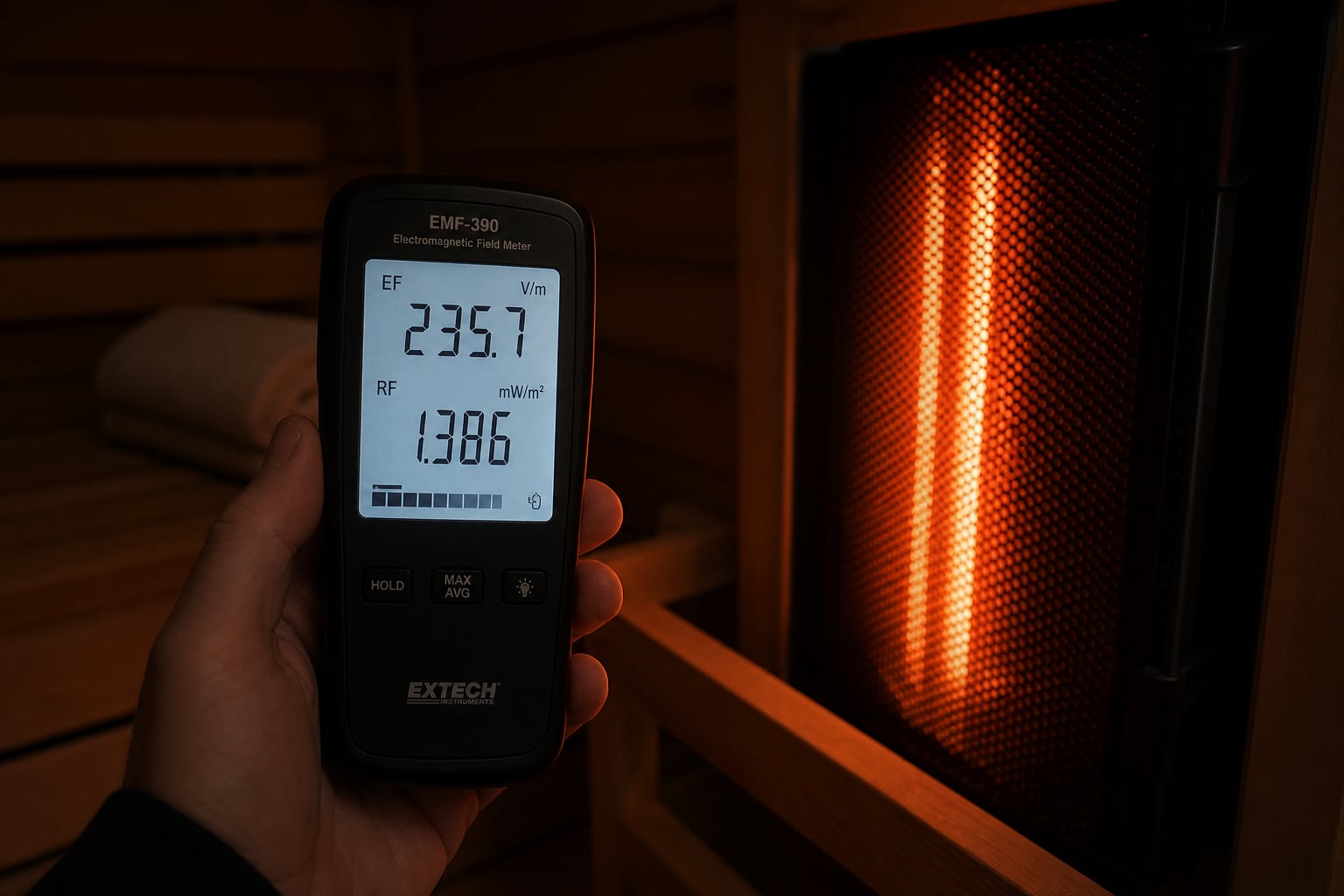 EMF between sauna brands can vary 100–500x; always ask for third-party readings taken at the seated position, not the bare panel in open air.
Imported sauna heaters you’ll find online put out 20–100 mG. That’s above the WHO guideline.
Well-engineered low-EMF designs (like VantaWave) measure under 1 mG, and in some cases below 0.2 mG. That’s less than a tenth of the WHO limit and orders of magnitude lower than a typical import.
Many companies advertise “low EMF” based on testing the heater panel alone in open air. If you test at the seated position with all heaters running, the reading can be 100 times higher. Always ask for third-party data taken from the seated position inside the sauna.
Heater Placement and Coverage: Why Distance and Angle Matter as Much as the Heater Itself
Physics again: infrared intensity follows the inverse square law. Twice the distance means a quarter of the intensity. A heater 6 inches away delivers about 4x the therapeutic infrared of one 12 inches away.
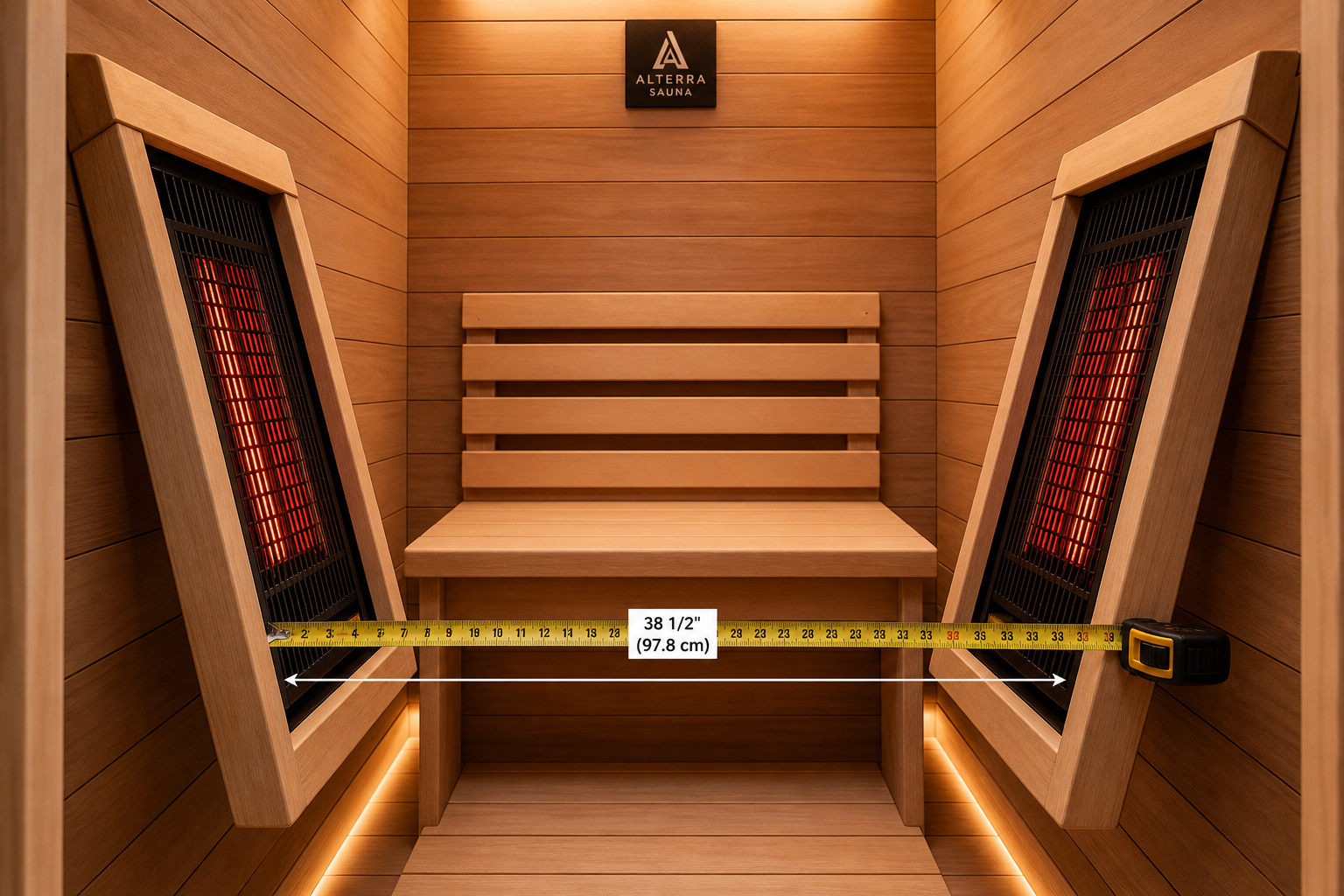 Inverse square law means a heater 6 inches away delivers four times the intensity of one at 12 inches—placement is as critical as power.
Good coverage means having panels placed to hit your whole body. Back panels should cover from your lumbar to your upper back. Side panels angled 15–20° toward you target your core and shoulders. Calf panels at about 12 inches height keep your legs in the game. Some setups add an overhead halogen element at 750°F for supplemental heat from above—like a gentle heat lamp.
 Good coverage means back panels from lumbar to upper back and side panels angled 15–20° toward you—check the pattern, not just the wattage.
Total wattage is a poor metric. A 2,000-watt heater badly positioned will underperform a 1,000-watt system with careful placement. Focus on coverage pattern, not power number.
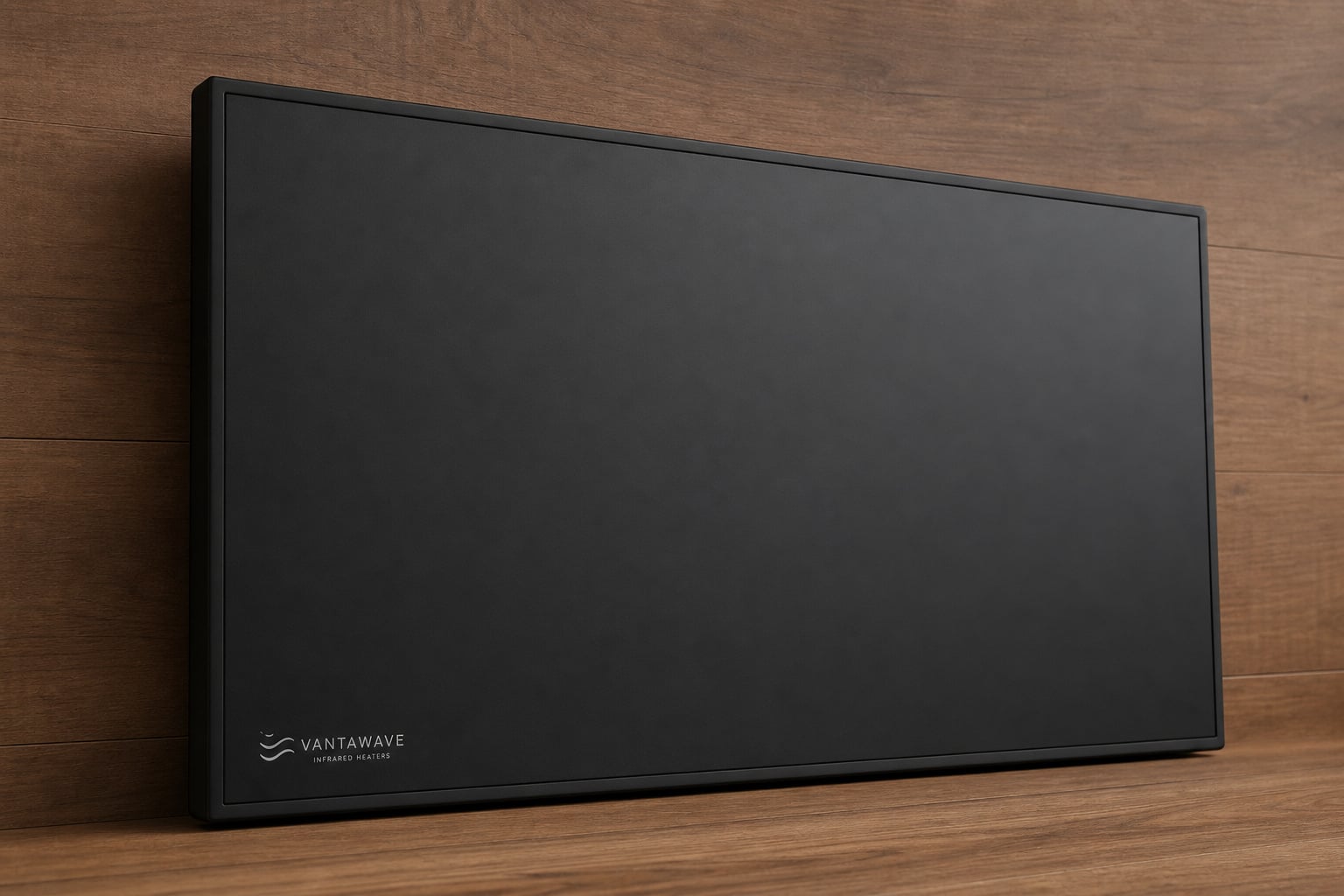 The VantaWave hits 190°F and 7.9 microns—center of the therapeutic band—with 0.97 emissivity and EMF below 0.2 mG at seated position.
Cost vs. Value: What You Actually Pay For in a “Good” Heater
Let’s talk money. Budget saunas with generic carbon panels run $1,500–$3,000. They feel warm but can’t raise your core temperature effectively. Therapeutic saunas with engineered heaters start at $5,000+. At that price, you’re paying for the right wavelength, low EMF, even coverage, and better build quality.
What about warranties? SaunaCloud’s CORE 5 power supply (in-house design) carries a 7-year warranty—a sign of confidence in the engineering. They’ve built over 3,000 custom saunas since 2014, and they manufacture their own power supplies, PCBs, and WiFi controls in-house. That level of vertical integration is not found at any other residential sauna company in North America.
The Verdict: Are Infrared Sauna Heaters Good?
Here’s a quick checklist you can use to evaluate any heater you see:
- Surface temperature: 190–250°F (hits the therapeutic sweet spot)
- Peak wavelength: 7–10 microns (where your body absorbs best)
- Emissivity: >0.95 (more electricity becomes actual infrared)
- EMF at seated position: <3 mG (WHO guideline; well-engineered designs go under 1 mG)
- Coverage: Even distribution with proper panel placement and angles
VantaWave checks all those boxes: 190°F, 7.9 microns, 0.97 emissivity, EMF below 0.2 mG, and a purposeful layout in the Atlas system. It’s not the only good option on the market, but it’s a concrete example of what happens when you design from physics rather than marketing. The framework above will serve you either way. Now you know what to look for.
Frequently Asked Questions
What is the downside to an infrared sauna?
The main downside is that health benefits are still uncertain — the Mayo Clinic notes that larger, more exact studies are needed. Also, many budget saunas use heaters that run at the wrong surface temperature, so you end up with warm air instead of deep, penetrating infrared, which means you’re not getting the therapeutic effect you paid for.
What are the downsides of infrared heaters?
The biggest downside is that most heaters on the market miss the therapeutic wavelength sweet spot. Generic carbon panels run too cool at 140–150°F, ceramic runs too hot at 350–400°F, and halogen hits 750°F+ with harsh near-infrared that many people find uncomfortable for a full session. You also have to watch for high EMF levels, which can vary 100–500x between brands.
What’s the difference between far-infrared and near-infrared sauna heaters?
Far-infrared heaters run at 190–250°F and produce wavelengths of 7–10 microns, which penetrate your body deeply and efficiently. Near-infrared heaters like halogen run at 750°F+ and produce wavelengths around 4.4 microns — that’s a different band that creates harsh, concentrated radiant heat. Don’t confuse halogen near-IR with therapeutic near-IR LEDs at 660–850nm; they’re not the same thing.
How much EMF is safe in an infrared sauna?
The World Health Organization recommends a limit of 3 mG. Many imported sauna heaters put out 20–100 mG, which is above that guideline. Well-engineered low-EMF designs measure under 1 mG, and some go below 0.2 mG at the seated position — less than a tenth of the WHO limit. Always ask for third-party data taken from inside the sauna, not from the panel alone in open air.