For many renters and buyers across North Carolina, the housing market doesn’t feel like growth so much as constant adjustment. Apartment complexes get renovated mid-lease, suburbs that didn’t exist a decade ago now have waitlists, and median prices keep shifting before anyone can fully react to them.
At first, this can look like simple overheated demand. However, the pattern underneath is more specific than that: a state absorbing population faster than almost anywhere else in the country, doing it largely by reworking what’s already built instead of starting from empty land.
Migration and the Pressure It Creates
Wake and Mecklenburg counties have each ranked among the fastest-growing counties in the nation by raw population gain, and growth at that scale changes what gets built and who builds it.
The state ranked first in the nation for domestic migration last year, drawing tens of thousands of new residents from costlier states looking for lower housing costs and steady job growth. That kind of inbound demand doesn’t distribute evenly across price points, which helps explain why investment firms have started looking past the obvious luxury submarkets toward communities that were previously undercapitalized.
A lot of current Real Estate Investing North Carolina activity follows this logic: firms targeting supply-constrained markets across the state, improving existing housing stock where new construction no longer pencils out.
The architecture involved, how a 1980s garden-style apartment complex gets reconfigured for the way people live now, carries as much weight in these deals as the financial structuring behind them.
A Market Built on Renovation
Remodeling has overtaken new construction as the larger share of residential building activity across much of the country, and the trend looks built to last.
An aging housing stock, combined with homeowners reluctant to give up low mortgage rates, has pushed renovation spending to levels NAHB economists call a sustained structural shift, according to recent NAHB market data, rather than a pandemic-era spike.
North Carolina mirrors that pattern closely. Owners throughout the Triangle and the Charlotte metro are reskinning and reconfiguring older apartment communities instead of tearing them down, partly because land costs have climbed too fast to make ground-up building the cheaper option anymore.
Cost isn’t the only driver. Architects working on these conversions tend to treat the existing structure as something to work with, not against, the same logic behind the adaptive reuse projects reshaping industrial sites across Europe
Growth Finds the Suburbs
The population data explains why renovation alone won’t close the gap.
North Carolina added roughly 150,000 residents in a single recent year, placing it among the top three states for total population growth. The state’s own demographic office, in its latest population projections, expects that pace to continue into the next decade.
Most of that growth is landing outside the urban core. Apex and Holly Springs, along with several towns ringing Charlotte, are now growing faster than the cities they orbit.
That shift toward the edges is forcing architects and planners to rethink density at a scale most of these towns never anticipated.
Missing-middle housing, duplexes and small multifamily buildings that work within existing neighborhood fabric rather than replacing it, is gaining ground as a path between sprawl and high-rise density.
Climate Shapes the Design Response
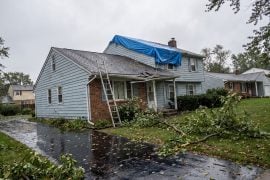
Renovation choices in North Carolina also answer to climate, not just economics. Coastal counties like Brunswick face hurricane exposure that pushes upgrades toward impact-rated windows and reinforced roofing, while inland Triangle communities deal with humidity that rewards better ventilation and moisture-resistant materials.
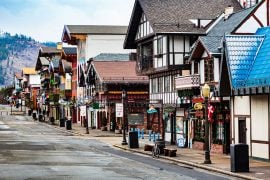
Builders look to vernacular cues, deep porches, raised foundations, breathable assemblies, drawing on the same bioclimatic design principles used elsewhere. These choices shape how long a renovated property performs before it needs another round of capital work.
Efficiency as Underwriting Logic
Energy performance has entered the investment conversation, not as a marketing point but as a number in the underwriting.
Buildings with poor insulation or outdated systems carry higher operating costs that surface in rent, so renovation decisions weigh efficiency against upfront spend instead of treating it as optional.
In practice, that means swapping out aging HVAC systems and adding insulation to unit envelopes built before modern energy codes. Neither upgrade is dramatic alone, but together they shift a property’s operating margin enough to matter over a multi-year hold.
Firms applying sustainable design practices find that efficiency upgrades pay for themselves faster in a market this tight, where low vacancy justifies the extra work upfront.
None of this resolves the tension between a state, adding residents faster than it can house them, and a construction industry slow to respond. But it does point to where the real work is happening: inside buildings that already exist, reworked one unit at a time, faster than anything rising from empty land nearby.