Architecture is about much more than designing attractive buildings. Architects must also communicate ideas clearly to clients, stakeholders, planners, contractors, and the public. One of the biggest challenges in this process is helping others understand how a design fits within its surroundings and how it will look and function in the real world.
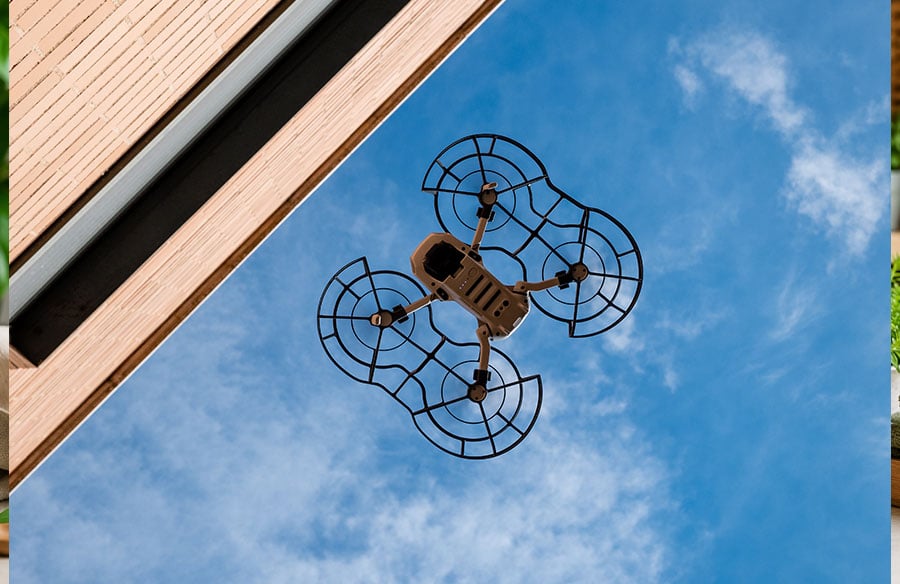
This is where drone videography has become an increasingly valuable tool. By providing high-quality aerial perspectives, drone footage helps architects present projects with greater clarity, making it easier to communicate scale, context, and design intent throughout every phase of a project.
According to research published by Architect Magazine, drone imagery gives architects new ways to understand, document, and communicate sites and structures, while also helping teams share information more effectively across projects.
Why Visual Communication Matters in Architecture
Architectural drawings, floor plans, and renderings are essential tools, but they can sometimes be difficult for non-technical audiences to interpret.
Clients may struggle to understand:
- How large a building will appear in its surroundings
- How the structure relates to nearby properties
- The impact on views and sightlines
- Site constraints and opportunities
- Overall project scale
Even highly detailed renderings can leave room for misunderstanding. Aerial video provides additional context by showing the relationship between a proposed design and the surrounding environment.
When stakeholders can visualize a project more clearly, decision-making often becomes faster and more efficient.
Understanding Scale Through Aerial Perspectives
One of the greatest advantages of drone footage is its ability to communicate scale.
Ground-level photography provides valuable detail, but it often lacks the broader perspective needed to fully understand a project’s size and presence within a site.
Drone footage helps architects demonstrate:
- Building massing
- Site dimensions
- Topography
- Proximity to neighboring structures
- Transportation access
- Landscape relationships
Aerial views provide a perspective that closely resembles how planners, developers, and investors often evaluate projects.
This wider viewpoint allows stakeholders to understand how a design occupies space and interacts with its surroundings.
Showing Context More Effectively
Context is a critical component of successful architectural design.
Every building exists within a larger environment that includes neighboring buildings, infrastructure, natural features, and community spaces.
According to architectural professionals who use drone technology, aerial imagery helps capture how buildings sit within their broader context while revealing details that may be missed during traditional site visits.
Drone footage can reveal:
- Street patterns
- Adjacent developments
- Green spaces
- Water features
- Traffic flow
- Urban density
- Site access points
This information helps architects communicate design decisions more effectively and demonstrate how a project responds to its environment.
Supporting Design Presentations
Client presentations often determine whether a project moves forward.
Architects must explain complex concepts in a way that feels accessible and easy to understand.
Drone footage can enhance presentations by:
- Creating engaging visual storytelling
- Providing realistic site overviews
- Supporting renderings and animations
- Illustrating project opportunities
- Helping clients visualize outcomes
Instead of relying solely on technical drawings, architects can combine aerial video with design renderings to create a more complete project narrative.
This often results in stronger client confidence and more productive discussions.
Improving Planning and Approval Processes
Planning boards and regulatory agencies frequently review projects based on documentation and visual materials.
Aerial footage can help decision-makers understand how a proposed development fits within an existing neighborhood or landscape.
By providing accurate visual context, drone footage helps:
- Clarify project impacts
- Demonstrate compliance with planning objectives
- Illustrate relationships with surrounding properties
- Support community engagement efforts
Visual transparency can reduce confusion and help stakeholders evaluate projects more effectively.
Enhancing Site Analysis
Drone technology is not only useful after a design is completed. It also provides significant value during the early stages of a project.
Architects use drone imagery to gather information about sites before design work begins.
Research on UAV applications in architecture and urbanism shows that drones are increasingly used for site analysis, mapping, 3D modeling, construction monitoring, and project planning due to their efficiency, accuracy, and cost-effectiveness.
Drone surveys can help architects assess:
- Existing site conditions
- Elevation changes
- Vegetation coverage
- Drainage patterns
- Infrastructure connections
- Access limitations
This information supports more informed design decisions from the start.
Documenting Construction Progress
Architects often remain involved throughout construction to ensure projects are executed according to design intent.
Drone footage provides a reliable method for documenting progress over time.
Regular aerial updates allow teams to:
- Track construction milestones
- Verify design implementation
- Identify potential issues early
- Improve communication with stakeholders
- Maintain visual project records
Because footage can be captured consistently from the same viewpoints, project teams can compare progress across different stages of development.
Creating More Compelling Marketing Materials
Architectural firms also use drone footage to showcase completed projects.
Professional aerial videos help communicate design achievements by highlighting both the building and its surrounding environment.
This content can be used across:
- Firm websites
- Social media platforms
- Award submissions
- Client presentations
- Project portfolios
Unlike traditional photography, aerial footage demonstrates how a project interacts with its site and community, creating a more compelling visual story.
The Future of Drone Technology in Architecture
Drone technology continues to evolve alongside architectural workflows.
New capabilities such as photogrammetry, 3D mapping, thermal imaging, and integration with BIM platforms are expanding how architects use aerial data throughout project lifecycles.
As expectations for visual communication continue to grow, aerial footage is becoming less of a luxury and more of a practical necessity.
Architects increasingly need tools that help clients and stakeholders understand projects quickly and accurately. Drone footage meets that need by providing a clear, engaging, and highly informative perspective that traditional visuals cannot always deliver.
Conclusion
Communicating architectural ideas effectively requires more than drawings and renderings alone. Stakeholders want to understand how projects fit within their surroundings, how they impact communities, and how design decisions influence the final outcome.
Drone footage provides architects with a powerful way to communicate scale, context, and design intent through visually compelling aerial perspectives. From site analysis and planning approvals to construction monitoring and project marketing, drone technology helps bridge the gap between technical design information and real-world understanding.
As architecture becomes increasingly collaborative and digitally driven, drone footage will continue to play an important role in helping architects tell the complete story behind their designs.