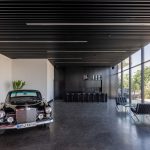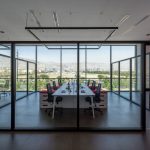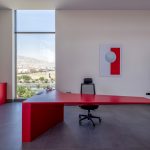
The Aria Sanat project is located in the industrial zone of Ghaleh Hassan Khan, an environment shaped by rigid functionalism, visual uniformity, and a general disregard for spatial quality. It reinterprets the conventional notion of the industrial-administrative office through a contemporary architectural approach that emphasizes formal clarity, openness, and user-centered experience.
Project Name: Aria Sanat Industrial
Studio Name: Nobico Studio
Location: Tehran, Iran
Date of Design: March 2023 – May 2023
Date of Construction: 2023 – 2025
Site Area: 1550 m²
Ground Floor Area: 344 m²
Built Area: 1000 m²
Beyond fulfilling operational needs, the design seeks to enhance spatial quality and enrich the everyday experience of work. Within this framework, architecture is seen as a medium for interaction, organizational cohesion, and meaningful engagement in an industrial setting.
One of the project’s initial challenges was shifting the client’s traditional perception of industrial spaces. Proposing an open, transparent, and non-linear spatial system within a context historically defined by strict segmentation and administrative hierarchies required ongoing dialogue and a fundamental rethinking of spatial models. This challenge extended beyond design—emerging during construction and in users’ daily interactions. Employees accustomed to closed, repetitive, and isolated spaces responded in various ways to the open, connected environment—from resistance and surprise to gradual acceptance.
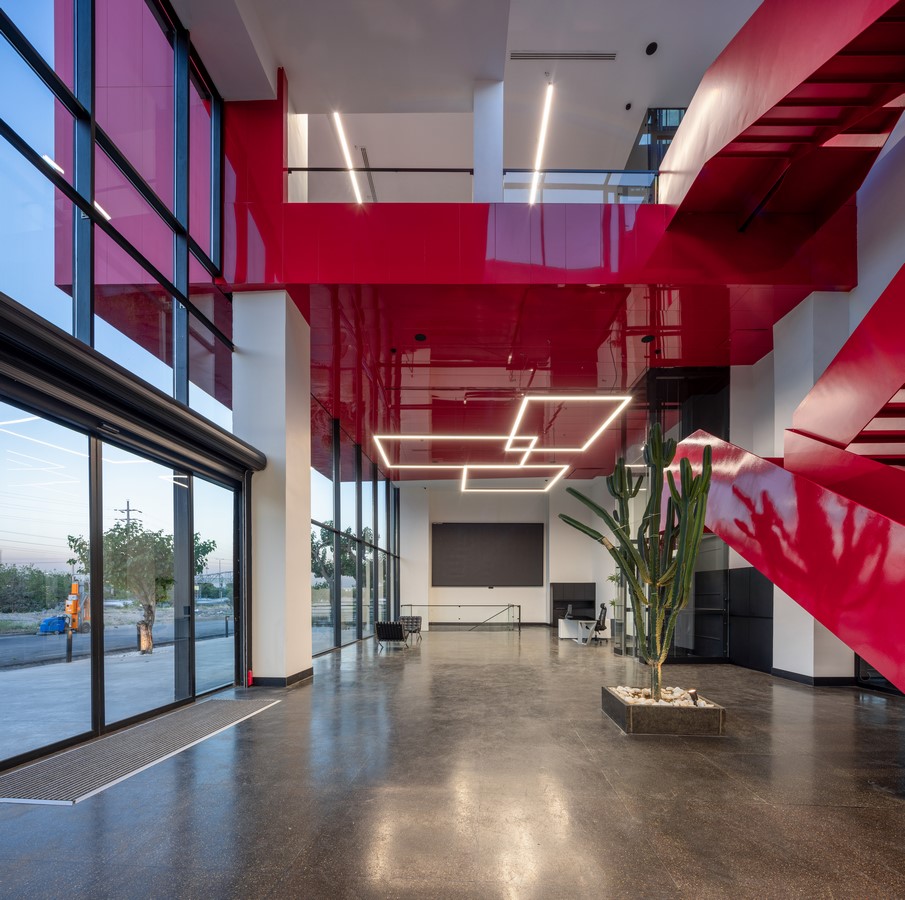
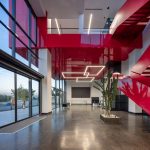
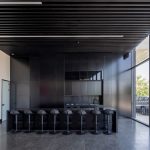
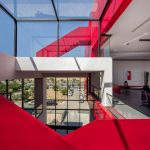
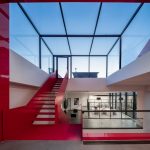
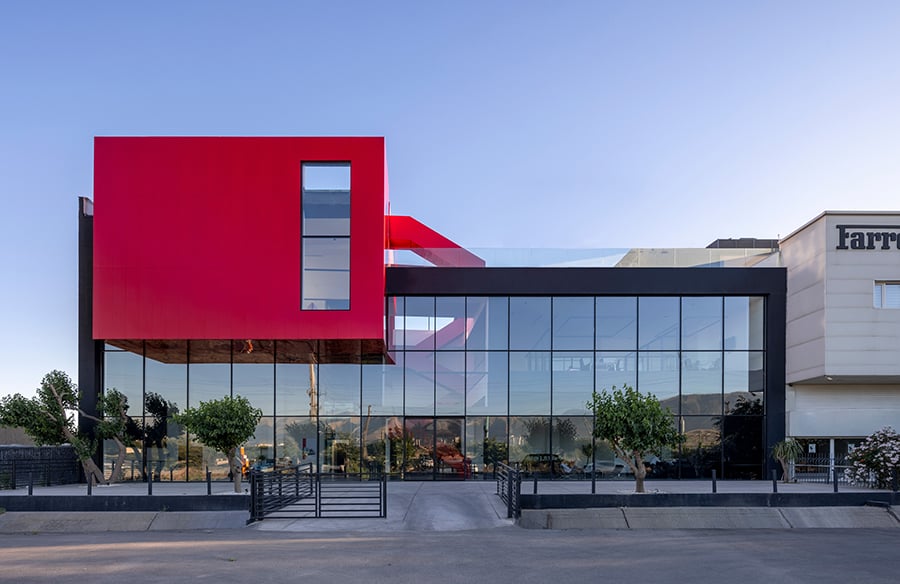
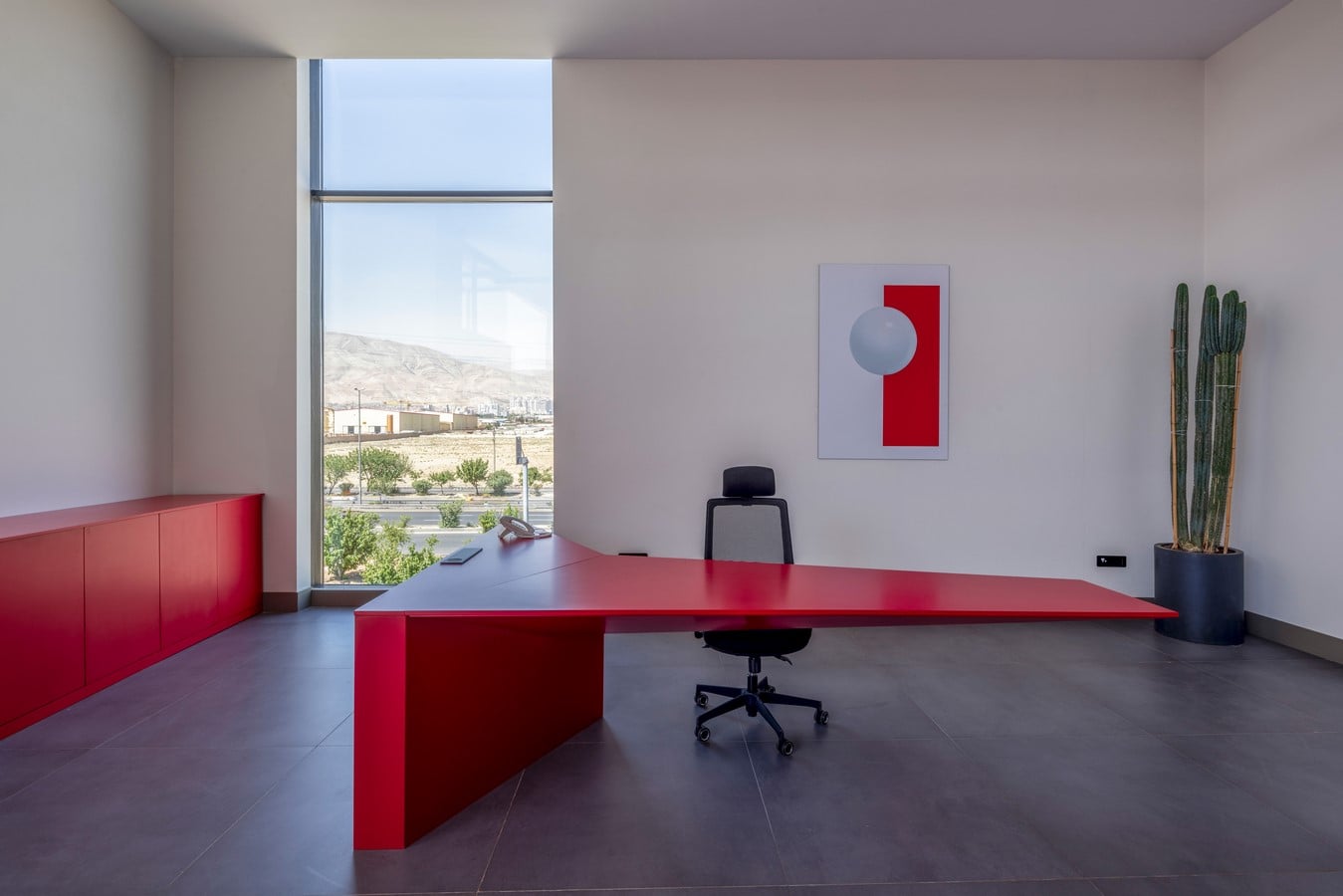
The spatial organization is defined by a vertical and transparent composition. A glazed primary volume houses semi-public office functions, while a solid red mass on the opposite side accommodates management areas. These two volumes are not oppositional but engage in a conceptual dialogue between structure and openness. The transparency of the main façade, together with clear functional zoning, establishes a flexible and communicative framework within the industrial context.
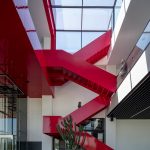
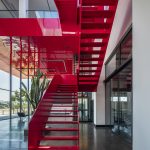
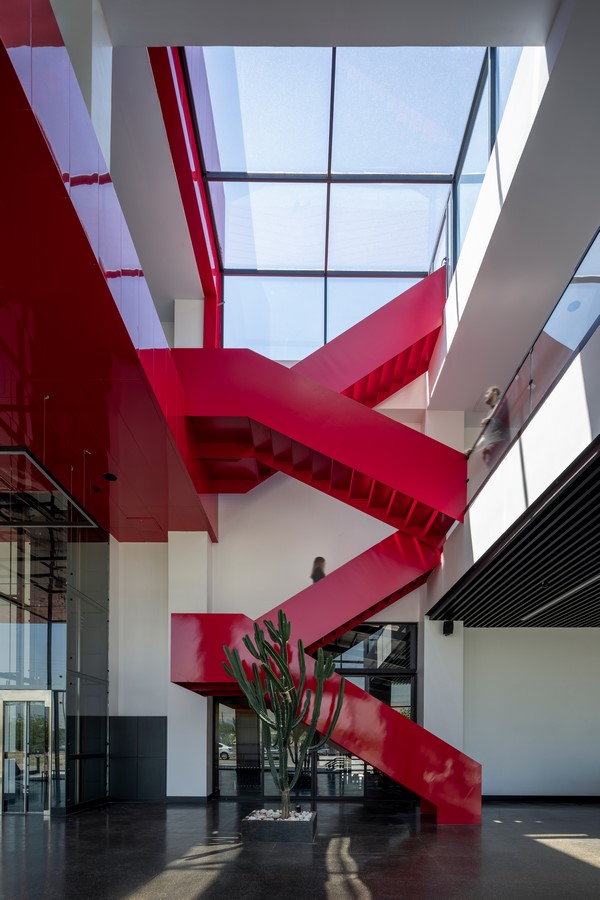
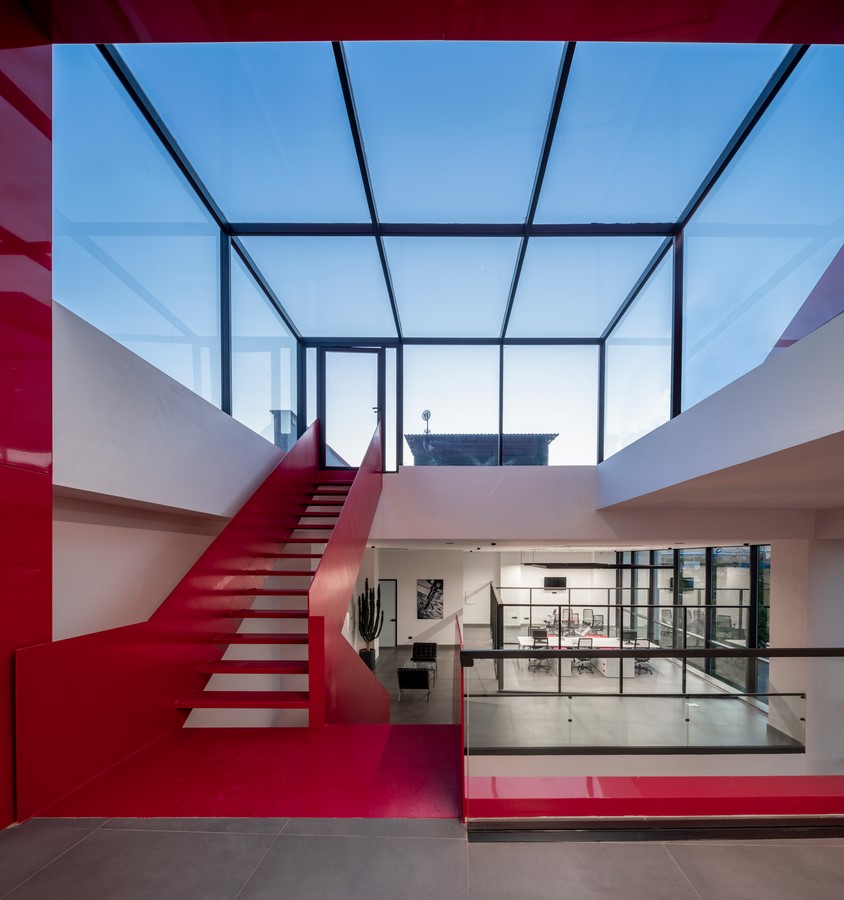
Natural light enters through a large glass roof at the center of the building, casting shifting patterns of light and shadow throughout the day. The suspended red stair at the project’s heart functions as the main vertical route while serving as a visual and sculptural anchor between the transparent and opaque volumes. As the spatial and kinetic core of the building, the stair organizes circulation and redefines the user’s experience. In contrast to the linear, efficiency-driven layouts typical of industrial settings, this element introduces a spatial narrative centered on movement, interaction, and architectural expression.
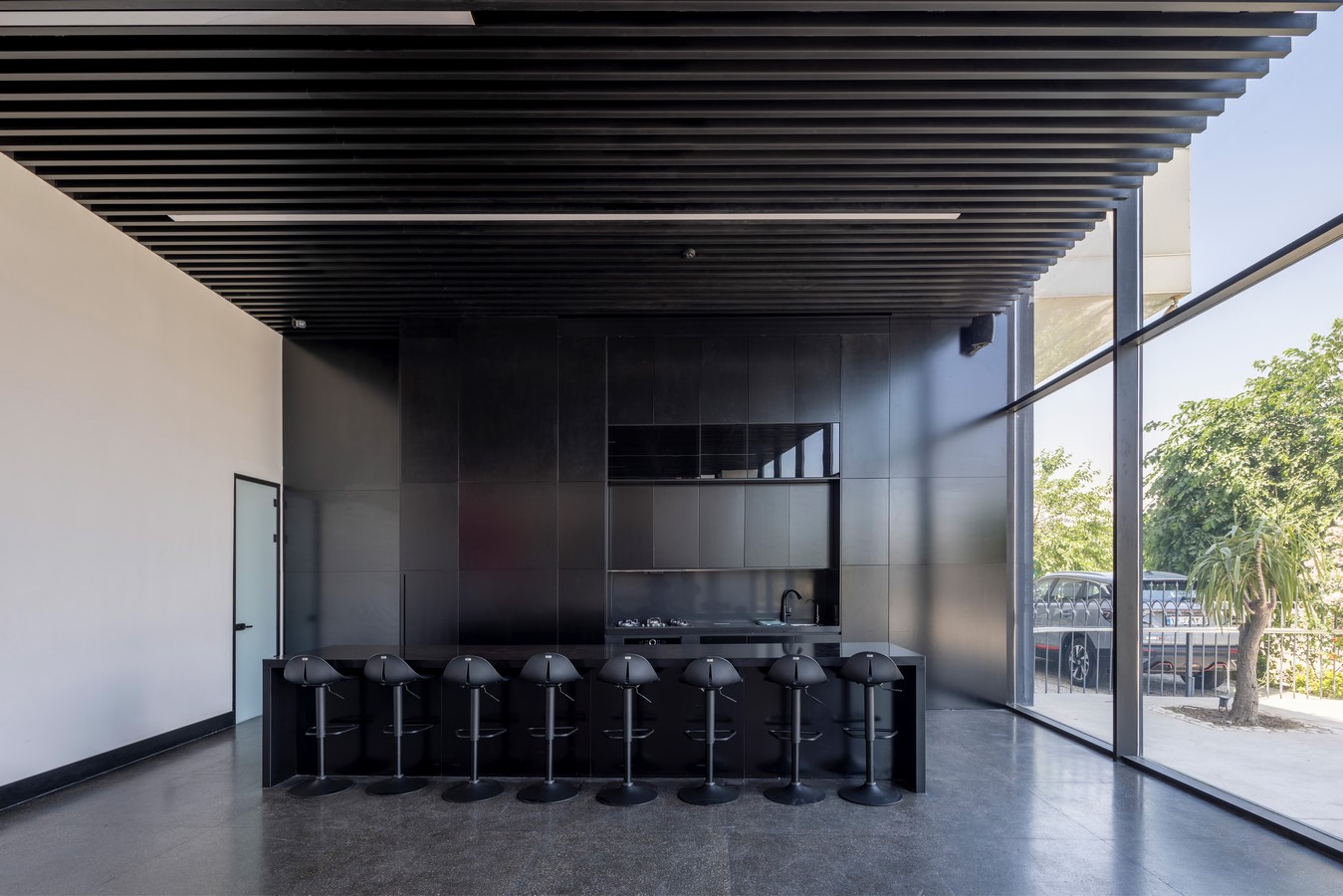
The primary structure is made of reinforced concrete. The central atrium is topped with a 25-square-meter glass roof that required precise engineering. To improve energy performance and reduce heat gain, Sun-Energy glazing was used for both the roof and façades. The suspended metal stair was prefabricated off-site and assembled on location. The red volume is clad in industrial composite panels, offering a striking contrast to the glazed primary mass. This combination of industrial materials and architectural detailing sought to preserve the site’s identity while enhancing spatial and environmental quality.
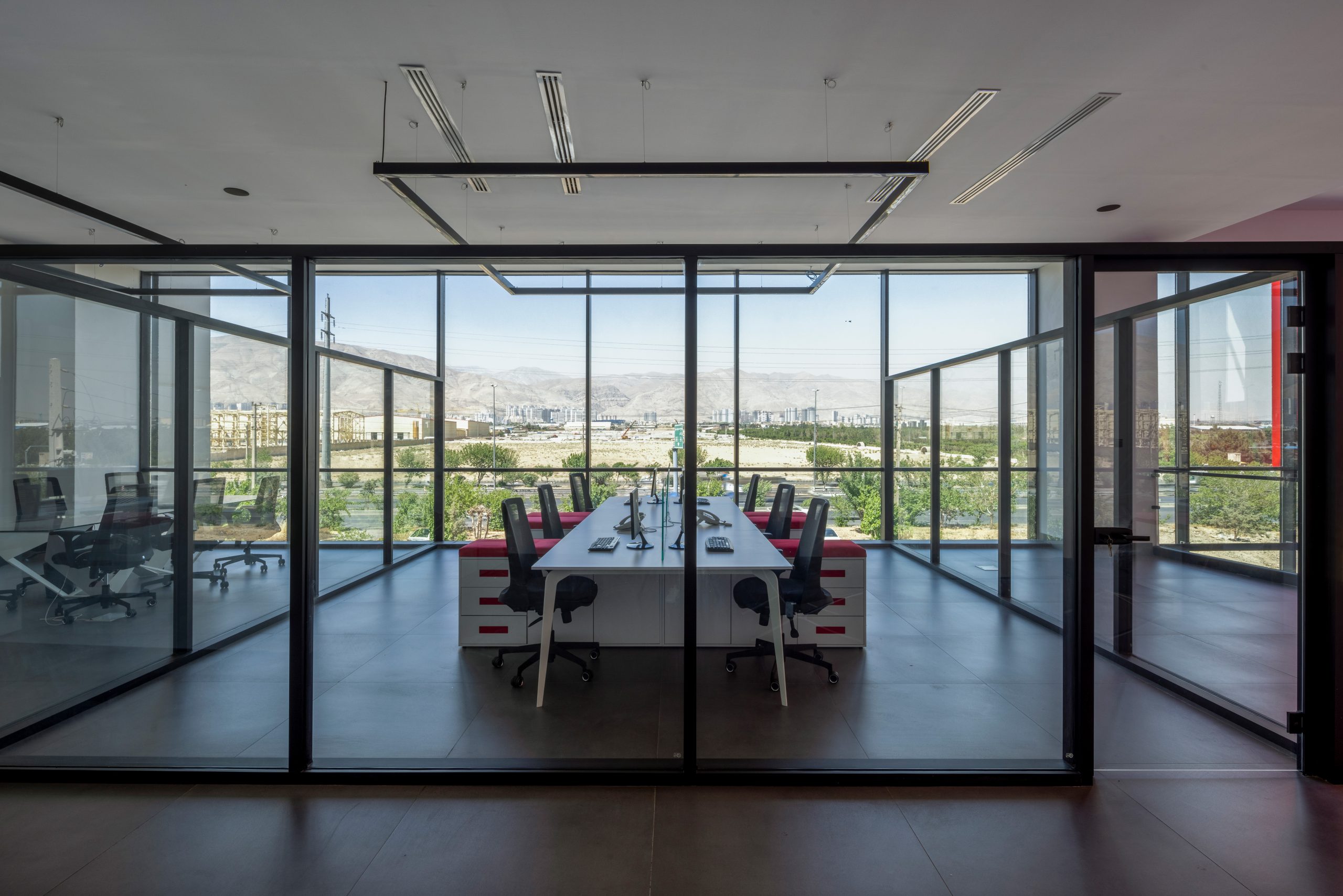
On the ground floor, the southern glazed façade provides a direct view into the production hall. This connection reflects a conscious effort to dissolve the traditional barrier between administrative and industrial functions. By aligning the office space with the rhythm of production, the project fosters operational unity, transparency, and a collective sense of purpose.
The Aria Sanat project aims to redefine the boundary between industrial form and human experience. While addressing functional needs, it reintroduces quality, meaning, and motivation into the workplace—transforming the industrial language through the use of light, color, materials, and contemporary spatial organization. Located in the western industrial belt of Tehran, the building has since influenced how neighboring factories perceive the role of administrative architecture. According to both users and management, the space has strengthened workplace belonging and motivation—serving as a clear indicator of the project’s architectural and social success.