Cálido is a specialty coffee shop designed by Carlota Gallo in the Chamberí district of Madrid. The space emerges from the universe of Mariale Briceño, a digital entrepreneur trained in pastry in Paris, who takes her first step into the physical world through this project. Developed with the strategic guidance of Ansón y Bonet, the result is a place where identity, gastronomy, and contemporary design converge.
Project Name: Cálido
Studio Name: Carlota Gallo
Location: Calle Donoso Cortés 68, Madrid
Year: 2025
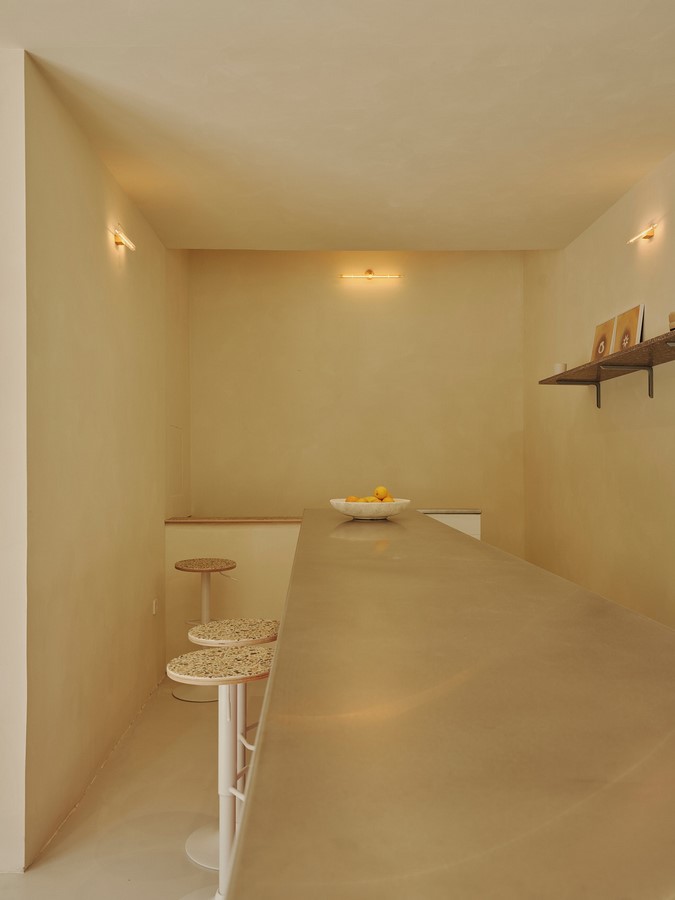
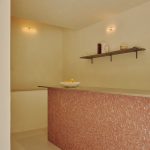
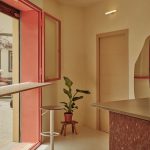
The design of Cálido is rooted in two core ideas: recovery and durability. The project embraces recovered materials as protagonists, valuing their context and long-term presence. Five sheets of recycled plastic and one of wood-residue terrazzo were transformed—without generating waste—into the café’s entire set of furniture, all produced on-site. These are complemented by stainless steel and limewash surfaces, which define the space both technically and sensorially. Recovery and durability.
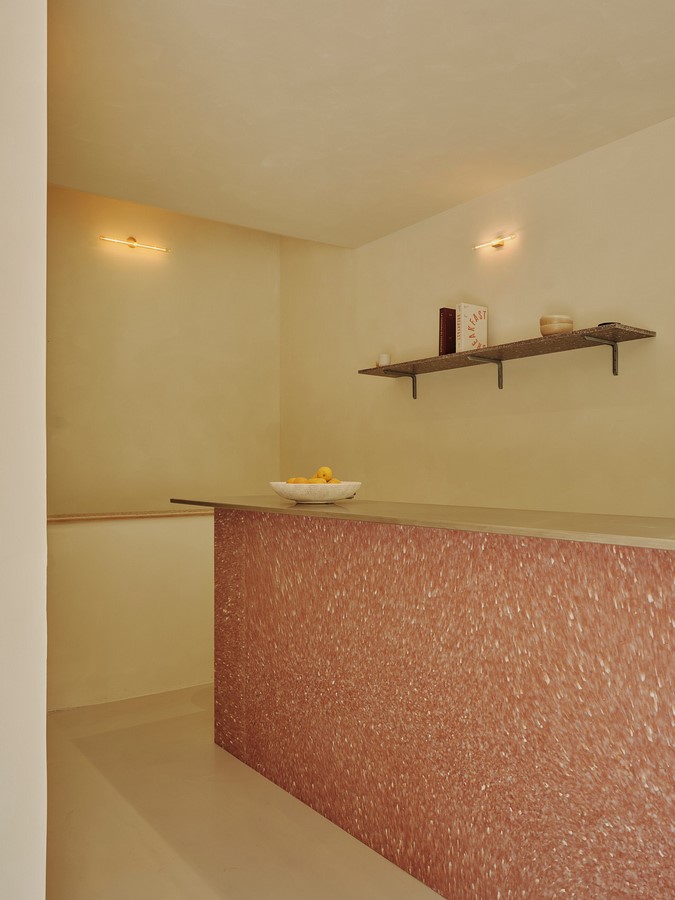
Cálido proposes an organic coexistence between new materialities—such as recycled plastic and terrazzo made from wood waste—and timeless, durable materials like stainless steel. The result is a tactile, functional, and visually precise space, where the industrial and the emotional coexist without hierarchy.
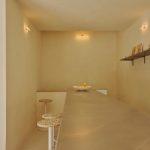
Cálido’s layout follows a clear logic of use and rhythm. An L-shaped bar, crafted in vibrant recycled plastic, organizes the space from its core: it separates the customer service area from the preparation zone, where fresh toasts, salads, and a selection of Paris-inspired bakery items are made. This technical front remains open and accessible, reinforcing the connection between kitchen and customer.
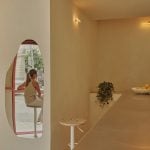
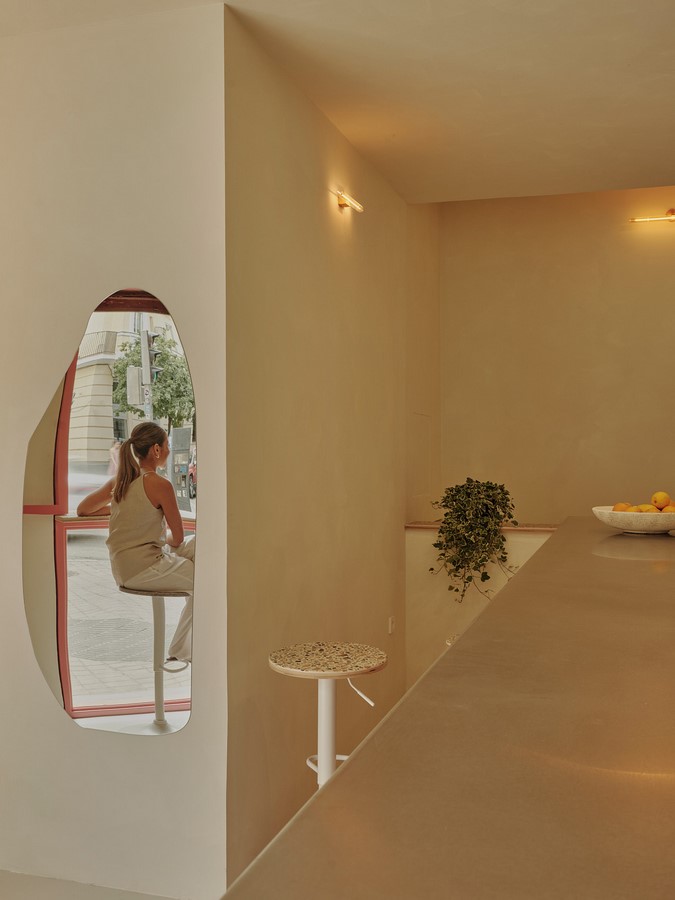
Surrounding the bar, a series of high stools invite a more immersive and direct experience. In parallel, auxiliary counters are placed for those making a brief stop —without giving up comfort or a sense of intimacy.
Open to the outside, the café features a courtesy bench along the façade. This gesture—subtle yet assertive—activates the exterior and proposes a pause: an invitation to sit, observe, and reconnect with the rhythm of the neighborhood.
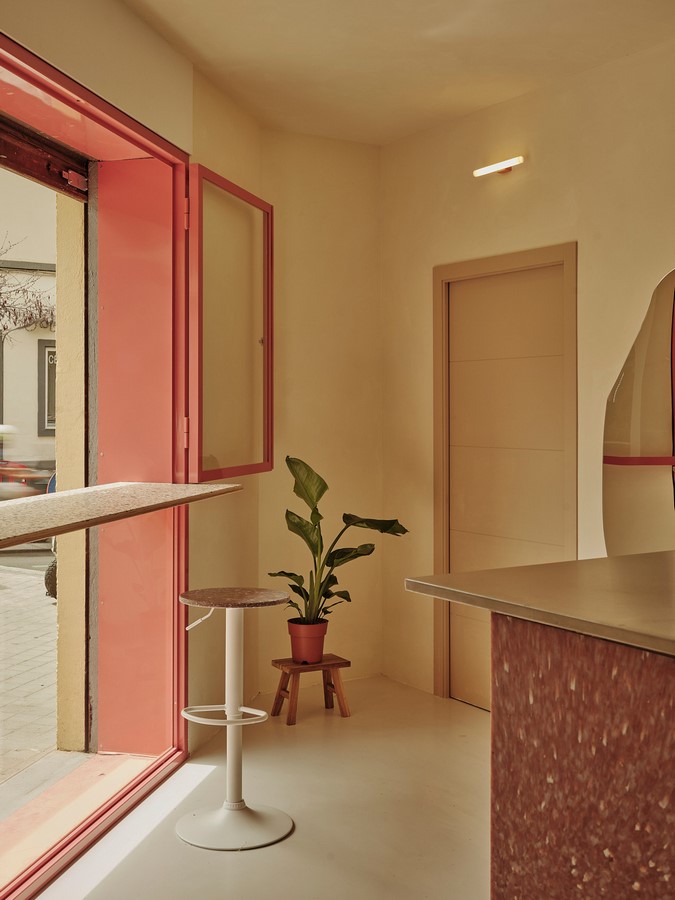
Finally, a reversible bar completes the spatial arrangement, articulating the transition between interior and street. This element functions not only as a surface of support, but as an extension of the space into the urban fabric—reinforcing Cálido’s open, accessible, and community-oriented character.