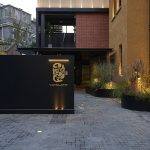
Founded by legendary architect Helmut Jahn, Jahn Architects has remained at the forefront of contemporary architecture through its bold innovation, sustainable design strategies, and a commitment to creating architecture that transforms the urban experience. With headquarters in Chicago and an international footprint, Jahn continues to shape skylines across the world by blending architectural ingenuity with environmental consciousness.
The Philosophy Behind Jahn Architects
Jahn Architects operates with a strong foundation in the belief that architecture must be both innovative and responsible. The firm’s philosophy revolves around performance-driven design—architecture that not only responds to the user’s needs but also enhances the cultural and environmental fabric of its surroundings.
This principle has been visible in every phase of the firm’s evolution. From the structural boldness of its early skyscrapers to the refined ecological strategies in more recent projects, Jahn’s work demonstrates a seamless integration of engineering, sustainability, and aesthetics.
Design Principles and Methodology
Jahn Architects employs a multidisciplinary approach, combining cutting-edge engineering with meticulous attention to form and function. Key principles guiding their design process include:
- Transparency and Light: Jahn buildings often feature glass as a primary material, creating visual openness and allowing natural light to flood the interior spaces.
- Structural Clarity: Exposing the skeleton of a building reflects the firm’s dedication to architectural honesty and technical precision.
- Sustainability: From energy-efficient façades to renewable energy integration, Jahn ensures that each project contributes positively to the environment.
- Urban Integration: Their projects are never isolated objects—they are thoughtfully inserted into the urban context, encouraging interaction, circulation, and public engagement.
Iconic Projects by Jahn Architects
1. James R. Thompson Center, Chicago
Perhaps one of Jahn’s most polarizing and discussed works, the James R. Thompson Center is a prime example of postmodern architecture that challenged conventional government buildings. It features a vast atrium wrapped in glass, symbolizing transparency in government. Though often critiqued for its energy inefficiency (a point of discussion that emerged later), the building’s bold aesthetics and civic symbolism make it a significant piece of architectural history.
2. Suvarnabhumi Airport, Bangkok
Jahn Architects played a central role in designing the passenger terminal complex of Suvarnabhumi Airport, one of Southeast Asia’s busiest aviation hubs. The architectural language of the project blends massive steel structures with efficient spatial planning, while also emphasizing passive design elements to reduce energy consumption in the tropical climate.
3. Veer Towers, Las Vegas
Part of the CityCenter development on the Las Vegas Strip, the Veer Towers are twin leaning high-rise residential buildings known for their bold geometry. Their tilted façade and vibrant exterior cladding represent Jahn’s commitment to creating distinctive urban landmarks while maintaining function and safety.
4. Doha Tower, Qatar (with Jean Nouvel)
While not a solo Jahn project, the Doha Tower embodies many of the firm’s values. The building’s façade utilizes traditional Islamic patterns to create an innovative solar shading system—reflecting both cultural relevance and environmental sensitivity.
Architectural Detailing and Use of Technology
Jahn Architects integrates technology and material innovation to achieve high-performance buildings. One of their most widely acclaimed approaches is the use of double-skin façades, which:
- Improve thermal insulation
- Enhance natural ventilation
- Reduce energy load
- Allow for daylighting without excessive glare
Moreover, their collaboration with engineers during early conceptual phases ensures that each design element—from the glass curtain wall to HVAC systems—is optimized for energy and spatial efficiency.
The firm’s commitment to Building Information Modeling (BIM) and parametric design further enhances coordination, cost-efficiency, and construction accuracy across all stages of development.
Sustainability as a Core Practice
Long before sustainability became an industry norm, Jahn Architects was incorporating ecological responsibility into its projects. Notable sustainability strategies include:
- Green Roof Systems: Used to reduce urban heat island effect and manage stormwater.
- Low-E Glass: Installed in façades to reflect heat while maximizing natural light.
- Geothermal and Renewable Energy: In select projects, the firm has introduced geothermal cooling systems and solar panel arrays to reduce carbon footprints.
- Smart Building Systems: Adaptive lighting, HVAC zoning, and water recycling systems are standard features in their newer developments.
Material Palette and Construction Techniques
The architecture of Jahn buildings is often defined by a refined material palette that balances aesthetic quality and durability. Common materials include:
- Glass: For transparency and interaction between indoor and outdoor spaces.
- Steel and Aluminum: Allowing slender structural members and precision detailing.
- Precast Concrete: Employed for modularity and rapid assembly.
These materials are typically fabricated off-site, ensuring high quality and faster on-site installation. Such construction techniques minimize waste and improve overall efficiency.
Contribution to Urbanism and Public Spaces
In addition to private developments, Jahn Architects has contributed significantly to the shaping of public infrastructure and urban space. The firm’s planning approach favors:
- Human-Centric Design: Prioritizing pedestrian pathways, social gathering areas, and accessibility.
- Contextual Awareness: Ensuring that new structures reflect and respect existing urban patterns.
- Connectivity: Integrating transportation nodes, greenways, and public plazas.
These principles are particularly visible in their transportation hubs and civic architecture.
Global Reach and Cultural Relevance
From Europe to Asia and North America, Jahn Architects has successfully adapted its architectural ethos across cultural and climatic contexts. Some of their international projects include:
- Highlight Towers, Munich
- Messeturm, Frankfurt
- Sony Center, Berlin
- Shanghai International Financial Center
Each project is designed with a deep understanding of local codes, traditions, and urban dynamics, while still retaining a distinctive Jahn signature.
Awards and Industry Recognition
Over the decades, Jahn Architects has received multiple accolades, including:
- Honor Awards from the American Institute of Architects (AIA)
- LEED Certifications for Sustainability
- International High-Rise Awards
- German Architecture Awards
These honors recognize not just the aesthetic value of their projects but their contribution to design excellence and sustainability worldwide.
What Sets Jahn Architects Apart
Several aspects distinguish Jahn Architects in the competitive field of global architecture:
- Visionary Leadership: The legacy of Helmut Jahn continues through the firm’s design language and innovation.
- Integrated Sustainability: Environmental stewardship is not an afterthought but a core design driver.
- Technological Mastery: Advanced modeling, performance simulations, and smart technologies are embedded in every project.
- Global Relevance: Projects that respect local culture while pushing design boundaries.
Call to Action: Partnering with Jahn Architects
For institutions, governments, and private developers seeking to elevate their architectural projects, Jahn Architects offers a rare blend of technical expertise, aesthetic refinement, and ecological sensitivity. Whether designing cultural landmarks, corporate towers, or public infrastructure, the firm brings a legacy of excellence to every commission.
Visit jahn.studio to explore their portfolio and begin a dialogue on your next architectural vision.
Conclusion
Jahn Architects stands as a beacon of modern architectural practice—one that balances innovation with responsibility, form with function, and global ambition with local sensitivity. With a proven track record of iconic projects and a forward-thinking ethos, Jahn continues to lead the evolution of architecture into a more intelligent, sustainable, and human-centric future.