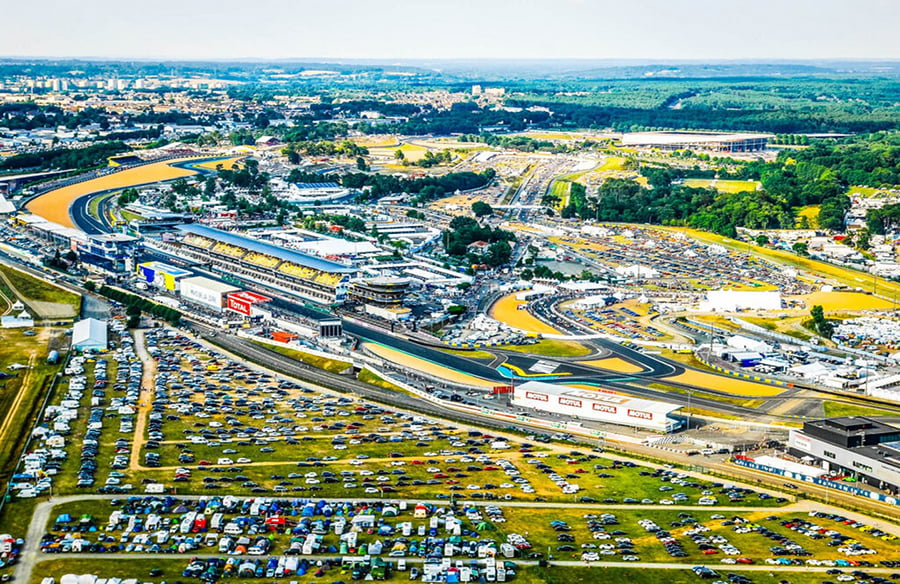
Circuit de La Sarthe – Biggest race car tracks in the world
In the realm of motorsports, few race tracks command as much respect and fascination as Circuit de la Sarthe. Nestled in the picturesque region of Le Mans, France, this iconic race track has become synonymous with endurance racing, pushing both machines and drivers to their limits. This article embarks on a comprehensive exploration of Circuit de la Sarthe, delving into its rich history, architectural nuances, and the unique challenges it presents to those who dare to conquer its twists and turns.
Historical Tapestry: From Public Roads to Racing Legend
Inception and Evolution
Circuit de la Sarthe, initially conceived in 1906, originated as a public road race aimed at showcasing the prowess of automobiles. The inaugural race covered a circuit that bore little resemblance to the modern layout, winding through the picturesque French countryside. Over the years, the track evolved, adapting to the changing landscape of motorsports and solidifying its place as a global racing icon.
The Le Mans 24 Hours: Endurance Racing’s Crown Jewel
The Le Mans 24 Hours, first held in 1923, emerged as the defining event at Circuit de la Sarthe. This endurance race, where teams and drivers navigate the circuit for a grueling 24 hours, has become the ultimate test of both human endurance and mechanical reliability. The Le Mans 24 Hours is not merely a race; it’s a celebration of skill, strategy, and the relentless pursuit of victory on one of the world’s most challenging tracks.
Architectural Evolution Over the Decades
Circuit de la Sarthe has undergone significant architectural transformations since its inception. Originally composed primarily of public roads, the track saw gradual modifications to enhance safety and accommodate the increasing speeds of racing machines. The integration of dedicated sections like the Porsche Curves and the Ford Chicanes showcases the track’s adaptability to the evolving demands of motorsports.
Architectural Brilliance: Navigating the Complex Layout
The Mulsanne Straight: A Test of Raw Power
The Mulsanne Straight, a legendary stretch on Circuit de la Sarthe, was once a flat-out, three-mile-long sprint where cars reached staggering speeds. Over the years, chicanes were introduced to break up the straight, introducing a strategic element to the race. The Mulsanne Straight remains a testament to the raw power and speed that define endurance racing.
The Porsche Curves: A Ballet of Precision
The Porsche Curves, a complex sequence of corners, demand a delicate balance between speed and precision. Negotiating this section requires a seamless dance between man and machine, testing the aerodynamic capabilities and handling prowess of the race cars. The Porsche Curves exemplify the intricate design elements that contribute to the overall challenge of Circuit de la Sarthe.
The Famous Esses and Tertre Rouge: Technical Prowess Unleashed
The Esses and Tertre Rouge sections form a technical maze that demands both technical finesse and strategic brilliance. Drivers navigate a series of rapid directional changes, leading up to the renowned Tertre Rouge corner, a crucial point where acceleration onto the Mulsanne Straight can make or break a lap time. These sections showcase the architectural ingenuity that elevates Circuit de la Sarthe to a league of its own.
Innovative Features: Challenges and Safeguards
Chicanes: Balancing Speed and Safety
Chicanes, introduced in various sections of Circuit de la Sarthe, serve dual purposes – they break up long straights, adding complexity to the track, and they enhance safety by reducing overall speeds. The presence of chicanes introduces a strategic element, as drivers and teams must carefully balance speed through straightaways and agility through these technical sections.
Tech-Driven Safety Measures
Circuit de la Sarthe has been at the forefront of implementing advanced safety measures to protect both drivers and spectators. From gravel traps and tire barriers to state-of-the-art impact-absorbing barriers, the track continuously evolves to enhance safety without compromising the challenges that make endurance racing a true test of skill.
Cutting-Edge Pit Infrastructure
Pit stops are a crucial aspect of endurance racing, and Circuit de la Sarthe boasts cutting-edge pit infrastructure. Teams rely on well-coordinated pit strategies, and the track’s pit lane is designed to facilitate quick and efficient stops. The combination of strategic pit stops and efficient infrastructure adds an extra layer of complexity to the Le Mans 24 Hours, making it a race of tactics as much as speed.
Endurance Racing Legends: The Impact of Circuit de la Sarthe
Triple Crown of Motorsport
Circuit de la Sarthe holds a special place in the hearts of racing enthusiasts, especially those pursuing the elusive Triple Crown of Motorsport. Winning the Monaco Grand Prix, the Indianapolis 500, and the Le Mans 24 Hours is considered the pinnacle of racing achievement. The inclusion of Circuit de la Sarthe in this prestigious trio underlines its significance in the motorsports landscape.
Iconic Moments and Legendary Victories
The storied history of Circuit de la Sarthe is adorned with iconic moments and legendary victories. From the battles between Ford and Ferrari in the 1960s to Audi’s dominance in the 21st century, the track has witnessed automotive rivalries and technological advancements that have shaped the trajectory of endurance racing.
Global Impact on Motorsports
Circuit de la Sarthe’s influence extends far beyond its French borders. The Le Mans 24 Hours attracts teams and drivers from around the world, contributing to the global allure of endurance racing. The track’s unique challenges and prestigious history have made it a magnet for top-tier talent, solidifying its status as a cornerstone of international motorsports.