Beijing National Stadium, Beijing – Stunning examples of Biomimicry in Architecture
In the heart of Beijing stands an architectural masterpiece that transcends conventional design paradigms—the Beijing National Stadium, colloquially known as the Bird’s Nest. This iconic structure not only serves as a symbol of modernity but also showcases the innovative incorporation of Biomimicry in its design, setting it apart in the realms of Architecture, Urban Design, and Interior Design.
Architectural Marvel: Design and Facade
Architectural Visionaries
The Beijing National Stadium was conceived by Swiss architects Jacques Herzog and Pierre de Meuron, in collaboration with Chinese artist Ai Weiwei. This dynamic team envisioned a structure that would not only be visually stunning but would also reflect the rich cultural tapestry of China.
Style and Typology
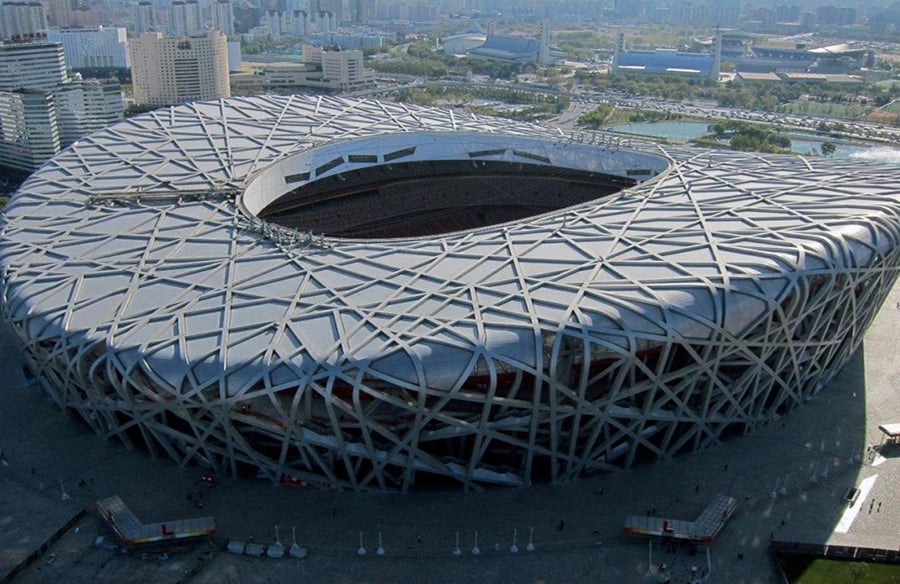
The stadium represents a fusion of contemporary architectural principles and traditional Chinese influences. Its distinctive elliptical form and lattice-like structure evoke the image of a bird’s nest, a nod to both nature and the nation’s cultural heritage. This unique fusion places the Bird’s Nest in the realm of deconstructivist architecture, characterized by non-linear forms and a departure from traditional design conventions.
Facade Innovation
The facade of the Beijing National Stadium is a testament to architectural ingenuity. The intricate steel lattice, resembling intertwined branches, not only adds to the aesthetic appeal but also serves a functional purpose. The open design allows for natural ventilation, reducing the need for mechanical systems and promoting sustainable practices.
Biomimicry: Nature-Inspired Design
Nature as a Blueprint
Biomimicry, the practice of drawing inspiration from nature’s designs to solve human challenges, played a pivotal role in shaping the Bird’s Nest. The lattice structure mimics the efficiency and strength found in natural systems, such as the interwoven branches of a bird’s nest or the fibrous composition of plant structures.
Sustainable Solutions
By emulating nature’s design principles, the architects achieved a harmonious blend of form and function. The stadium’s Biomimicry-driven design not only enhances its aesthetic appeal but also contributes to sustainability goals. The open lattice allows for optimal air circulation, reducing the need for extensive climate control systems.
Functionality and Utilization
Multi-Purpose Venue
Beyond its role as a sports venue, the Beijing National Stadium is a versatile space that hosts a myriad of events, from cultural performances to international conferences. This adaptability aligns with modern trends in urban planning, where multi-functional spaces contribute to vibrant and dynamic cityscapes.
Urban Integration
The stadium’s location within the Olympic Green, a comprehensive urban development project, underscores its integration into the broader urban fabric. Urban planning considerations played a crucial role in positioning the Bird’s Nest as a focal point, seamlessly connecting it to surrounding spaces and promoting accessibility.
Interior Design: Blending Form and Function
Spatial Harmony
The interior of the Beijing National Stadium reflects a commitment to spatial harmony. The architects employed a minimalist approach, allowing the structure’s form to dictate the internal layout. This creates an immersive experience for visitors, emphasizing the sheer magnitude and elegance of the architectural design.
Cutting-Edge Technology
Incorporating state-of-the-art technology, the interior of the Bird’s Nest offers an unparalleled spectator experience. From acoustics to lighting, every element has been meticulously designed to enhance the overall ambiance and ensure optimal functionality during diverse events.
Conclusion: A Timeless Symbol of Innovation
In the realm of Architecture, Urban Design, and Interior Design, the Beijing National Stadium stands as an enduring testament to innovation and sustainability. The fusion of Biomimicry principles, the seamless integration into urban planning, and the meticulous attention to detail in both exterior and interior design make the Bird’s Nest a beacon of inspiration for architects and enthusiasts alike.
As we marvel at the structural grandeur of the Beijing National Stadium, let us not only appreciate its aesthetic brilliance but also recognize the transformative power of Biomimicry in shaping the future of architectural design. This iconic structure serves as a call to action, urging architects to explore the boundless possibilities that lie at the intersection of nature and human ingenuity.