National Aquatics Center, Beijing – Stunning examples of Biomimicry in Architecture
The National Aquatics Center, located in Beijing, China, stands as an iconic testament to architectural brilliance, pushing the boundaries of design innovation and sustainability. Commonly known as the “Water Cube,” this architectural marvel has not only redefined the skyline of Beijing but has also set new standards in the realms of architecture, urban design, and interior design.
Architectural Genesis: A Fusion of Form and Function
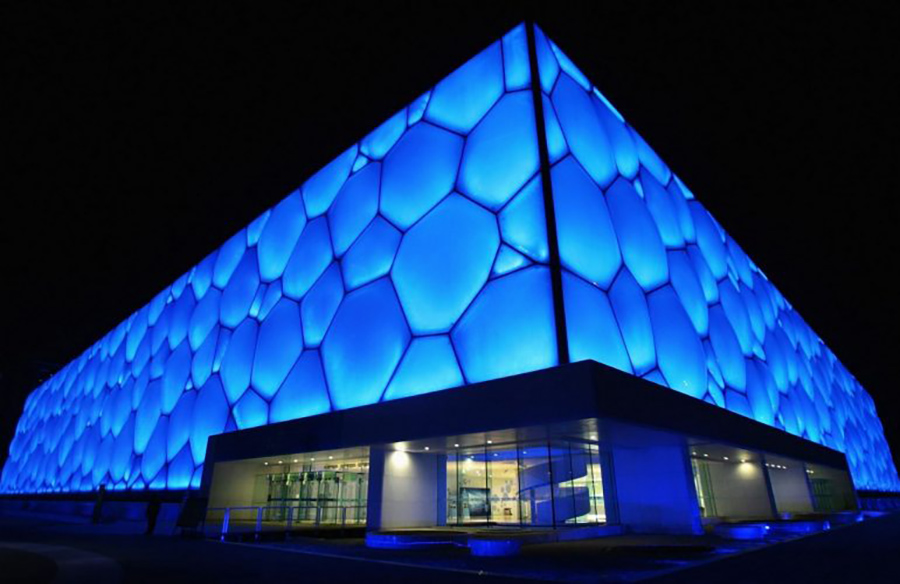
The brainchild of PTW Architects, CSCEC International Design, and Arup, the National Aquatics Center seamlessly blends cutting-edge design with environmental consciousness. The architects drew inspiration from the principles of Biomimicry, a design approach that emulates nature’s efficiency and sustainability. The result is a structure that mirrors the intricate geometry found in soap bubbles, achieving a delicate balance between aesthetics and performance.
Biomimicry Unveiled: Crafting Nature’s Precision
In the design of the Water Cube, Biomimicry takes center stage. The building’s façade, composed of lightweight ETFE (ethylene tetrafluoroethylene) pillows, mimics the cellular structure of a water lily, offering both transparency and insulation. This biomimetic approach not only enhances the building’s visual appeal but also optimizes energy efficiency by allowing natural light to illuminate the interior spaces.
Building Uses and Typology: A Versatile Aquatic Haven
The Water Cube serves as a multi-functional aquatic center, hosting a myriad of water sports events, recreational activities, and cultural events. Its typology seamlessly integrates a competition pool, diving pool, and recreational areas, catering to both professional athletes and the general public. The flexibility of the space makes it an architectural gem capable of adapting to diverse events, from international swimming competitions to art exhibitions.
Architecture Style: A Contemporary Masterpiece
The architectural style of the National Aquatics Center can be classified as contemporary, characterized by its avant-garde use of biomorphic forms and innovative materials. The integration of biomimicry principles sets it apart from conventional designs, making it a beacon of modernity and sustainability in the heart of Beijing.
Planning for Impact: A Holistic Approach
The meticulous planning of the Water Cube extends beyond its physical structure. The surrounding landscape and urban design contribute to its overall impact on the environment and community. Green spaces, pedestrian-friendly zones, and sustainable infrastructure have been integrated into the planning, promoting a harmonious coexistence between the built environment and nature.
Interior Design: Immersive Aquatic Experiences
Step inside the Water Cube, and you are greeted by a harmonious blend of functionality and aesthetics. The interior spaces reflect a commitment to user experience, with strategically positioned seating, state-of-the-art facilities, and an ambiance that resonates with the spirit of aquatic activities. The use of color palettes inspired by water elements creates a serene atmosphere, enhancing the overall visitor experience.
Call to Action: Embracing Sustainable Design Practices
As we marvel at the architectural brilliance of the National Aquatics Center, it serves as a call to action for architects, urban planners, and interior designers worldwide. The integration of biomimicry principles highlights the importance of sustainable design practices in shaping the future of our built environment. Professionals in the industry are urged to explore innovative solutions that not only captivate the eye but also minimize ecological footprints.
Conclusion: The Water Cube Legacy
In conclusion, the National Aquatics Center, Beijing, stands tall as a symbol of architectural excellence, pushing the boundaries of design innovation. From its biomimetic façade to its versatile typology, every aspect of the Water Cube reflects a commitment to sustainability and functionality. As the architectural community continues to evolve, the Water Cube remains a guiding light, inspiring future projects to embrace biomimicry and prioritize sustainable practices.
The legacy of the Water Cube extends beyond its physical structure, leaving an indelible mark on the landscape of Beijing and the global architectural scene. As we look to the future, may the principles embodied in this aquatic marvel continue to guide the way towards a more sustainable and aesthetically pleasing built environment.