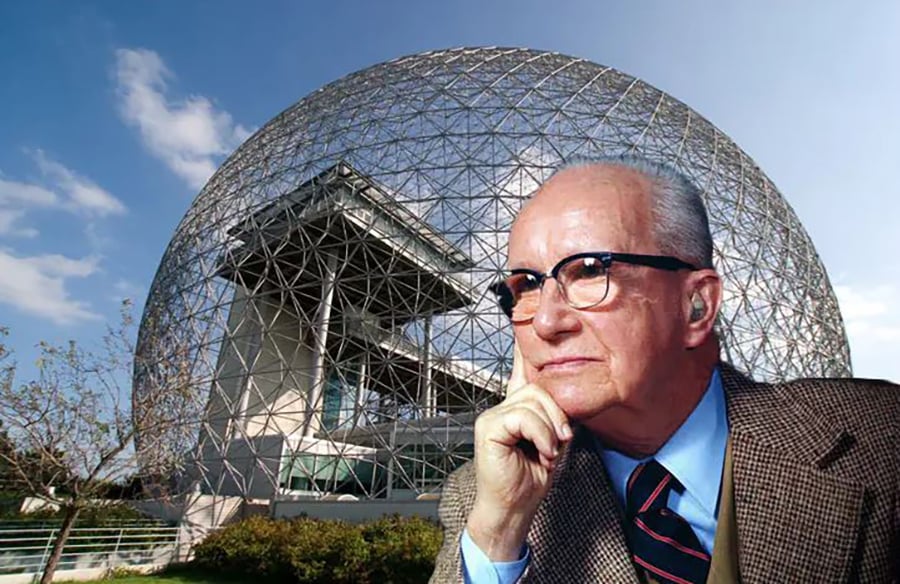
Buckminster Fuller – Greatest Architects / Best Architects In The World
Buckminster Fuller, an iconic figure in the world of architecture, left an indelible mark on the field with his innovative ideas and avant-garde designs. This article delves into the life and architectural style of Fuller, exploring key examples of his work that showcase his revolutionary contributions to the world of architecture.
Early Life and Influences
Buckminster Fuller, born on July 12, 1895, in Milton, Massachusetts, demonstrated an early fascination with geometry and design. His exposure to the works of great architects and inventors during his formative years significantly influenced his worldview. Fuller’s interests extended beyond architecture, encompassing engineering, philosophy, and sustainability.
Educational Background
Fuller’s academic journey played a pivotal role in shaping his multidisciplinary approach to architecture. He attended Harvard University but was expelled due to financial difficulties. Despite this setback, he continued to educate himself, delving into various fields that would later converge in his architectural innovations.
Architecture Style: Geodesic Domes
One of Fuller’s most groundbreaking contributions to architecture is the development of geodesic domes. These structures, characterized by their spherical form composed of interconnected triangles, revolutionized the way architects approached design and construction.
The Montreal Biosphère
One prominent example of Fuller’s geodesic domes is the Montreal Biosphère, originally designed as the United States Pavilion for the 1967 World Exposition. The structure’s innovative design showcased the potential of geodesic domes in creating large, lightweight, and environmentally sustainable spaces.
Ford Rotunda
The Ford Rotunda, constructed in 1935, served as a testament to Fuller’s vision for efficient and cost-effective architecture. Although tragically destroyed by fire in 1962, the Rotunda demonstrated the potential of geodesic domes in large-scale commercial applications.
Synergetics: A Comprehensive Design Philosophy
Fuller’s architectural philosophy, known as synergetics, goes beyond conventional design principles. Synergetics emphasizes the interconnectedness of design elements, inspired by the inherent geometry of the universe. This holistic approach informed Fuller’s diverse range of projects, showcasing his commitment to creating harmonious and sustainable environments.
Notable Projects
Dymaxion House
The Dymaxion House, envisioned by Fuller in the 1920s, was a compact, energy-efficient dwelling that could be easily transported and assembled. Despite never achieving mass production, this project laid the foundation for later explorations in modular and sustainable housing.
Dymaxion Car
Fuller’s Dymaxion Car, an innovative three-wheeled vehicle, challenged traditional automotive design. Though only three prototypes were built, the project exemplified Fuller’s commitment to rethinking conventional solutions and embracing efficiency.
Wichita House
The Wichita House, designed in 1945, showcased Fuller’s interest in mass production and affordable housing. The hexagonal design and efficient use of space underscored his dedication to creating functional and accessible living spaces.
Spaceship Earth
Fuller’s association with the term “Spaceship Earth” reflects his global perspective on architecture and sustainability. He advocated for responsible stewardship of our planet, emphasizing the need for environmentally conscious design and resource management.
Legacy and Impact
Buckminster Fuller’s legacy extends far beyond his physical creations. His influence on future architects, designers, and environmentalists is immeasurable. Fuller’s emphasis on sustainable and efficient design continues to resonate in contemporary architecture, inspiring a new generation to explore innovative solutions to global challenges.
Conclusion
Buckminster Fuller’s life and work stand as a testament to the transformative power of visionary thinking in architecture. From his pioneering geodesic domes to his revolutionary design philosophy of synergetics, Fuller’s impact reverberates through time. As we continue to face unprecedented challenges in the 21st century, embracing Fuller’s principles can guide us towards a more sustainable and harmonious future.
Call to Action
Explore the works of Buckminster Fuller in-depth, attend exhibitions showcasing his designs, and engage in conversations about the relevance of his architectural philosophy in today’s context. Embrace the spirit of innovation and sustainability championed by Fuller as we collectively shape the future of architecture.