Antoni Gaudí – Greatest Architects / Best Architects In The World
Antoni Gaudí, a prominent Catalan architect born in 1852, left an indelible mark on the world of architecture with his innovative and distinctive style. Revered as the face of Catalan Modernism, Gaudí’s works are celebrated for their organic forms, intricate detailing, and profound connection with nature.
Early Life and Education
Antoni Gaudí was born in Reus, Catalonia, and showed early promise in the arts. In 1873, he enrolled in the School of Architecture in Barcelona, where he embraced a wide range of influences, from Gothic to Oriental, shaping his unique perspective on design.
Architectural Style
Modernisme: The Catalan Art Nouveau Movement
Gaudí’s architectural journey is deeply intertwined with the Modernisme movement, which emerged in Catalonia as a response to the broader Art Nouveau movement. Characterized by its emphasis on craftsmanship and a rejection of industrialization, Modernisme sought to fuse traditional Catalan art with innovative designs.
Organic Forms and Nature-inspired Designs
Gaudí’s distinctive style is rooted in his profound connection with nature. He drew inspiration from the organic forms and structures found in the natural world, incorporating elements like tree-like columns, flowing lines, and intricate floral patterns into his designs.
Masterpieces of Antoni Gaudí
1. Sagrada Família
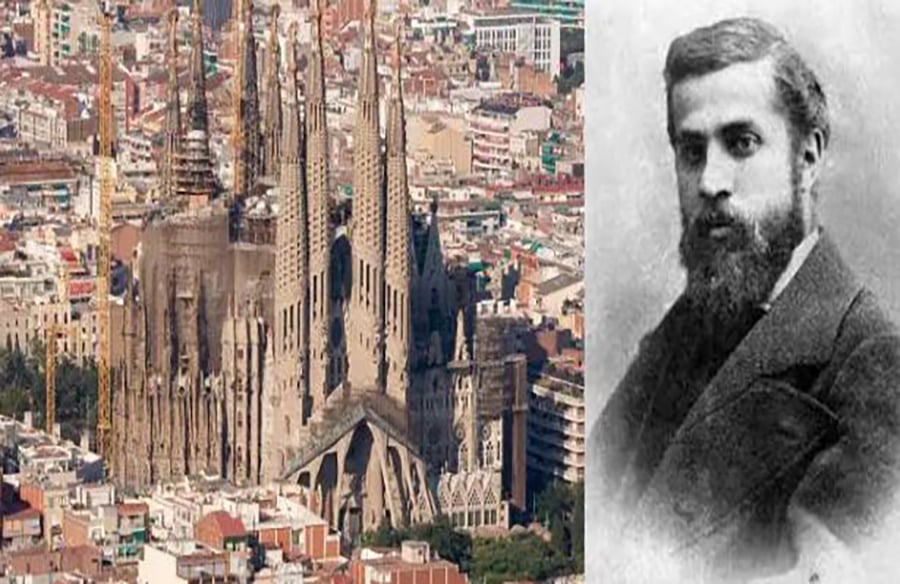
Undoubtedly Gaudí’s magnum opus, the Sagrada Família is a basilica that transcends conventional architectural norms. Initiated in 1882, this monumental work is an ongoing project, a testament to Gaudí’s unwavering dedication. Its soaring spires and intricate facades showcase Gaudí’s mastery in merging Gothic and Art Nouveau elements.
2. Park Güell
Designed as a residential project but later transformed into a public park, Park Güell is a vivid manifestation of Gaudí’s whimsical creativity. The vibrant ceramic mosaics, undulating benches, and the famous lizard sculpture, commonly known as “El Drac,” make it a captivating space that reflects Gaudí’s playful yet meticulous approach.
3. Casa Batlló
Known for its fantastical appearance, Casa Batlló is a residential building that Gaudí transformed in 1904. The undulating facade, vivid colors, and innovative use of materials showcase Gaudí’s commitment to blurring the lines between architecture and art.
4. Casa Milà (La Pedrera)
Completed in 1912, Casa Milà, commonly known as La Pedrera, exemplifies Gaudí’s exploration of unconventional shapes and structures. The undulating stone facade, wrought-iron balconies, and sculptural elements make it a testament to Gaudí’s avant-garde approach.
5. Casa Vicens
Considered one of Gaudí’s earliest masterpieces, Casa Vicens is a residential project that showcases his experimentation with diverse architectural styles, including Moorish and Gothic influences. The colorful tiles, ornate detailing, and innovative use of space set it apart as a unique gem in Barcelona.
6. Colònia Güell Crypt
Situated in the industrial village of Colònia Güell, the crypt is a lesser-known gem in Gaudí’s portfolio. The use of hyperbolic geometry and innovative structural solutions foreshadows elements later seen in the Sagrada Família.
7. Palau Güell
Commissioned by the industrial tycoon Eusebi Güell, Palau Güell is a mansion showcasing Gaudí’s early work. The interior is a testament to Gaudí’s attention to detail, featuring intricate ironwork, colorful mosaics, and a unique integration of space.
8. Bellesguard Tower
Constructed between 1900 and 1909, Bellesguard Tower is a lesser-known work that reflects Gaudí’s adaptation of medieval and Gothic elements. The combination of stone and brick, along with the unique angular design, makes it a captivating structure.
9. Terència Gaudí (Casa Ramos)
Built as a residence for Gaudí’s friend Terència Ramos, this project showcases his ability to harmonize architectural innovation with the practical needs of a dwelling. The use of brickwork and wrought-iron elements adds to its charm.
10. Güell Pavilions
Commissioned by Eusebi Güell, the Güell Pavilions exemplify Gaudí’s ability to create functional yet aesthetically pleasing structures. The use of parabolic arches and the integration of natural elements make them unique in Gaudí’s body of work.
11. Crypt at the Colònia Güell
Beyond the unfinished Sagrada Família, Gaudí’s crypt in Colònia Güell provides further insights into his innovative use of geometry and spatial design. The organic forms of the columns and the interplay of light showcase his evolving architectural language.
12. Casa Calvet
Completed in 1904, Casa Calvet is one of Gaudí’s more conventional works, showcasing a neogothic influence. The ornate facade and wrought-iron balconies demonstrate Gaudí’s ability to adapt his style to different contexts.
13. Casa Botines
Situated in León, Spain, Casa Botines is one of Gaudí’s few works located outside Catalonia. The combination of Gothic and Moorish influences, along with the distinctive towers, makes it a notable architectural landmark.
14. Teruel Center for Performing Arts
Although unrealized, Gaudí’s design for the Teruel Center for Performing Arts provides a glimpse into his visionary approach to public spaces. The use of arches and organic forms reflects his commitment to creating harmonious environments.
15. Sobrellano Palace
While not as widely recognized as some of his other works, Gaudí’s collaboration on the Sobrellano Palace in Comillas showcases his adaptability to various architectural contexts. The neo-Gothic elements and ornate detailing align with the aesthetics of the time.
Legacy and Influence
Antoni Gaudí’s legacy extends far beyond his physical creations. His innovative use of materials, dedication to craftsmanship, and integration of natural forms have inspired generations of architects. Gaudí’s influence is evident in contemporary architecture that seeks to harmonize with the environment and embrace organic design principles.
Conclusion
Antoni Gaudí’s contributions to architecture have left an indelible mark on the world. His unique style, characterized by organic forms, intricate detailing, and a profound connection to nature, has made him an enduring figure in the history of architecture. As we marvel at the Sagrada Família and other masterpieces, we are reminded of Gaudí’s ability to push the boundaries of conventional design, creating timeless works that continue to captivate and inspire. Explore Gaudí’s world, and you’ll discover not just buildings but a testament to the limitless possibilities of architectural innovation.
Explore the World of Gaudí: Plan Your Architectural Journey Today!
For an in-depth exploration of Antoni Gaudí’s masterpieces and their significance, plan your architectural journey to Catalonia. Visit the Sagrada Família, stroll through Park Güell, and immerse yourself in the genius of Gaudí’s creations. Don’t miss the opportunity to witness the convergence of art and architecture in the heart of Barcelona.
To make the most of your Gaudí experience, consider guided tours that provide insightful commentary on each masterpiece. Engage with the rich history and artistic nuances of Gaudí’s works, and gain a deeper appreciation for the evolution of Modernisme in Catalonia.
Book your architectural adventure today and witness the brilliance of Antoni Gaudí’s timeless creations!
[Note: The information provided in this article is based on historical and architectural facts related to Antoni Gaudí and his works as of the last knowledge update in January 2022.]